



Every corner of the country has its own take on barbecue. Meet the smoky, saucy traditions that have shaped barbecue across America.
In many places across the United States, barbecue is so much more than something you eat for lunch—it’s a way of life. It’s been part of American culture since before the country was even officially founded and is deeply woven into the cultural fabric in places like North Carolina and Texas, where barbecue is both a celebratory meal and an everyday lunch. No matter where you’re eating it, the country’s best barbecue joints treat everything they do with a deep reverence for all things smoke-kissed.
The country’s barbecue culture is vast and diverse, and there’s so much to know about the history, traditions and broad range of influences that make each region’s barbecue unique. Whether you’re an expert or a total newcomer to the cuisine, you’ll be transformed by the smoke, spices and regional barbecue sauces that turn even the most humble cuts of meat into a truly transcendent meal.
America’s Most Iconic Barbecue Regions
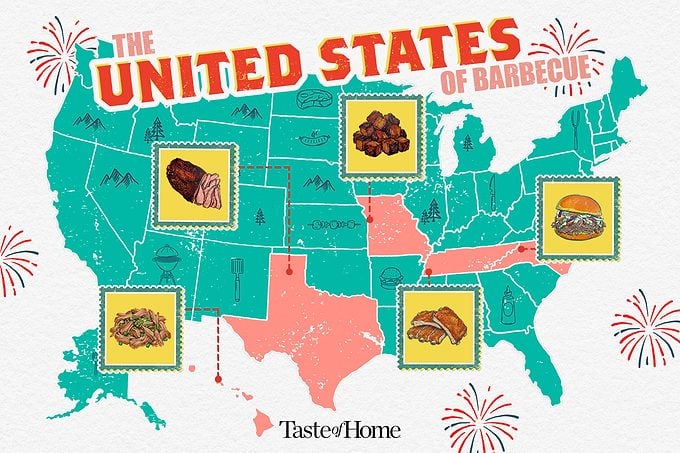
Depending on where you are in the United States, barbecue can look vastly different. If you find yourself in North Carolina or Memphis, you can expect juicy pulled pork sandwiches or spice-rubbed ribs. But in Texas, the smoke-stained spots in the state’s Hill Country bring slices of the tenderest beef brisket you’ve ever seen, perhaps paired with a fluffy flour tortilla. This diversity of styles, methods and proteins makes the country’s array of barbecue options exciting, but it’s important to know what to expect, wherever you are.
Kansas City barbecue
Kansas City barbecue is rooted in a tradition that dates back more than 100 years. In the early 1900s, Tennessee native Henry Perry landed in the state and began serving his newspaper-wrapped, hickory- and oak-smoked meats to locals in the city, all paired with his special peppery sauce. Perry’s restaurant would later become the legendary Arthur Bryant’s, which still serves its famed burnt ends and smoked pork spare ribs today.
Given its roots, it’s no surprise that Kansas City barbecue is often compared to Tennessee-style barbecue. “Kansas City barbecue is a kissing cousin to Memphis-style, but generally has a thicker barbecue sauce with a more savory component than Memphis,” says Melissa Cookston, seven-time world barbecue champion and owner of Memphis BBQ Co.
One of the features that sets Kansas City apart is its sweet, savory and spicy dry rub. The specific herbs and spices used will vary widely from restaurant to restaurant, but most include garlic, cayenne and paprika, plus plenty of brown sugar to help create a flavorful bark as the meat cooks. It’s used on everything from beef brisket and burnt ends to smoked chicken and turkey, pork ribs and shoulders, and sausages.
Read on: A guide to Kansas City barbecue
Kansas City barbecue recipes


Memphis barbecue
Memphis is home to some of the country’s tenderest and most flavorful smoked pork. Here, pork shoulder and pork ribs are the dominant proteins, served alongside more innovative fare like barbecue spaghetti, nachos and pizza. “The original Memphis barbecue, which had been around forever, is the barbecue sandwich: pork shoulder that’s been smoked forever and ever, and put on a bun with coleslaw,” says John Vergos, the third-generation owner of Memphis barbecue institution The Rendezvous.
Ribs, too, have a special place in Memphis’ barbecue canon, traditionally served in two unique yet equally delicious styles. Dry ribs have been a staple of Memphis barbecue since the 1950s, when they were first popularized at The Rendezvous. Instead of being smoked, they’re usually cooked directly over charcoal, basted with vinegar to keep them tender and rubbed heavily with a spice rub that often includes paprika and sugar.
Like dry ribs, wet ribs are rubbed with spices, but they’re brushed with a tangy Memphis-style barbecue sauce that balances tomato with a little mustard and spice. As the ribs are slow-smoked over hickory wood, the sauce reduces into a sticky, messy glaze that will keep you coming back for more.
Read on: A guide to Memphis barbecue
Memphis barbecue recipes


North Carolina barbecue
Whole-hog barbecue has been a staple of Eastern North Carolina’s barbecue identity since the state was founded. “It’s the original food of North Carolina,” says Greg Hatem, owner and pitmaster of The Pit in Raleigh, North Carolina. In the early days, whole pigs were cooked in large pits in the ground and left to smoke for hours on end. Today, large barrel smokers are more common than underground pits, but the pork is still enjoyed as it was in the early days. Nothing goes to waste, and the meat is chopped and served alongside super-crispy pieces of pork skin and a tangy, vinegar-based East Carolina barbecue sauce.
Going whole-hog on barbecue is an ideal way to experience the Tar Heel State, but there’s an alternate way to experience barbecue in North Carolina. Over in Lexington, it’s more common to find pork shoulder than whole hog. The smoky shoulders are chopped or sliced and served with a thicker North Carolina-style barbecue sauce made with ketchup.
Read on: A guide to North Carolina barbecue
North Carolina barbecue recipes


Texas barbecue
When most people think of Texas barbecue, they’re thinking of Central Texas-style barbecue. Here, beef reigns supreme. Across the Lone Star State, you’ll find succulent brisket, smoked for hours on end over post oak or mesquite wood, alongside towering beef ribs and jalapeno-stuffed sausages inspired by the German immigrants who settled in Central Texas in the 1800s.
This style of barbecue is almost exclusively focused on the meats. The rubs are typically simple, often just salt and pepper, and Texas-style barbecue sauce is almost never slathered on during the cooking process. “It’s still good with sauce, but in an ideal world, you want a piece of brisket that tastes awesome by itself,” says Lane Milne, co-owner of Goldee’s Bar-B-Q in Fort Worth, Texas.
There are a few other regional styles in Texas, including the saucier, sweeter East Texas-style barbecue that incorporates pork ribs and smoked poultry. In South Texas-style barbecue, Tex-Mex and Mexican flavors are melded with traditional smoking techniques, and it’s not uncommon to see brisket tucked inside flour tortillas and topped with a drizzle of spicy salsa verde. More recently, there are also a growing number of fusion barbecue restaurants that incorporate a wide range of global flavors, like the smoky Lao sausage served at Goldee’s or the sauces that incorporate pomegranate and sumac at KG Barbecue in Austin.
Read on: A guide to Texas barbecue
Texas barbecue recipes


Beyond the Big Four Barbecue Styles
Once you’ve got a solid understanding of the country’s most popular barbecue styles, it’s time to dig a little bit deeper. These regions boast their own unique barbecue traditions, from the underground ovens used to cook kalua pig in Hawaiian barbecue to the white barbecue sauce of Alabama.
Hawaiian barbecue
In addition to the stunning beaches and gorgeous scenery, you’ll also find some incredible barbecue in the state of Hawaii. The most iconic dish is kalua pig, which is traditionally cooked in an underground oven called an imu. “The imu is the cornerstone of traditional Hawaiian cuisine and can be thought of as Hawaii’s original barbecue,” says Philip “Ippy” Aiona, host of the Emmy Award-winning docuseries Eating Our Roots.
Hawaiian barbecue dishes like kalua pig, huli huli chicken, kalbi ribs or teriyaki beef are often served as part of a plate lunch alongside rice and macaroni salad. Kalua pig is seasoned simply with salt and lets the smoke do most of the talking, but beef and chicken are usually marinated with soy sauce, ginger, garlic, sugar, vinegar and sometimes pineapple. They’re grilled over kiawe wood, a type of mesquite that grows in Hawaii.
Read on: A guide to Hawaiian barbecue
Hawaiian barbecue recipes


South Carolina barbecue
North Carolina barbecue may get most of the attention, but South Carolina is home to its own distinct barbecue culture. You’ll still find whole-hog barbecue and plenty of pork shoulder here. “Carolina whole hogs are traditionally served in a ‘pig pickin’,’ where the hog meat is chopped, seasoned with sauce and returned to the hog. Attendees go around and ‘pick’ at their favorite bites,” Melissa says.
Instead of the peppery vinegar-based sauces of North Carolina, mustard barbecue sauce reigns supreme. Dubbed as “Carolina Gold,” it’s made with mustard, apple cider vinegar and brown sugar or honey, creating a thick, tangy sauce that accentuates the rich smokiness of the pork. “The mustard sauce is one-of-a-kind in the barbecue world, and a really nice contrast to the normal tomato-based sauces,” Melissa says.
St. Louis barbecue
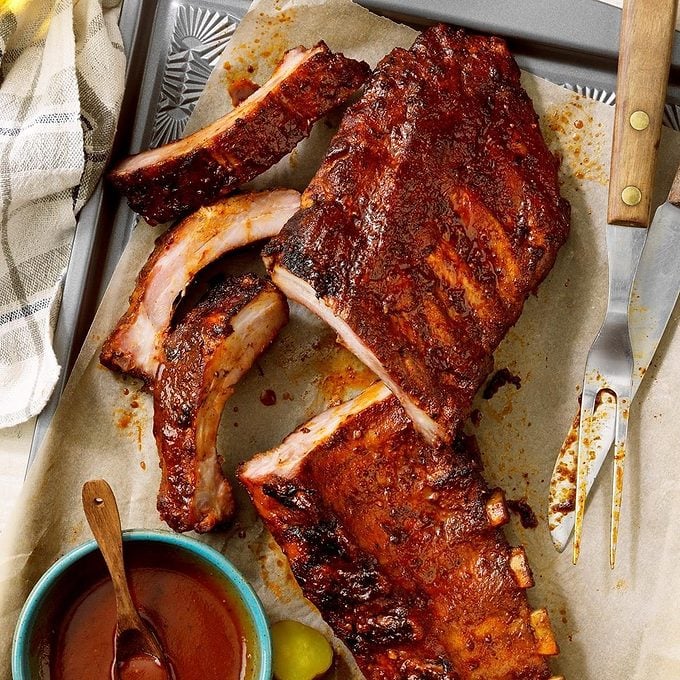
Most people have heard about St. Louis spareribs, and the city is certainly great at making these grilled, saucy ribs. But some of the signature items in St. Louis-style barbecue revolve around the pig’s less desirable parts, including pig ears and pig snoots that are smoked until crunchy. The real star of the show is a thick, bone-in slice of pork shoulder that shines once it’s spent a little time in the barbecue pit.
“Pork steaks should be a tough, nearly inedible cut, but the St. Louis folks figured out how to slowly smoke-roast them to achieve an amazing texture and great mouthfeel,” Melissa says.
Central California barbecue (Santa Maria style)
On the central coast of California, a decidedly unique style of barbecue awaits. “While southern barbecue revolves around cooking meats for a long time to break down collagens and turn tough cuts into delicious delicacies, Santa Maria style is more of a ‘reverse-style’ cook,” Melissa says. “You cook tri-tip at lower temps to add flavor, then fire it up for a quick sear with a finish temperature of medium-rare to medium.”
Santa Maria-style barbecue dates back to the 1800s, when ranch owners would grill beef to serve to the vaqueros who worked their herds. The beef involved is always tri-tip steak, which is grilled over red oak wood and served alongside vibrant salsa cruda, pinquito beans and grilled French bread.
Alabama barbecue
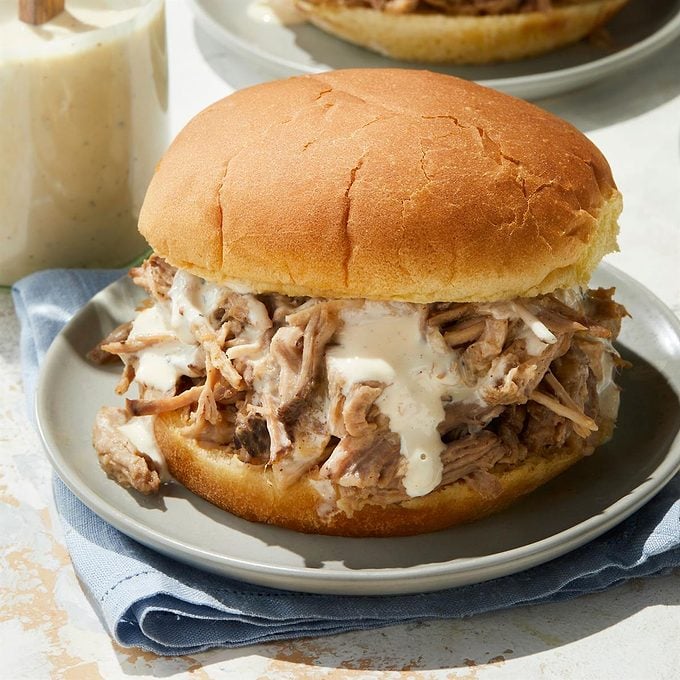
You’ll find southern barbecue staples like ribs and pulled pork in Alabama, but the smoked chicken is perhaps more popular. It pairs particularly well with the most iconic part of the state’s barbecue culture: Alabama white barbecue sauce, a tangy, mayo-based sauce that’s a little peppery, a little zingy and always perfect for dunking smoked chicken legs.
The origins of this unique barbecue sauce are widely traced back to Bob Gibson of Big Bob Gibson Bar-B-Q. “The few parts of Alabama barbecue they didn’t invent, they perfected,” Melissa says. “Plus, they top it off with the tallest pies in the South.”
Kentucky barbecue
While other states focus on beef and pork, Kentucky’s barbecue heritage is rooted in smoked mutton. The tough meat becomes tender after it’s cooked for hours over hickory coals. The sauce served alongside the mutton is a vinegary, Worcestershire-based sauce referred to as “black dip.”
On the eastern side of the state, pork is more common. You’ll find fork-tender Boston butt and fall-off-the-bone pork ribs, both served with a vinegar-based sauce that’s quite similar to what you’ll find in many North Carolina establishments.
Hidden Gems and Local Barbecue Specialties
Outside of the country’s most familiar barbecue regions, there is still some incredible barbecue to be had—and some really special dishes, from Cornell chicken to Baltimore’s pit beef sandwiches. There also tends to be a bit more flexibility in style in places like Arkansas and Chicago, which borrow both flavors and techniques from other barbecue traditions across the United States. They may not get the same shine as Texas and North Carolina, but these hidden gems and local specialties are a must for any serious barbecue aficionado.
Upstate New York barbecue
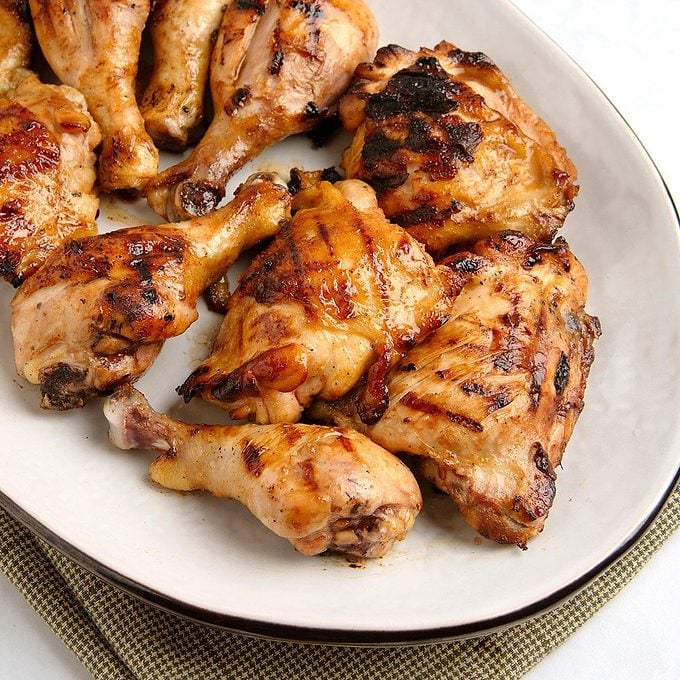
Plenty of regions have a take on barbecue chicken, but none are quite like the Cornell chicken you’ll find in upstate New York. Developed by a Cornell University professor in the 1940s, the dish was popularized at the New York State Fair, where it grew into a regional icon.
Before and during cooking, the chicken is basted with an oil-and-vinegar-based sauce that’s spiked with herbs. It’s then grilled over an open pit until the meat is juicy and tender, and the skin is nice and crispy. Cornell chicken is often served with salt potatoes, a fluffy and tender dish of boiled potatoes first invented by 19th-century salt mine workers.
Baltimore barbecue
Most barbecue beef is made from brisket, but Baltimore pit beef uses the top or bottom round roast instead. A staple in Baltimore since the 1970s, the roast is grilled over charcoal until it’s crusty on the outside but still fairly rare on the inside. It’s sliced super thinly and piled high on a Kaiser roll. As far as sauce is concerned, pit beef is traditionally served with a creamy horseradish sauce, but there are some spots in the region that use a sweet, tomato-based barbecue sauce instead.
Florida barbecue
As one might expect on the Gulf Coast, fish is a major player in Florida’s barbecue scene. At roadside stands across the state, mullet is typically doused in Creole seasoning and smoked for hours until it’s fall-apart flaky. You’ll also find it served alongside a citrusy barbecue sauce, a nod to the state’s most famous agricultural crop.
Beyond fish, smoked pork is also popular. It’s often marinated in mojo, a nod to the Cuban influences on Florida cuisine. “The flavors can be explosive, with bright citrus notes,” Melissa says.
Arkansas barbecue
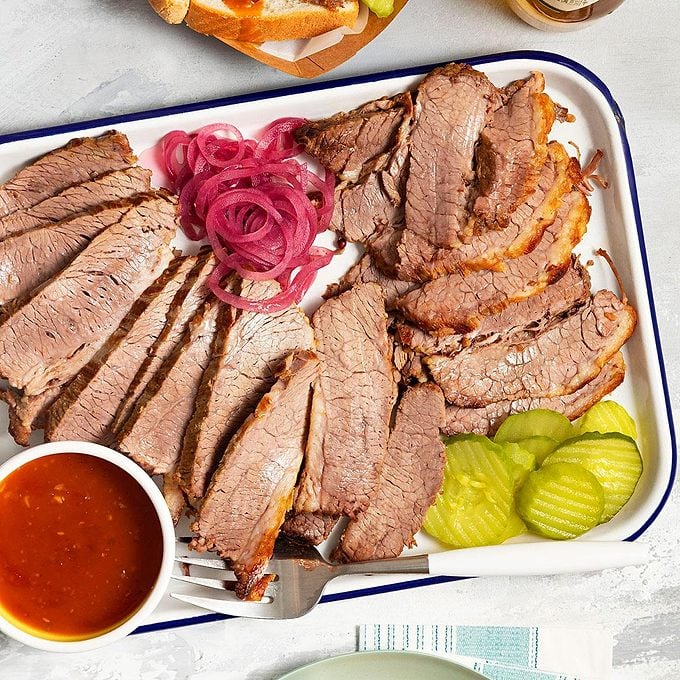
Thanks to its location near the middle of the country, Arkansas barbecue brings together several regional influences to create its own kind of barbecue. It takes the best parts of Memphis, the Delta region and its neighboring state of Texas, so you’ll find everything from pork ribs to smoky brisket on restaurant menus. The type of sauce on offer will vary depending on your location. In the northeast corner of the state, you can expect a vinegar-based sauce, while sauces in western Arkansas will be more tomatoey.
Arkansas is also home to one of the country’s oldest barbecue establishments. Located in Marianna, Jones Bar-B-Q has been slinging its super-tender chopped pork sandwiches, among other offerings, since 1910. “They embody what barbecue is about—basic foods transformed into the perfect bite,” Melissa says.
Chicago barbecue
Chicago-style barbecue is best known for a homegrown type of barbecue pit known as the aquarium smoker, which takes its name from its glass enclosure. It emulates the open-fire cooking style of a traditional pit but is designed for indoor spaces.
Barbecue restaurants started popping up in Chicago in the 1930s as Black Americans moved to Chicago during the Great Migration and brought their barbecue traditions with them. They created smokers that could be safely used indoors, as the Windy City’s winters weren’t conducive to outdoor cooking.
Rib tips are the specialty in Chicago. Served with french fries and white bread, they’re cooked until they’re melt-in-your-mouth tender and smothered in a thick and tangy tomato-based sauce. For the ultimate Chicago barbecue experience, order the combo with hot links.
Georgia barbecue
“Georgia is definitely underappreciated in the barbecue world,” Melissa says. It’s something of a melting pot, embracing the pulled pork, ribs and chicken of neighboring states, but the meats are a bit smokier, and the sauces tend to be sweeter.
Although it’s not a typical barbecue dish, many Georgians claim Brunswick stew as the heart of their barbecue heritage. The super-meaty, tomatoey stew has a little bit of every barbecue meat thrown into the mix, often including some of the mop sauce.

