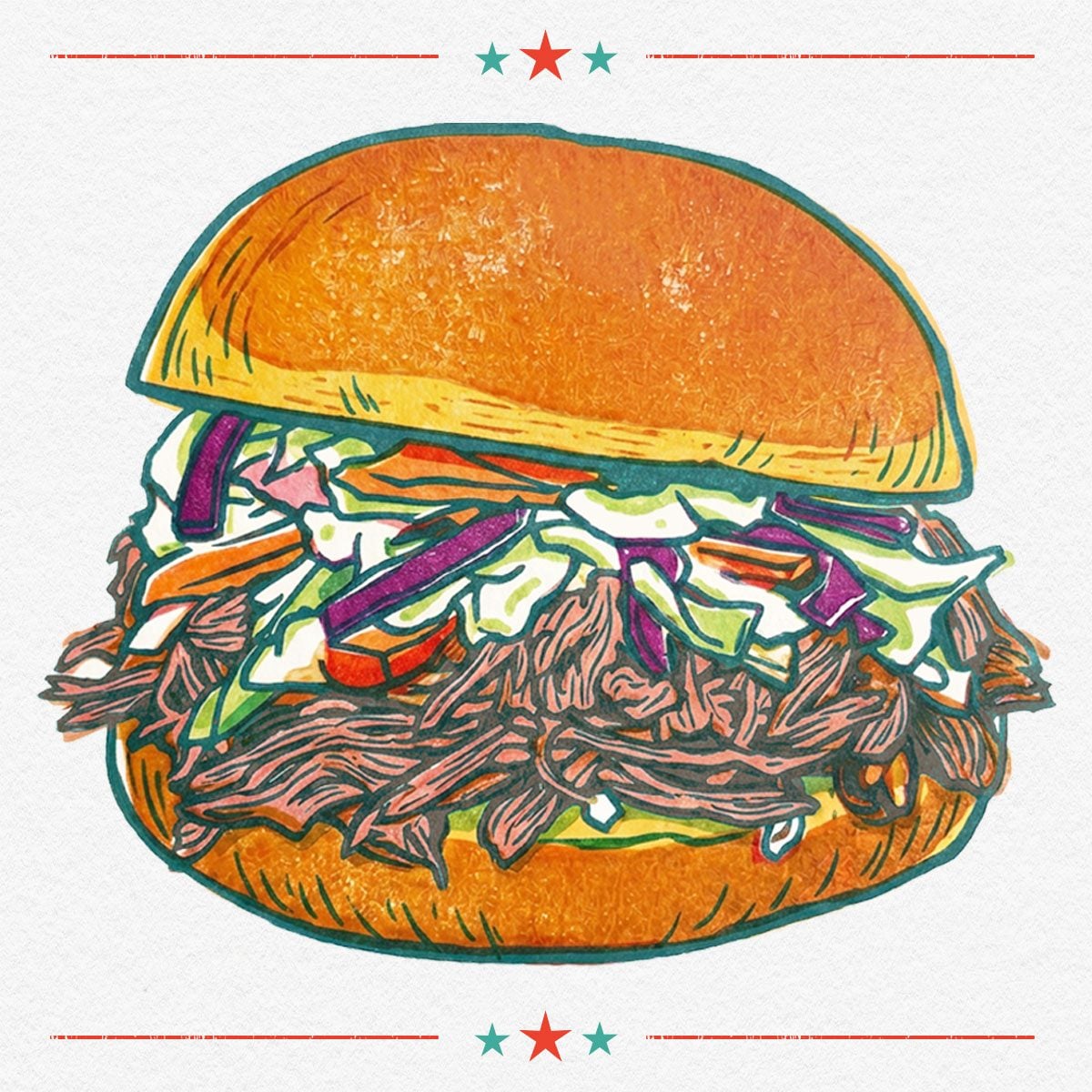
North Carolina-style barbecue is all about slow-smoked pork, vinegar-based sauces and a whole lot of tradition.
I secretly love traveling solo because I can eat whenever and wherever I want, sampling the best local spots on my own schedule. That freedom made barbecue a must during a short trip to North Carolina a few years ago. Having lived in Dallas, I wasn’t new to barbecue recipes, but I also knew North Carolina-style barbecue wouldn’t be the same as Texas-style brisket. So, I asked around for the best restaurant in Raleigh, grabbed a seat at the long counter and ordered a cold beer while I set about the business of figuring out just how many things I could taste in one meal.
I knew I had to build my plate around pork. It reigns supreme in North Carolina barbecue, from the coarsely chopped, tomato-dressed pork shoulders of the Lexington area to the whole hog barbecue that defines Eastern North Carolina. I’m sure the sides were delicious (I remember practically rolling out of the restaurant, totally stuffed), but it was the tender, smoke-kissed pork, lightly dressed in a vinegary sauce, that stole my heart.
To learn more about how this iconic pork is made, I spoke with a few pitmasters and North Carolina natives with a deep understanding of the state’s history and barbecue culture.
How Whole-Hog Barbecue Shaped North Carolina
Eastern North Carolina was the first part of the state to be settled, and whole hog barbecue has been a staple since its early days. “It’s the original food of North Carolina,” says Greg Hatem, owner and pitmaster of The Pit in Raleigh, North Carolina. Traditionally, the meat was cooked in a pit dug in the ground, large enough to accommodate the whole pig. Wood was strategically placed around the sides of the pit and near the thickest parts of the animal. Depending on the pig’s size, it could take up to 14 hours to slowly smoke and roast the animal until the skin was crisp and the meat tender.
But the time and effort were worth it for the abundance it yielded. “It was about survival and preservation,” says Ryan Mitchell, co-owner of True Made Foods and co-author of Ed Mitchell’s Barbecue. “A whole hog could provide a week’s or month’s supply of protein and food that gave life to as many people as possible.” This is also why vinegar-based sauces became popular in North Carolina. Ryan says that mopping the hog with vinegar tenderized and flavored the meat, but more importantly, it helped preserve it and prevent spoilage in a time before refrigeration existed.
Over time, as the state expanded, Lexington-style barbecue emerged. There, the settlers started cooking just the pork shoulder instead of the whole hog. They also added tomatoes to the sauce and side dishes. It’s hard to believe now, but tomatoes were considered a poisonous nightshade in early America and North Carolina. Plantation owners thought it was a harmful crop because of the pesky hornworms they attracted. The newer settlers knew how to grow and cook with tomatoes, so they naturally infused them into barbecue.
Eastern North Carolina vs. Lexington-Style Barbecue
Today, you’ll find both styles in North Carolina. Both feature pork cooked low and slow over hardwoods like oak and hickory, but the pork cuts used and the way they’re sauced vary.
- Eastern North Carolina barbecue: Eastern North Carolina is defined by whole hog barbecue mopped with a vinegary East Carolina barbecue sauce. Because it’s a lengthy process, it usually becomes a social gathering. But really, whole hog barbecue is about using every part of the pig, so nothing goes to waste. All the meat, from the shoulders and hams to the ribs and tenderloins, is combined into one tasty bite. “You chop it all up together, and you sauce it down,” says Greg. “It has a flavor like no other,” especially when it’s topped off with pieces of crisp, rendered skin (aka cracklings).
- Lexington-style barbecue: Lexington-style barbecue features pork shoulder rather than the whole hog. The shoulders are cooked low and slow until tender, then they’re either sliced or chopped (coarsely or finely, depending on your preference). If you order it “outside brown,” it will include bits of the dark, flavorful crust, called the bark. It’s usually served with dip, a tangy, vinegar-based North Carolina barbecue sauce that contains ketchup.
A North Carolina Barbecue Menu
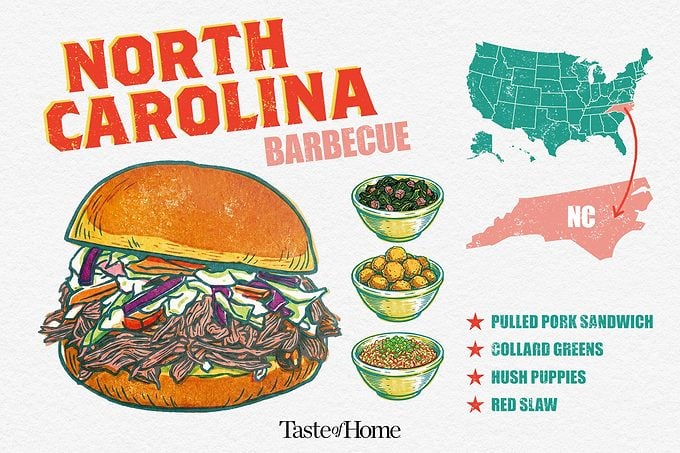
A North Carolina barbecue menu will feature pork, usually piled onto a soft bun as a sandwich or enjoyed on a plate with a variety of sides and a tangy sauce. To wash it all down, cold beer and sweet, bubbly Cheerwine hit the spot.
- Meat: Chopped pork shoulder or whole hog barbecue is the most iconic meat in North Carolina barbecue, but you’ll also find barbecue pork ribs. Ribs get a bit of a different treatment than the larger cuts, with a light spice rub and more frequent, heavier mopping with the sauce during the last hour or so on the grill. Smoked chicken is also something you’ll see at a barbecue and on restaurant menus.
- Sauces: Vinegar is the key ingredient and flavor in barbecue sauces throughout North Carolina. In Eastern North Carolina, the sauce is an uncooked blend of vinegar (usually apple cider vinegar), salt, pepper and red pepper flakes. It may also have a bit of sugar or hot sauce for spice and balance. As you travel west, the sauce becomes slightly thicker from the addition of tomatoes (usually in the form of ketchup). But it’s still very liquidy and pourable, and nowhere near as thick as a bottle of prepared barbecue sauce.
- Sides: In Eastern North Carolina, creamy coleslaw, collard greens and Brunswick stew are classic options. With Lexington-style barbecue, you’ll find hush puppies and red slaw, named for the healthy dose of ketchup in the dressing. Ryan and Greg also have a few nontraditional favorites. Ryan says he’ll always welcome boiled potatoes, baked beans and mac and cheese at a barbecue, and Greg serves heirloom cabbage collards on his menu because the locally grown variety is more tender than traditional collard greens. And no matter where you are in the state, sweet potatoes will likely be on the table. North Carolina is the biggest sweet potato producer in the U.S.
North Carolina Barbecue Recipes to Try at Home


How do you make North Carolina-style barbecue pork at home?
It’s logistically tricky to cook a whole hog in a pit at home, so most people use barrel smokers instead. These metal, horizontal cylinders are large enough to fit a whole pig and can be turned to cook the pig evenly. It’s not uncommon in Eastern North Carolina to hire a pitmaster to bring one and cook the meat for pig picking parties. “Every pig jig or contest around here is going to be centered around tradition,” says Ryan. “The firemen, police academies and all the big groups, they all do whole hog contests.”
Lexington-style pork shoulder doesn’t require any special equipment to make at home, especially if you turn your grill into a smoker. “It’s a lot easier—and faster—to cook shoulders,” says Greg, explaining that it may have been the reason it’s the more popular choice in the Lexington area of the state. Just make sure to rest the meat well before chopping it so it stays juicy, then add just enough sauce to moisten it.