



Texas barbecue is rooted in a wide range of culinary influences. Here's everything you need to know about this signature barbecue style, from beefy smoked brisket to sides like ranch-style beans, coleslaw and so much more.
There are few cooking styles with more gravitas attached to them than Texas barbecue. A beloved staple in the state for more than 100 years, barbecue’s presence in Texas has grown and evolved dramatically throughout the decades—and it’s only gotten tastier.
For myself and many Texans, a rich and juicy slab of brisket is the quintessential taste of our home state. It’s a culmination of a wide range of traditions and flavor influences that also happen to melt in your mouth. On the weekends, Texans line up at barbecue joints across the state, sipping beer in the summer heat as we wait for trays laden with beef ribs, baked beans and potato salad. It’s more than a meal; it’s an experience.
Because Texas barbecue is largely focused on beef and sauce isn’t really a major player, the style distinguishes itself from most southern smoked meat traditions. Here, simplicity reigns supreme, allowing the flavor of top-quality beef to shine without being overpowered by complicated rubs or too much sauce.
Whether you’re planning a trip to the Lone Star State or looking to recreate some of the country’s most delicious barbecue recipes at home, here’s everything you need to know about Texas barbecue.
What is Texas barbecue?
The history of Texas barbecue dates back more than 100 years and reflects a blend of culinary traditions. In the mid-1800s, large numbers of German and Czech immigrants settled in Texas. They brought their sausage-making and meat-smoking traditions with them, helping shape what would become Central Texas-style barbecue. But the cooking style—and the name!—also traces its roots to the Spanish word barbacoa, a cooking style in Mexico and South Texas where meat is cooked in a pit of coals.
For Lane Milne, co-owner of Goldee’s Bar-B-Q in Fort Worth, the definition of Central Texas barbecue is pretty simple. “Traditional Texas barbecue is, at its core, meat smoked indirectly over post-oak wood,” he says. What makes things a bit more complicated is that Texas is home to more than one barbecue style. Other regions use different types of wood, like mesquite, and some use direct heat over open pits instead of indirect smoking. The proteins, and how they’re served, can also vary.
The Regional Styles of Texas Barbecue
Central Texas-style barbecue
When most people think of Texas barbecue, whether inside or out of the state, they’re thinking of Central Texas-style barbecue. Heavily influenced by Texas’s long-booming cattle industry, this barbecue style puts beef front and center. “In Central Texas, it’s predominantly going to be beef, whereas other regions are more focused on pork, and the meats are going to stand on their own,” Lane says. The most popular proteins here are beef brisket and beef ribs, usually seasoned simply with salt and pepper. “Obviously, they’re still good with sauce, but in an ideal world, you want a piece of brisket that tastes awesome by itself.”
But that’s not to say that beef is the only thing on the menu. German and Czech immigrants brought their own traditions of smoking meat to the state, so sausage has always been a defining part of Central Texas barbecue menus. Recipes vary, but the sausage is typically smoked over wood for hours until it’s tender and juicy.
“In a lot of cases, it was people cooking what was left over from the meat case—that’s what got smoked,” says Tom Mickelthwait of Mickelthwait Craft Meats in Austin. “You would have a lot of beef clod or brisket because that’s what was available and inexpensive at meat markets.”
East Texas-style barbecue
Though less widely known than Central Texas barbecue, the style of ‘cue prepared in East Texas is just as compelling. It’s rooted in the hard work and creativity of formerly enslaved African-Americans, whose culinary traditions help shape southern cuisine as we know it today. It’s saucier, a bit sweeter and more likely to include a broader range of proteins, including sauce-basted pork ribs, smoked turkey and chicken.
South Texas-style barbecue
Not surprisingly, the barbecue of South Texas melds Tex-Mex and Mexican flavors with traditional smoking techniques, creating flavor combinations that are downright irresistible. Think brisket tacos with juicy, tender smoked meat tucked inside a tortilla and slathered with bright salsa verde, served alongside esquites street corn salad and borracho beans. It’s a favorite of Memphis barbecue icon Melissa Cookston, who describes the South Texas style as her favorite in the state. “I always lean towards fusion styles, and this combines Mexican influence with good Southern smoke,” she says.
New-school Texas barbecue
Across the state of Texas, chefs from backgrounds of all kinds are using their experiences to inform a whole new world of fusion barbecue. At Goldee’s Bar-B-Q in Fort Worth, Lane and his team have helped introduce smoky Lao sausage, a sweet-and-spicy dipping sauce called jeow som and sticky rice to countless barbecue customers. Meanwhile, at KG Barbecue in Austin, chef Kareem Al-Gayesh incorporates flavors like pomegranate and sumac into his rubs and sauces, a nod to his Egyptian heritage.
What’s on a Texas barbecue menu?
A Texas barbecue menu will vary widely from restaurant to restaurant, but there are some obvious touchstones. Here’s what to expect:
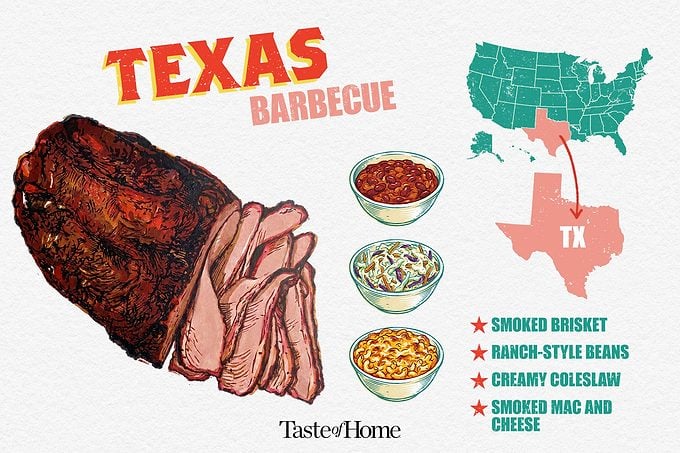
- Meats: The most common meats on a Texas barbecue menu are smoked brisket (often served sliced or chopped), beef ribs and sausage. Depending on where you are in the state, you may also find smoked turkey, chicken and pork ribs.
- Sides: Tom and Lane both agree that Texas barbecue’s quintessential sides are potato salad, baked beans and bright, mayo-based coleslaw. That said, the barbecue sides on offer will vary widely from restaurant to restaurant. Some joints keep it classic, while others take a more modern approach with dishes like smoked mac and cheese.
- Sauce: Central Texas-style barbecue shouldn’t be super saucy, but most restaurants will serve a thin sauce that’s usually a little bit spicy to pair with proteins like smoked brisket and sausage. In East Texas, a thick, sweet Texas barbecue sauce is more common, typically seen basted onto pork ribs or mixed into chopped beef. In South Texas, you’re likely to find salsa and a peppery, thin barbecue sauce.
- Accouterments: Along with the side dishes, old-school and new-school barbecue joints alike typically serve their meats with slices of white sandwich bread, sour pickles and raw onion slices.


