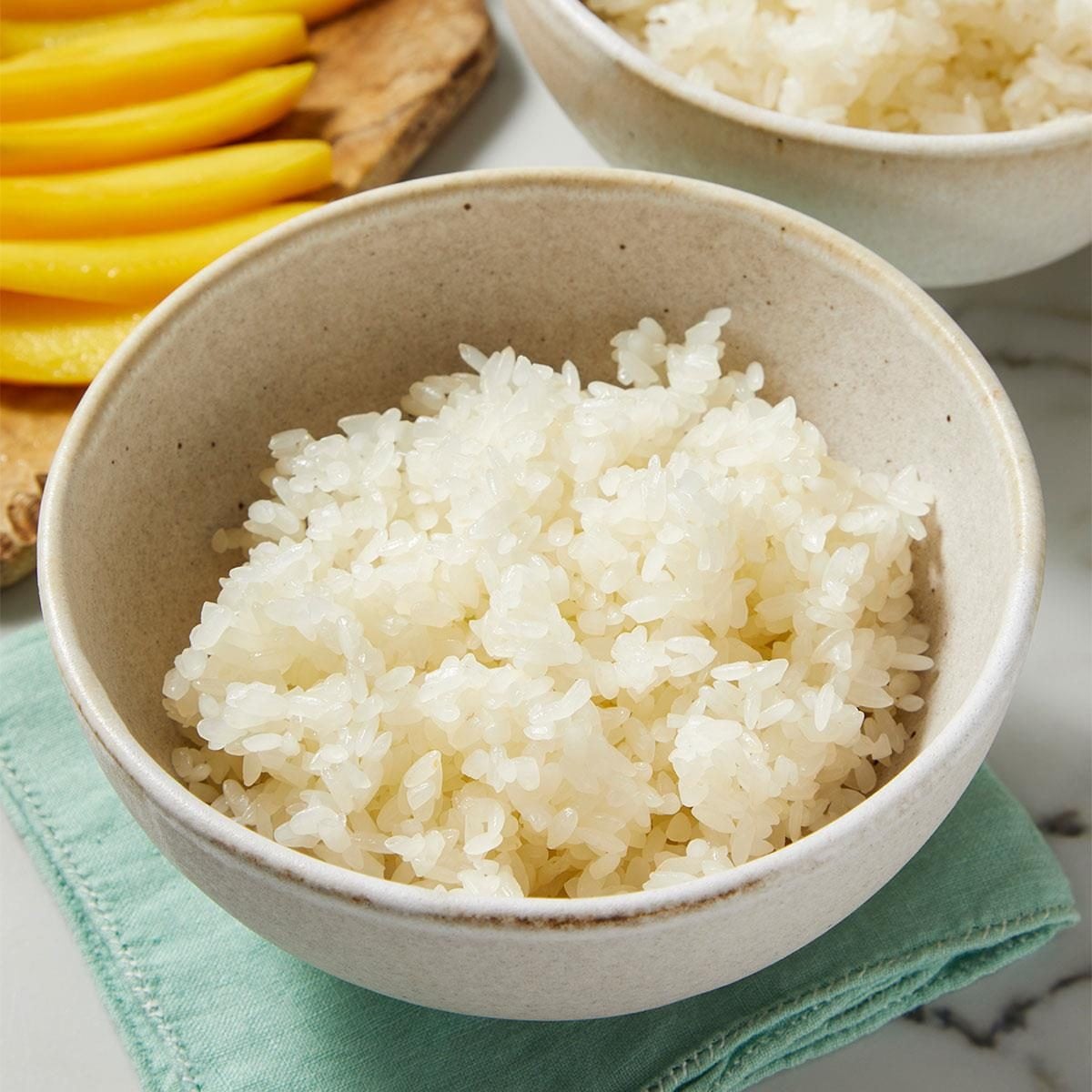
Once you know how to make sticky rice, mango sticky rice is just a few extra steps away.
The world of rice is a lot more vast than you might think. As our guide on how to cook rice explains, each rice variety has a cooking method best suited to it, and sticky rice is no different. It’s a little more tedious, but learning how to make sticky rice is so worth the rewards: coconut-glossed mango sticky rice, homemade mochi, and an accompaniment for slow-roasted meats.
“Sticky” isn’t just a description of how the rice cooks up. It’s a unique rice variety, like basmati or jasmine rice. Without diving too deep into the food science, the basic idea is that all rice varieties contain two types of starch—amylopectin and amylose—that work together to determine the finished dish’s texture. Sticky rice has an unusually high level of amylopectin and very levels of amylose, which helps the grains stick together as they cook.
Ingredients for Sticky Rice
- Uncooked glutinous or sweet rice: You may also find sticky rice labeled as “glutinous” or “sweet” rice. Thai long-grain sticky rice is perfect for making mango sticky rice. You’ll also find Japanese short-grain sticky rice, which is sweeter than Thai sticky rice. Black (or purple) sticky rice is a whole-grain variety that cooks up with a nutty flavor and a deep purple color. We prefer long-grain glutinous or sweet rice for their texture. You won’t be able to pull this dish off with regular rice.
How to Cook Sticky Rice
Step 1: Rinse and soak the rice

Rinse the glutinous rice under cold water until the liquid is no longer milky-colored. Add the rice to a small bowl. Cover the rice with 2 inches of cold water and let it soak for eight hours or overnight.
Editor’s Tip: I like to rinse my rice in a fine-mesh strainer while agitating the rice to get all the grains.
Step 2: Prepare the steamer

Line a bamboo steamer with a piece of cheesecloth over a saucepan of simmering water. Drain the rice from the bowl and place it in the cheesecloth. Fold over the cheesecloth’s edges to seal the rice inside.
Editor’s Tip: The best way to make sticky rice is in a steamer. If you don’t have a bamboo steamer, simply set a fine-mesh strainer (or a colander lined with cheesecloth) over a saucepan of simmering water. Make sure the bottom of the strainer doesn’t touch the water.
Step 3: Steam the sticky rice

Replace the bamboo steamer lid on top and cook the rice for 15 minutes. Carefully, using a large spatula, flip the cheesecloth bundle over or stir so the bottom layer of rice is on top. Cook the rice until it’s tender and glossy, an additional 15 to 20 minutes. Let the rice cool for a few minutes, then serve it.

Ways to Use Sticky Rice
- Turn it into mango sticky rice: One of the most popular sticky rice recipes is mango sticky rice. Prepared sticky rice is served with freshly sliced mango, and is topped with a sweetened coconut glaze. It’s easy and absolutely perfect after a very savory dinner.
- Serve it with meats: Between Thai larb gai, Korean short ribs, delicately steamed fish with ginger and scallions, and Japanese chicken yakitori, there is no shortage of robust, flavorful meats that pair well with a side of sticky rice.
- Use it for poke: Sticky rice is great for poke, topped with salmon, spicy mayo, edamame, cucumber, green onions, avocado and bean sprouts.
- Shape it into onigiri: Sticky rice’s texture is ideal for forming triangular onigiri Fill them with all kinds of foods like salted salmon, tuna mayo, pickled plums, kimchi or bonito flakes. Don’t forget the nori wrap on the outside.
- Load it into lettuce wraps: Want to make your Vietnamese pork lettuce wraps a little more filling? Add 1 to 2 tablespoons of sticky rice before adding your meats, vegetables, sauce and other toppings.
How to Store Sticky Rice
As with all rice, cool down sticky rice as quickly as possible. You can do this by spreading it out on a sheet tray and placing the tray in the fridge, uncovered, until the rice has cooled. Transfer the cooled rice to an airtight container and refrigerate it for up to four days.
Can you freeze sticky rice?
Yes, you can freeze sticky rice. Cool down the sticky rice as quickly as possible as described above. Transfer it to a zip-top bag. Freeze the rice for up to two months.
How to Make Sticky Rice Tips

Why is my sticky rice clumpy?
If your sticky rice came out clumpy rather than sticky, then you may not have properly washed the rice. Skipping the washing step is one of the biggest rice mistakes people make. Rinsing rice under water while agitating it removes the excess starch so the grains can stay separated. Don’t worry, they’ll still become properly sticky if you wash the rice!
Is sticky rice gluten free?
Yes, sticky rice is gluten free. The word “glutinous” refers to the rice’s chewy texture and ability to clump together as it cooks. While it’s naturally gluten free, you should make sure the rice wasn’t processed in a facility that also handles wheat.
Are sushi rice and arborio rice the same as sticky rice?
No, sushi rice and arborio rice are not the same type of rice as sticky rice. While sushi and arborio rice do stick to your fingers, they’re not as sticky and chewy as sticky rice.
Directions
-
1Rinse rice under cold water until the liquid is no longer milky-colored. Add rice to a small bowl. Cover the rice with two inches of cold water and let it soak for 8 hours or overnight.
-
2Line a bamboo steamer with cheesecloth over a saucepan of simmering water.
-
3Drain the rice and place in the cheesecloth. Fold over cheesecloth edges to seal. Replace bamboo steamer lid; cook for 15 minutes. Carefully, using a large spatula, flip cheesecloth bundle over, or stir so the bottom layer of rice is on top and vice versa. Cook for an additional 15-20 minutes, until the rice is tender and glossy.