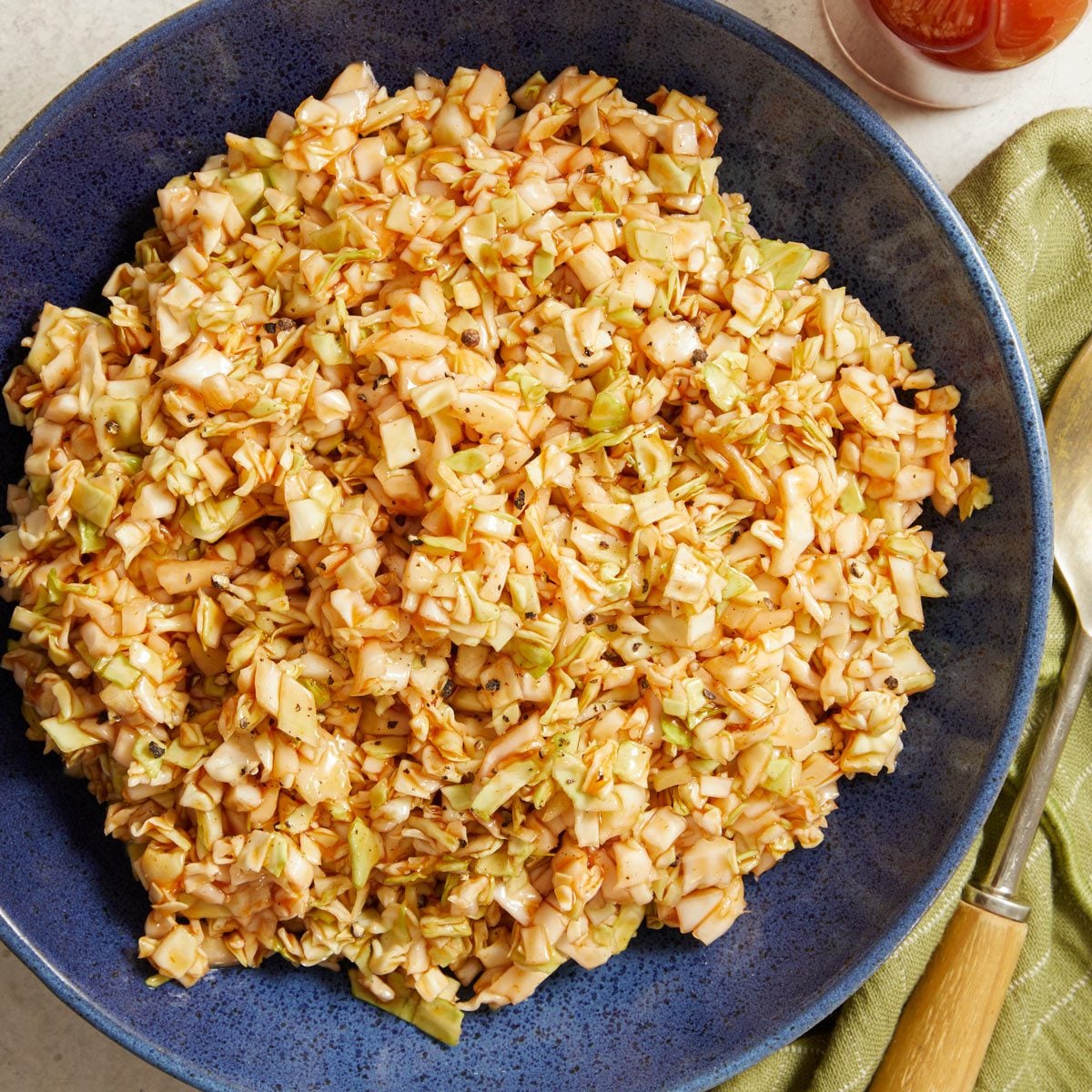
Give your next cookout a kick of North Carolina flavor with this crisp, sweet and tangy red slaw, named for its crimson dressing.
There are times when the cooling power of creamy coleslaw is the perfect addition to a plate of barbecue. Then, there are times you want to be punched in the taste buds with vinegar, heat and sweetness. That’s when you make red slaw. This vibrant side dish is a North Carolina-style barbecue classic. It originated in the Lexington, North Carolina, area as an accompaniment to the smoked pulled pork favored in the western part of the state, but it’s super easy to make, so you don’t have to plan a trip to North Carolina to try it.
What makes red slaw different from classic coleslaw is the generous use of ketchup, instead of mayonnaise or a vinaigrette, in the dressing—so much ketchup, balanced with vinegar, sugar and a bit of hot sauce, that the cabbage looks red. The flavors are similar to those in North Carolina barbecue sauce, so this slaw pairs perfectly with Lexington-style pulled pork or saucy ribs. It needs a bit of time in the fridge for the cabbage to soften and absorb the dressing, so plan to make it ahead and refrigerate it while the meat slowly smokes on your grill.
Red Slaw Ingredients

- Ketchup: Ketchup is the key ingredient that gives this slaw its namesake red color. No need for anything fancy or flavored here. In fact, if you opt for a sugar- or salt-free ketchup, you may need to adjust the other ingredients to get the right flavor balance.
- Cider vinegar: There is a lot of vinegar in this recipe, so using cider vinegar, a type of vinegar that’s milder with a fruity edge, keeps the dressing from becoming overly acidic.
- Brown sugar: The molasses-forward taste of brown sugar adds flavor in addition to sweetness. You could use dark brown sugar, but the sauce will be more vibrantly red if you stick with light brown sugar.
- Salt: Even though ketchup has salt, you still need to season the dressing generously to balance the assertive ingredients and ensure the cabbage isn’t bland.
- Coarsely ground pepper: Finely ground pepper can taste dusty or burn your tongue, but freshly ground, coarse pepper has a sharp, slightly fruity flavor to remind you that peppercorns are berries. A good pepper grinder with adjustable grind settings is one of the best kitchen tools to have.
- Hot sauce: Hot sauce can vary so much in terms of spice, seasonings and the amount of vinegar it has. We recommend Texas Pete, a Louisiana-style type of hot sauce with a thinner consistency that isn’t overly spicy.
- Cabbage: One of the defining aspects of red slaw is that the cabbage isn’t shredded or left in big chunks. You need to chop it finely so the dressing totally coats every bit of green. Plus, the fine texture is easier to pile on a pulled pork sandwich.
Directions
Step 1: Make the dressing

In a large bowl, whisk together the ketchup, cider vinegar, brown sugar, salt, pepper and hot sauce.
Editor’s Tip: Hard, lumpy brown sugar won’t dissolve well in the dressing so, if needed, take a minute to soften your brown sugar first.
Step 2: Add the cabbage, toss and refrigerate

Add the chopped cabbage and toss to coat. Cover and refrigerate for at least four hours or overnight before serving.
Editor’s Tip: The cabbage will wilt a ton as it sits in the fridge, but when you first toss it all together, it will be voluminous. I prefer to toss it with long-handled tongs over a spatula, so I can grab big bunches of cabbage from the bottom of the bowl and lift them to the top. When I stir with a spatula, bits of cabbage always go flying.

Red Slaw Variations
- Add a smoky twist: Since this slaw is often served with slowly smoked pork shoulder, adding a pinch of smoked paprika or chipotle powder to the dressing, though not traditional, would be a delicious modification.
- Sneak in a second vegetable: Adding some finely chopped red bell pepper will add a bit of crunch to the slaw and won’t detract from the red-hued dressing.
- Switch up the hot sauce: Since the dressing is so simple, changing the hot sauce is an easy way to personalize the slaw while still having it look and taste classic. Try a hot sauce with garlic or one with more spice, if you can handle the heat.
How to Store Red Slaw
Store red slaw in an airtight container in the refrigerator. Don’t worry if the container seems a little full when you first pack it up; the cabbage will wilt as it softens in the dressing. Mix it well before serving, as some of the dressing may fall to the bottom of the container.
How long does red slaw last?
One of the best things about this slaw is that it’s sturdy enough to hold up in the refrigerator for three to four days without becoming soggy. I like to taste and adjust the seasonings after it’s been in the fridge longer than a day. Over time, some seasonings can soften and others can intensify, but it’s nothing a pinch of sugar or salt, or a shake of hot sauce, can’t remedy. Serve the slaw cold, right out of the refrigerator, for a refreshing bite alongside meat hot off the grill.
Red Slaw Tips

What should you serve with red slaw?
Red slaw is the perfect barbecue side dish to spoon over pulled pork sandwiches or pile next to grilled ribs. In North Carolina, they favor pork, but the tang of red slaw would also pair beautifully with smoked chicken or grilled hamburgers. Even if you’re not grilling, the crunchy slaw is a great side dish for sauteed shrimp or on a sides-for-dinner plate with cornbread, braised collard greens and baked beans.
What’s the best way to finely chop the cabbage?
The best way to finely chop cabbage for red slaw is with a sharp chef’s knife, a large cutting board and some patience. Though it’s tempting to toss big chunks into a food processor and blitz away, you don’t want to turn the cabbage into a paste or grind it so finely that it becomes watery and loses its crisp texture. Before starting, prevent your cutting board from slipping by placing a damp paper towel underneath it. Then, I like to quarter the cabbage and finely chop one wedge at a time. It doesn’t have to be perfect, so don’t worry about getting it just right.
Do you need to pre-salt the cabbage?
For this recipe, you do not need to salt the cabbage after chopping and before tossing it with the dressing. Cabbage is a watery vegetable, and some people prefer to draw out that excess water by salting the chopped veggie, letting it sit in a colander and then rinsing off the excess salt, but we didn’t find that necessary here. If you choose to do so, reduce the salt in the dressing and shake off as much water as possible after rinsing.
Ingredients
- 1-1/2 cups ketchup
- 1/2 cup cider vinegar
- 1/2 cup packed brown sugar
- 1 teaspoon salt
- 1 teaspoon coarsely ground pepper
- 1/2 to 1 teaspoon hot sauce (Texas Pete Preferred)
- 2 medium heads cabbage, finely chopped
Directions
-
1In a large bowl, whisk together ketchup, cider vinegar, brown sugar, salt, pepper and hot sauce. Add chopped cabbage and toss to coat. Cover and refrigerate at least 4 hours or overnight before serving.