Kansas City burnt ends may take all day in the smoker, but that first bite of tender, saucy brisket makes it worth the wait.
According to Joe Pearce, pitmaster for Slap’s BBQ in Kansas City, eating perfectly cooked Kansas City burnt ends is an experience everyone should have at least once in their life. Every day, he sees people try this regional barbecue delicacy for the first time and declare it “the best bite of food they’ve ever had” after just one piece.
If you’re not familiar with burnt ends, they’re among the most famous barbecue creations to come out of Kansas City. At one time, they were given away for free to customers waiting in line for Kansas City–style ribs. Today, they’re a sought-after menu item at barbecue joints all around the city. Described as “meat candy,” Every bite of Kansas City burnt ends—often described as “meat candy”—is a miraculous combination of robust flavors and textures, akin to a soft, silky meat marshmallow (just trust me on this one—it’s a good thing).
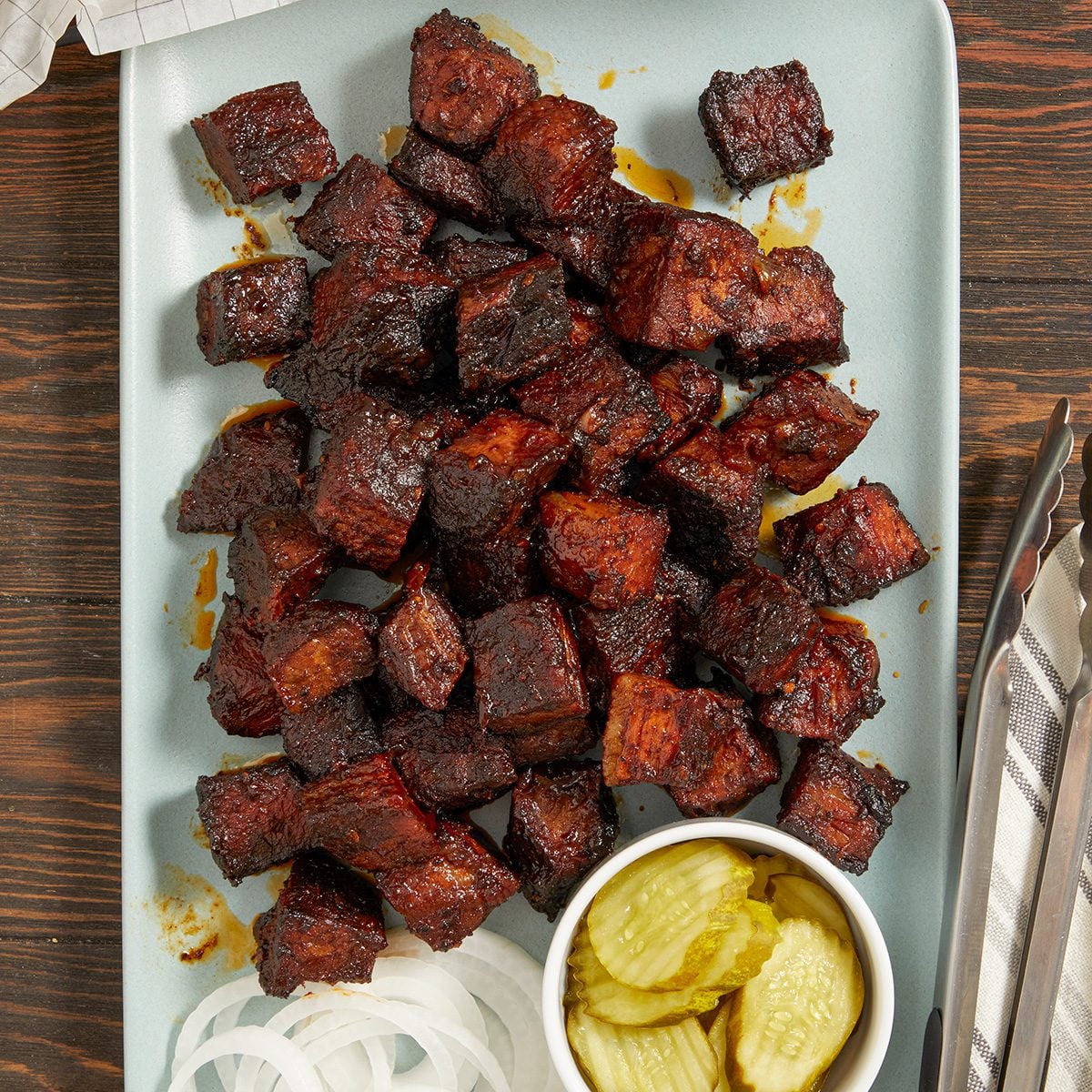
To make burnt ends, you’re in for an all-day affair with your backyard smoker or pellet grill. The process begins just like any other smoked brisket recipe, by smoking the meat low and slow until a crisp, intensely flavored bark forms and the meat is perfectly tender. Rather than being sliced and served, the meat is cut into large cubes and bathed in a sweet, sticky Kansas City barbecue sauce. The burnt ends are then returned to the smoker until the sauce is reduced, the fat is rendered and the pieces of meat are charred to a rich, maroon color.
Ingredients for Kansas City Burnt Ends
- Butter: The barbecue sauce starts with butter, which is used to soften the onions and garlic soften. It adds a bit of welcome richness against the other sharp and sweet sauce ingredients.
- Aromatics: A duo of onion and garlic provides a flavorful base for the complex burnt-end sauce.
- Homemade barbecue sauce: Like many of the best barbecue sauce recipes, this one begins with a combination of ketchup, brown sugar, molasses, apple cider vinegar, yellow mustard, chili powder, salt, black pepper and a pinch of cayenne. It’s a little sweet, a little tangy and a little spicy.
- Dry rub: A blend of black pepper, onion powder, garlic powder, kosher salt, paprika, chili powder and brown sugar covers the meat in whispers of sweet, savory and spicy flavor.
- Yellow mustard: Don’t worry, rubbing the beef with mustard doesn’t make it taste like a ballpark hot dog. The mustard simply helps the dry rub recipe adhere, and it mellows out as it cooks. The mustard’s vinegar content also contributes acidity, which acts as a tenderizer.
- Brisket: A whole beef brisket has two parts: the flat and the point. For burnt ends, use the richly marbled point. Its high fat content keeps the meat supremely moist and tender during the long cooking process.
Directions
Step 1: Make the sauce

In a medium saucepan, melt the butter over medium heat. Add the onions and cook them until they’re tender, four to five minutes. Add the garlic and cook for one minute longer. Add the ketchup, brown sugar, molasses, apple cider vinegar, yellow mustard, chili powder, salt, black pepper and cayenne and bring the sauce to a boil. Reduce the heat to a low simmer. Cook the sauce, stirring occasionally, until the flavors have melded, 10 to 15 minutes. Transfer it to a bowl, cover it and refrigerate it.
Step 2: Prepare the brisket

In a medium bowl, combine the black pepper, onion powder, garlic powder, kosher salt, paprika, chili powder and brown sugar. Preheat a smoker to 225°F, preparing it for indirect heat with a drip pan. Add wood chips or pellets to the smoker according to the manufacturer’s directions. Brush the mustard over both sides of the beef, then rub it with the spice rub mixture.
Step 3: Smoke the brisket
Place the brisket over the drip pan (fat-side up) and smoke it, covered, over indirect medium heat until a thermometer inserted in the beef reads 165° and a dark bark has formed, about eight hours. Wrap the brisket securely in unwaxed butcher paper and smoke it until a thermometer inserted into the center reads 202° and the meat is very tender, two to three more hours.
Editor’s Tip: While temperature is a very reliable indicator of doneness (make sure you have a meat thermometer), you can also judge a brisket by how easily a thermometer slides in and out of the meat. Properly cooked, a thermometer should meet very little resistance and be removed easily, like a softened stick of butter.
Step 4: Cut the brisket into cubes and toss in the sauce

Increase the smoker temperature to 275°. Cut the brisket into 1-1/2-inch cubes. Place half of the prepared sauce in the bottom of a foil pan. Add the cubed brisket and toss to coat it in the sauce.
Step 5: Give the brisket a final smoke
Place the foil pan on the smoker. Smoke the brisket for 1 hour to 1 hour and 30 minutes longer, tossing occasionally, until the sauce has thickened and the brisket cubes are deep maroon and lightly charred. Serve the burnt ends with the remaining sauce.

Kansas City Burnt Ends Variations
- Try a different sauce: If you have another store-bought or homemade barbecue sauce recipe that you enjoy, you can use it here. Just make sure to choose one that’s on the sweet side so the burnt ends caramelize and the sauce reduces to the proper sticky consistency.
- Play with the rub ingredients: According to Joe, Kansas City’s dry rubs are known for their liberal, complex flavor profiles. Feel free to play around with this recipe, but aim to keep that signature blend of sweet, savory, bold and spicy flavors.
- Use another cut of beef: To make authentic burnt ends, using brisket is a must. That said, you can use a chuck roast instead if you’re looking for a cheaper alternative or a smaller yield. The burnt ends won’t have quite the same taste and texture, but they will be delicious nonetheless.
How to Store Kansas City Burnt Ends
Leftover burnt ends should be stored in an airtight food storage container in the refrigerator for three to four days (though they’d never last that long in my house). You can also freeze the cooked meat in a freezer-proof storage container or bag, with as much air as possible pressed out, for two to three months.
How do you reheat Kansas City burnt ends?
Reheat burnt ends by spreading them in a single layer on a parchment-lined baking sheet and baking them in a 350° oven until they’re heated through. You can also saute them in a skillet over medium heat, which will crisp and caramelize the edges to perfection.
Kansas City Burnt Ends Tips

Should you smoke a brisket fat-side up or fat-side down?
There is a great debate over whether a barbecued brisket should be smoked with the fat cap on the top or the bottom. In my experience, it really depends on your smoker. If you have a smoker setup where the heat comes from the side, then having the fat cap on top is your best bet. This allows the fat to render and drip over the meat as it cooks, keeping it extra moist.
If you have a smoker with the heat source directly below the meat (many pellet smokers are designed this way), you may get better results with the fat cap on the bottom. This shields the meat from the heat below, preventing it from drying out.
What is butcher paper?
Butcher paper is a food-safe, heavy-duty paper that pitmasters use when smoking meats. Unlike the butcher paper used at the supermarket, which is often waxed on one side to prevent meat juices from leaking out, pink- or peach-colored butcher paper for smoking is unbleached and unwaxed. The paper allows the meat to breathe while it is wrapped, so the bark retains its texture. If you don’t have butcher paper, heavy-duty aluminum foil can be used instead. Just know that the brisket’s exterior will be softer.
What should you serve with burnt ends?
Ask any pitmaster from Kansas City what they would serve with burnt ends to make a perfect plate of barbecue, and I guarantee that most will say cheesy corn, another Kansas City barbecue specialty.
Joe also recommends pairing burnt ends with a rack of tender barbecue ribs and a scoop of baked beans to round out your meal. Other tasty options include cornbread, macaroni and cheese, homemade french fries, tangy coleslaw and creamy potato salad.
Ingredients
- SAUCE:
- 2 tablespoons butter
- 1 cup finely chopped white onion
- 3 garlic cloves, minced
- 2 cups ketchup
- 1/2 cup packed brown sugar
- 1/3 cup molasses
- 1/4 cup cider vinegar
- 2 tablespoons yellow mustard
- 2 tablespoons chili powder
- 1 teaspoon salt
- 1/2 tablespoon coarsely ground pepper
- 1/4 teaspoon cayenne pepper
- RUB:
- 1-1/2 teaspoons coarsely ground pepper
- 1 teaspoon onion powder
- 1 teaspoon garlic powder
- 1 tablespoon kosher salt
- 1 tablespoon paprika
- 1 tablespoon chili powder
- 1/3 cup packed brown sugar
- BRISKET:
- 2 tablespoons yellow mustard
- 5 pounds fresh beef brisket (point cut)
Directions
-
1For the sauce, in a medium saucepan, melt butter over medium heat. Add onions, cook until tender, 4-5 minutes. Add garlic; cook one minute longer. Add remaining ingredients; bring to a boil. Reduce heat to a low simmer. Cook until flavors have melded, 10-15 minutes, stirring occasionally. Transfer to a bowl; cover and refrigerate.
-
2In a medium bowl, combine the rub ingredients.
-
3Preheat smoker to 225°. Prepare smoker for indirect heat, using a drip pan. Add wood chips or pellets to smoker according to manufacturer’s directions. Brush mustard over both sides of beef. Combine all rub ingredients; rub over both sides of beef.
-
4Place brisket over drip pan (fat side up) and smoke, covered, over indirect medium heat until a thermometer inserted in beef reads 165° and a dark bark has formed, about 8 hours. Wrap brisket securely in unwaxed butcher paper; smoke until a thermometer inserted in beef reads 202° and meat is very tender, 2-3 more hours.
-
5Increase smoker temp to 275°. Cut the brisket into 1-1/2-in. cubes. Place half the prepared sauce in the bottom of a foil pan. Add the cubed brisket and toss to coat. Place foil pan on the smoker. Smoke for 1 to 1-1/2 hours longer, tossing occasionally, until sauce has thickened and brisket cubes are deep maroon and lightly charred. Serve with remaining sauce.