


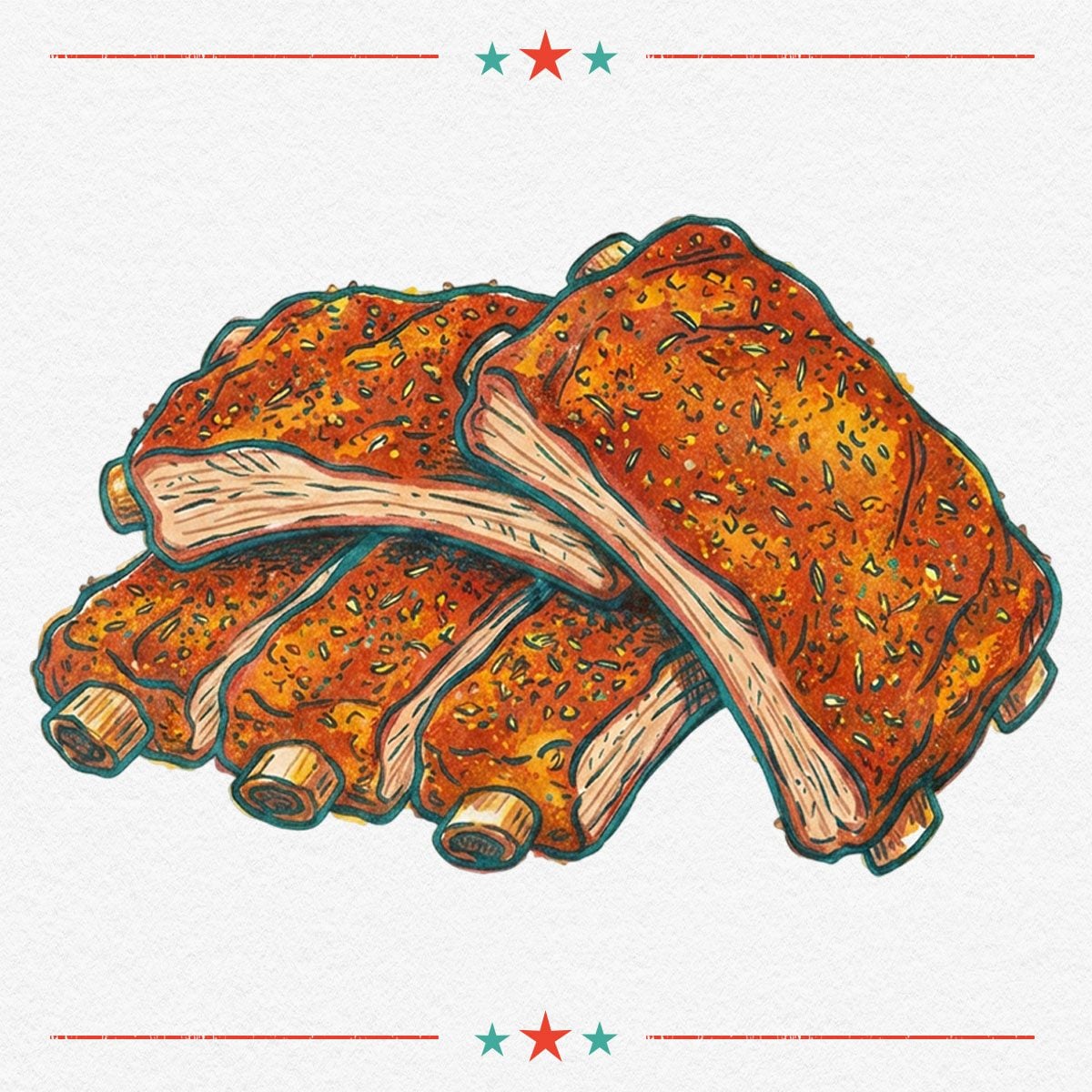

Explore Memphis-style barbecue, from spice-rubbed dry ribs and saucy wet ribs to pulled pork sandwiches loaded with coleslaw.
It’s almost a laughable understatement to say that Memphis loves its barbecue. Home to the Memphis in May World Championship Barbecue Cooking Contest, the city attracts pitmasters from around the world, armed with their signature barbecue recipes, hoping to place first in their category. But for locals and visitors alike, championship-caliber barbecue isn’t just reserved for special occasions. It’s part of everyday life in backyards and restaurants all over the city.
Pork is at the heart of the city’s barbecue tradition, from tender pulled pork sandwiches to racks of ribs served dry with a savory spice rub or wet with a tangy sauce. Smoke and spice also extend well beyond classic barbecue plates. The city’s pitmasters are remarkably inventive, serving up creative dishes like barbecue spaghetti and dry-rubbed french fries.
I wanted to learn more about Memphis barbecue, so I connected with several local experts: Ernie Mellor, pitmaster and owner of Hog Wild BBQ; John and Anna Vergos, second- and third-generation owners of The Rendezvous; and Melissa Cookston, a seven-time world barbecue champion and owner of Memphis BBQ Co. I got a history lesson and some in-depth information about what defines Memphis-style barbecue.
What is Memphis-style barbecue?

Memphis-style barbecue has one foot in tradition and one foot in innovation. “Authentic Memphis-style barbecue is often best found in backyards, going back to its old-school roots strongly tied to cotton plantations, farmers and the African American community,” Ernie says. Pork, which was widely available and affordable, quickly became the meat of choice. “Traditionally, it was simply smoked pork shoulder that was pulled and sauced, served as a sandwich with coleslaw.”
Today, pork shoulder and ribs are seasoned with complex, multi-ingredient spice rubs, but Ernie says it wasn’t always that way. “Dry rubs have only become more popular in the last 40 years or so.” In addition to being spread over meat before cooking, these spices are used as a final seasoning, sprinkled over cooked meat while still hot to bloom and add a secondary, fresh layer of flavor.
The spirit of experimentation and evolution didn’t stop there. Memphis restaurants began offering new barbecue dishes, shaking dry rubs over french fries and adding smoked pulled pork to barbecue spaghetti, nachos and pizza. As the story goes, Coletta’s Italian Restaurant put a barbecue pizza on the menu in the 1950s, and it quickly became one of its signature items. It was even a supposed favorite of Elvis Presley.
Memphis Has a Love Affair with Ribs
John says that ribs were once considered a less desirable cut since they have less meat and require longer cooking than other pork cuts. That’s not the case today, and they’re arguably more popular in Memphis than pulled pork.
“Memphis has a love affair with baby back ribs,” Melissa says. “We cook them to be flavorful and tender.”
The devotion to ribs runs so deep that Memphis is home to two distinct styles and plenty of opinions as to which is the best: dry ribs or wet ribs. The main difference is that wet ribs are sauced before they’re served, but neither is necessarily more flavorful than the other. “Our seasonings and sauces are full-flavored. You’re going to taste sweet notes, savory mid-tones and a bit of spice at the back of your tongue that just begs you to take another bite,” Melissa says.
Memphis-style dry ribs
Dry ribs were popularized by The Rendezvous in the 1950s. John says that when his father, Charlie, opened the restaurant, he discovered an old coal chute in the basement and started grilling his ribs instead of using the traditional low-and-slow cooking method. He added flavors like vinegar, oregano and garlic from his Greek heritage. “Then he went to New Orleans and tasted all the spices there, like paprika and Cajun seasoning,” John says. “He mixed Greek and Cajun seasonings to create the rub we still use today.”
The restaurant still serves its dry ribs cooked directly over charcoal, basted with vinegar while they cook and generously coated with the spice rub toward the end. Although the barbecue sauce isn’t added to the ribs while they cook, it is served on the side. John says The Rendezvous’ sauce contains about 12 ingredients to hit the right balance of flavors. “Our sauce is a little bit more tomatoey and vinegary than it is sweet or mustardy,” he says, and it’s not overly thick or paste-like, so it doesn’t mask the ribs’ flavor.
Memphis-style wet ribs
Wet ribs are typically slow-smoked over hickory wood, the local wood of choice due to its abundance. It burns slowly, adding a bold, smoky flavor that shines through the spices and sauce. The ribs are usually seasoned with a flavorful dry rub before they hit the smoker and brushed with a thin barbecue sauce toward the end of cooking, giving them a glossy sheen and a layer of tangy tomato flavor.
As the ribs finish cooking, the sauce becomes more like a glaze than a thick topping. That makes wet ribs stickier and messier than dry ribs, so it’s always a good idea to have plenty of napkins nearby. Most barbecue joints serve extra sauce on the side for dipping, ideal for sauce lovers who want just a little more.
What’s on a Memphis barbecue menu?
A traditional Memphis-style barbecue menu includes pulled pork or ribs—dry or wet. But depending on the restaurant, it’s not uncommon to see dishes like barbecue nachos, pizza or spaghetti on the menu.
“Memphis is a barbecue-specific town,” John says. “You don’t go out and say, I’m going to go eat barbecue. You go out and say, I’m going to get some Rendezvous ribs, or I’m going to get a shoulder sandwich from Tops, or I’m going to go get barbecue spaghetti from The Bar-B-Q Shop.” Locals and visitors alike love it all.
- Meat: Pork is the meat of choice in Memphis-style barbecue. Most menus include ribs seasoned with a bold dry rub, either cooked over charcoal for dry ribs or smoked over hickory and sauced for wet ribs. The pulled pork is usually piled high on a soft bun. “Our pork shoulders are cooked to a ‘pulling temperature’ where the tender pork can be hand-pulled,” Melissa says. “Don’t forget to top that sandwich with a healthy serving of coleslaw—it will change your life!”
- Spices: There’s no set ingredient list for a Memphis dry rub, but many include paprika, oregano, onion powder, garlic powder and cayenne. The mix is bold but not necessarily spicy, prioritizing dried herbs, garlic and earthy spices over fiery ones. Ernie says he uses 17 herbs and spices in his rub. “The way I describe my dry rub to a judge at a barbecue competition is that it rolls all over your tongue, folds out laterally, tickles all your taste buds and then turns around and gives you a little pinch on the [rear],” he says.
- Sauce: Memphis barbecue sauce is thinner than most barbecue sauces and embraces a balanced flavor profile. It’s tomato-forward with a little tang from vinegar, savory notes from mustard and garlic, sweetness from sugar or molasses, and a well-roundedness from herbs and spices. The same dry rub that’s used on the meat is typically added to the sauce as well.
- Sides: You’ll find all the classic barbecue sides in Memphis, most notably coleslaw, baked beans and potato salad. Some restaurants make their creamy coleslaw and potato salad “mustard-style,” making them more yellow than white, thanks to a generous amount of mustard in the dressing. Coleslaw is served on the side with ribs, but it’s a must to pile it on top of pulled pork sandwiches, where the cool, crunchy slaw contrasts with the rich meat and bold spice rub. Depending on the restaurant, you may also find dry-rubbed sides, like fries, tots or onion rings.


