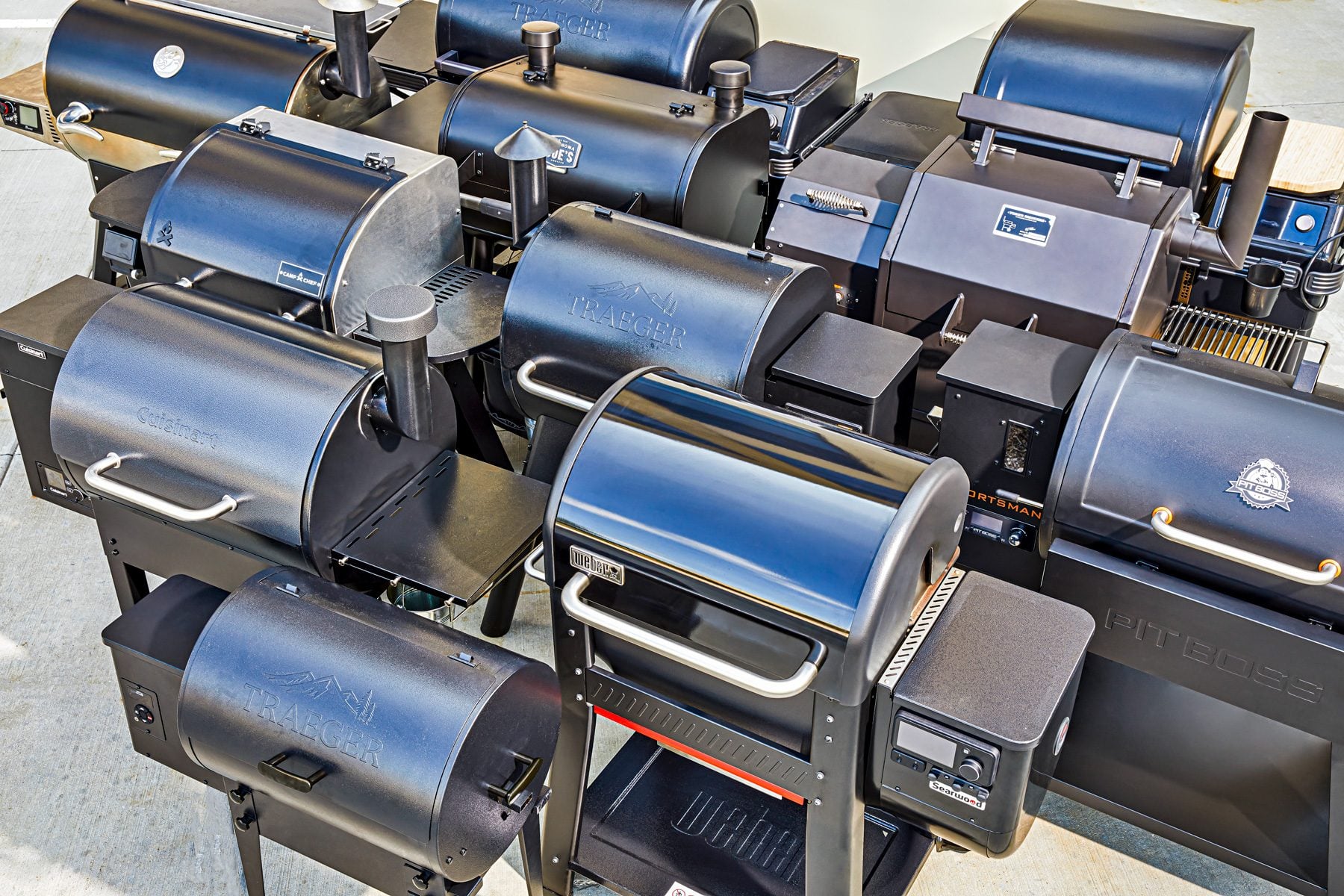
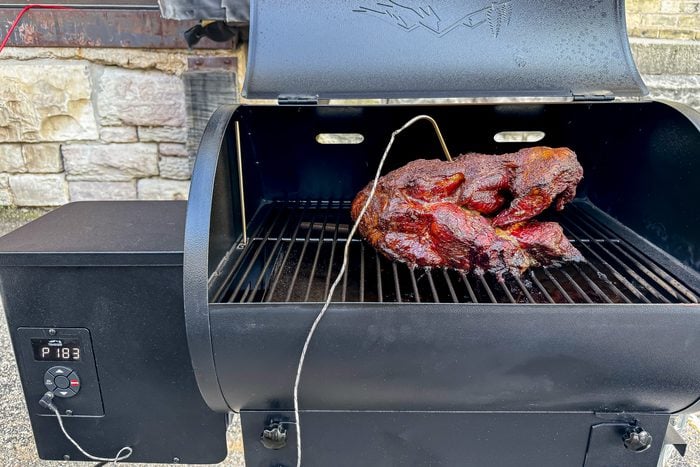
After smoking more than 115 pounds of pork shoulder (plus chicken breasts, salmon, corn and pork chops), we feel confident that these are the best pellet grills for every barbecue boss.
Our editors and experts handpick every product we feature. We may earn a commission from your purchases. Learn more.
Highlights
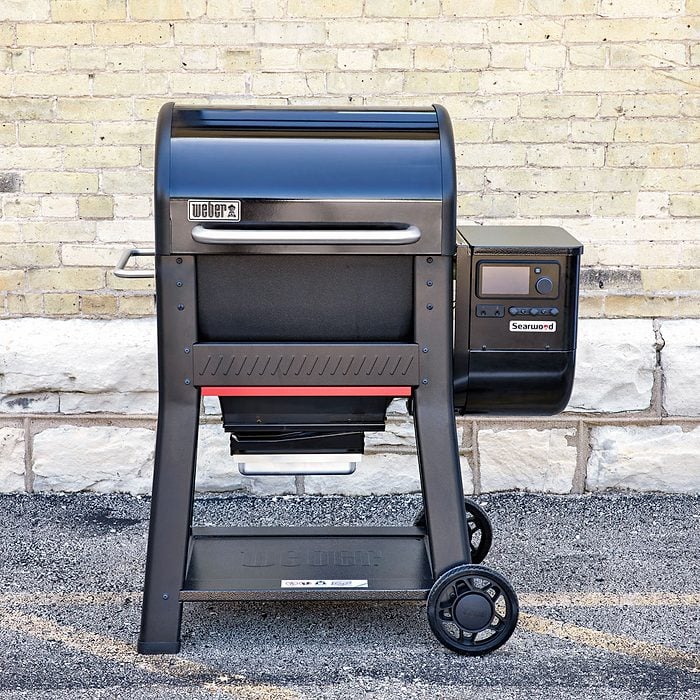
The best pellet smoker is none other than the Weber Searwood. Our testing team was impressed with this model’s temperature regulation, adjustable smoke level and searing capabilities.
You can’t talk about the best pellet grills without mentioning Traeger! We were impressed with every model we tested, including the Woodridge Pro, Ironwood XL, Timberline and Tailgater.
Pellet grill reviews focus on a wide variety of factors. When testing, we considered assembly and setup, features, fuel capacity and cleanup. Our most important test, though, was gauging how each grill cooked salmon, chicken, pork and veggies.
Any debate on the best grills involves folks tirelessly singing the praises of gas grills and charcoal grills. But for folks who wish to marry the ease of a gas grill with the versatility of a charcoal grill, there’s another option worth considering: the best pellet grills.
"Pellet grills come in various sizes, from compact models perfect for small spaces to larger units used in commercial cooking. They’re also electric-powered, allowing you to easily control the temperature for consistent results."
Kell Phelps
National Barbecue & Grilling Association managing partner
Our expert Product Testing Team, editors and in-house grilling expert Catherine Ward broke out the best grill accessories and put 12 top-rated pellet grills to work. More than 280 pounds of pellets and 400 hours later, we feel confident that these are the best pellet grills for beginners, pros and everyone in between.
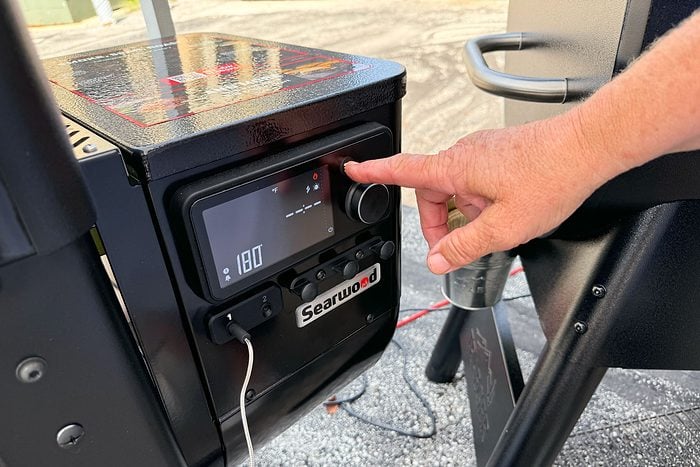
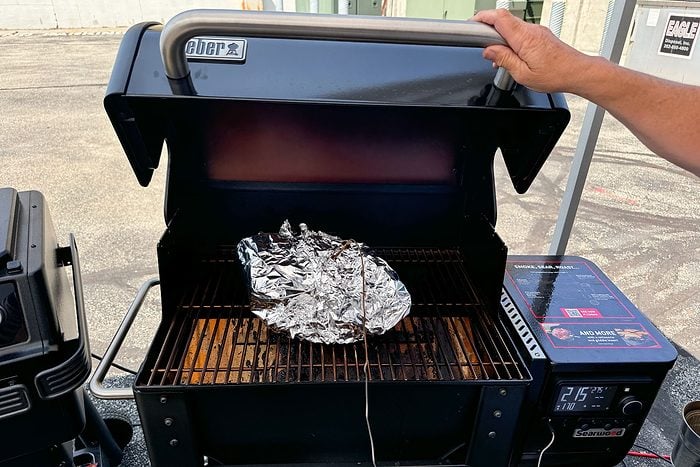
The Searwood’s overall performance may sway you in the Napoleon vs. Weber debate. Plated steel cooking plates and a DirectFlame mode—which creates a nice, dark color—make this one a top performer in terms of sheer searing power. The grill’s temperature does not fluctuate at all, which is super impressive considering we’re working with fire and wood.
It produced the best chicken of the bunch thanks to a rich, smoky flavor and solid searing on the surface. While it overcooked the salmon by a bit, taking the filet off a little earlier should circumvent the excess heat. We also cranked the Super Smoke option up to the third setting, which could explain the slightly charred results. While we regret the overcooking, we certainly don’t regret the smoky flavor!
The Weber Searwood provided the best wood-fired flavor of the bunch. This was apparent in the corn test, where the veggies sponged up just the right amount of smoke seasoning. It also created the best sear on the pork chops, rendering the fat smoky and crisp. Our Testing Team also noted the pork roast came out “just perfect,” boasting a tender and juicy interior with a red smoke ring and dark bark. There’s also plenty of space for larger cuts thanks to the sizable 648-square-inch grates.
Dylan Fischer for TASTE OF HOME
The stainless handles don’t get too hot, and there’s a row of hooks for hanging your favorite Weber accessories. Despite being a pellet grill, this all-in-one appliance works solidly for searing and smoking, so you only need one machine. It also wipes down easier than the other grills, so it’s ideal for those who want to spend less time on cleanup.
We love the app’s flexibility, which offers features like “Start SmokeBoost,” “Manual Mode,” “Shut Down,” target temperature, temperature alerts and a timer. It records the grill and probe temperatures and shows you a temperature fluctuation chart. The app itself also has recipes and another page where you can monitor the grill’s progress—just like having a sous chef on hand.
But don’t just take our word for it. Even the pros think it’s one of the highest quality pellet grills on the market. Matt Abdoo, executive chef and co-founder of Pig Beach BBQ, is a huge fan. “I had the chance to cook on one last year, and in my opinion, the design and durability are fantastic,” he raves. “It holds heat and smoke extremely well for low-and-slow BBQ, and it also gets hotter than most pellet grills for direct cooking like steaks and burgers.”
Delicious food results, especially at lower temperatures and longer cook times
Cons:
Not ideal for searing and high-temp cooking
App could be more advanced
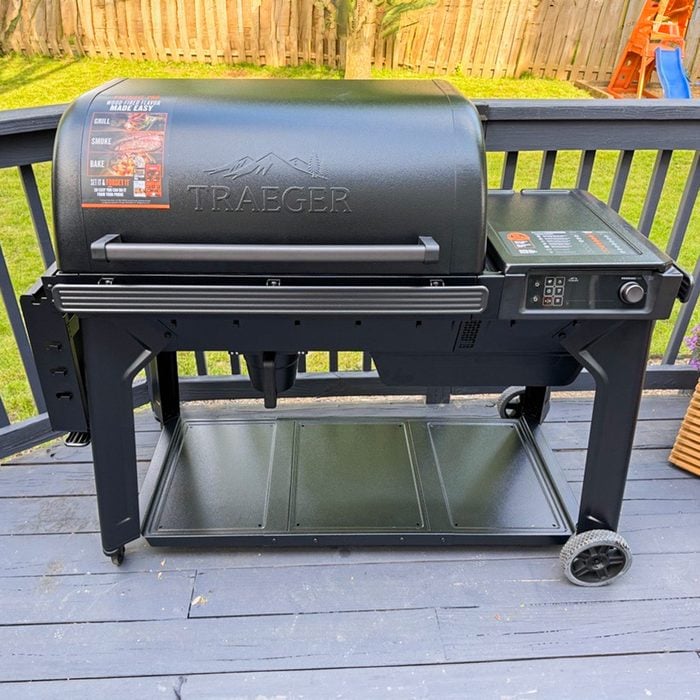
The Traeger Woodridge Pro is our top pick for new pellet grill users. It’s easy to assemble, use and clean, and it delivers even, consistent results. “I appreciate that the controls and app are streamlined for hassle-free grilling. While some expert grillers might want more features from the Traeger App, I found its simple interface manageable and easy to use from the first cook,” says Shopping Editor Mary Henn.
Mary Henn for Taste of Home
The Woodridge Pro is equipped with WiFIRE technology and a digital pellet sensor. These capabilities allow you to track your cooking and monitor your pellet levels from anywhere using the Traeger App. “I love that Traeger has introduced the budget-friendly Woodridge Series,” Mary adds, “which includes many of the same technological features as the more expensive Ironwood and Timberline grills.”
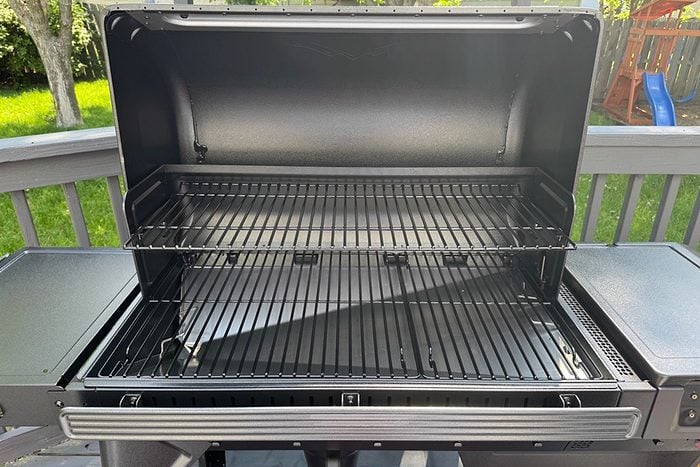
The Woodridge Pro also includes a folding side shelf for extra prep space, a super smoke mode and several other standout features to enhance your outdoor cooking experience. The hopper is located on the right side of the grill and can hold up to 24 pounds of wood pellets. Couple that with the grill’s 970 square inches of cooking space and two tiers, and there’s plenty of room to feed a crowd.
Mary Henn for Taste of Home
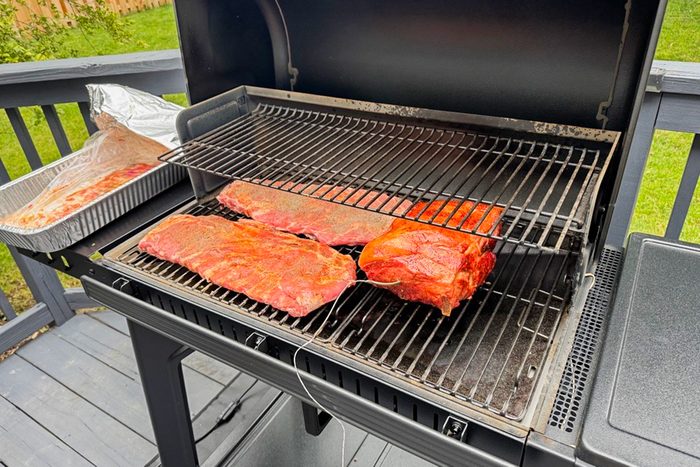
During testing, Mary used the Woodridge Pro to smoke ribs and pork shoulder. The pulled pork turned out super-juicy with a nice red smoke ring, and the ribs were smoky and tender enough to pull from the bone with ease. She also used the grill to cook brats, which got a nice char and were perfectly juicy.
“One of the best features of the Woodridge Pro is its compatibility with the Traeger App, which is efficient, user-friendly and easy to look at,” Mary says. “The Traeger App allows you to set and adjust the temperature of the grill remotely from the comfort of your bed at 5 or 6 a.m. It also allows you to set timers, view the actual and adjust the target temperature of the meat probe, check pellet levels and more.”
Priced lower than the Ironwood and Timberline series from Traeger, the Woodridge series makes a more affordable gift for grillers just starting out, leaving room in the budget for Traeger grill accessories.
Long-term update
After a year of regular use, Mary’s Traeger performs just as impressively as it did on day one. “After giving it a deep clean with a shop vac at the start of the season, it’s performing just as impressively as it did last year,” she raves. “It has held up through all kinds of wild Midwest weather on our deck, including snow, hail and high winds.”
In order to keep her grill in tip top shape, Mary invested in a Traeger-brand cover. “I thought it was a bit pricey at first,” Mary admits. “But the brand cover is definitely a must-have if you plan to keep your grill outside! It shows a bit of sun fading, but it has done an excellent job protecting the grill and keeping it in great condition.”
As for performance, Mary uses this grill at least once a week during the spring and summer months and especially appreciates the generous cooking area. “The grilling space on the Woodridge is very generous,” she says. “We have no problem grilling for family (10–15+ people) when they visit on weekends.” But Mary’s love for the Traeger Woodbridge is no match for her husband’s.
“My husband uses it even more than I do and absolutely loves it,” she quips. “He’s said more than once, ‘It’s the best I’ve ever had.’ By that, he means it’s the best smoker he’s ever used, which is high praise coming from someone in the Kansas City area, where smoking and barbecuing meat is practically a cultural ritual.”
Grate materials: Porcelain | Weight: 174 pounds | Cooking area: 970 square inches | Wi-Fi/Bluetooth connectivity?: Yes | Special Features: Wi-Fi and app connectivity; super smoke and keep warm modes; temperature probe; digital pellet sensor; folding side shelf | Warranty: 10 years
DAN ROBERTS FOR TASTE OF HOME
Best Large Capacity
Traeger Ironwood XL
Pros:
Very roomy
Useful app features
Locking wheels
Generous work surface
Quick pellet swaps
Cons:
May be too large for some
No disposable liner pan
Interior paint is peeling after one year of use
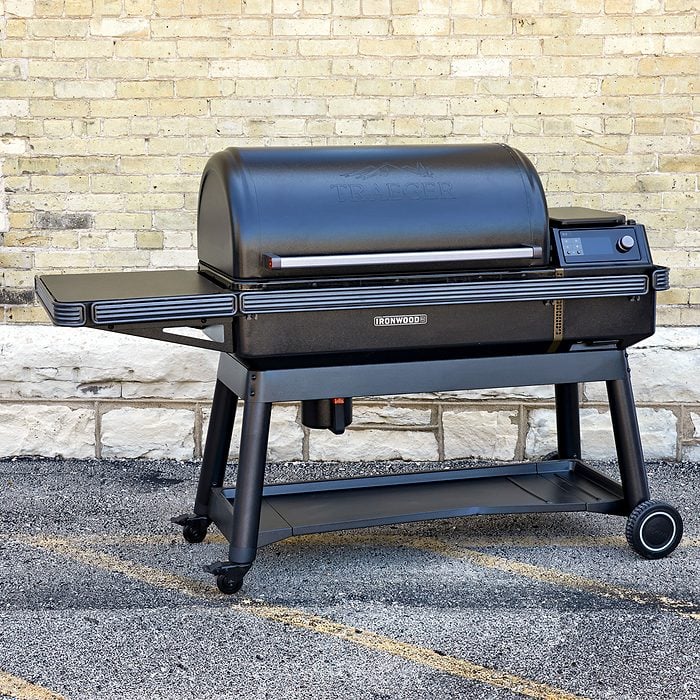
Pellet grill pros should invest in a high-quality, long-lasting unit, and the Traeger Ironwood XL delivers exactly that. It looks luxe and substantial enough to impress even the snobbiest griller. The unit’s sleek, black powder-coated exterior and courtesy lights, coupled with a large cooking area and locking wheels, give it an edge over competitors.
Our grill expert, Catherine, has been testing this pellet grill for over a year for our Ironwood XL review. “This is definitely a pellet grill for a serious smoker,” she says of this feature-rich pick. She notes, “It’s intuitive and multi-functional, and it doesn’t require what I like to call ‘babysitting.'” This is partly due to the phone app, which we found easy to connect. It also comes with two probes, accessory side shelves on both sides for food prep and an open shelf underneath for storage.
TASTE OF HOME
The app offers helpful data, like pellet percentage and a timer, and you can shut the grill down via the app or employ the special cooking modes. Swapping out pellets is also easier than other Traegers thanks to a quick-swap hopper. Cooking modes include “Super Smoke” and “Keep Warm” modes. You can also use the app to view the grill’s temperature and access recipes and tutorials, including a video on how to clean and maintain your grill.
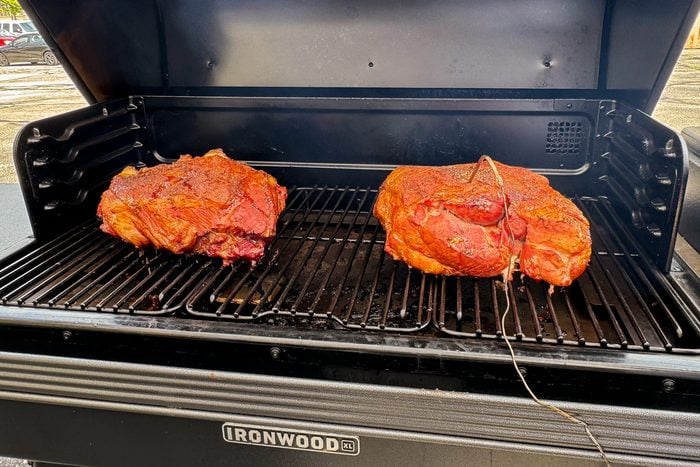
This machine emits a lot of smoke at times, but it’s a rockstar with consistent, even heat. The salmon smoked up beautifully, and the chicken breasts built up a nice bark on the bottom. It also gave the pork chops some nice color and provided enough power to give the pork shoulder a vibrant red smoke ring. While the shoulder was a bit dry, it was still moist enough to thoroughly enjoy.
TASTE OF HOME
One thing to note is that after a year of consistent use, the paint on the interior has begun chipping away. This could be partly due to a lack of disposable liners present in other Traeger models. However, we found that the level of visible wear was pretty on par with most well-used pellet grills.
Editor’s note: The new version of the Traeger Timberline is the Traeger Timberline XL, which features 1,320 square inches of grilling space. The original model is currently still available at Ace Hardware.
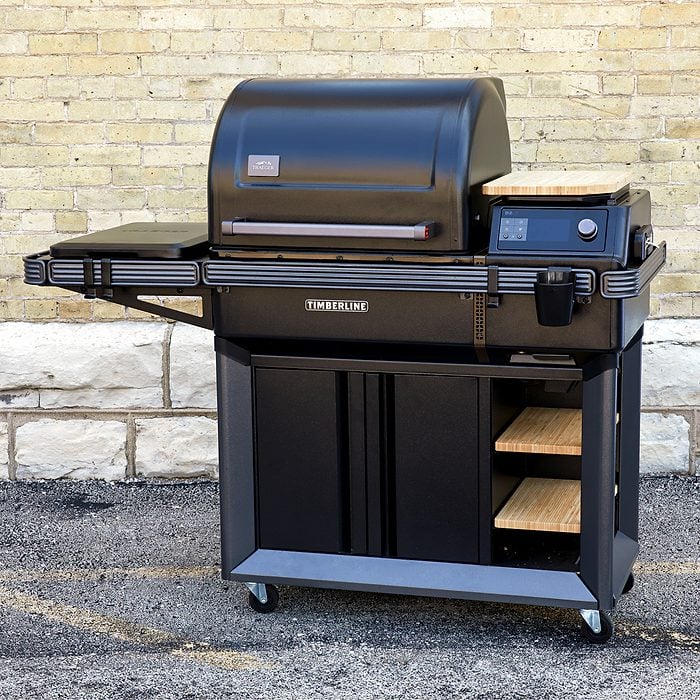
Whether you plan on plank grilling or showing off your low and slow roasts, the Traeger Timberline is well worth the splurge for serious pit fiends. The super sleek kitchen-ready design is only the tip of the iceberg. It includes a whopping 880 square inches of grilling space and an induction burner on the side that’s compatible with magnetic cookware. Adjustable grates also allow users to customize each cook based on their needs.
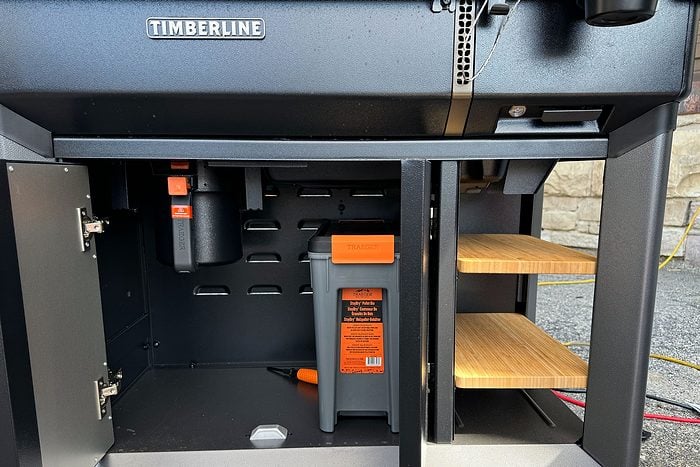
“It’s a good performer with some showy extra features,” says Catherine. “The wood accents make it very appealing to look at. Sheri even discovered that the cutting board on the side table is removable (attached with a very strong magnet).” The Timberline looks and feels like a mini outdoor kitchen on wheels. Apart from the grilling features, it offers accessory hooks, courtesy lights, towel racks and a side basket accessory shelf. It even comes with a plastic cupholder that holds the chef’s favorite non-alcoholic beer.
TASTE OF HOME
The easy-to-use interface worked well when coupled with the Wi-Fi features and app. Set the temperature and a timer, manually select the “Super Smoke” or “Keep Warm” feature or engage the shut-down button. It also lets you know what percentage of the hopper is full. There’s a grill and maintenance section that tells you how to clean and maintain your grill. There are also pages full of recipes and tutorials, along with shoppable sections where you can buy sauces and pellets or locate a Traeger dealer.
Catherine is a big fan of the touchscreen controls, finding them easy and organized. Each setting has its own sub-menu, which helps make things feel more intuitive. As you boost the temperature, the screen automatically switches from “Smoking” to “Grilling” to “Searing,” a feature we love.
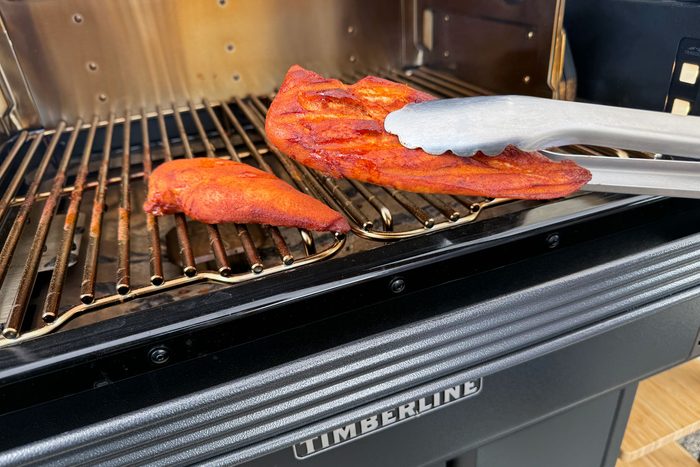
“The Traeger Timberline corn would pair with any type of food without overpowering it,” says Mark Derse, our photographer. It came out slightly smoky with a light flavor. The grill produced near-perfect chicken that had lots of bark and a juicy interior, with a light mahogany top and mild, smoky flavor. Similarly, the pork chops received a little color along the edges (though not as much as we’d like), and the pork shoulder offered beautiful, complex flavors and a nice color.
DYLAN FISCHER FOR TASTE OF HOME
However, with more tech comes more issues. Testers note that after 30 minutes of cooking the chops, the grill went into its 30-minute shutdown cycle. Then, they had to turn it off because it said it was too hot (500 degrees Fahrenheit). After they turned it back on, it prompted a deep-clean notification, even though the grill was thoroughly cleaned. After a restart, the grill worked as expected. We don’t think this was a big issue, but we want to make note of it—especially given the high price point.
Grate materials: Stainless steel | Weight: 238 pounds | Cooking area: 880 square inches | Wi-Fi/Bluetooth connectivity?: Yes | Special Features: Touchscreen; two wireless probes; two wired probes; induction cooktop | Warranty: 10 years
On Sale
DAN ROBERTS FOR TASTE OF HOME
Best Portable
Traeger Tailgater
Pros:
Portable design
Fold-down legs
Good size for moving, travel and storage
Assembly isn't too complicated
Cons:
Small hopper
Not as stable as some grills
No pellet chute
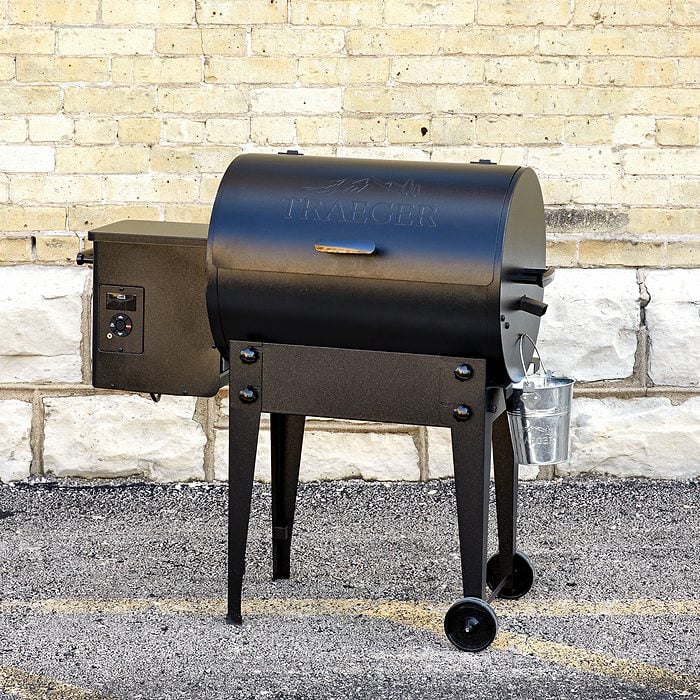
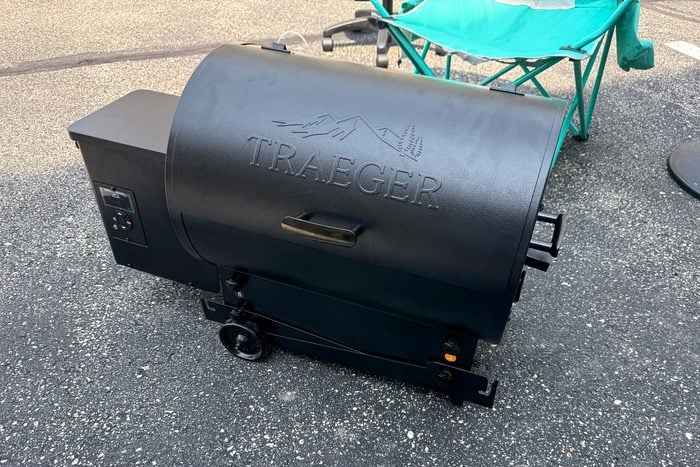
The Traeger Tailgater is our top pick for those wanting to use a pellet grill on the go. Compact with a small 300-square-inch cooking area, it offers a simple yet effective interface. It also weighs in at a very modest 62 pounds and has foldable legs. This makes the Tailgater compact enough to tuck into a van for camping trips, storage and—you guessed it—tailgating. Given the smaller size, assembly takes only one person rather than the two it takes for the other best pellet grills on our list.
TASTE OF HOME
What it lacks in extra features like Wi-Fi, it makes up for with a lower price point and easier mobility thanks to a lightweight build. It also has its fair share of helpful features, including a “keep warm” mode for folks waiting for other dishes to finish cooking. In short, it’s the best pellet grill for the money.
Don’t think this tinier Traeger isn’t as effective as its larger cousins, either. It produced juicy, moist chicken breasts with a little caramelization and a nice smoky top. That said, it gobbles up pellets rather quickly, and the lack of a way to empty the pellets means there’s no way to switch flavors mid-cook. “You’ll want to keep an eye on the pellet consumption on the Tailgater,” says tester Sheri Kaz.
The pork chops came out moist, albeit slightly uneven. Similarly, the pork shoulder end result was fairly tough and didn’t pull well. While it wasn’t dry, it also wasn’t super moist. “I would think the shoulder would be 190 degrees internally versus the actual 205 degrees that it was,” says Catherine Ward, Prep Kitchen Manager.
TASTE OF HOME
Despite fewer settings, the interface is less intuitive than other Traegers. It lacks a pellet chute and has a smaller hopper than the others. But it still incorporates core features like a meat probe and the signature barrel style. While its performance isn’t quite on par with our top performers, it’s the only truly portable option on our list. It’s also great for those who want to learn to use their pellet grill before investing in a thousand-dollar appliance.
Long-Term Testing Update
Deputy Shopping Editor Katie Bandurski has been long-term testing the Traeger Tailgater since September 2024. “The tech on this one is pretty simple compared to other Traegers,” she notes. “That said, it does impart a lovely smoky taste. I grilled apples in a cast-iron skillet to serve with shortcake and vanilla ice cream this fall. Yum! You could really taste the smoky flavor without it being overwhelming. I’m excited to experiment with different pellet flavors, too.”
Katie noticed that the bottom tray rusted shortly after she began using it. While it doesn’t come into contact with food, she found this disappointing given the price point. “The tray definitely comes out, so it’s not like the grill itself is going to rust through, which is good,” she says. A replacement drip tray costs $33. And while that’s not a ton of money, we feel that the parts should have held up better.
Grate materials: Porcelain | Weight: 62 pounds | Cooking area: 300 square inches | Wi-Fi/Bluetooth connectivity?: No | Special Features: “Keep Warm” mode; temperature probe | Warranty: 3 years
DAN ROBERTS FOR TASTE OF HOME
Best for Smoking
Yoder Smokers YS480s Pellet Grill
Pros:
Keeps smoke inside
Separate searing grate
Locks on wheels
Comes with repair paint
Side tables
Cons:
Bulky and difficult to move
Scratches easily
Silicone buttons
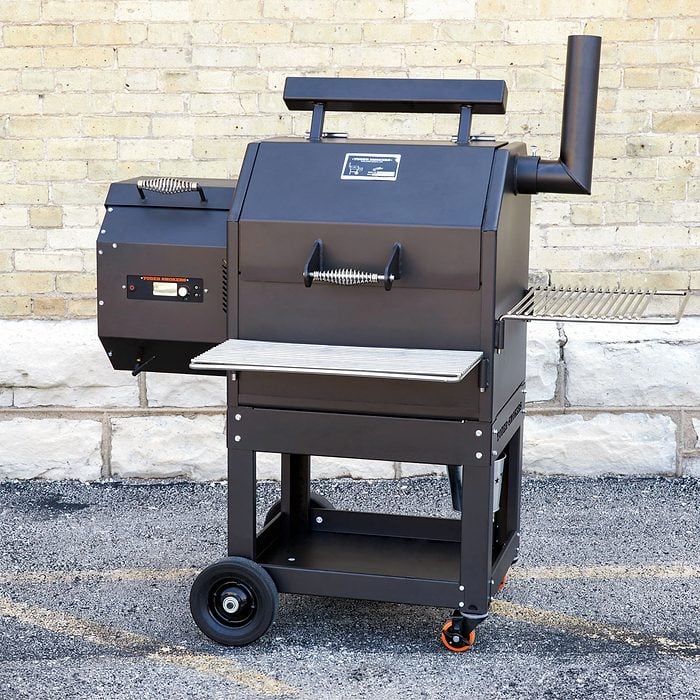
Big cooking areas and small grills don’t typically mix, but the Yoder Smokers YS480s pellet grill proves that’s not always the case. It boasts a behemoth 800 square inches of grilling space while still only taking up around 53 inches lengthwise. This pick for the best pellet grill maximizes surface area by utilizing one lower row with three cooking grates and a second-level slide-out cooking shelf.
TASTE OF HOME
“The instructions are not super clear for this smoker,” notes Ben Landwehr, TMB studio assistant, of the smoker assembly. “There are certain screws on the base that aren’t attached until later, and this isn’t made super obvious, so some backtracking may be required. It’s built on its side, then lifted upright. Definitely a two-person lift, as this is one of the heaviest-duty smokers on the list.” In addition to this assembly hiccup, the unit itself is big, bulky and difficult to move, though the inclusion of a side table means more prep space. The grill also scratches easily, which is why it comes with its own spray cover-up paint.
However, the separate searing grate is a “grate” addition that more than makes up for these oversights. The grill can also cook in an over-the-flame fashion. You can even bake or do some indirect grilling. Because the Yoder keeps smoke inside while closed, it’s also a good choice for both quick grilling and barbecuing low and slow roasts. The app is especially user-friendly. It shows temperature and probe information, plus the option to program temperature changes.
It may not be the best for fragile items like fish (which give off a lot of white albumin) or veggies (which don’t soak up a lot of smoky flavor). That said, the grill is well-equipped to cook up chicken breasts with a nice char or juicy pork chops. During our tests, it also created juicy, tender pork shoulders with a nice dark bark that fell apart at the slightest shred. Ours had a nice pink smoke ring and a milder flavor, something that Catherine says is normal when you’re not smoking with hardwood.
Overall, the performance and smaller size make the Yoder an excellent compact option for home cooks.
Matt Abdoo, executive chef and co-founder of Pig Beach BBQ, notes that pellet grills have been exploding in popularity with no signs of slowing down. “Personally, I love cooking on a pellet smoker because I BBQ all day, every day for work. So when I’m home, I want something I can set and forget while still producing an excellent end product,” he says. “I don’t see any slowdown in this category because pellet grills provide such an approachable entry point into making really good BBQ without the hassle of constantly managing a fire or adjusting air vents.”
According to Abdoo, pellet grills are able to maintain a consistent temperature through a thermostat system and offer a variety of wood and charcoal pellets to achieve different flavor profiles. However, he points out that they do not produce the same level of smoke flavor as traditional stick burners. Fortunately, there’s a solution.
“One of the more exciting recent developments is the introduction of Royal Oak’s charcoal pellets, which are blended with flavors like applewood, hickory or mesquite,” says Abdoo. “You get the high heat and flavor of charcoal while still balancing it with your preferred wood profile. It’s a great option for replicating the flavor style of more traditional smokers that use charcoal and wood together. The charcoal pellets also burn hotter, which helps create a better sear and char when grilling steaks, burgers and other foods over direct heat.”
How We Found the Best Pellet Grills
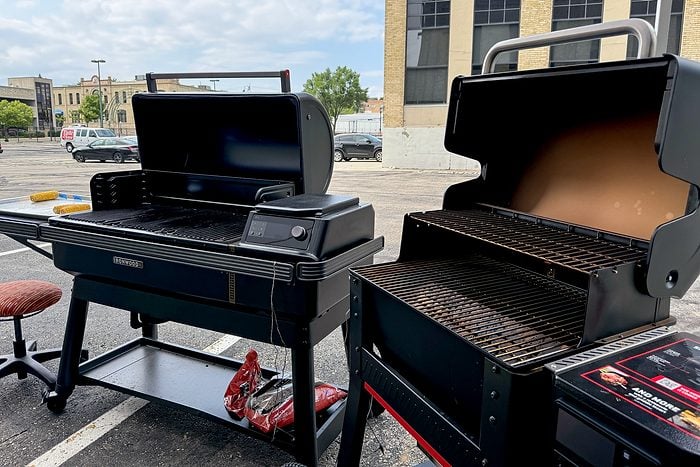
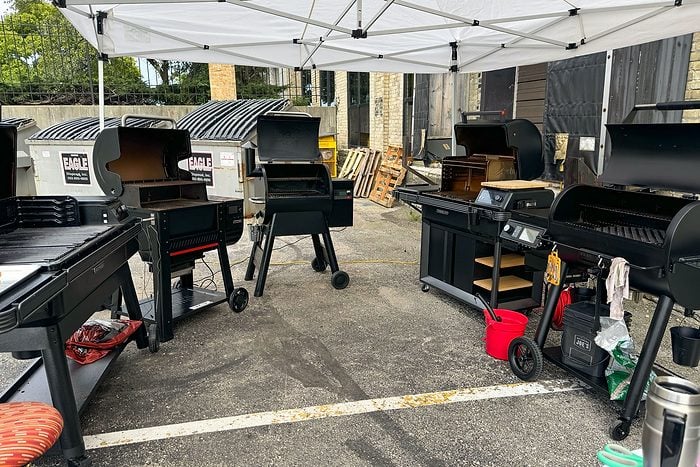
Our Product Testing Team first looked at bestsellers and top-rated finds. After scouring hundreds of pellet BBQ reviews, we secured 12 grills from the most popular brands, including Traeger, Cuisinart and Weber. Primary testers include Dylan Fischer, Sheri Kaz and Prep Kitchen Manager Catherine Ward. We used Pit Boss Apple Blend pellets for all these tests.
Due to internet limitations, these grills were connected to Wi-Fi and paired indoors, so the grills were not ignited or running during connection, meaning we could not engage with most features. Throughout this test, we smoked 115 pounds of pork shoulder, plus chicken breasts, salmon, corn and pork chops. All in all, our testers:
Used 280 pounds of pellets
Collected 660 data points
Spent 400+ man-hours on this test
Assembly and Setup
TASTE OF HOME
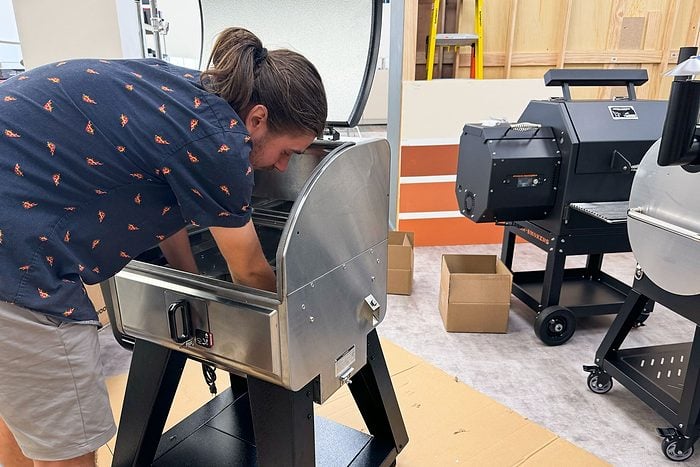
Testers read through each user manual and assess its clarity and helpfulness. They assemble each grill and record how long the process takes from start to finish (this test does not include adding pellets, connecting to apps, etc.). They also evaluate the ease of the process and season the grill, where applicable.
Features
TASTE OF HOME
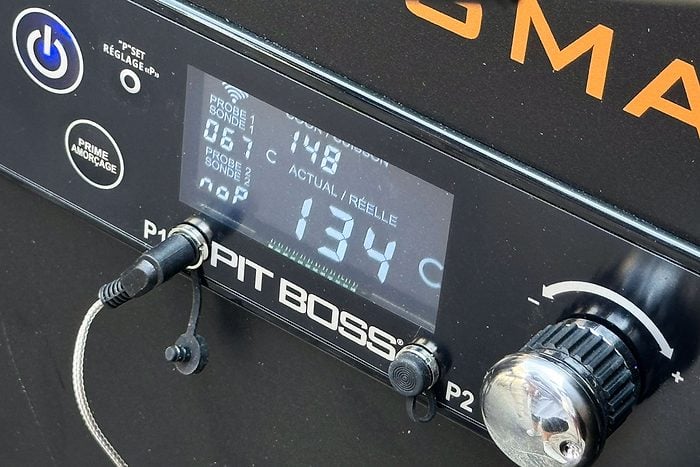
As best as possible, within the bounds of our preset tests, testers utilize the extra features and accessories of each pellet grill. This includes extras like probe thermometers, Wi-Fi/Bluetooth UX, built-in lights, touchscreens and special cooking modes.
Fuel
TASTE OF HOME
Testers load pellets into the grill and assess the ease of the process, accessibility and capacity of the hopper. They then replenish the fuel as needed, tracking how frequently this is required and how easy it is to monitor fuel levels.
Food Tests
TASTE OF HOME
Salmon: Testers cook a roughly one-pound salmon fillet on each pellet grill, timing how long the grill takes to preheat to cooking temperature. They then time how long it takes the salmon to reach the proper internal temperature and note any sticking to the grill grates. Testers consume the salmon and assess its tenderness, bark, succulence and flavor (particularly smoky flavor). Testers will also monitor how well the grill maintained temperature.
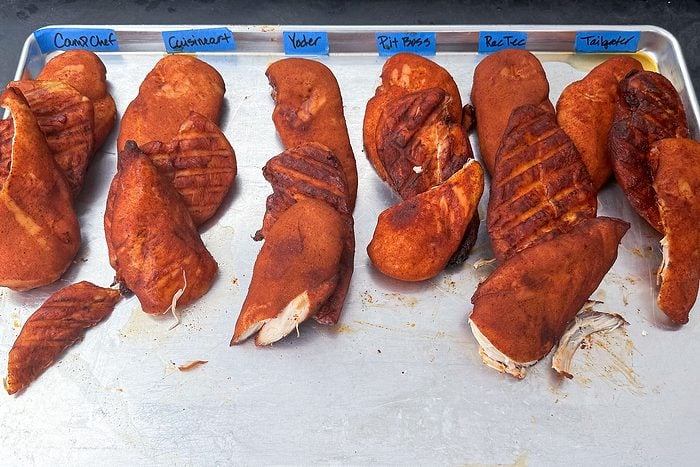
Chicken breasts: Testers cook two pounds of chicken breasts on each pellet grill, timing how long the grill takes to preheat to the cooking temperature. They time how long it takes the chicken to reach the proper internal temperature and note any sticking to the grill grates. Testers consume the chicken and assess its tenderness, bark, juiciness and flavor. They will also monitor how well the grill maintains temperature.
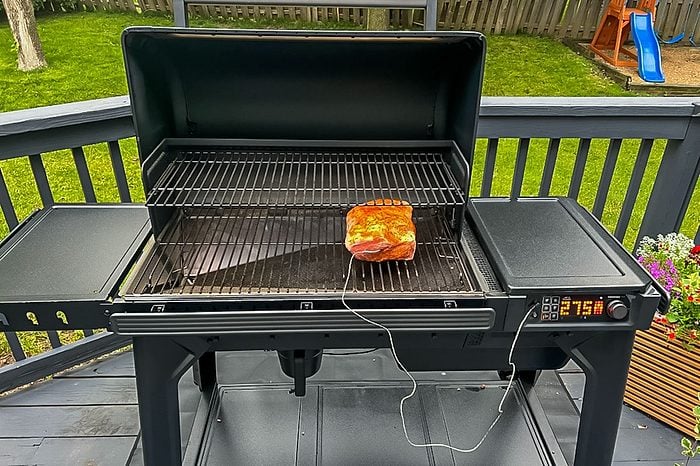
Pork shoulder: Testers cook one pork shoulder on each pellet grill, timing how long the grill takes to preheat to the cooking temperature. They time how long it takes the pork to reach the proper internal temperature and note any sticking to the grill grates. Testers consume the pork and assess its tenderness, bark, juiciness and flavor. They also monitor how well the grill maintains temperature.
Corn/vegetables: Testers cook a medley of vegetables on each pellet grill. They determine how long it takes the vegetables to cook, whether there is any sticking, the level and evenness of the browning and the flavor of each veggie.
Cleanup
TASTE OF HOME
Testers empty the ash and grease trap and clean the grill according to the user manual, evaluating the ease and length of the process.
Long-Term Testing
We conducted our original pellet grill tests in August 2024. Since then, each best pellet grill has gone home with a long-term tester for continued use. We check in with our testers every three months to note any design flaws and deterioration over the product’s natural lifespan. Given the high price point of most pellet grills, we will withdraw a recommendation if the product fails to last.
Other Pellet Grills We Tested
Recteq Flagship 1100: Formerly our best overall option, this Recteq pellet grill is unfortunately no longer available. You can, however, pick up the comparable Flagship 1600.
Traeger Pro 575: Previously our best budget pick, this model was discontinued (although it’s still in stock at some retailers) and replaced with the Traeger Woodridge line. (Which we also tested and approved.)
Pit Boss Sportsman 820: The Pit Boss offers adjustable smoke levels, and it’s speedy and efficient. It also has a few fun bonuses, like a tray holder on the side and a fold-down table in front. It’s intuitive, and the vent disperses the smoke nicely so it’s not in your face. That said, the venting system is hard to operate and can get stuck with burned-on debris, and there’s no flat spot to set down food. Additionally, short folks may find operating this tall option tricky.
Camp Chef Woodwind Pro 24: Besides being tricky to operate with vague prompts, the Camp Chef spit flames, making it a real safety hazard. Additionally, the smoke box is nearly impossible to pull in and out due to poor construction. We also had trouble with preheating, and the shutdown mode burned through all the pellets in the hopper.
Oklahoma Joe’s Rider 900 DLX: The Oklahoma Joe is a nightmare to clean. Users must burn off all the pellets at the end of each smoke session, and the screen is jumbled and hard to read. Like the Camp Chef, it is also tricky to operate—screens and prompts are not straightforward, which is frustrating. Oklahoma Joe really surprised us with these issues since the charcoal grill is a good performer.
Additional Testing
MARY HENN FOR TASTE OF HOME
We updated our pellet grill testing by trialing the all-new Woodridge Pro Pellet Grill from Traeger, the brand synonymous with pellet grills. Over the years, Traeger has introduced several different lines of pellet grills, including rather pricey models like the Ironwood and Timberline.
We were impressed to see Traeger launch the new Woodridge Series, which offers the brand’s signature, high-quality grilling experience at more accessible price points. Like the other Traeger grill series, the Woodridge Series includes three grill models: the Woodridge (base model), Woodridge Pro (mid-tier model) and Woodridge Elite (premium model). Of course, we were eager to find out how the new Traeger lineup compared to other pellet grill models and if it would truly deliver in terms of performance and taste.
We sent the Woodridge Pro to Shopping Editor Mary Henn, who tested it in her backyard this spring and reported her findings for this best pellet grills review. A Kansas City native, Mary is familiar with smoking meat, especially barbecue brisket, pulled pork and ribs. She’s spent many hours around pellet grills and has written about restaurants and barbecue pits. She’s even interviewed some of the country’s most skilled pitmasters.
What to Look for When Buying a Pellet Grill
Choosing a grill is a big task, made even more intimidating by the high price point of most models. When choosing between gas and charcoal or pellet grills, consider not only what you’ll grill but also your skill level and budget.
“Before shopping for a grill—or any big purchase, really—I do my homework,” says in-house grilling expert and head of the Taste of Home Prep Kitchen, Catherine Ward. “After setting my budget, I want to read the reviews, good and bad, because one person’s drawback is another’s positive.”
While some folks prefer using an indoor grill vs. an outdoor grill when the weather cools down, Catherine notes that it’s not necessary to invest in two separate appliances. “I grill outside year round. Cold and snow don’t deter me, so I look for a grill that gets up to temp quickly and holds the temperature, even in cold and windy conditions,” she says. Pellet grills are practically the gold standard for outdoor cooking. They get up to temperature in around 15 minutes, making them a lot faster to preheat than charcoal grills.
Build
TASTE OF HOME
According to Omaha Steaks Executive Chef David Rose, there are a few factors to consider when purchasing a pellet grill: configuration, controllers, type and class.
Configurations: Pellet grills are configured as built-in or freestanding models. “The built-in configuration is the most popular and convenient in an outdoor cooking area, as they are connected to the rest of the kitchen,” Chef Rose says. “The freestanding configuration is portable and allows more autonomy, making it best suited for those without an outdoor kitchen.”
Controllers: The three controller types are Non-PID, PID and PID-Plus. Chef Rose explains each: “Non-PID controllers offer up to 10 preset temperatures. They are more imprecise and cycle between 30 to 40 degrees of your intended temperature, regulating the fire if it is too hot or too low. PID controllers utilize new technology to run precise calculations based on various factors to maintain temperatures within 5 degrees of your settings. PID-Plus builds on the PID controller with Wi-Fi capabilities and companion smartphone apps that can be used to monitor and send alerts.”
Type of Pellet Grill: The two primary types of pellet grills are traditional and vertical. “A traditional grill is best if you aim to cook at a wide range of temperatures and with a broader variety of meat types,” he says. “A vertical grill specializes in lower temperatures and is designed to cook for longer periods of time. This type is best for cooking softer meats like fish.”
Class of Pellet Grill: The four classifications of pellet grills are practical, economy, premium and luxury:
Practical pellet grills: Typically made of stainless steel with a temperature range of around 200 to 400 degrees. “Due to the lower price point, the temperature regulation is lower quality,” Chef Rose explains.
Economy grills: “Economy grills tend to be made with nicer steels, like powder-coated or porcelain, with a temperature range of up to 500 degrees,” he says.
Premium pellet grills: These “are made with high-quality stainless steel and are well insulated to allow for more consistent cooking temperatures,” he says.
Luxury grills: These are made of the highest quality durable steel and can reach as high as 700 degrees. They also feature the latest technology and optimal insulation to retain cooking temperature. “These grills are top-of-the-line and will cost well over a thousand dollars,” Chef Rose adds.
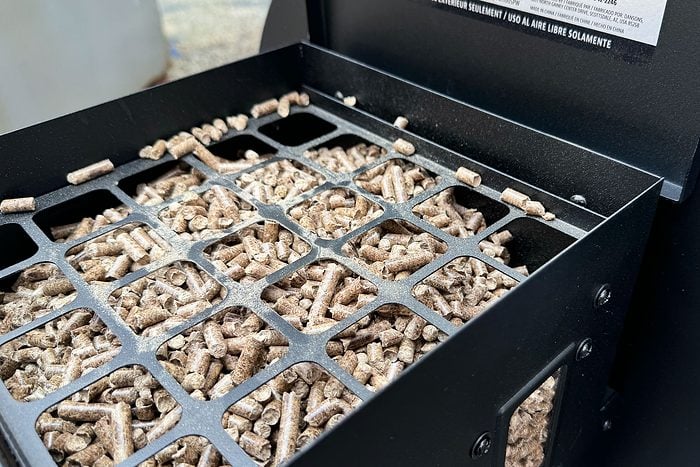
Pellets Dylan fischer for TASTE OF HOME
Chef Rose also notes that you should consider the pellets you’re using. “The most common pellet types are hardwood, softwood and blended, which are a mix of both,” he says. “Hardwood pellets are commonly used for smoking or grilling and are made from species like hickory, maple or apple. Softwood pellets are used for heating and are made from coniferous trees like pine. Blended pellets are a good choice for general grilling needs when achieving a woody flavor is not the main focus. Always use food-grade pellets specifically for cooking, as heating pellets can contain binders or fillers that are unsafe for consumption.”
Size and Features
Additionally, National Barbecue & Grilling Association managing partner Kell Phelps offers a few tips for choosing the right grill for you. “When choosing a pellet grill, consider the size—think about whether you’ll be cooking for just a couple of people or a large group. Most pellet grills are sized by their grilling surface area, so even if two grills look similar on the outside, one might offer multiple layers of cooking space inside. Other features are important, too, especially technology like digital controls or Wi-Fi connectivity that make grilling easier,” he says.
“Longevity is key; if you plan to grill several times a week, you’ll want a durable model that can stand the test of time,” Phelps adds. “For example, Recteq grills are built with thick stainless steel, making them heavier and generally more long-lasting than comparable models.”
FAQ
Dylan Fischer for TASTE OF HOME
What is a pellet grill?
“A pellet grill is an outdoor cooking device that beautifully blends the functions of a smoker, grill and oven,” says Phelps. “It uses real wood pellets as fuel, giving your food a delicious, smoky flavor that’s hard to duplicate. These pellets are made from compressed sawdust and come in a variety of wood types, like hickory, mesquite, pecan and applewood, each adding its unique flavor to your dishes.”
Pellet grills are “grate” (get it?) for pro grillers and newbies alike. Simply fill the hopper with wood pellets, ignite the grill, set the temperature and let the magic happen. Pellets come in various wood flavors, like applewood and hickory, so it’s easy to experiment with different taste combinations. You can even use them for smoking.
Similar to a gas grill, you can set your temperature and cooking time since these are electric appliances. While they’re not as good at searing as gas grills, they outperform their charcoal and gas-fueled counterparts at smoking. Because they don’t operate on either coal or gas, pellet grills also help you avoid some of the most common grilling mistakes.
How does a pellet grill work?
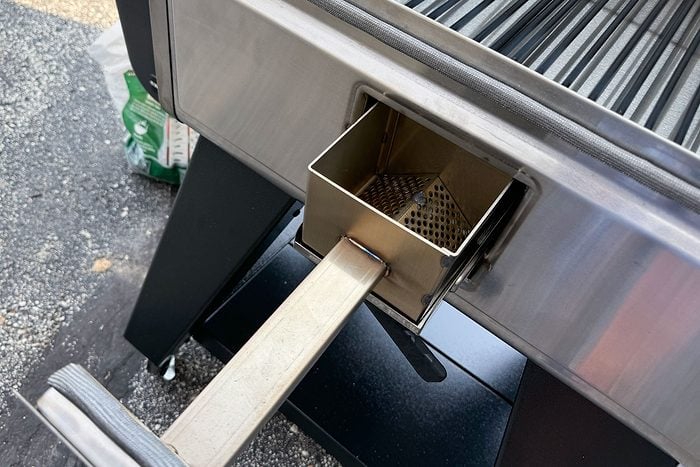
Phelps says, “A pellet grill operates using an electric-powered auger that feeds wood pellets from a hopper into a firepot. Once the grill is turned on, a heating rod ignites the pellets, creating heat and smoke. A fan circulates this smoke and heat throughout the grill, ensuring your food cooks evenly. A thermostat controls the temperature, so you can set it to your desired level and let the grill do the work. This combination of precision and convenience is what makes pellet grills so popular.”
Most offer easy start options, but the exact process differs depending on the grill. Once started, simply set the temperature, pop in your protein and get to grilling.
How do you clean a pellet grill?
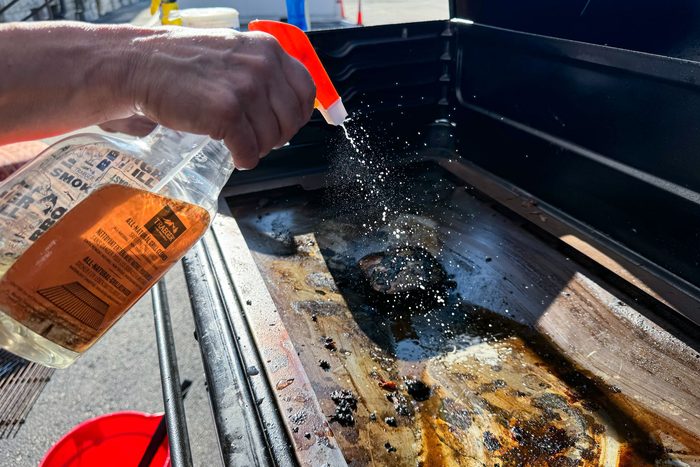
“Cleaning a pellet grill is straightforward but important for maintaining its performance,” says Phelps. “Cleaning the grates with a wet paper towel wrapped around your spatula is the safest and easiest way after each cook. Every few uses, you’ll also want to remove and clean the deflector plate, especially if you’ve been cooking something greasy like pork butt—grease buildup can lead to fires,” he notes.
“After about 20 cooks, it’s a good idea to vacuum out the ash from the grill’s interior under the deflector plate,” notes Phelps. “Don’t forget to wipe down the exterior with a damp cloth and empty the grease bucket regularly to keep everything running smoothly.” Additionally, investing in a good grill brush can help speed the cleaning process along.
“Whether it’s gas, charcoal or pellet-fired, keeping the grill clean with a grill brush will prevent fires and flare-ups, but it also ensures that whatever food I’m grilling won’t be contaminated by previous cooks and leftover charred bits,” says Catherine. “Overall, I avoid brushes with wire bristles to prevent loose bristles from making their way into my food.”
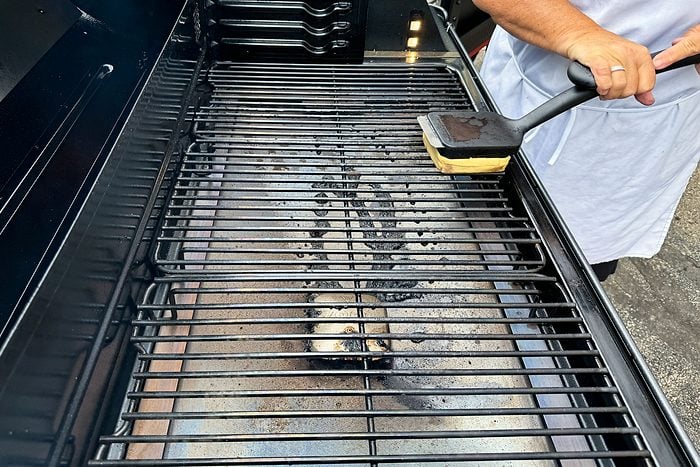
A quality grill brush cuts cleanup time in half, and many work on hot grills to produce steam, so they’re fast and efficient. Another benefit of steam brushes like the BBQ Daddy or the Grill Rescue brush is that you can clean the grill right after cooking, rather than letting gunk and food dry onto the grates.
Why You Should Trust Us
As Taste of Home’s food and beverage expert, I have ample experience testing and reviewing everything from cookware to meal kits. Our team dedicates itself to vetting and testing the products we recommend, from big purchases like the best food processors to smaller splurges like the best hop water. Our Product Testing Team has more than 25 combined years of experience in professional product selection and testing, and the Test Kitchen Team brings even more experience to the table.
A lifelong foodie, pellet grill tester Catherine Ward heads up the Taste of Home prep kitchen. She also lends her expertise to articles about cooking and baking techniques and kitchen tools. Her areas of focus include grilling and smoking. Catherine has worked in the hospitality industry for most of her career, catering and teaching cooking classes. She is happiest when cooking for a table full of friends and family.
For this piece, we also spoke to National Barbecue & Grilling Association managing partner Kell Phelps. Phelps has been in the barbecue world since his teenage years, when he cut his teeth on the competition circuit. In 1990, his father and NBBQA founding member Joe Phelps started a printed newsletter called the National Barbecue News. In 2002, Kell bought the magazine from his dad and made barbecue his daily job. Kell and his father are both proud past presidents of the NBBQA.
We also spoke to Omaha Steaks Executive Chef David Rose for additional insights about what to look for in a pellet grill. Chef David Rose was raised with a diverse and curious palate. Born in New Jersey to two chef parents, his culinary interest led him to enroll in Le Cordon Bleu Culinary College in Georgia, where he graduated Summa Cum Laude. Living in Atlanta for more than a decade, Chef Rose finds inspiration in his surroundings. He identifies as a Southern chef, creatively reinterpreting classic Southern fare by incorporating the refinement of his French culinary training with his signature bold flavors and the occasional flair from his family’s Jamaican recipes.
Finally, we spoke to Matt Abdoo, executive chef and co-founder of Pig Beach BBQ, which has locations in New York, Boston and Florida. Abdoo shared his expertise on pellet grills and industry trends.
We are no longer supporting IE (Internet Explorer) as we strive to provide site experiences for browsers that support new web standards and security practices.



![The Best Weber Grills [Tested and Reviewed]](/wp-content/uploads/2024/05/TOHA24_Webers6-copy_Napoleon-group_Taste-of-Home_01_YVedit_FT_1.jpg?resize=72,72)