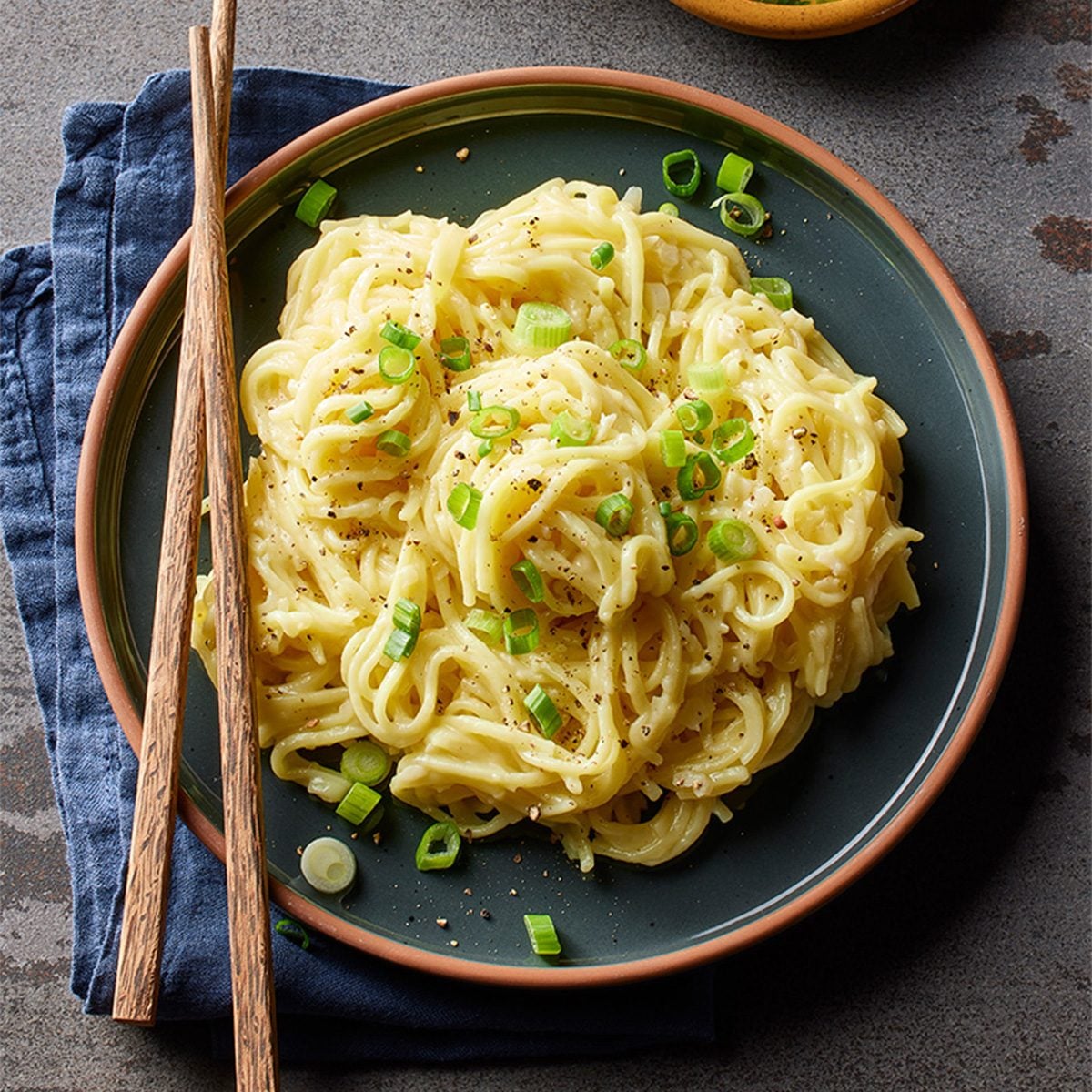
An unlikely combo of fish sauce and Parmesan makes these Vietnamese garlic noodles hard to stop eating.
Garlic is its own food group in my kitchen, so when I learned that one of the most popular noodle recipes out there calls for 20 cloves, I knew I had to make it. This Vietnamese garlic noodles recipe, a mashup of Vietnamese pantry staples and Italian technique, is inspired by the noodles you’ll find around the Bay Area, thanks to Chef Helene An. But you don’t have to know these noods to want to make this recipe. The dish is full of savory garlic flavor with a big kick of umami. It’s definitely a recipe for the garlic lovers out there!
What are Vietnamese garlic noodles?
The story goes that An, who fled Vietnam during the war, settled in California and went on to build a restaurant empire. At her Thanh Long restaurant in the early 1970s, she dreamed up this recipe after a forgettable plate of garlic pasta at an Italian spot. Now, for decades, she’s served her rendition alongside roasted Dungeness crab.
The original recipe is apparently a secret, but the building blocks are no mystery: a small mountain of minced garlic melted slowly into butter, then seasoned with fish sauce, oyster sauce and a hit of Maggi. A blizzard of Parmesan and a splash of starchy cooking water pull everything into a clingy sauce that coats every strand of noodle. Fresh chow mein or homemade ramen noodles give you the best chew, but plain old spaghetti or udon can work if that’s what you have in your pantry.
Ingredients for Vietnamese Garlic Noodles
Butter: Butter forms the rich, glossy base of the sauce. Salted or unsalted both work, though unsalted gives you more control over the final seasoning. Because it’s such an important ingredient, use the best butter brand you can.
Garlic: A superabundance of minced garlic gives these noodles their deep, savory backbone. Cook the garlic low and slow so it turns sweet and golden rather than bitter and browned. A Microplane or, even better, a mini food processor will make this a lot easier.
Fish sauce: Made from fermented anchovies, fish sauce delivers the savory umami depth that defines many Vietnamese recipes. It’s one of the most fundamental Asian sauces to keep in your pantry and has many uses (it’s even good on fruit salad!).
Oyster sauce: Thick and slightly sweet, oyster sauce adds body and a glossy sheen to the finished sauce. Its concentrated flavor rounds out the salty notes from the fish sauce.
Sugar: A little sugar balances the salt, so the sauce tastes round instead of flat. Sugar also encourages the garlic to caramelize.
Maggi seasoning sauce: This Swiss-born liquid seasoning is a pantry staple in many kitchens, prized for its concentrated savory punch. Maggi deepens the sauce with notes that land somewhere between soy sauce and beef bouillon.
Fresh chow mein noodles: Springy and chewy, these wheat noodles soak up the garlic butter while holding their shape. Ramen noodles make a fine substitute when fresh chow mein is hard to find.
Parmesan cheese: The salty, nutty cheese melts into the sauce, giving it a creamy, clingy texture. Grate it fresh for the smoothest melt and the fullest flavor.
Green onions: Tossed over the top just before serving, green onions add a fresh, sharp bite that cuts through the richness. The thin slices also bring a pop of color to the finished dish.
Directions
Step 1: Make the garlic sauce
DAN ROBERTS FOR TASTE OF HOME
Melt the butter in a saucepan or wok over medium heat. Add the garlic and cook for two minutes, being careful not to brown. Add the fish sauce, oyster sauce, sugar and Maggi seasoning. Stir to combine, then remove from the heat.
Step 2: Cook the noodles
DAN ROBERTS FOR TASTE OF HOME
Meanwhile, bring a pot of water to a boil. Cook the fresh chow mein noodles according to the package directions.
DAN ROBERTS FOR TASTE OF HOME
Drain the noodles, reserving 1/2 cup cooking water.
Step 3: Combine and finish
Add the pasta to the garlic mixture, and return to the stove over medium heat. Add the Parmesan and reserved pasta water, then stir until heated through and the sauce is creamy. Top with the green onions before serving.
DAN ROBERTS FOR TASTE OF HOME
Vietnamese Garlic Noodle Variations
Add a protein: Toss in cooked frozen shrimp, shredded rotisserie chicken or seared sliced steak just before the noodles go back on the heat. Lump crabmeat is a classic pairing with garlic noodles.
Turn up the heat: Stir a spoonful of chili oil or sambal oelek into the sauce, or scatter thinly sliced Thai chiles over the top with the green onions. A drizzle of chili crisp at the table lets everyone control their own spice level.
Load it with vegetables: Wilt baby bok choy, shiitake mushrooms or snow peas in the garlic butter before adding the noodles. The veggies soak up the sauce, turning the dish into a more complete meal.
Brighten it with herbs: Finish the dish with a handful of torn cilantro or Thai basil, along with the green onions. The fresh, fragrant leaves cut through the buttery richness and highlight the dish’s Vietnamese roots.
Top it with an egg: Slide a crispy-edged fried egg on top of each bowl and let the runny yolk loosen the sauce as you twirl the noodles. A soft-boiled egg, halved, would be just as good.
How to Store Vietnamese Garlic Noodles
Let the noodles cool, then transfer any leftovers to an airtight container and refrigerate for three to four days. The Parmesan sauce will firm up and cling to the noodles as it chills, so they will look a little dry once cold, but a splash of water loosens everything back up.
What’s the best way to reheat Vietnamese garlic noodles?
The best way to reheat Vietnamese garlic noodles is gently, with a splash of liquid to revive the sauce that firmed up in the fridge. Warm the noodles in a skillet over medium-low heat with a tablespoon or two of water or broth, tossing the noodles until the sauce loosens and turns creamy again. A microwave works too: Heat the noodles in 30-second bursts, stirring and adding a little water between each burst until warmed through.
Vietnamese Garlic Noodle Tips
What other types of noodles can you use?
Fresh chow mein noodles and ramen are the go-to choices for Vietnamese garlic noodles, but plenty of other wheat noodles work just as well. Reach for fresh or dried egg noodles, lo mein, yakisoba, or even regular spaghetti or linguine.
What else can you serve with Vietnamese garlic noodles?
Vietnamese garlic noodles are rich enough to anchor a meal, so they pair best with lighter, brighter dishes. Serve them alongside grilled shrimp, lemongrass chicken, garlicky bok choy or a smashed cucumber salad to balance the buttery noodles. A platter of fresh herbs and lime wedges on the table lets everyone add their own finishing touches.
We are no longer supporting IE (Internet Explorer) as we strive to provide site experiences for browsers that support new web standards and security practices.




![Overhead horizontal image of a hand pouring a dark liquid from a small measuring spoon into a light gray pot. The pot contains finely minced garlic simmering in golden oil, with a metal whisk resting on a gray mat nearby. | [Original] Melt butter in a saucepan or wok over medium heat. Add garlic and cook for 2 minutes, being careful not to brown. Add fish sauce, oyster sauce, sugar and Maggi seasoning. Stir to combine, then remove from heat.](https://grid-rampart.live/wp-content/uploads/2026/06/Vietnamese-Garlic-Noodles_TOHcom26_282675_DR_06_16_008b.jpg?fit=700%2C1024)

![Eye Level horizontal image of a glass measuring cup holding approximately 4oz of a pale yellow, steaming liquid. In the background, a large pot is partially visible, and a bowl filled with grated cheese rests to the right. | [Original] Meanwhile, bring a pot of water to boil. Cook fresh chow mein noodles according to package directions. Drain; reserving 1/2 cup cooking water.](https://grid-rampart.live/wp-content/uploads/2026/06/Vietnamese-Garlic-Noodles_TOHcom26_282675_DR_06_16_009b.jpg?fit=700%2C1024)