This panna cotta comes together in one saucepan with just a few ingredients. It's silky, creamy and ready to customize.
Panna cotta translates literally to “cooked cream,” and that’s essentially the recipe: You heat up cream, sugar, gelatin and vanilla, and then chill the mixture until set. Italian panna cotta has a reputation for being a restaurant dessert—but it’s not that hard to make, as it takes only about 10 minutes of active cooking before the fridge takes over. The result is a custard-like treat that wobbles gently on the spoon and melts on the tongue.
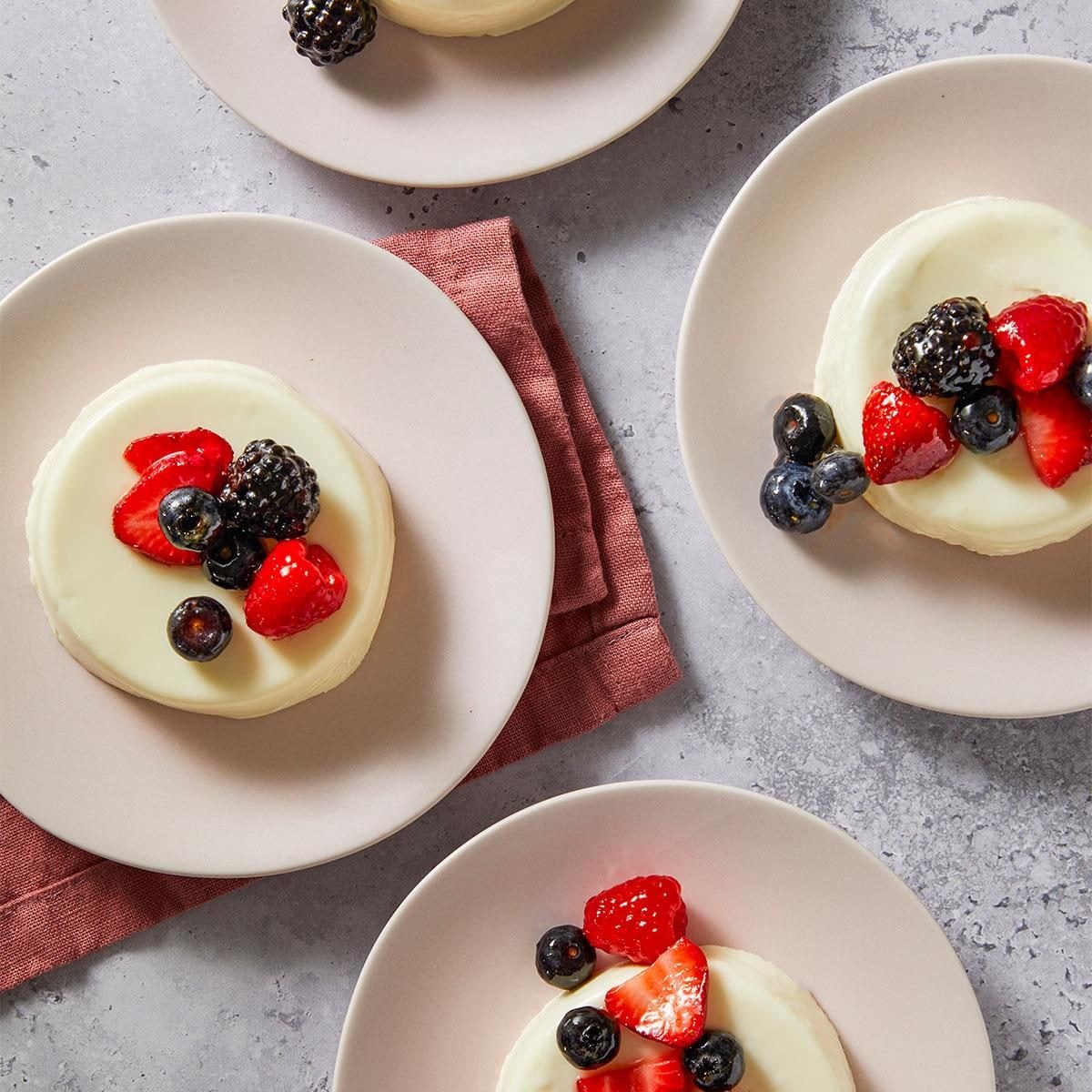
We view a vanilla panna cotta as a canvas: Top it with macerated strawberries, a drizzle of caramel, a spoonful of chocolate sauce—or serve it straight from the glass with nothing added at all. Four ingredients, one saucepan and you’re done.
What is panna cotta?
Panna cotta is an Italian dessert made by setting sweetened cream with gelatin, putting it in a category of its own. It’s not a custard, which relies on eggs for structure, and it’s not a pudding, which typically uses a starch like cornstarch as a thickener.
Creme brulee is a baked egg custard with a crackling, caramelized sugar crust that’s richer and denser, and the dessert is considerably more involved to make than panna cotta. Panna cotta skips all of that and delivers something just as elegant, with a distinctive supple texture.
Panna Cotta Ingredients
- Unflavored gelatin: The workhorse of this recipe, gelatin, sets the cream mixture into that signature silky, barely firm texture that makes panna cotta so elegant. Look for gelatin near the Jell-O in the baking aisle.
- 2% milk: Milk is used to bloom the gelatin before it hits the hot cream. The milk also helps the granules dissolve evenly so the finished dessert sets without any lumps or rubbery patches.
- Heavy whipping cream: Cream is the star of the show in this recipe. It gives panna cotta its rich custardy body and that voluptuous quality you can’t get from leaner dairy. For the best result, use cream with no added stabilizers or thickeners.
- Sugar: Sugar lightly sweetens the cream without overwhelming the delicate dairy flavor. Toppings like fresh fruit or caramel sauce can add extra sweetness.
- Vanilla extract: A teaspoon adds warmth and depth to the very simple flavors of this dessert. A high-quality brand of pure vanilla extract is worth reaching for here, since the flavor is front and center in every bite.
How to Make Panna Cotta
Step 1: Bloom the gelatin and heat the cream

In a small bowl, sprinkle the gelatin over the milk and let stand for five minutes.

Meanwhile, in a small saucepan, combine the cream and sugar; cook and stir over medium heat until the sugar is dissolved.
Add the gelatin mixture and vanilla, stirring until the gelatin is completely dissolved.
Step 2: Chill until set

Divide the mixture among four dessert dishes. Refrigerate, covered, for two hours or until set. If desired, unmold onto small dessert plates and top with mixed berries before serving.
Editor’s Tip: When it comes to presentation, you can either serve the individual desserts in their dishes or unmold them and serve them upside down on small dessert plates. Either way works!

Panna Cotta Variations
- Add citrus: Stir a tablespoon of lemon, orange or Meyer lemon zest into the warm cream mixture for a bright, aromatic note that cuts through the richness beautifully.
- Layer in some coffee: Dissolve a teaspoon of instant espresso powder into the hot cream along with the sugar for a mocha-tinged panna cotta that pairs especially well with a dark chocolate drizzle.
- Infuse with herbs: Steep a few sprigs of fresh lavender, rosemary or thyme in the warm cream for five minutes before proceeding with the recipe, then strain the cream before adding the gelatin mixture.
- Top with a fruity sauce: Spoon a simple strawberry sauce or raspberry sauce over each dish just before serving for a very traditional presentation.
- Make it chocolate: Whisk 2 ounces of finely chopped bittersweet chocolate into the hot cream until fully melted for a decadent chocolate panna cotta that sets up beautifully and needs nothing more than a sprinkle of flaky salt before serving.
How to Store Panna Cotta
Panna cotta should be stored in the refrigerator, kept covered to prevent it from absorbing any odors. If you’re storing it in the dessert dishes you plan to serve from, press a piece of waxed paper or parchment directly against the surface of each one before covering.
How long will panna cotta last?
Panna cotta will keep in the refrigerator for three to four days. After that, the texture may begin to degrade and the flavor can start to dull. It’s best enjoyed sooner rather than later.
Panna Cotta Tips

What type of vanilla should you use for panna cotta?
Pure vanilla extract is the easiest option. It gives a clean, classic vanilla flavor throughout. For a more visually striking result, vanilla bean paste or a split and scraped whole vanilla bean are worthy splurges—both leave those distinctive flecks throughout the cream and offer a deeper, more complex flavor than extract.
What’s the best mold to use for making panna cotta?
Dessert dishes and ramekins are obvious choices, and small Mason jars or juice glasses are a charming alternative, especially if you’re serving a crowd and want something you can prep and store without any extra fuss.
If you’d like to unmold your panna cotta onto a plate for a more dramatic presentation, lightly greased ramekins or small silicone molds are your best bet—just run a thin knife around the edge, give it a gentle shake and invert it onto a plate.
Why can’t I get the panna cotta out of the mold?
If you’re having trouble unmolding, don’t fret. Carefully run a paring knife around the edge of the panna cotta, set the mold in a bowl of hot water for one minute and turn it over onto a dessert plate. Tap the bottom of mold gently, if necessary, to help release.
What if my panna cotta didn’t set?
The most likely issue is the gelatin—it may not have fully dissolved into the cream mixture or it didn’t bloom properly. If it’s still not setting after a few hours, you can gently warm the mixture back up in a saucepan, dissolve a small additional amount of bloomed gelatin into it and start the chilling process again.
How should you serve panna cotta?
You have a lot of options when it comes to serving panna cotta! Leave it in the dish or glass for a casual, easy presentation. Or, unmold it onto a plate to impress your friends and family. Either way, a topping of some kind is nice—a spoonful of macerated strawberries or raspberries, a drizzle of honey, a puddle of chocolate or caramel sauce, or even a scattering of toasted nuts all work.
Panna cotta can also be served with a crisp accompaniment like a French butter cookie or biscotti, which adds a welcome textural contrast to the silky custard.
Ingredients
- 2-1/2 teaspoons unflavored gelatin
- 1/4 cup 2% milk
- 2 cups heavy whipping cream
- 1/4 cup sugar
- 1 teaspoon vanilla extract
Directions
-
1In a small bowl, sprinkle gelatin over milk; let stand 5 minutes. Meanwhile, in a small saucepan, combine cream and sugar; cook and stir over medium heat until sugar is dissolved. Add gelatin mixture and vanilla, stirring until gelatin is completely dissolved.
-
2Divide mixture among four dessert dishes. Refrigerate, covered, 2 hours or until set.