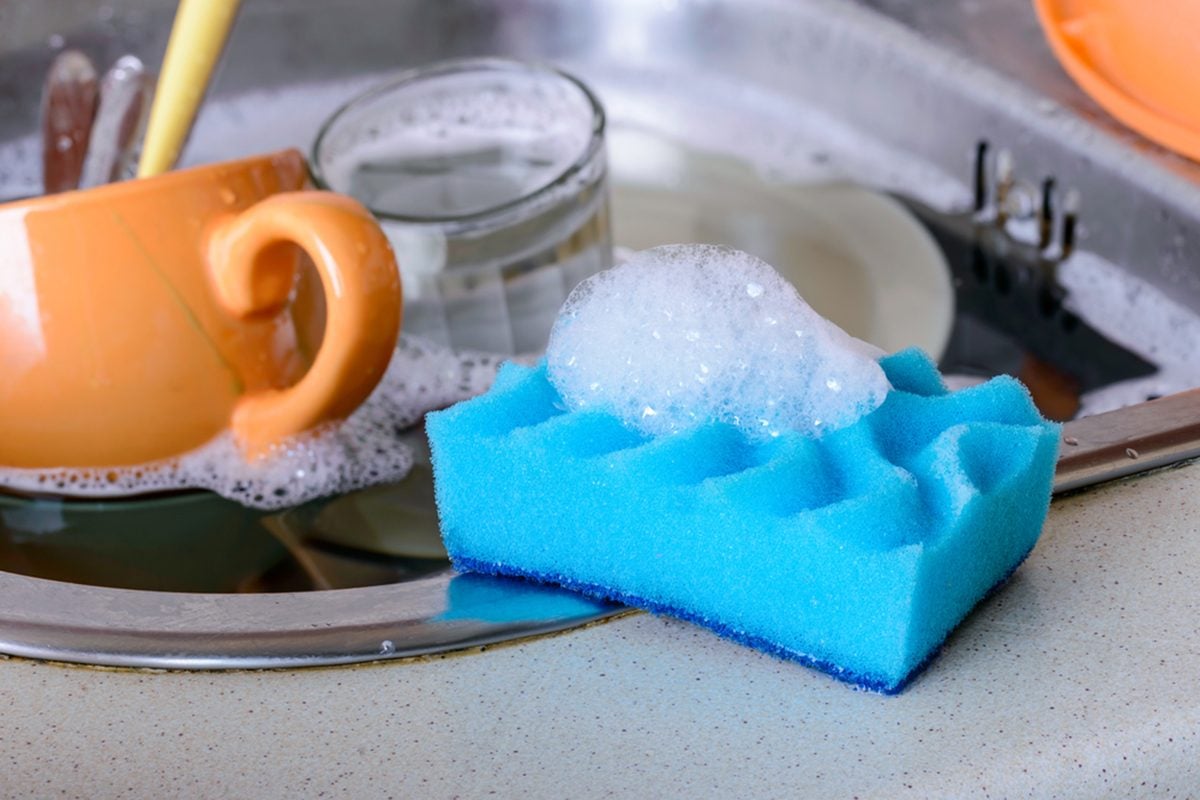
You could clean that old kitchen sponge—but experts agree that it's safer to toss and replace it.
In my opinion, kitchen sponges are quite the kitchen MVP. They’re cheap, convenient and really easy to use. Even with all the fancy kitchen cleaning products on the market, a good sponge is still my most reliable cleaning tool.
I use sponges to scrub the grit and grime off dishes, remove food that’s caked on the countertops and clean up spills in the microwave. Sponges are my go-to tool for most kitchen cleaning tasks, from big to small messes. But all that scrubbing means my sponge is collecting a ton of bacteria and germs—and using one for too long can actually contaminate the surfaces they’re supposed to be cleaning.
Cleaning is already hard work, and I don’t want to make it harder on myself. So if you’re like me and are guilty of holding on to sponges way longer than you’re supposed to, don’t worry. Here are some cleaning techniques to help you kick the sponge-hoarding habit.
How long do kitchen sponges last?
Sponges may last for months, but experts recommend replacing your kitchen sponge at least once a week. A week may feel short, but it makes sense considering that most of us use a kitchen sponge multiple times a day. After a full week, it can be contaminated with all sorts of bacteria and germs. Using it could put you at risk of getting sick by smearing the bacteria from the sponge along all your kitchen surfaces—and this can make its way into your food.
“The best way to identify when your sponge is ready to be replaced is by making it into a sensory experience. The look and the smell of the sponge will tell you when it’s time for it to go,” says Melissa Maker, cleaning expert and founder of Clean My Space. “If it smells and looks gross or dirty, and you can’t get rid of the odor or appearance, then it’s time to move on.”
Depending on how you use your kitchen sponge, it may need to be replaced even more often and sooner than the one-week mark. If it is discolored, is missing chunks, smells bad or has mold, it’s time to throw it away, regardless of how long it’s been since you opened it. “As with all cleaning products, it all comes down to you,” says Maker. “If you’re using a cleaning product every single day to clean various things, it has to be replaced sooner.”
What about cleaning your kitchen sponge?
Cleaning a sponge may seem like a good way to prolong its life, but it’s really safest to toss out a sponge if you have been using it for more than a week. Even if a sponge still looks “clean,” it can be harboring a ton of microscopic bacteria. “A sponge’s structure is foamy and cellular, and it has so many stacked pockets—all of which cause bacteria to spread quickly throughout it,” says Maker. “It’s going to be really difficult to fully clean your sponge because of its structure.”
The most important thing to do to prolong the life of your sponge is to wring it out after each use and make sure that it dries completely. Letting your sponge sit in a pool of grimy water will just make it a breeding ground for bacteria. Proper cleaning and storing techniques can make sure you’re keeping your sponge in tip-top shape.
Experts also recommend sanitizing your sponge every few days to prevent bacterial growth, especially if you’re hand-washing dishes. According to the USDA, microwaving your sponge for one minute or running it in the dishwasher’s hot cycle will kill over 99% of bacteria. If you’re using the microwave method, make sure your sponge doesn’t contain any metal and soak the sponge in water to prevent any risk of fire. You can also submerge your sponge in a bleach solution: Mix 3/4 cup of bleach with a gallon of water and let the sponge soak for five minutes; then wring it out and let it air dry.
Tricks to Make Your Sponges Last Longer
If throwing away a sponge feels wasteful, then I have a handy trick to make them feel as if they’re lasting longer: Cut them in half. This was a little budget-saving tip I got from my mother, who always cut our sponges in half when I was growing up. Now that I’m an adult, I understand why she did it. Since sponges get dirty so quickly, this essentially gives you two sponges for the price of one.
When I’m scrubbing particularly grimy areas of the microwave or kitchen counter, I like using a smaller sponge so I have more control and precision when cleaning. Sometimes I’ll cut a sponge in half and designate one half for the kitchen and one half for the bathroom.
Just because a sponge may be deemed unsafe to clean kitchen surfaces or pots and pans, that doesn’t mean it needs to be trashed completely. I usually demote my kitchen sponges to other jobs before tossing them completely, repurposing my former kitchen sponge as a utility sponge. You can do so simply by cutting a corner off one side, marking it as cleaning product that can be used only for the dirtiest of work—like cleaning a car or toilet bowl.