


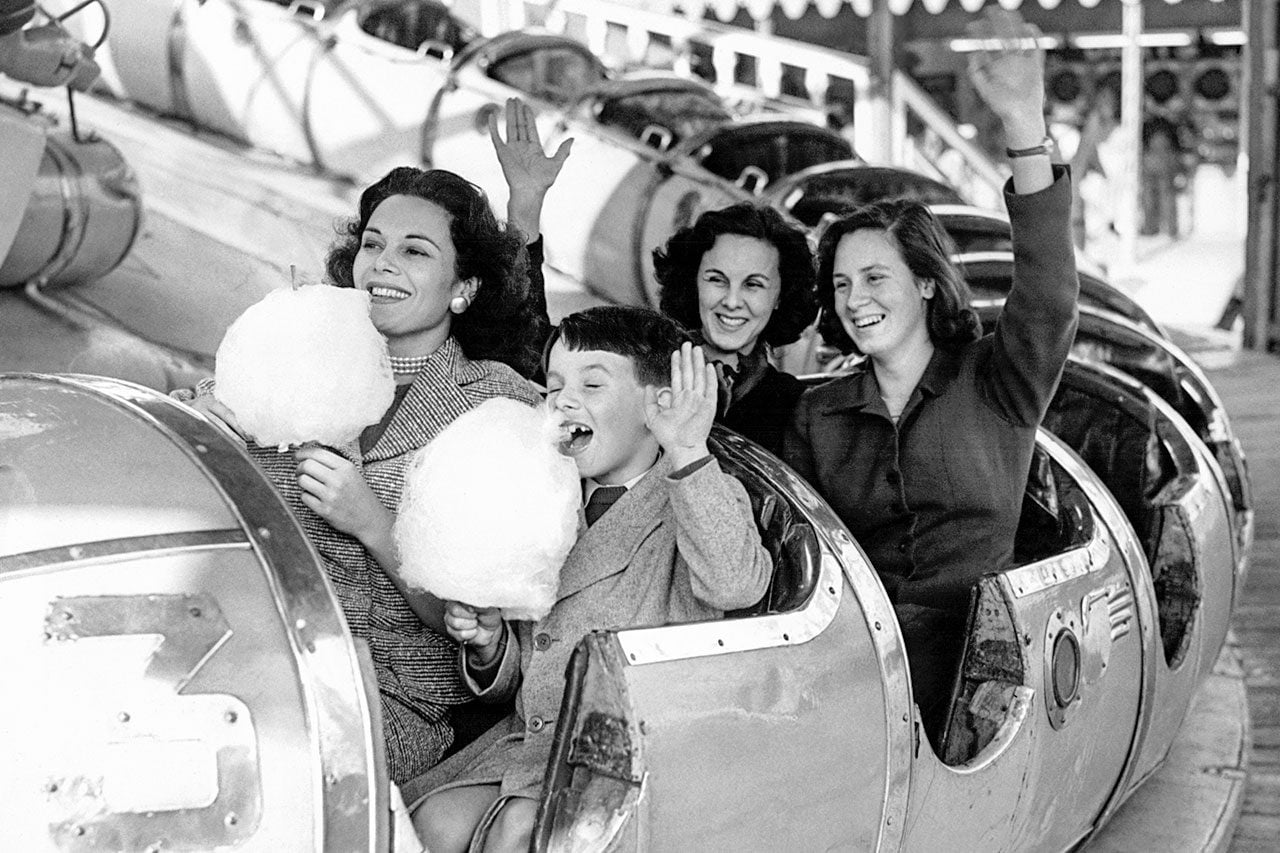

At state fairs across America, food stands were full of regional goodies before deep-fried Oreos stole the spotlight.
Growing up, my best friend lived right across the street, and we spent just about every day of our childhood together. Her dad happened to manage the Big Fresno Fair, which meant every October we got what felt like the best deal imaginable: access to the Director’s Suite, unlimited ride passes and enough free fair food to keep two 10-year-olds happily wandering the fairgrounds for hours. Looking back, I’m not entirely sure how our parents were comfortable letting us disappear into a crowd of thousands armed with nothing but ride bracelets and corn dogs, but somehow we always found our way back.
I still take advantage of that perk whenever I’m back in Fresno in October, only now I bring my own kids. They don’t roam quite as freely as I did back in the ’90s, but we all still make a beeline for our favorite fair foods the moment we arrive. These days, it’s cinnamon rolls, corn dogs and a giant pickle for good measure.
Looking back, my favorite fair foods probably weren’t all that different from most others in the ’90s. But in the 1950s, state fairs were a much more regional affair. Wisconsin had cream puffs. Minnesota had Pronto Pups. Southern fairs had boiled peanuts. Before every fairground started serving roughly the same deep-fried menu, state fairs were still celebrating the foods that made their corner of the country unique.
Cream Puffs
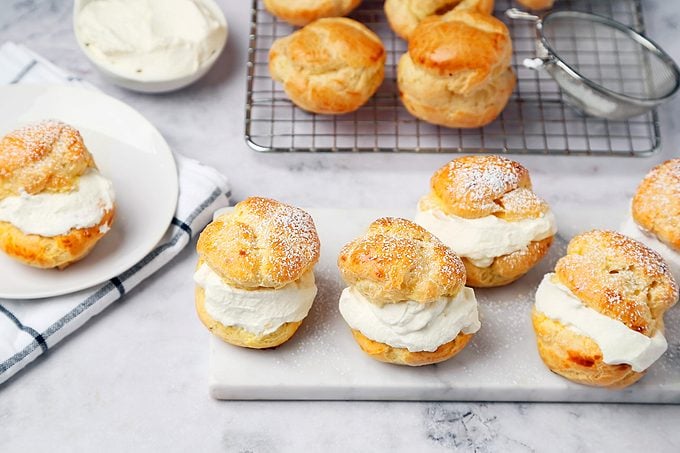
If you were headed to the Wisconsin State Fair in 1955, there was one stop you simply couldn’t skip. The fair had been serving its famous Original Cream Puffs since 1924, when they were introduced as a way to showcase the state’s thriving dairy industry. By the mid-’50s, they were already a beloved tradition.
Each oversized cream puff was filled with fresh whipped cream and finished with a generous dusting of powdered sugar. Wisconsin looked at a mountain of whipped cream and collectively decided, “Yes, this seems reasonable,” and we love them for that. More than a century later, not much has changed.
Pronto Pups
Most of us think “corn dog” and move on. Minnesotans know better.
The Pronto Pup arrived at the Minnesota State Fair in 1947, and while it looks nearly identical to a corn dog, it uses a pancake-style batter instead of the sweeter cornmeal coating found on its better-known cousin. It’s one of those regional distinctions locals will happily explain to you…whether you asked them to or not.
All-You-Can-Drink Milk
Unlimited soda refills barely raise an eyebrow today. Unlimited milk feels aggressively Midwestern in the best possible way.
The Minnesota State Fair introduced its all-you-can-drink milk stand in 1955 as a way to promote the state’s dairy farmers. For just a few cents, visitors could refill their cups throughout the day—a wholesome answer to today’s towering milkshakes and over-the-top dessert creations.
Corny Dogs
Minnesota wasn’t the only state convinced it had perfected the hot dog on a stick. Fletcher’s introduced the Corny Dog at the State Fair of Texas in 1942, where it quickly became one of the fair’s signature foods.
It may look a lot like Minnesota’s Pronto Pup, but don’t tell Texans that. For decades, the two have inspired friendly regional debates, with each state proudly claiming its version is the one worth standing in line for.
Hamburgers
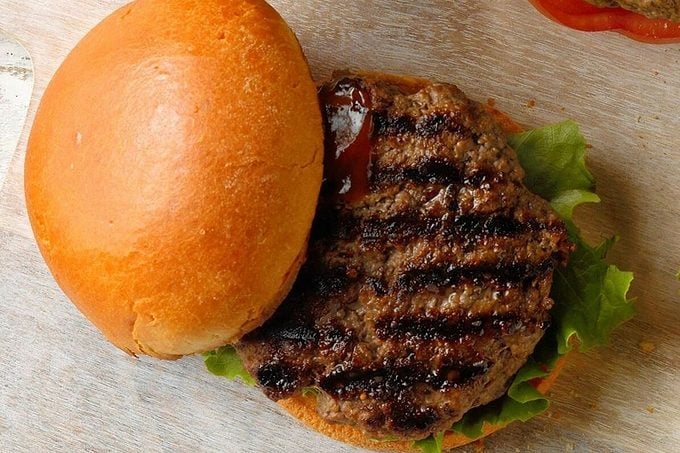
Nebraska didn’t need to invent an outrageous fair food to get people in line. It already had beef.
Photographs show hamburger stands at the Nebraska State Fair before 1950, serving exactly the kind of simple, satisfying meal you’d expect at an agricultural fair celebrating one of the country’s largest cattle-producing states. Before every fair tried to invent the next viral food, a really good hamburger was enough to draw a crowd.
Tom Thumb Mini Donuts
Mini doughnuts feel like they’ve been part of every state fair forever, but they were still relatively new in 1955. Tom Thumb Donuts debuted at the Minnesota State Fair in 1949, where fairgoers lined up for tiny cake doughnuts tossed in cinnamon sugar while they were still warm.
Unlike hamburgers or sit-down meals served by church groups, the doughnuts were designed to be eaten while wandering the fairgrounds. Fresh from the fryer and coated in sugar, they were easy to carry from one exhibit to the next—and before long, they became as much a part of the fair as the rides themselves.
Lemonade Shake-Ups
Not every fair tradition belongs to just one state.
Fresh-squeezed lemonade was cooling off fairgoers across the country by the 1950s, but Iowa became especially known for its lemonade shake-ups. Rather than simply stirring everything together, vendors packed fresh lemon juice, sugar and ice into a cup and shook it until it was icy cold—a simple trick that’s still just as refreshing these days.
Candy Apples
Few fair treats have stood the test of time quite like the candy apple. By 1955, they’d already been a fair favorite for decades. Caramel apples existed, but they hadn’t yet become the midway staple they are today. If you walked through a state fair in the mid-’50s looking for an apple on a stick, chances are it was coated in a glossy shell of bright red candy instead.
Cotton Candy
Some fair foods are proudly regional. Cotton candy has never cared about state lines.
By 1955, the airy spun-sugar treat had already become one of the universal symbols of a day at the fair. Whether you were in California, Wisconsin or Georgia, chances are you’d see oversized clouds of pink and blue spun sugar drifting through the crowd before you even spotted the Ferris wheel.
Saltwater Taffy
Most people associate saltwater taffy with the Atlantic City Boardwalk, but by the early 1950s, it had made its way onto state fairgrounds too. North Carolina’s State Fair began selling handcrafted saltwater taffy in 1951, giving visitors another sweet souvenir to take home after a day of carnival rides and livestock shows.
Italian Sausage
Wisconsin may be best-known for its cream puffs, but another longtime State Fair favorite tells a very different story. Mille’s Italian Sausage began serving fairgoers in 1932, becoming the first permanent food stand built at Wisconsin State Fair Park.
Founded by Italian immigrants, Amatore and Antonette Mille, the Italian sausage stand quickly became an annual tradition for generations of fairgoers. It’s a reminder that state fair food wasn’t shaped only by local farms—it was also shaped by the families who brought their own culinary traditions with them.
Homemade Pies
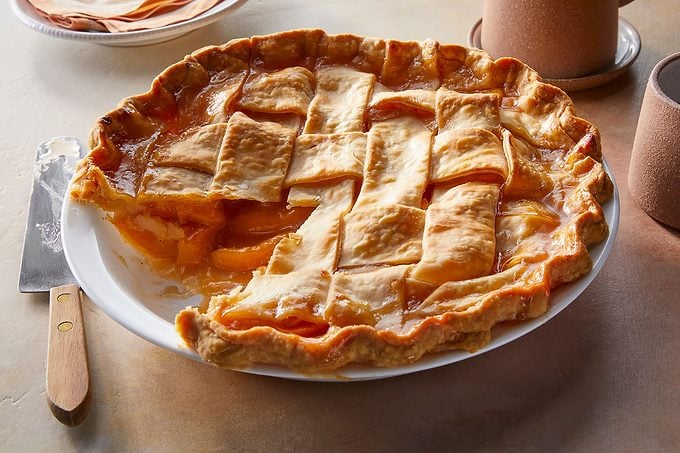
Not every memorable fair treat came from a concession stand. In the 1950s, many state fairs still relied on church groups, civic organizations and community volunteers to feed hungry visitors. Apple, cherry and peach pies sat alongside homemade dinners, reminding fairgoers that these events were as much about neighbors gathering together as they were about the rides. Before fairs were packed with branded food trailers, plenty of the best meals came from somebody’s church cookbook.
Roasted Sweet Corn
In corn-growing states, the harvest was often the attraction. It’s easy to forget today, but state fairs were originally agricultural exhibitions, built to celebrate crops, livestock and farmers that defined a region. Roasted sweet corn fit that mission perfectly. Fresh ears were buttered and handed over still steaming, giving fairgoers a taste of one of the state’s biggest harvests. When the corn is that good, it may as well be considered dessert.
Boiled Peanuts
If you grew up going to state fairs in Georgia, South Carolina or other peanut-growing states, a warm paper sack of boiled peanuts probably doesn’t seem unusual at all. Elsewhere, many fairgoers had never even heard of them.
Instead of roasting peanuts until they’re crisp, fresh green peanuts are simmered for hours in heavily salted water until they become soft, creamy and deeply savory. Like so many regional foods, boiled peanuts are a reminder that what feels completely ordinary in one part of the country can be a brand-new experience somewhere else. That’s exactly what made the 1950s state fairs so much fun—every region had something that locals took for granted and visitors couldn’t wait to try.
Pickled Eggs
State fairs handed out blue ribbons for far more than pies and cakes. Home-preserved foods—from jams and pickles to carefully prepared pickled eggs—gave home cooks another chance to show off their skills and compete for top honors.
They may not have drawn the same crowds as the roller coaster or cotton candy stand, but entries like these were a reminder of what state fairs were built to celebrate in the first place: the skills of the people who grew, cooked and preserved the food that fed their communities.

