Colonial Americans were doing some pretty fascinating things with cornmeal and whipped cream.
If you could go back and sit down to dinner in 1776, the scene would probably look far more practical and lived-in than the polished Colonial Williamsburg reenactment most of us have in our minds. The table might have dense slices of cake made sticky by dried fruit, or bowls of long-simmered stew and greens softened in hot fat. Cornmeal mush would be steaming near the fire while savory pies baked somewhere nearby. If your host was wealthy enough to show off a little, there may even be a tureen of turtle soup on the table. And somewhere nearby, almost certainly, there is alcohol. Revolution is thirsty work.
Colonial American cooking was practical because it had to be. Refrigeration didn’t exist, roads were rough, and winters could feel endless. Meat spoiled quickly, fresh ingredients changed constantly with the seasons, and much of early American food was built around one central question: How do we keep this edible longer than three days? But the food itself was far from joyless. The flavors were rich, heavily spiced, buttery and often surprisingly elegant, shaped by European traditions, Indigenous ingredients and the realities of cooking in an entirely new landscape.
In honor of America’s 250th birthday, here are some of the dishes that might have appeared on a 1776 menu—some comforting, some genuinely strange, and a few that deserve another shot.
Election Cake
Americans have apparently been stress-baking through elections since the 1700s.
Election cake was especially popular in New England, where communities gathered for long, crowded voting days that involved travel, taverns, speeches and enough socializing to require enormous amounts of food. (Colonists in Connecticut and Rhode Island could vote for their own governors as early as 1660.) According to Reader’s Digest, women in Connecticut baked these to help sustain men traveling to the polls.
These were not delicate little snack cakes. Election cake was heavy with dried fruit, warming spices and often whiskey or brandy, placing it somewhere in the neighborhood of fruitcake and spice bread. It was the kind of sturdy baked good capable of surviving both a muddy carriage ride and several hours of political debate.
Honestly, it feels very American that one of the country’s earliest election traditions involved carbs.
Brunswick Stew
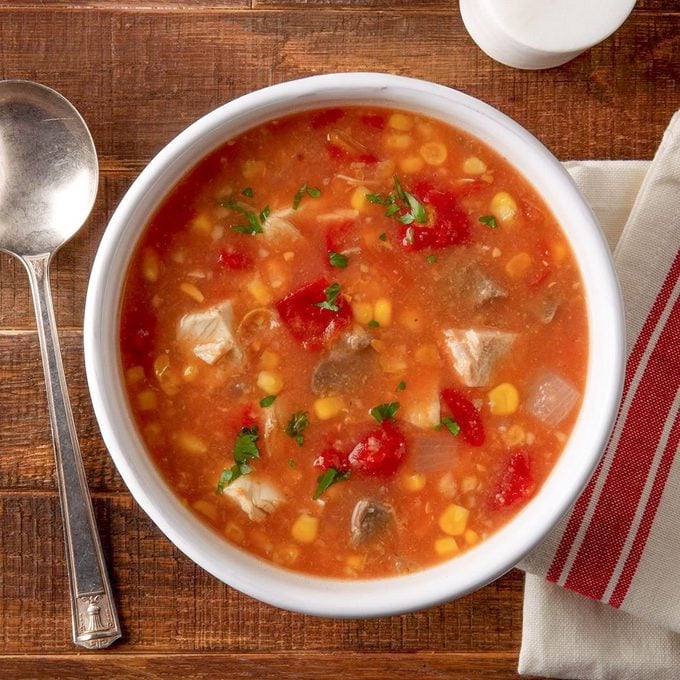
Modern Brunswick stew usually contains chicken or pulled pork. Colonial Brunswick stew was considerably wilder.
Early southern versions often included squirrel meat simmered with tomatoes, lima beans, corn and okra. Both Virginia and Georgia claim ownership of the dish, though the earliest versions were less about state pride and more about whatever happened to be running through the woods that week.
The interesting thing is that, apart from the squirrel, Brunswick stew still feels remarkably familiar. It’s smoky, slow-cooked and hearty, and it’s still tied to regional ingredients just like Southern cuisine. Corn, tomatoes and beans—all ingredients heavily shaped by Indigenous agriculture—became foundational to colonial cooking long before “American cuisine” officially existed.
We’ve mostly just stopped putting squirrels in it.
Wilted Salad
Wilted salad sounds rustic until you realize warm greens dressed with sharp acid and rich fat are still the backbone of half the appetizers at modern farm-to-table restaurants.
Colonial versions usually involved sturdy garden greens tossed with softened onions, mustard, vinegar or lemon and often some form of warm animal fat. Which, frankly, sounds delicious.
This is one of the clearest reminders that colonial food was not all beige mush and aggressively preserved meat. There were fresh herbs, garden vegetables and bright acidic flavors woven throughout daily cooking whenever the season allowed for it.
Turtle Soup
While many colonial dishes were built around practicality, turtle soup belonged to a wealthier world of upscale candlelit taverns, imported drink and loudly held political opinions.
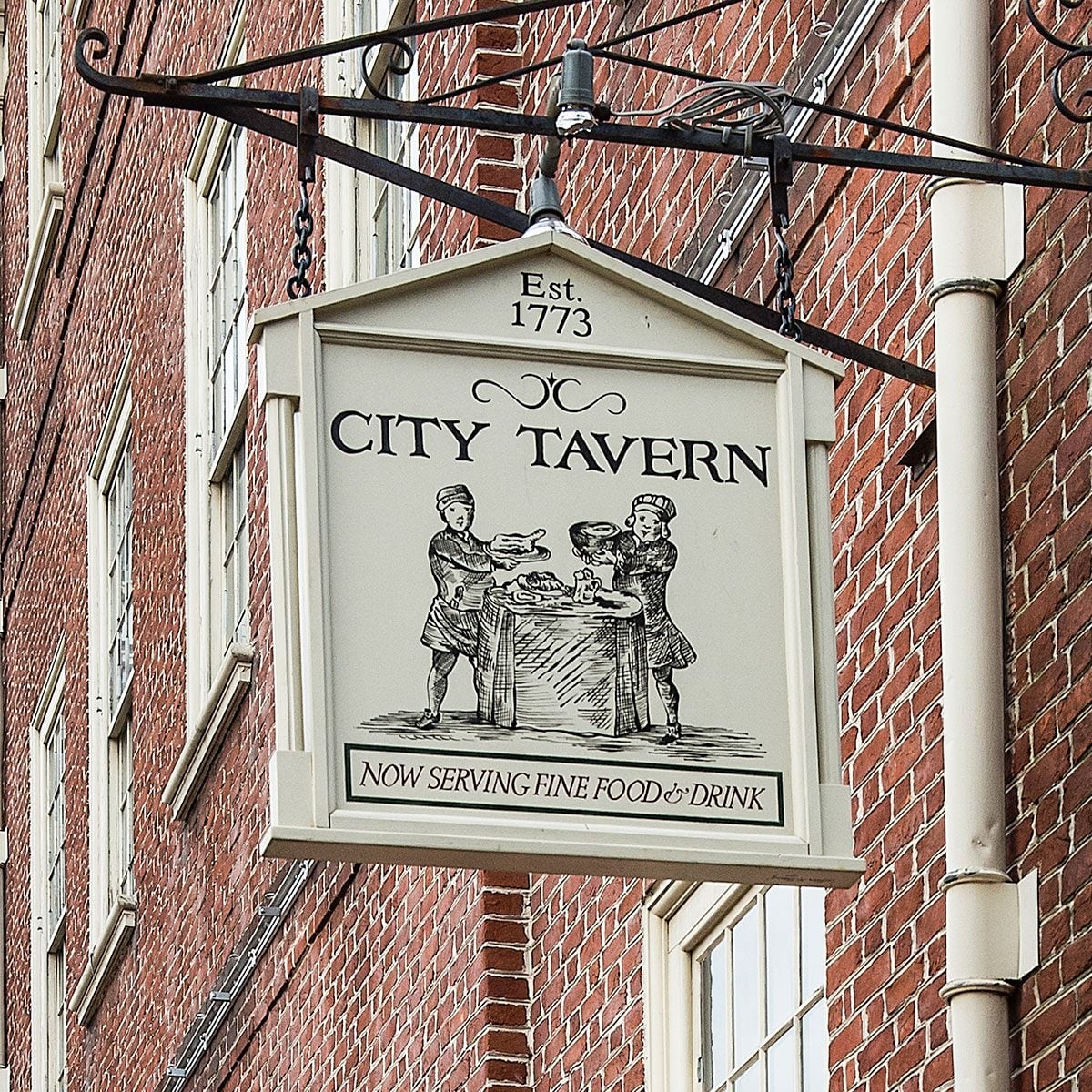
Made with turtle meat simmered in rich broth and often finished with Madeira or sherry, turtle soup became fashionable in wealthy dining rooms and port cities. Reader’s Digest notes that Philadelphia’s City Tavern served a famous version that may have even been enjoyed by George Washington.
Modern Americans tend to imagine colonial food as uniformly rustic, but upper-class dining in the colonies could actually be extremely elaborate. Exclusive taverns hosted politicians, merchants and wealthy travelers, who ate well and drank imported wines that arrived through Atlantic trade routes. Turtle soup occupied the same category as oysters and punch service: rich, expensive foods meant to signal sophistication.
Succotash
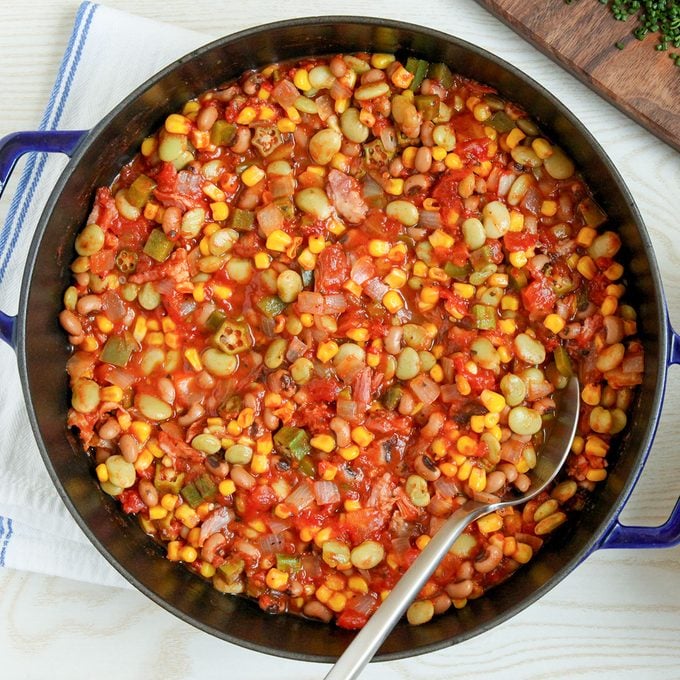
Succotash is one of the clearest examples of how Indigenous agriculture shaped what eventually became American food.
Traditionally made with corn, beans and sometimes squash, succotash originated in Native communities long before European settlers arrived. Colonial Americans adopted the dish quickly, which makes sense given that corn appears everywhere in early American cooking.
Corn appears constantly across colonial cooking because settlers quickly realized Indigenous crops and agricultural knowledge were far better adapted to the local landscapes than the European traditions they arrived with.
Today, succotash still feels like the sort of dish that typifies the season: sweet corn at its peak, tender beans and fresh herbs melting into the mix, and the faint feeling that summer is starting to slip away.
Mush or Hasty Pudding
“Mush” is, objectively, one of the least persuasive names ever given to a food. Which is unfortunate because hasty pudding was essentially the colonial version of grits or polenta—a warm cornmeal comfort Americans would likely still find deeply comforting.
The dish was made by stirring spoonfuls of cornmeal into boiling milk until the mixture was thick and hearty. It was inexpensive, filling, and adaptable depending on the season and household. Poorer families might eat it plain, while wealthier tables added butter, cream and/or sweeteners.
A colonial breakfast table would have smelled like a combination of smoke, milk warming near the hearth, and cornmeal thickening slowly in a pot. And that honestly sounds pretty wonderful.
Pigeon Pie
Passenger pigeons once existed in such overwhelming numbers that flocks reportedly darkened the sky for hours at a time. Colonists treated them as an endless food source because, at the time, they practically seemed to be. Which is exactly how they ended up baked into savory pies across colonial America.
There’s something strangely haunting about the dish now, knowing that passenger pigeons eventually became extinct as a result of overhunting and habitat destruction. But at the same time, savory meat pies simply made sense. They stretched ingredients, held heat well and fed large groups efficiently.
Beneath the extinct-bird portion of the equation, the structure of the dish still sounds appealing: rich gravy, flaky pastry, savory meat and herbs, all baked together until golden.
Hoe Cakes
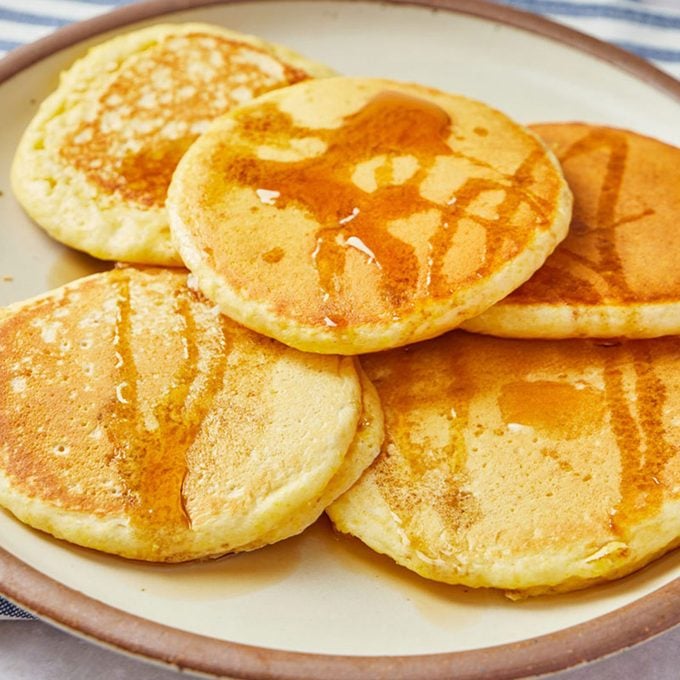
Hoe cakes fall into the category of colonial foods that sound mildly insulting until you realize they are essentially crisp-edged cornmeal pancakes cooked over fire.
Like so many colonial foods, hoe cakes reflect the merging of European cooking traditions with Indigenous ingredients and techniques. They were portable, inexpensive and practical for travelers, workers and soldiers.
The name likely comes from the practice of cooking simple cornmeal batter on flat metal plates. Those flat plates were called “hoes” back in the day, according to the National Park Service. Today, they’d be akin to what we call “griddles.”
Potted Meat
Before refrigeration, preserving meat was often a matter of survival. Potted meat involved pounding cooked meat into a paste, packing it tightly into jars and sealing it beneath a thick, airtight layer of butter or lard. Apparently, properly potted meat could last for a year, according to Reader’s Digest.
The phrase itself sounds unfortunate to modern ears—like it could refer to Victorian medicine or something discovered in the back of a camping cooler. But the actual technique is not all that different from European confits, rillettes and other preservation methods that later became considered luxury foods.
Pepper Pot Soup
Pepper pot soup was hearty, heavily seasoned, and filled with tripe and vegetables, with an aggressively peppery broth designed to warm people through brutal winters. According to popular legend, versions of pepper pot soup were served to Continental Army troops during the Revolutionary War, though historians debate some of the finer details.
Still, the dish became woven into early American food culture and Revolutionary War lore as a staple of Philadelphia taverns. You can almost picture the room: wet wool coats steaming near the fire, muddy boots by the door, and enormous bowls of peppery soup hitting wooden tables while somebody loudly argues about tea taxes in the background.
Syllabub
Syllabub sounds less like a drink and more like the name of an exceptionally cheerful storybook rabbit. But it was, in fact, one of colonial America’s favorite party drinks.
The frothy punch combined whipped cream, sugar, citrus and alcohol—often wine, cider, sherry or brandy. Some recipes were especially theatrical, involving milk drawn directly from the cow and mixed with alcohol to create an airy foam—which feels completely unhinged and somehow elegant at the same time.
I could almost see syllabub appearing on a modern cocktail menu next to a smoked rosemary sprig and a paragraph about locally sourced cream.
And honestly, that may be the biggest surprise about a menu from 1776. Beneath the unfamiliar names and occasionally alarming preservation methods, much of colonial American food still feels recognizable. Its rich stews, buttery cakes, creamy desserts and communal meals were built around comfort, abundance and, of course, the occasional pretentious cocktail.
The ingredients have changed. The kitchens have changed. But Americans have always loved gathering around crowded tables with something hearty on the stove and dessert waiting nearby.
Related: