Three centuries later, it's still easy to underestimate.
With America’s 250th birthday approaching, I’ve found myself increasingly fascinated by the foods and drinks that shaped the country’s earliest years. While researching the dishes that filled colonial tables, I was reminded how much food can connect us to the people who came before us. Sometimes that’s through a treasured family recipe, a loaf of bread or a beloved regional dessert. In this case, it’s through an alarmingly strong bowl of punch.
Fish House Punch is one of the most famous drinks of the colonial era, having earned a reputation for being refreshing, dangerously potent and surprisingly enduring. As someone who loves both cocktail history and a good drink, I couldn’t resist finding out whether this Revolutionary-era punch deserved its legendary reputation.
What is Fish House Punch?
Fish House Punch has been around since the 1700s, which means it has outlasted empires, cocktail trends and more than a few questionable drinking fads.
The drink is believed to have originated with the Schuylkill Fishing Company of Pennsylvania, a gentleman’s fishing club founded in 1732. Despite its wholesome-sounding name, the group was almost as famous for its boozy punch as it was for its fishing. Its signature recipe combined rum, Cognac, peach brandy, lemon juice and sugar into a deceptively easy-drinking cocktail that had a tendency to knock guests flat.
It seems early Americans were rather enthusiastic drinkers. The Founding Fathers weren’t always sitting around sipping neat whiskey and discussing democracy in hushed tones. More often, they were gathered around communal bowls of punch, refilling cups and offering increasingly spirited opinions on British rule.
Fish House Punch fit right into that world. It was shareable and strong enough that stories about its potency have survived for nearly 300 years.
How do you make Fish House Punch?

For this test, I turned to George Washington’s Mount Vernon, which shares a version of Fish House Punch based on an 18th-century recipe. The original instructions call for 2 quarts of Jamaican rum, 1 quart of Cognac, 3/4 pound of loaf sugar, 2 quarts of spring water, 1 quart of lemon or lime juice, and “1 wine glass” of peach brandy. As someone who spends a lot of time reading modern recipes, I appreciated the reminder that colonial cooks measured ingredients with a level of confidence I can only aspire to. A wine glass? Whose wine glass? George Washington’s wine glass? Mine?
The measurements may be vague, but the preparation is specific. In a video demonstrating the recipe, a bartender from George Washington’s Mount Vernon explains that Fish House Punch can’t be enjoyed immediately. It needs at least three hours of what he calls “mellowing time.”
The original recipe was designed to supply an entire tavern, not to be a spontaneous weeknight cocktail, so it mellows directly in a punch bowl already filled with ice and lemon slices. But since I wasn’t hosting Benjamin Franklin and half of Philadelphia, I opted for the smaller-batch version. The process isn’t difficult, though it does require some planning. I mixed and refrigerated the punch for two hours, then added ice cubes and lemon wedges and let everything mellow for another hour.
How does it taste?
Looking at the recipe, I expected Fish House Punch to taste like the 18th century. Specifically, I expected it to taste like a committee of colonial men had decided that just adding more liquor was the solution to every problem. Instead, it’s quite elegant.
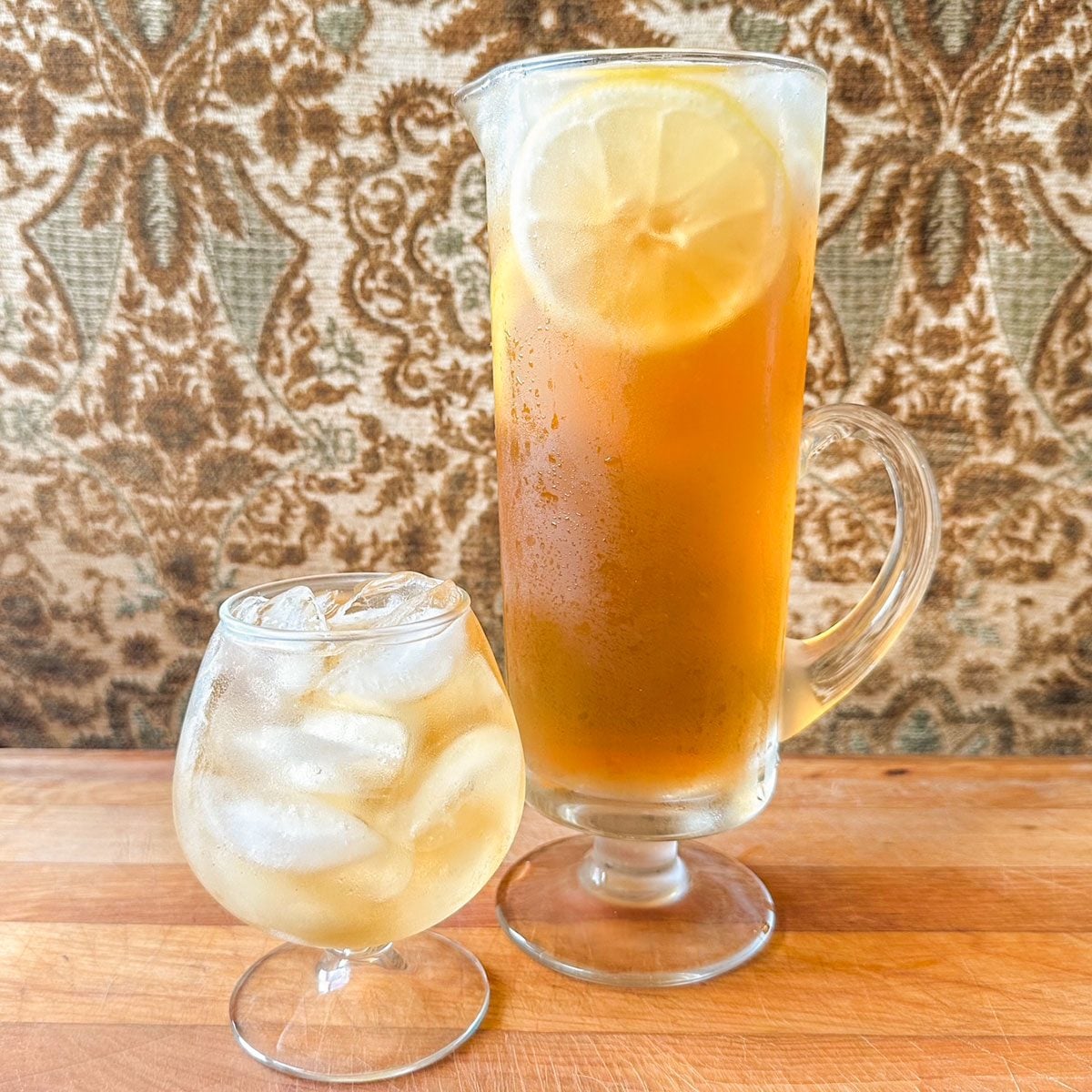
What surprised me most was how familiar it felt. For all its history, Fish House Punch doesn’t drink like a novelty or mere historical curiosity. It drinks like something you’d happily serve on a patio in 2026. The lemon keeps the punch bright, while the peach brandy adds a subtle fruitiness that softens the sharper edges of the rum and Cognac. Everything works together, and no one ingredient dominates.
But I now also have a very clear understanding of why so many historical accounts caution against underestimating it. Fish House Punch doesn’t taste particularly strong, and that’s precisely the danger. Suddenly, three centuries of warnings from people who had one glass too many started to make a lot more sense.
Related: