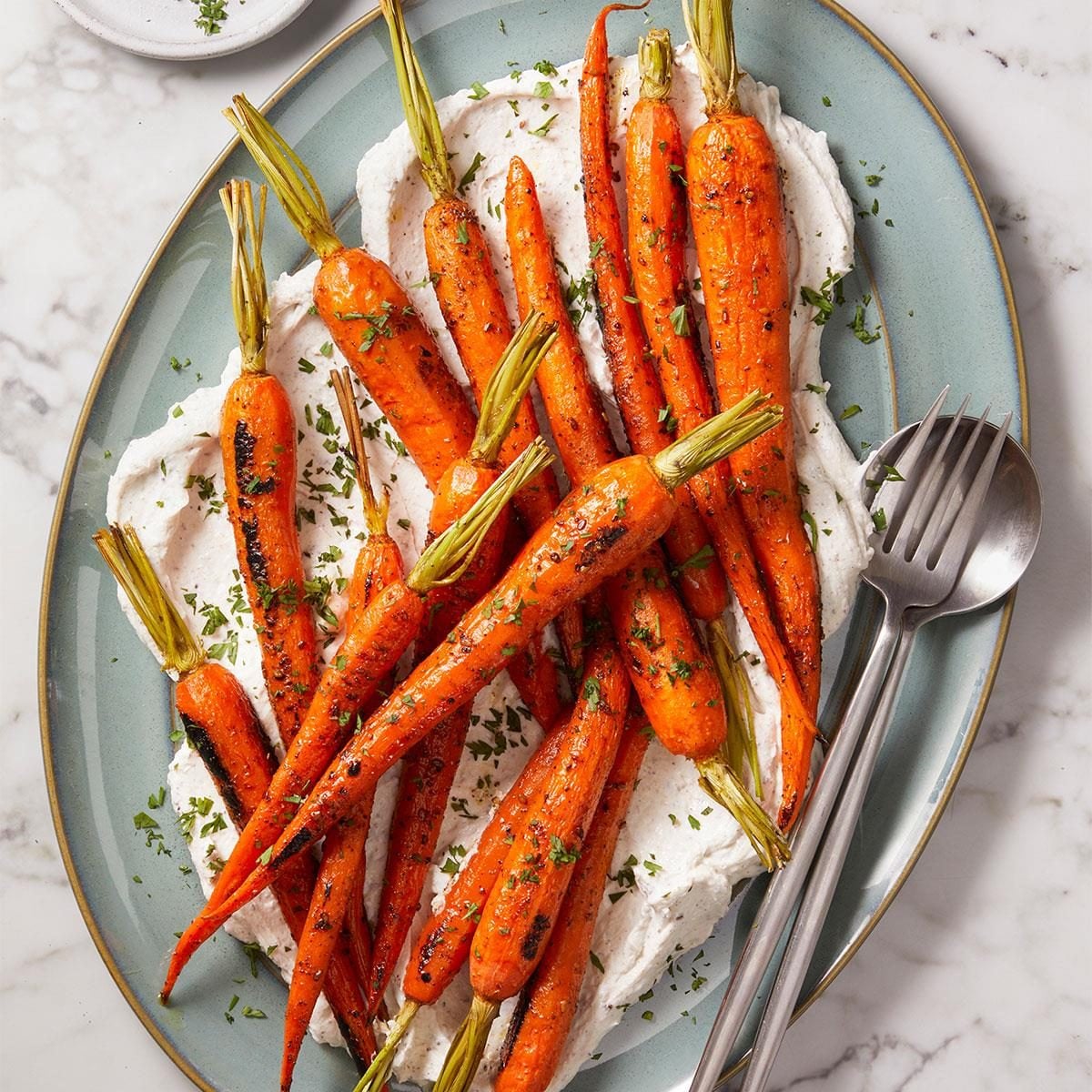
Za'atar roasted carrots have plenty of Middle Eastern flair and seasoning, turning an everyday root vegetable into the most interesting thing on the table.
Fragrant za’atar is my most prized spice-cabinet possession, and these za’atar roasted carrots really show what it can do. The seasoning blend of dried thyme, toasted sesame, sumac and salt brings a background-player root vegetable right into the spotlight. A bed of cool, tangy labneh (a thick, creamy, strained yogurt) catches the spiced olive oil that runs off the warm vegetables. Scatter the frilly carrot tops over everything (they taste like parsley’s wilder cousin) and call it dinner, a side dish, or the best part of a mezze spread.
I fell in love with ingredients like labneh and za’atar while working as a recipe developer for Middle Eastern cookbooks. Years of testing hummus variations and memorizing the differences between Lebanese and Syrian za’atar blends turned me into a devotee. These items were once hard to find, but now many supermarkets carry both. These days I’ve been easing off dairy, so I often replace the labneh in this recipe with thick hummus or smoky baba ghanoush, spread across the platter in the same generous swoosh.
Za’atar Roasted Carrots Ingredients
- Carrots: Look for fresh carrots with the green tops still attached; this signals they were recently harvested and haven’t been sitting around losing moisture. Smaller, more slender carrots roast up tender and sweet without needing to be halved lengthwise.
- Olive oil: A drizzle of good olive oil helps the za’atar cling to the carrots and encourages caramelization in the hot oven. Use the best olive oil you can buy since the flavor comes through in the finished dish.
- Za’atar seasoning: This Middle Eastern blend of dried herbs, sesame seeds, sumac and salt adds earthy, tangy, nutty flavor to both the carrots and the labneh. You’ll find za’atar in well-stocked grocery stores, in Middle Eastern markets or online, and homemade versions work beautifully too.
- Greek yogurt: As the whey drains off of plain, full-fat Greek yogurt, it thickens into rich, tangy homemade labneh. Skip low-fat yogurt, which won’t give you the same luxurious texture.
- Salt: Stirred into the yogurt, salt seasons the labneh and helps draw out moisture as it strains. It also keeps the finished spread from tasting flat against the bold, savory carrots.
- Lemon juice: Fresh lemon juice brightens the labneh and cuts through its richness with a welcome hit of acidity. Squeeze it from an actual fresh lemon rather than reaching for the bottled stuff, which can taste dull or metallic.
- Salt and pepper: A final seasoning pulls everything together and sharpens the flavors of the carrots and labneh. Taste as you go, since za’atar and labneh are already seasoned.
Directions
Step 1: Strain the yogurt

Line a fine mesh strainer with two layers of cheesecloth. Place the yogurt in the strainer over a bowl. Cover and refrigerate it for at least four hours or overnight.
Step 2: Roast the carrots

Preheat the oven to 425°F. Clean and trim the carrots, reserving 1 tablespoon of the chopped carrot greens for a garnish. Place the carrots in a baking dish. Drizzle them with olive oil, sprinkle them with za’atar, then toss to coat them. Bake the carrots until they’re tender, 20 to 25 minutes, tossing halfway.
Step 3: Assemble the dish
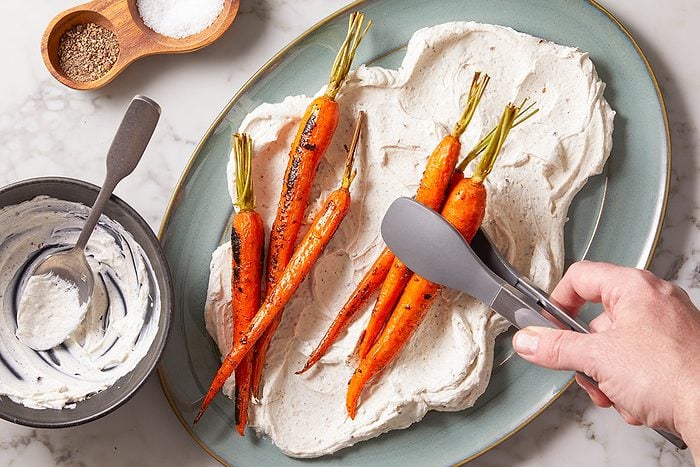
Mix the lemon juice and za’atar into the labneh, then spread it over a serving dish. Layer the roasted carrots over top. Sprinkle them with the reserved carrot greens and season them with salt and pepper to taste.

Za’atar Roasted Carrots Variations
- Swap the base: Use whipped feta or a garlicky tahini sauce in place of the labneh for a different tangy backdrop.
- Add a crunchy topping: Scatter toasted pine nuts, pistachios or dukkah over the finished dish for texture and extra nutty flavor.
- Finish them with pomegranate: Shower the carrots with fresh pomegranate seeds and a drizzle of pomegranate molasses for a sweet-tart contrast.
- Mix up the roots: Roast parsnips, baby turnips or rainbow carrots alongside (or instead of) the orange carrots for a more colorful platter.
- Add some heat: Sprinkle Aleppo pepper or a pinch of red pepper flakes over the carrots before roasting them.
- Drizzle them with honey: Finish the warm carrots with hot or plain honey to play up their natural sweetness against the savory za’atar.
- Swap the herbs: Substitute chopped fresh dill, mint or parsley for the carrot tops if your carrots come topless.
- Make it a meal: Spoon everything over warm pita bread or fluffy couscous and add a handful of chickpeas for a heartier plate.
How to Store Za’atar Roasted Carrots
Separate the labneh and roasted carrots and store them in individual airtight containers in the refrigerator. The labneh holds up especially well on its own, and is great for spreading on toast or dolloping onto other dishes later in the week if there’s enough leftover.
How long will za’atar roasted carrots last?
When stored properly in airtight containers in the refrigerator, za’atar roasted carrots will last three to four days.
Should you reheat za’atar roasted carrots?
It’s best to enjoy any leftover za’atar roasted carrots at room temperature. The labneh shouldn’t be heated, as heating it will break its creamy texture and cause it to separate. Pull the dish out of the fridge about 20 minutes before serving it, and dig in.
Za’atar Roasted Carrots Tips

Can you make the labneh ahead of time?
Yes, the labneh is a great make-ahead component. Make it up to three days in advance and store it in an airtight container in the refrigerator until you’re ready to assemble the dish.
What can you serve with za’atar roasted carrots?
Za’atar roasted carrots fit right in as part of a Middle Eastern-inspired spread alongside dishes like easy parchment paper gyros, chicken shawarma, kofta meatballs or grilled kebabs. They’re also lovely next to other mezze such as hummus, baba ghanoush, tabbouleh, fattoush or warm pita with olive oil and sumac. For a fully vegetarian meal, pair them with stuffed grape leaves or a platter of falafel with tahini sauce.
Ingredients
- 1 pound fresh carrots with greens
- 2 tablespoons olive oil
- 2 teaspoons za'atar seasoning
- labneh:
- 1 cup plain Greek yogurt
- 1/2 teaspoon salt
- 1 teaspoon fresh lemon juice
- 1 teaspoon za'atar seasoning
- toppings:
- 1 tbsp. chopped carrot top greens
- Salt and pepper to taste
Directions
-
1Line a fine mesh strainer with two layers of cheesecloth. Place yogurt in strainer over a bowl. Cover and refrigerate for at least 4 hours or overnight.
-
2Preheat oven to 425°. Clean and trim carrots, reserving 1 tablespoon chopped carrot greens for garnish. Place carrots in a baking dish. Drizzle with olive oil and sprinkle with za'atar seasoning; toss to coat. Bake until tender, 20-25 minutes, tossing halfway.
-
3Mix lemon juice and za'atar into labneh; spread over serving dish. Layer roasted carrots over top. Sprinkle with reserved carrot greens and season with salt and pepper to taste.