Seasoned couscous tastes far more impressive than its five-minute cook time suggests, and all you need are a few pantry staples.
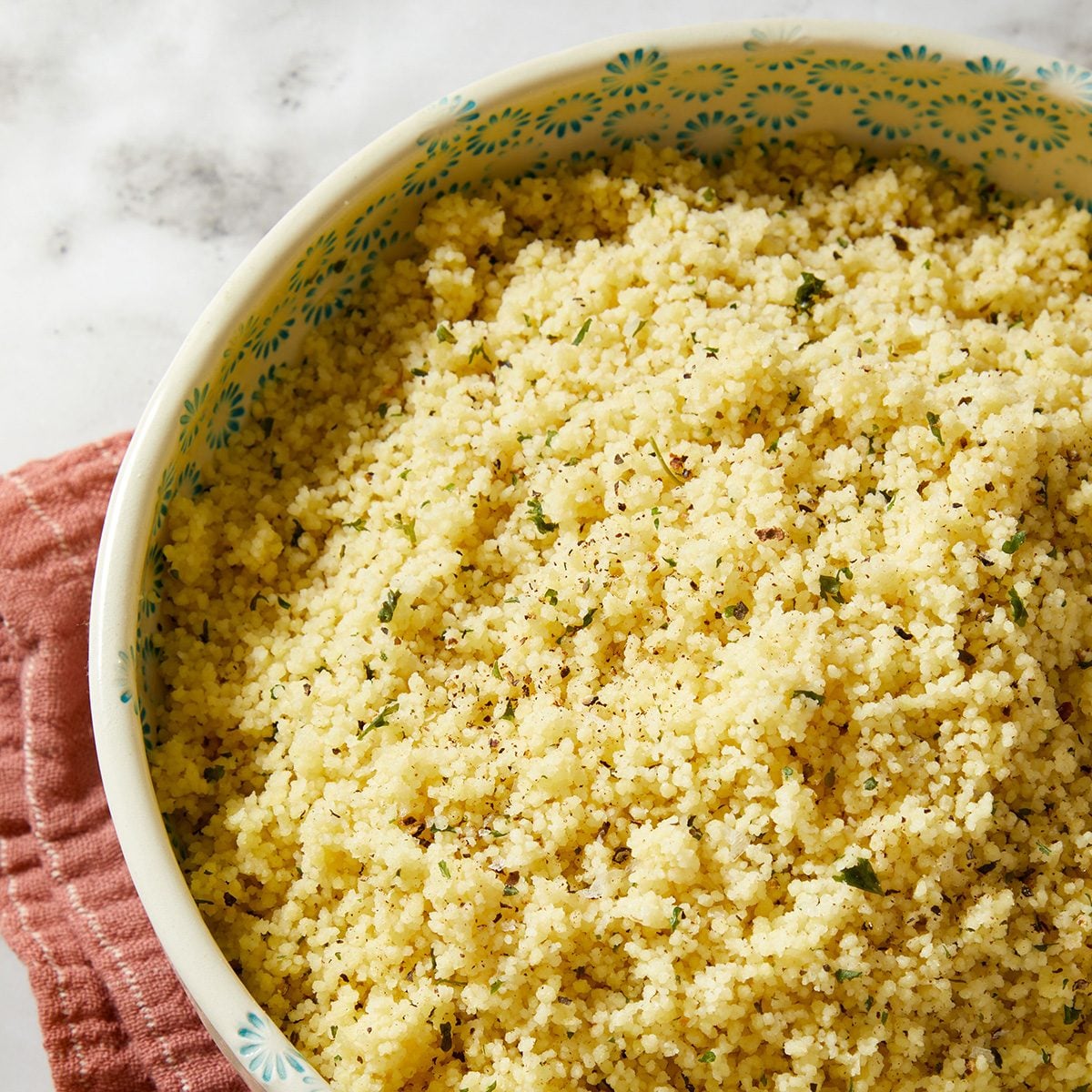
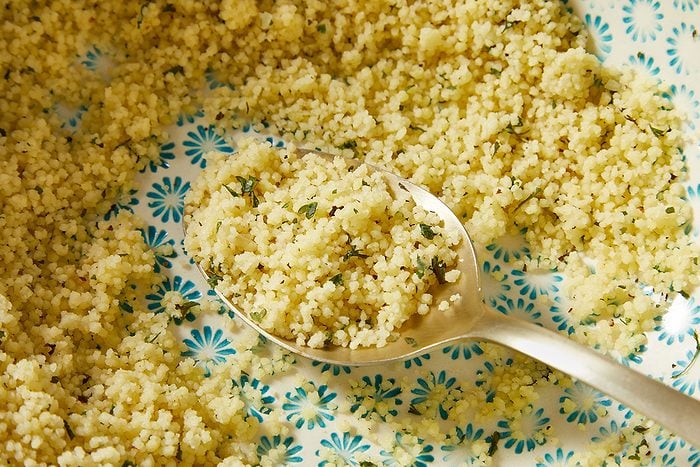
Seasoned couscous is one of the fastest, most satisfying side dishes you can pull together. Tiny granules of semolina drink up buttery broth, swelling into a tender, fluffy, herb-flaked mound. The technique couldn’t be simpler: Bring the seasoned liquid to a rolling boil, cut the heat, stir in the couscous, cover the pot and walk away. When you come back and drag a fork through the grains, they’ll separate easily into light grain-like pieces.
The grocery store can make even the simplest ingredients confusing, so a quick note about couscous. You’ll find three main types: Moroccan couscous, the smallest and most common couscous; Israeli (aka pearl) couscous, with large, round grains that have a chewier bite; and Lebanese couscous, the biggest of all. This recipe calls for standard Moroccan couscous, which cooks by simply absorbing hot liquid off the heat. Israeli and Lebanese couscous require actual simmering and longer cook times, so they aren’t interchangeable here.
Recipe contributor Ruth Lee of Troy, Ontario, says this side dish will earn a permanent spot in your weeknight dinner rotation.
Ingredients for Seasoned Couscous
- Couscous: Couscous looks like a whole grain, but it’s actually semolina pasta, coarsely milled from durum wheat and shaped. For this reason, it’s not a gluten-free product. It’s a staple in many North African and Middle Eastern dishes, and is also a star in Mediterranean cooking. Look for couscous near the rice, grains or pasta at the grocery store.
- Butter: A tablespoon of butter adds richness and subtle silkiness to the couscous. It’s fine to use salted butter, just keep in mind that the bouillon contains salt. Adjust the seasoning to taste.
- Dried parsley flakes: This mild herb contributes a fresh, slightly peppery note and flecks of color. If you prefer fresh parsley, use the fresh-to-dried herb conversion.
- Chicken bouillon granules: The bouillon infuses the couscous with savory depth and a well-seasoned backbone that plain water alone can’t provide.
- Dried minced onion: These small pieces rehydrate as the couscous steams, and deliver a gentle sweetness and aromatic flavor without the need to chop fresh onion.
- Dried basil: Warm, slightly sweet dried basil rounds out the seasoning blend and pairs naturally with the chicken bouillon.
- Pepper: A small amount of black pepper adds subtle heat and sharpness, balancing the savory and herbal flavors.
- Garlic powder: Just a pinch of garlic powder enhances the overall seasoning without overpowering the other ingredients.
Directions
Step 1: Make the couscous
In a large saucepan, combine the water, butter, dried parsley flakes, chicken bouillon granules, dried minced onion, dried basil, black pepper and garlic powder, and bring the mixture to a boil. Remove the pan from the heat and stir in the couscous. Cover the pan and let it stand for five minutes or until the liquid is absorbed. Fluff the couscous with a fork before serving it.

Seasoned Couscous Variations
- Make it Mediterranean: Stir in chopped sun-dried tomatoes, sliced kalamata olives and crumbled feta cheese after fluffing the couscous for a bright, briny twist.
- Add a fresh herb finish: Toss in chopped fresh mint, cilantro or dill just before serving to brighten the flavor and add a pop of color.
- Go nuts: Fold in toasted pine nuts or slivered almonds for a satisfying crunch that contrasts with the tender couscous.
- Swap the bouillon: Replace chicken bouillon with vegetable bouillon or homemade vegetable broth to make this side dish vegetarian friendly without sacrificing savory depth.
- Stir in dried fruit: Mix in golden raisins, dried cranberries or chopped dried apricots for a sweet counterpoint that pairs well with roasted meats.
- Make it cheesy: Stir in a handful of freshly grated Parmesan or shredded Gruyere while the couscous is still hot, letting the cheese melt.
- Spice it up: Add a pinch of cumin, smoked paprika or red pepper flakes to the boiling liquid for a warm, subtly smoky flavor.
- Load it with veggies: Toss in sauteed zucchini, roasted red peppers and baby spinach to turn this simple side into a more substantial dish.
- Try a citrus twist: Squeeze fresh lemon juice over the finished couscous and add a bit of zest for a light, bright flavor that can cut through richer main courses.
How to Store Seasoned Couscous
Let the couscous cool completely before transferring it to an airtight container. Store it in the refrigerator, keeping the lid tightly sealed to prevent the grains from drying out. You can also freeze cooked seasoned couscous.
How long does seasoned couscous last?
Seasoned couscous will keep in the refrigerator for three to four days when stored in an airtight container. In the freezer, it will maintain its best quality for three to four months. While frozen couscous may be safe to eat beyond that, the texture and flavor will start to decline over time.
What’s the best way to reheat seasoned couscous?
The stovetop is the best way to reheat seasoned couscous. Warm it in a saucepan over medium-low heat, adding a splash of water or broth to loosen the grains and restore moisture. Stir it gently with a fork as it heats, breaking up any clumps to keep the texture light and fluffy. The couscous is ready when it’s heated through; the grains should separate and feel tender again.
Can you freeze seasoned couscous?
To freeze seasoned couscous, first let it cool, then portion it into airtight containers or resealable freezer bags, pressing out as much air as possible before sealing them. When you’re ready to enjoy it, thaw the couscous in the refrigerator overnight, then gently reheat it on the stovetop with a splash of water to restore its fluffy texture.
Seasoned Couscous Tips
How else can you use seasoned couscous?
Seasoned couscous is versatile enough to be so much more than a simple side dish. Toss it with fresh vegetables, chickpeas and a lemon vinaigrette for a hearty grain salad that works great for lunch or meal prep. It also makes an excellent filling for stuffed pepper recipes or hollowed-out zucchini boats. Some recipes with couscous call for using it as a bed for braised meats or roasted vegetables in place of rice, while others have you stir it into soups and stews just before serving to add body and texture.
What can you serve with seasoned couscous?
Seasoned couscous pairs well with almost any protein or main course. Try it alongside baked chicken thighs, grilled lamb chops, baked salmon or roasted pork tenderloin. It’s a natural match for dishes with Mediterranean or North African flavors, such as chicken shawarma, steak kebabs and shrimp and lentils. For weeknight-friendly options, serve it with baked lemon chicken, honey-garlic pork chops or pan-seared red snapper. For a lighter meal, pair it with grilled veggie kabobs, a simple frittata or a big green salad.
Ingredients
- 2 cups water
- 1 tablespoon butter
- 1 tablespoon dried parsley flakes
- 2 teaspoons chicken bouillon granules
- 1/2 teaspoon dried minced onion
- 1/2 teaspoon dried basil
- 1/4 teaspoon pepper
- 1/8 teaspoon garlic powder
- 1 package (10 ounces) couscous
Directions
-
1In a large saucepan, combine the first eight ingredients; bring to a boil. Remove from the heat; stir in couscous. Cover and let stand for 5 minutes or until the liquid is absorbed. Fluff with a fork.