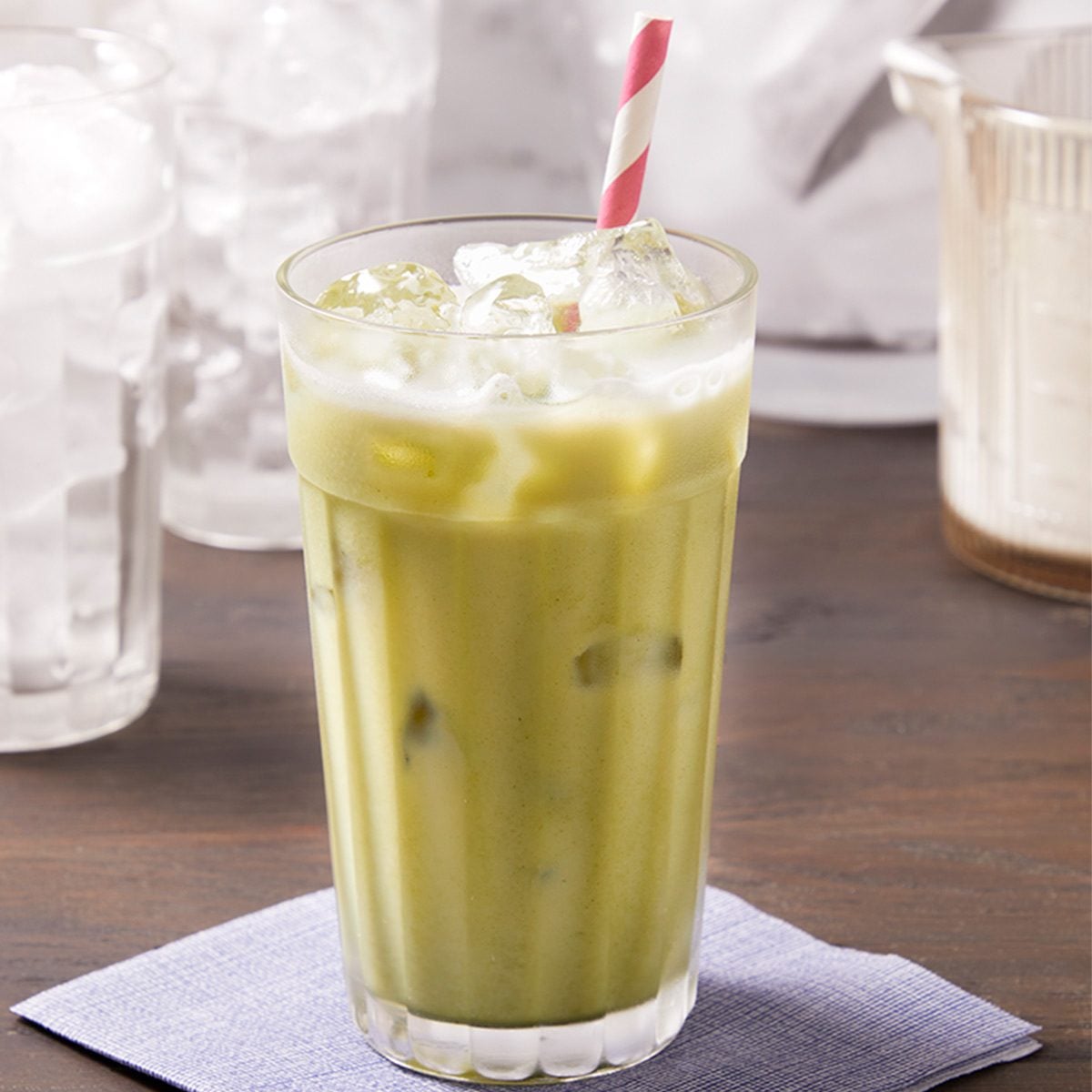
The iced matcha latte all over your feed is cheaper to make at home, and it tastes even better.
My obsession with matcha started in cafes, but barista-made beverages are getting pricier every week, so it was inevitable that I would start making my own at home. Turns out, making a matcha latte is even easier than making a traditional espresso latte. There’s no grinding beans or pulling shots. Matcha is sold pre-ground to a superfine powder, which can be blended with hot water using an inexpensive bamboo tea whisk. To latte-ify it, simply mix with milk and sweetener and serve over a big ice cube.
Besides the distinct flavor, matcha is a staple for me because of its health benefits. It delivers more beneficial compounds than traditional brewed tea because you consume the whole leaf (not merely the water it is steeped in). Matcha has less caffeine than coffee, and because it also contains the calming compound L-theanine, it promotes focus rather than jitters. But honestly, I’d drink it even without these perks because I love the flavor.
What is matcha?
Matcha is a finely ground powder made from shade-grown green tea leaves. Loose tea gets steeped and tossed, but matcha is the whole leaf milled into powder, so you drink the tea itself and take in more of its flavor, nutrition and caffeine. It has anchored Japanese tea ceremonies for centuries and now turns up in lattes, ice cream, matcha cakes and other baked goods.
The powder comes in two main grades. Ceremonial-grade matcha is made from the youngest first-harvest leaves, shade-grown and stone-ground into a fine, vivid green powder. It tastes smooth with almost no bitterness, especially when traditionally whisked with hot water and sipped on its own. Culinary-grade matcha comes from later harvests and tends to be a shade more astringent. For an iced matcha latte like this, either works.
Iced Matcha Latte Ingredients

- Matcha green tea powder: This stone-ground powder gives the latte its grassy, slightly sweet flavor and signature green color. You’ll find matcha at many well-stocked grocery stores, usually shelved with the tea or in the international aisle. For a wider range of grades and fresher powder, check an Asian market, a specialty tea shop or online retailers like Ippodo.
- Hot water: A small amount of hot, not boiling, water dissolves the matcha into a smooth concentrate before the milk goes in.
- Honey or other sweetener: Sweetener is optional and balances matcha’s natural bitterness. Honey, agave nectar and simple syrup all blend well since they’re liquid, but a granulated sugar works too if you stir it into the hot matcha while it’s still warm.
- Ice cubes: Filling the glass with ice keeps the latte cold and adds a refreshing, cafe-style chill. For a slower melt and less dilution, reach for larger cubes or a single oversized one.
- Milk: Whole dairy milk makes the creamiest latte, but oat milk is a popular plant-based pick because it froths and adds a touch of sweetness. Pour it in slowly over the matcha to create that pretty layered look before you stir.
Directions
Step 1: Whisk the matcha and water

In a small bowl, whisk together the matcha and water until smooth. If desired, add the honey or a sweetener of your choice and stir until smooth.
Editor’s Tip: A small bamboo whisk (chasen) or a handheld milk frother makes quick work of any lumps, but the back of a spoon works in a pinch.
Step 2: Assemble over ice

Fill a tall glass with ice. Pour the matcha over the ice. Add the milk to the top and stir to combine. Serve immediately.

Iced Matcha Latte Variations
- Make it a strawberry matcha: An iced strawberry matcha latte combines homemade strawberry syrup with milk and matcha. The pink-and-green layers look striking, and the berries’ tartness plays well against matcha’s grassy edge.
- Pour a dirty matcha: Add a shot of espresso or a splash of strong cold brew over the milk. The roasted coffee notes deepen the matcha without overwhelming it.
- Swirl in vanilla: Stir half a teaspoon of vanilla extract or a pump of vanilla syrup into the matcha concentrate. It rounds out any bitterness and gives the latte a soft, dessert-like finish.
- Top with sweet cream cold foam: Froth a splash of heavy cream with a little milk and sugar, then float it over the finished latte. The silky cap mimics what you’d pay extra for at a coffee shop.
- Go tropical with coconut: Swap in coconut milk for some or all of the dairy. It adds a gentle sweetness and a creamy body that matches matcha’s vegetal flavor.
Iced Matcha Latte Tips

Why does my iced matcha latte taste bitter?
If your iced matcha latte tastes bitter, the usual culprit is that it’s too hot, which scorches the delicate powder. Let your kettle sit for a minute after boiling so the water drops to about 160° to 175°F, and double-check that you’re not using more matcha than the recipe calls for.
What’s the best milk for an iced matcha latte?
The best milk for an iced matcha latte comes down to the texture and flavor you want. Whole dairy milk gives the creamiest result, while oat milk is the top plant-based pick because it’s naturally sweet and blends smoothly. For a lighter drink, swap in 2% or almond milk for the whole milk.
Can you make an iced matcha latte without a whisk?
Yes, you can make an iced matcha latte without a traditional bamboo whisk. Combine the matcha and hot water in a small sealed jar, then shake it hard for 20 to 30 seconds. Or buzz it with a handheld milk frother until no lumps remain.
How much caffeine is in an iced matcha latte?
An iced matcha latte made with half a teaspoon of matcha contains roughly 30-70 mg of caffeine, depending on the brand and grade of the powder. That’s generally less than a cup of brewed coffee, and many people find matcha gives a steadier lift thanks to an amino acid called L-theanine.
Ingredients
- 1/2 teaspoon matcha (green tea powder)
- 1 tablespoon hot (not boiling) water
- Honey or desired sweetener, optional
- Ice cubes
- 3/4 cup milk
Directions
-
1In a small bowl, combine matcha and water; whisk until smooth. If desired, add honey or sweetener of choice, stir until smooth.
-
2Fill a tall glass with ice. Pour matcha over ice. Add milk to the top, stir to combine. Serve immediately.