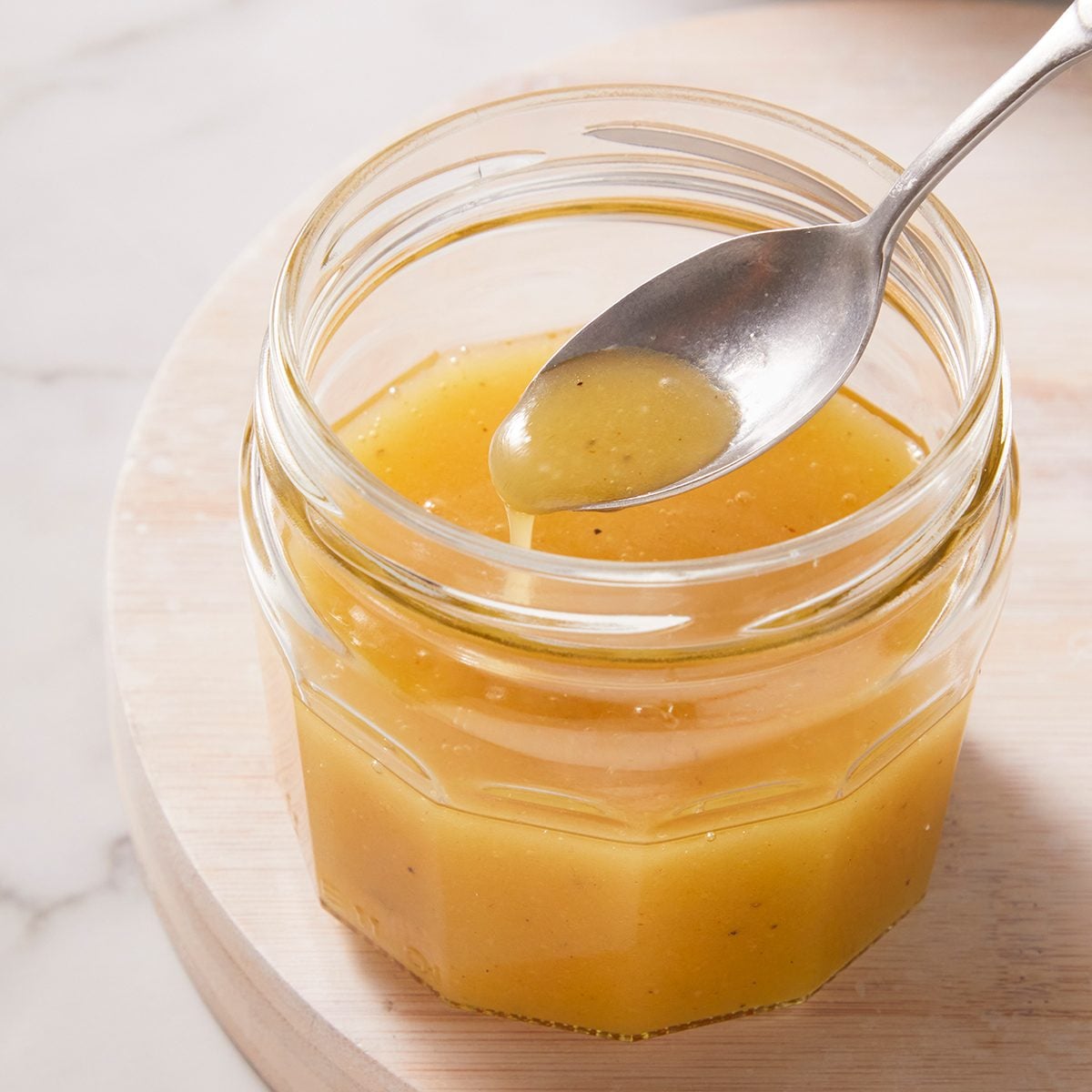
With white balsamic vinegar and walnut oil, this honey balsamic Dijon vinaigrette will make your salads the star of the table.
In my days as a restaurant owner, I was known for my salad dressings. Where many of the other spots in town served up familiar prepared Italian dressing, ranch dressing, blue cheese and Thousand Island dressing, I made all my dressings from scratch from interesting oils, high-end vinegars and, almost always, Dijon mustard to bring it together. Even people who said they didn’t usually order salads were tempted by my concoctions. And this honey balsamic Dijon vinaigrette recipe is just the kind of dressing I would have made.
I love that this vinaigrette is balanced between sweet, sour and salty flavors, with ingredients that are a touch out of the ordinary. Honey adds a floral sweetness that’s backed by white balsamic vinegar; walnut oil brings rich and nutty flavor; and Dijon makes it thick and almost creamy-tasting. It jazzes up everything it touches, so you can serve it with raw vegetables on a crudite platter, drizzle it over roasted vegetables or use it in grain salad recipes or with meats.
Ingredients for Honey Balsamic Dijon Vinaigrette

- White balsamic vinegar: White balsamic vinegar isn’t as syrupy and caramelized as dark balsamic, due to a different cooking and aging process. Its delicate flavor adds complexity to dressings and other dishes.
- Dijon mustard: A hefty spoonful of sharp Dijon mustard emulsifies the oil and water in the dressing, keeping it creamy once it’s blended. (If you use a blender to mix the dressing, it’ll stay emulsified for even longer.) Plus, the salty, tangy flavor balances the sharp vinegar and nutty walnut oil.
- Honey: A lick of honey complements and enhances the sweetness of the balsamic, and gives the dressing a nice viscosity. Choose a lighter type of honey to keep the flavors balanced. Because the dressing will be on the sweeter side, it’s great paired with peppery, spicy or bitter greens, such as arugula, mustard greens or endive.
- Salt and pepper: The classic seasoning combo can be used in almost any dressing you make. If you prefer to let the other ingredients stand out, you can dial back on the black pepper a bit.
- Walnut oil: More mellow than the nuts from which it’s made, walnut oil is a lovely ingredient to keep on hand. It’s delicate, so it should be used as a finishing oil rather than a cooking oil. Walnut oil degrades quickly in light and heat, so buy a nice brand and store it in the fridge to preserve its flavor.
Directions
Step 1: Make the dressing

In a small bowl, whisk the white balsamic vinegar, Dijon mustard, honey, salt and pepper.

Gradually whisk in the walnut oil until the dressing is blended. Refrigerate it until you’re ready to serve it.
Editor’s Tip: If you prefer, you can put the ingredients into a large jar and use an immersion blender to mix them. (We tested many options to find the best immersion blenders if you don’t yet have this handy appliance and would like help choosing one.)

Honey Balsamic Dijon Vinaigrette Variations
- Swap the oil: If you can’t find walnut oil or prefer not to use it, there are plenty of other options, including some of my favorite healthy oils. Hazelnut or almond oil would keep the dressing tasting nutty, though they are on the pricey side. Grapeseed oil and sunflower oil are milder-tasting but still lovely and more economical.
- Use a different vinegar: To keep the lighter, fruity taste of the dressing, try making it with apple cider, sherry or champagne vinegar. Regular balsamic vinegar would also be delicious, but it will darken the dressing.
- Add alliums: Classic dressings often include alliums, which make dressings punchy and savory. Try adding some finely grated raw garlic, mashed roasted garlic, minced shallot or chopped chives to this dressing.
How to Store Honey Balsamic Dijon Vinaigrette
Store honey balsamic Dijon vinaigrette in a tightly sealed glass jar or food storage container in the refrigerator for up to one week. If you decide to include fresh ingredients such as garlic or herbs, the dressing will last for three to five days.
Honey Balsamic Dijon Vinaigrette Tips

Why has my dressing separated?
If the oil is added too quickly, the emulsification can break, meaning the fat and liquid will separate. That’s why slowly streaming oil in is an important step. If you whisk in a zig-zag pattern rather than in circles around the bowl, that can help, too. If all else fails, add more Dijon mustard to bind it, or use the power of a blender to combine the ingredients.
How else can I use honey balsamic Dijon vinaigrette?
Besides using this recipe as a salad dressing, vinaigrettes can nearly always double as marinades—and this recipe is no exception. Honey balsamic Dijon vinaigrette would be particularly good with pork or chicken, since the honey would caramelize nicely on the meat. The flavors would pair well with seafood, too, but since seafood is so mild, it’s best to drizzle it over shrimp, scallops or baked salmon after cooking them. If you just have a little vinaigrette left, toss it into a bowl of herbed white beans or drizzle it onto a sandwich.
Ingredients
- 3 tablespoons white balsamic vinegar
- 1 tablespoon Dijon mustard
- 1 teaspoon honey
- 1/2 teaspoon salt
- 1/2 teaspoon pepper
- 1/2 cup walnut oil
Directions
-
1In a small bowl, whisk the first 5 ingredients. Gradually whisk in oil until blended. Refrigerate until serving.