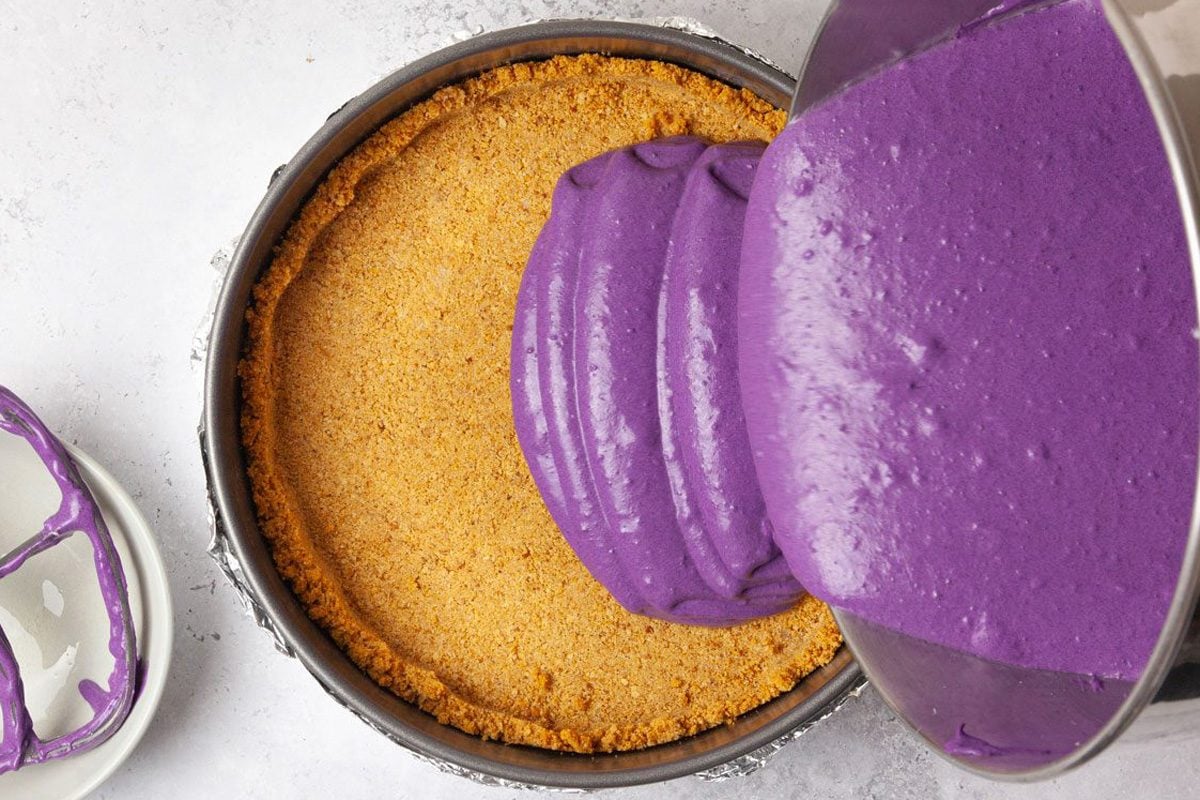
We’ve seen this popular Filipino ingredient on menus all over the U.S., but what is ube exactly?
Our editors and experts handpick every product we feature. We may earn a commission from your purchases.
Learn more.
Lots of buzzy global ingredients have been trending in the States as of late. Particularly, anything with the unbeatable combo of pretty color and sophisticated flavor, such as yuzu, matcha, hojicha and now ube. With its boldly violet hue and nutty, vanilla-like flavor, ube has steadily made its way into American culture. I first saw it on Instagram posts from cafes, bakeries and restaurants showing off their ube cold foams, swirly ube soft serves and ube custard-filled pastries.
Although I’ve been seeing it around for a while, it feels as if ube has solidly landed as the next big food trend in the U.S. Companies like Starbucks, King’s Hawaiian and Trader Joe’s have all featured ube in their products, firmly splashing this Southeast Asian ingredient into the United States’ mainstream.
But what is ube exactly? What does the vibrant purple potato taste like? More importantly, where can I buy it to make my own ube recipes at home ASAP? This lilac-colored ube cake is really calling my name!
What is ube?
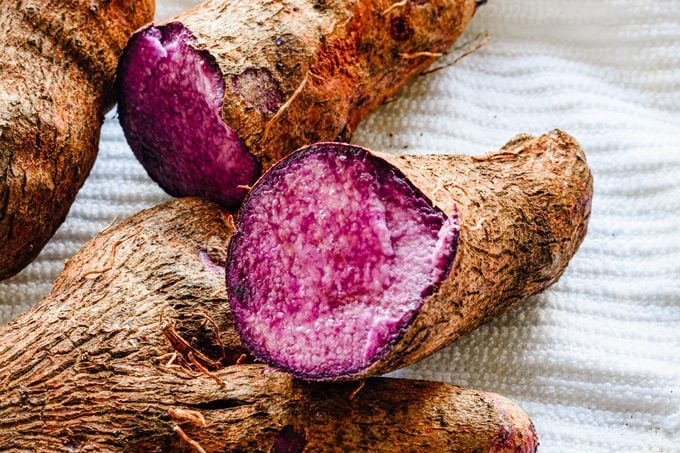
Ube (pronounced ooo-bay) is a purple root vegetable native to the Asian tropics and is particularly popular in Filipino cuisine. It has a dark purple, almost brown skin with a vibrant, neon purple flesh. In the Philippines, you’ll find it in halo-halo, a frozen dessert layered with shaved ice, evaporated or condensed milk, ube jam and other mix-ins. It’s also commonly used in the famous ube cake from Red Ribbon Bakeshop and in ube pandesal, a bread roll stuffed with gooey cheese and jam.
Ube is often confused with taro, another root vegetable native to Southeast Asia. Both are rich in antioxidants, fiber, vitamins and minerals, but taro and ube are not the same. Taro has a brown exterior and a white and purple-speckled interior. Ube is usually used in desserts, while taro is a bit starchier and is better suited for savory recipes, like soups and stews.
What does ube taste like?
When cooked, ube has a creamy texture and a sweet, vanilla-like flavor that’s reminiscent of pistachio and coconut. If you’re curious about ube’s flavor but not ready to commit to buying ingredients for a recipe, seek out ube-flavored products at the grocery store. Breads, spreads, cookies or ice creams are a great way to sample its flavor.
I first tried ube in culinary school when a classmate made ube ice cream. I hadn’t even heard of ube until I saw the ice cream maker churning out gobs of violet-colored ice cream. I remember thinking it was pretty and wondering what ratio of blue and red food coloring she had used. Our chef gathered us around to try it, and the aroma of almond, vanilla and coconut extract hit me all at once. When I took a bite, it tasted floral, nutty and subtly earthy with notes of caramelized white chocolate (something I was super familiar with because we had made it the day before). I was shocked to learn the color was completely natural too.
Once I learned that ube was a type of yam, my mind immediately compared it to orange sweet potatoes. Comparatively, sweet potatoes certainly have a similar caramelized sweetness, but they’re much earthier than ube’s sweet, floral and vanilla-y flavor. I grew up eating all sorts of sweet potato desserts (that I still make every year), but ever since that day in class, I’ve been excited to use ube.
Where can I buy ube?
You can buy ube in different forms at Filipino or Asian grocery stores. Some stores sell fresh or frozen ube, but it can be difficult to find. Plus, it takes a while to cook and is a bit laborious to turn into homemade ube jam (aka ube halaya). It’s much easier to buy one of these ready-to-use products:
- Ube extract: Ube extract is a highly concentrated product, so it’s a great way to add vibrant color to dessert recipes. Use it in frostings, cookies, ice creams, pastry creams, meringues, macarons, cakes, flans and cheesecakes. Store it in your cabinets near your other extracts. I find the smell to be a bit strong, so I keep mine in a zip-top bag.
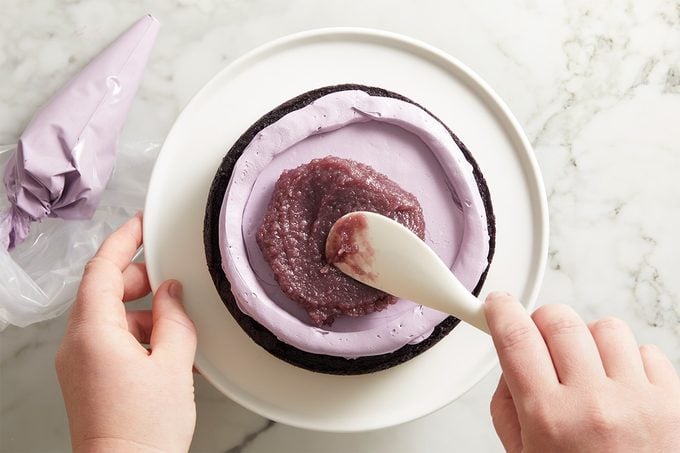
- Ube jam: Also known as ube halaya, ube jam is great for brownies, doughnuts, crinkle cookies and bread doughs. It’s also perfect as a filling for desserts like Danishes, cakes, cinnamon rolls, babkas and thumbprint cookies. Keep unopened ube jam at room temperature, and refrigerate it once opened.
- Ube spread: Ube spread is thinner than ube jam, making it better as a finisher on toast, vanilla ice cream, pancakes, scones, waffles, oatmeal and croissants, or as a glaze for pastries like homemade Pop-Tarts. Keep the unopened jar at room temperature, then refrigerate it after opening.
- Ube powder: When it comes to drinks, ube powder is king. Reconstitute it with a bit of water, then use it to make ube lattes, ube cold foam or ube cocktails. Keep ube powder stored in a cool, dry place. Humid environments will make the powder clump.
How should I use ube?
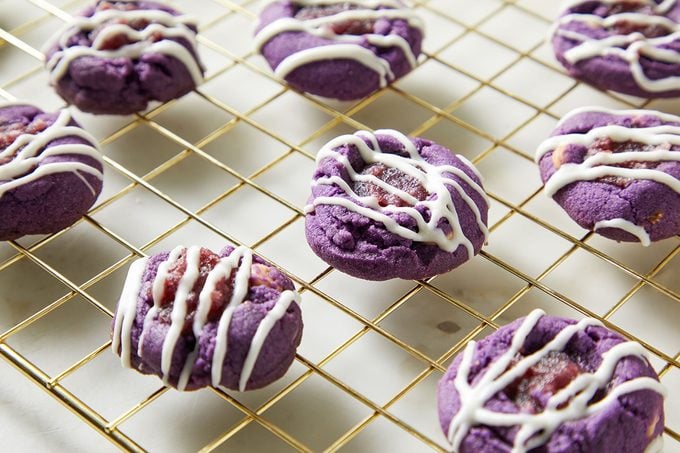
You can incorporate ube into almost any of your favorite desserts. I personally love to use ube extract and ube jam together whenever I can for an explosion of ube flavor. The extract adds color to cake or cookie batters, and the jam is great for layering between cakes or as a filling for ube cookies. For something really impressive, make an ube cheesecake with ube halaya in the baked custard and ube extract in the homemade whipped cream. It really makes a statement on the table or in an Instagram photo if that’s your thing (it certainly is mine!).
If you’re new to ube and want to stick with one product, try using ube extract to make an absolutely gorgeous ube frosting for cakes, cupcakes, cookies and brownies. If you have an ice cream maker at home, try your hand at ube ice cream. It’s just as easy as churning vanilla ice cream and using ube extract instead of vanilla. Or, pick up a jar of ube jam and use it as a filling for cinnamon rolls or babka. It can also be kneaded into bread dough to create ube bread, with the whole loaf having a pretty violet hue. For cocktails, lattes or homemade cold foam, ube powder is your friend.