TikTok's latest trend turns fruit into sour candy ... sort of.
Our editors and experts handpick every product we feature. We may earn a commission from your purchases.
Learn more.
Some candy flavors never really lose their pull, no matter how well into adulthood you may be. For many people, sour is one of them—the sharper, the better. I, sadly, am not one of those people; a few ill-advised Warheads in my childhood were enough to put me off aggressively sour foods for good. Everyone else in my house eats them like they’re about to disappear, though, so this “sour fruit” trend caught my attention.
Lately, my feeds have been full of people coating grapes and other fruits in lemon juice, sugar and citric acid, then freezing them until they taste like sour candy. While it didn’t launch the trend, Fruit Riot—a frozen snack of real fruit turned sharp, sweet and intensely puckery—seems to be egging it on. It’s the kind of trendy grocery item that shows up everywhere all at once—except, of course, in my small town. So instead of tracking down a bag of Fruit Riot, I did what everyone online is doing and made it myself.
What is the sour fruit trend?
@dietitiantracy Here’s how to make the viral Fruit Riot sour frozen fruit at home: Ingredients 2 cups red and green grapes, washed and dried 1 cup fresh or frozen mango Lemon juice ½ cup white sugar 2-3 teaspoons citric acid (add more if you want it more sour) Directions 1. Line a baking sheet with wax or parchment paper and set aside. 2. Prep the fruit by washing and drying thoroughly using a tea towel. 3. Place the fruit in a bowl and toss with some lemon juice. 4. In another bowl, whisk together the sugar and citric acid. 5. Add the fruit into the sugar mixture and toss until all of the fruit is coated. 6. Transfer the fruit to the baking sheet and freeze for a minimum of 3 hours. #sourgrapes #fruit #sourfruit #fruitriot #candy #pineapple #mango #grapes #walmart #walmartfinds #foodie #foodreview #sour #dupe #fyp ♬ End of Beginning – Djo
The sour fruit trend is simply fresh fruit coated in citrus juice, sugar and citric acid. It’s either eaten immediately or after a stint in the freezer.
The goal isn’t to disguise the fruit; it’s to push it to the extreme. The lemon (or lime) juice sharpens it, the sugar rounds it out, and the citric acid brings that unmistakable, almost electric sourness that lingers for a second longer than you expect.
Grapes show up most often for a few reasons: They hold their shape, they snap when you bite into them, and they take well to freezing. Strawberries are a little softer, a little messier, but still in on the trend. From there, it’s all variation. Some versions skip the citric acid entirely and lean more sweet than sour, while others double down on it. Some people eat them straight from the bowl; others freeze them until the coating sets and the fruit takes on an icy, firm-yet-chewy bite.
And there’s no “right” way to make sour fruit, which is part of the appeal.
How to Make Sour Fruit at Home

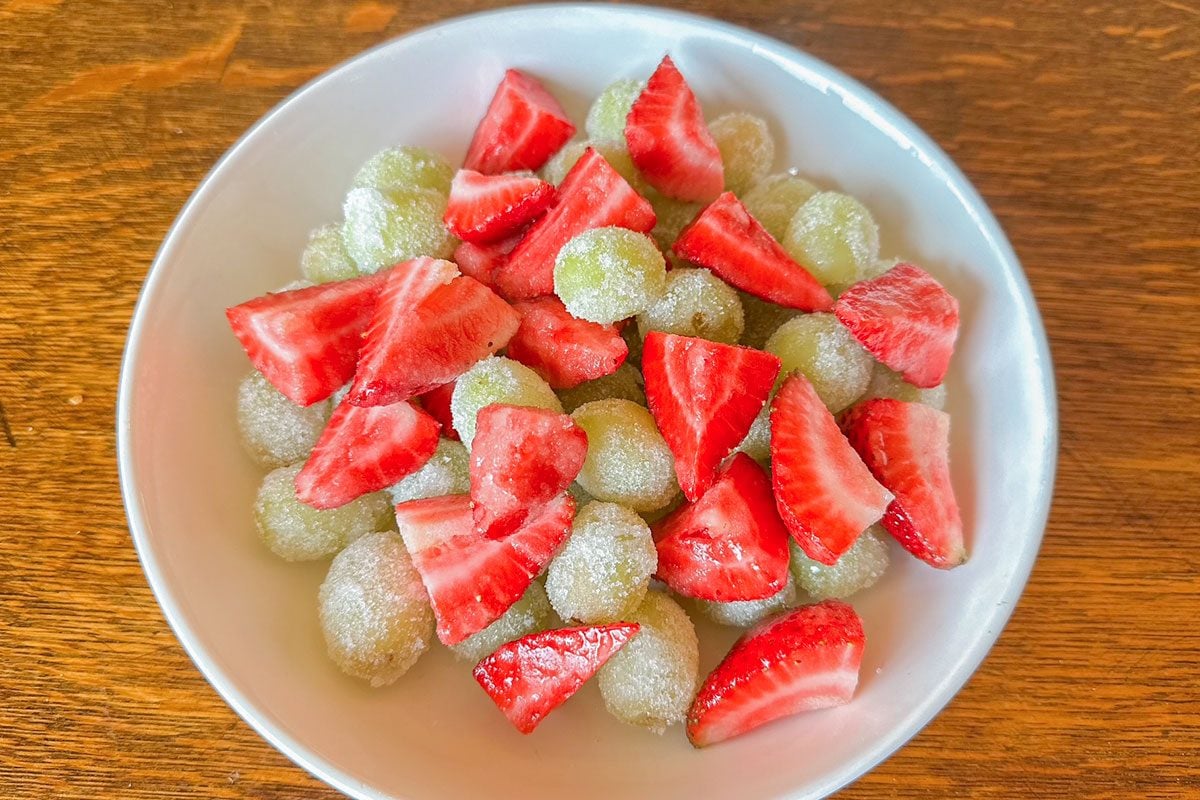
I used both grapes and strawberries, mostly to see how they would hold up side by side. I started by rolling the fruit in lemon juice, then tossing it in a mixture of granulated sugar and citric acid. From there, everything went onto a sheet pan and into the freezer.

I’m glad I started with the grapes, because once I started on the strawberries, they turned both the lemon juice and the sugar mixture pink. Not the worst thing, but not exactly what I was going for. It’s better to coat just a few pieces at a time and give each a good shake before transferring them to the sugar mixture. If they’re too wet, the sugar will slide off rather than stick. The strawberries behave a little differently overall, releasing more juice and softening faster. They don’t keep that same clean, coated finish the grapes do.
How does it taste?
For the first time in about 30 years, I genuinely loved something sour. I was shocked—actually shocked—at how good these were.
I only froze the fruit for about an hour because I didn’t want it to be hard as a rock, and that turned out to be exactly right. The texture was cold and firm but still juicy, and the coating set just enough to cling without turning into a shell.
What surprised me most is that the fruit doesn’t taste sour in the same way that sour candy does. The comparison is there, but it doesn’t quite do it justice. The fruit itself comes forward more, with just a light, sharp edge from the lemon and citric acid that keeps everything from tipping too sweet.
This trend isn’t so much a candy-making workaround as it is a completely different lane—and a much better one than I ever expected.
Related: