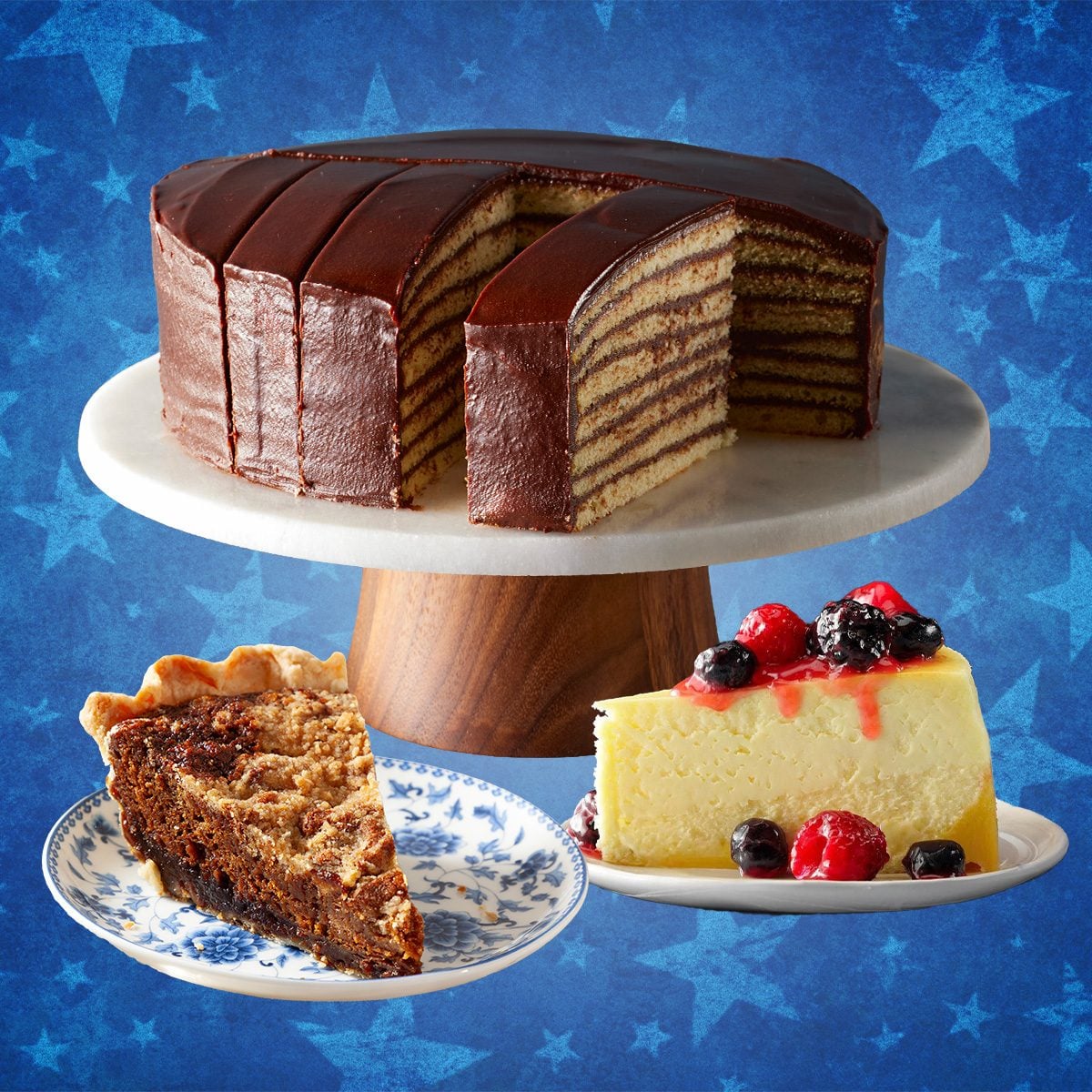
The desserts are iconic. Their stories are even better.
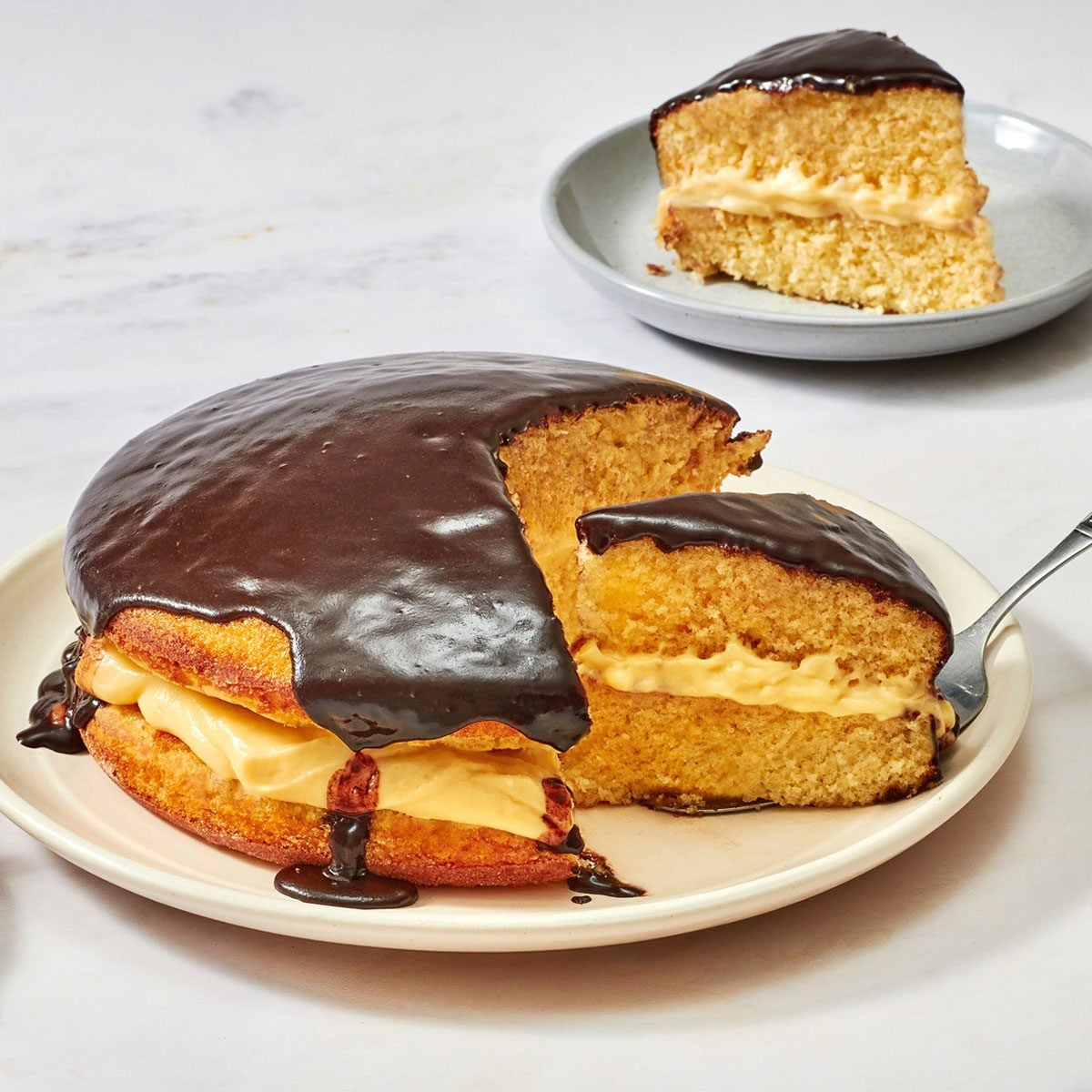
Homemade Boston Cream Pie
In the mid-1800s, Boston’s Parker House Hotel was one of the country’s great dining destinations. The dessert we now know as Boston cream pie was created there, originally served as the Parker House “Chocolate Cream Pie.” More than a century later, it was still so beloved that Massachusetts named it the official state dessert in 1996.
The name has always required a little generosity. Boston cream pie is, in every practical sense, a layer cake filled with custard and topped with chocolate. But after more than 150 years, the misnomer feels less like a mistake than part of the dessert’s permanent architecture. Boston claimed it, America accepted it, and nobody needs to reopen the case.
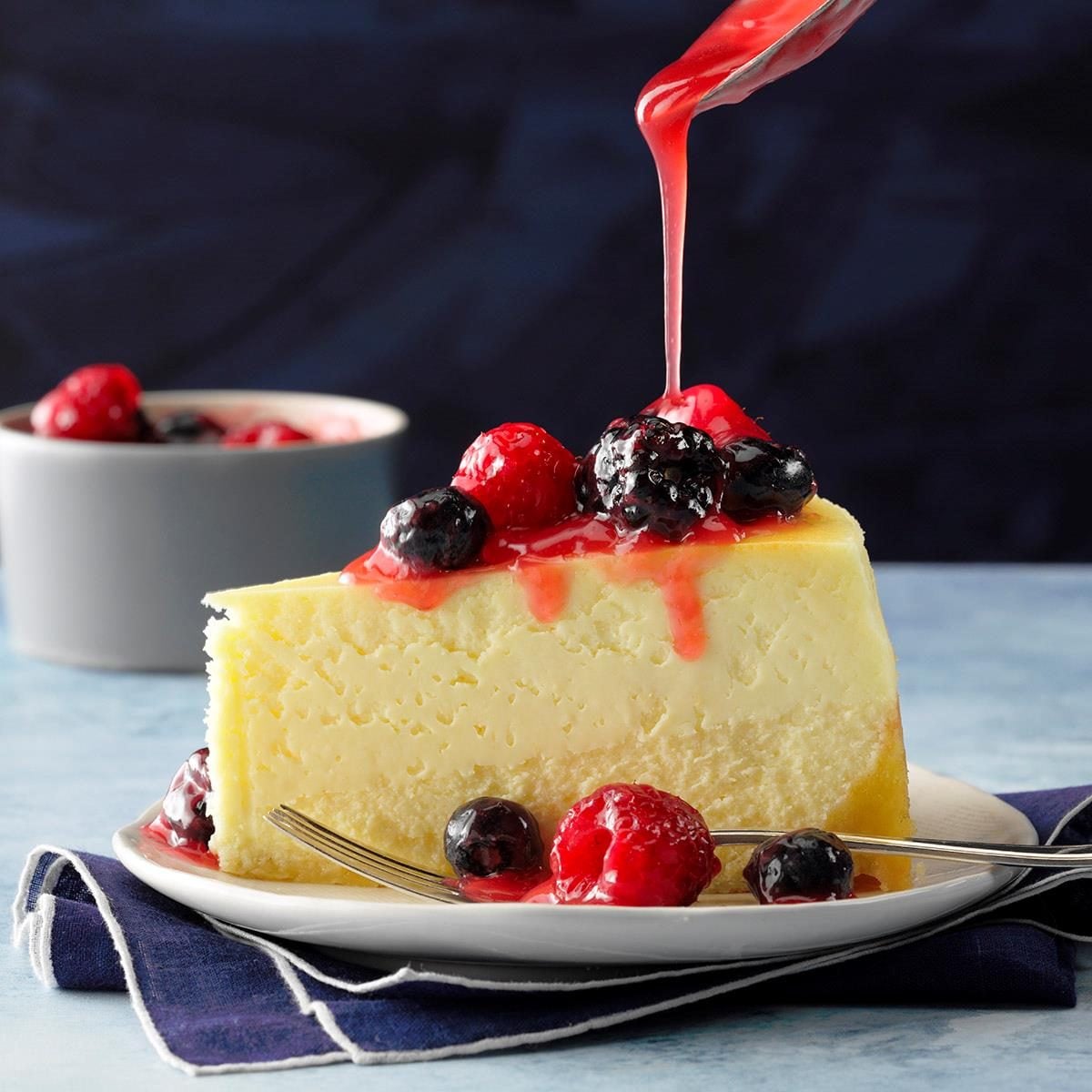
New York Cheesecake
By the early 20th century, Jewish bakeries and delis in New York were helping popularize a richer style of cheesecake that was made with cream cheese rather than the farmer cheese or curd-style cheeses common in many European versions.
That small ingredient shift changed the entire category. New York did not invent cheesecake, but it helped to create the version many Americans now picture when they hear the word—one that’s tall, creamy, a little dramatic, and sturdy enough to hold its own under a tumble of berries. The city’s real contribution was not just a recipe. It was a standard.
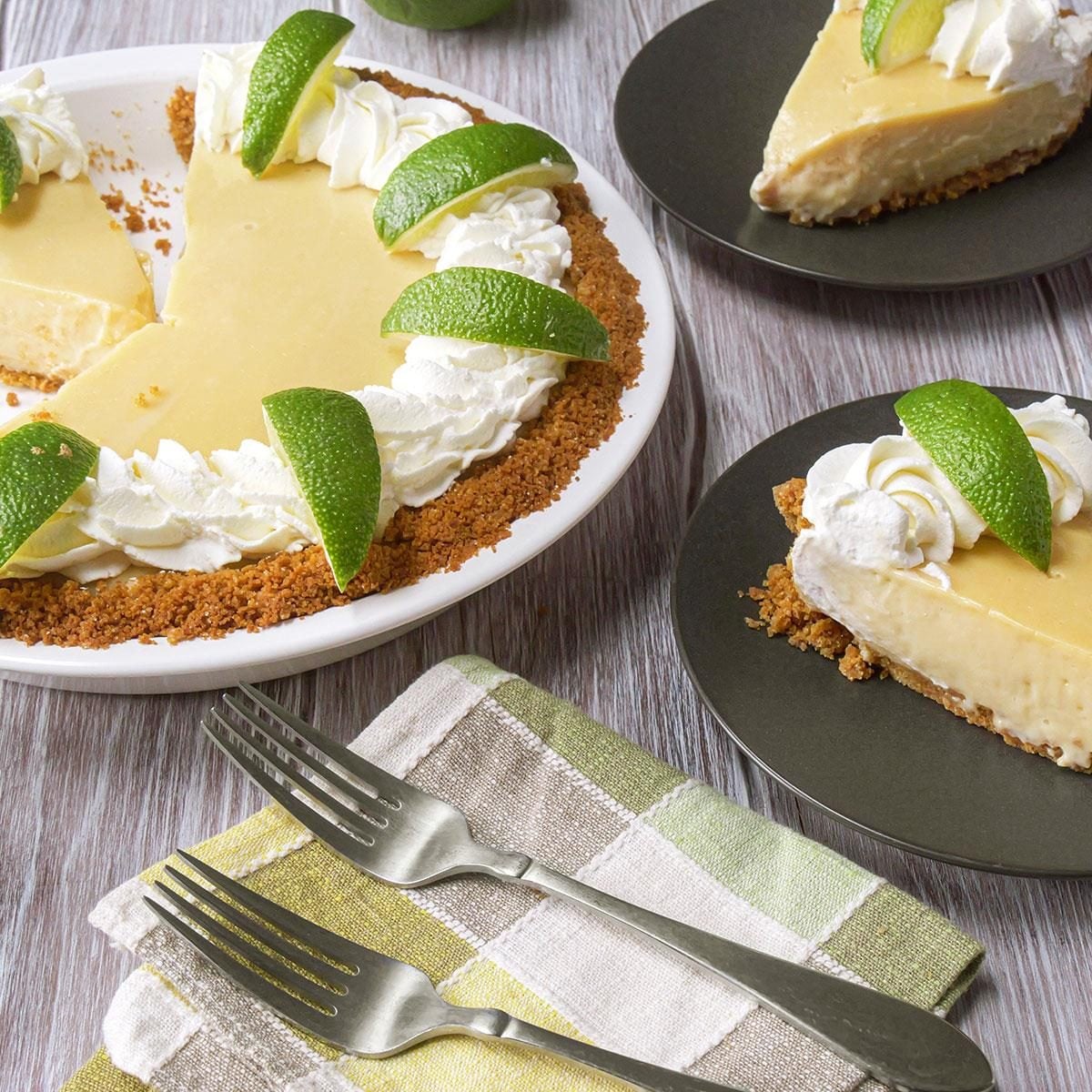
Key Lime Pie
Long before Florida officially named Key lime pie its state pie, the dessert was already an edible postcard for the Florida Keys.
The pie grew out of life in the islands, where Key limes were plentiful and fresh dairy was not always easy to come by. Sweetened condensed milk, introduced in the mid-19th century, helped solve that problem by allowing cooks to create a rich, creamy filling from ingredients that could withstand the subtropical climate.
The result was a dessert so closely tied to the Keys that it eventually became one of Florida’s most recognizable foods. More than a century later, Key lime pie remains proof that some of the best recipes begin as practical solutions for regional problems.
Texas Sheet Cake
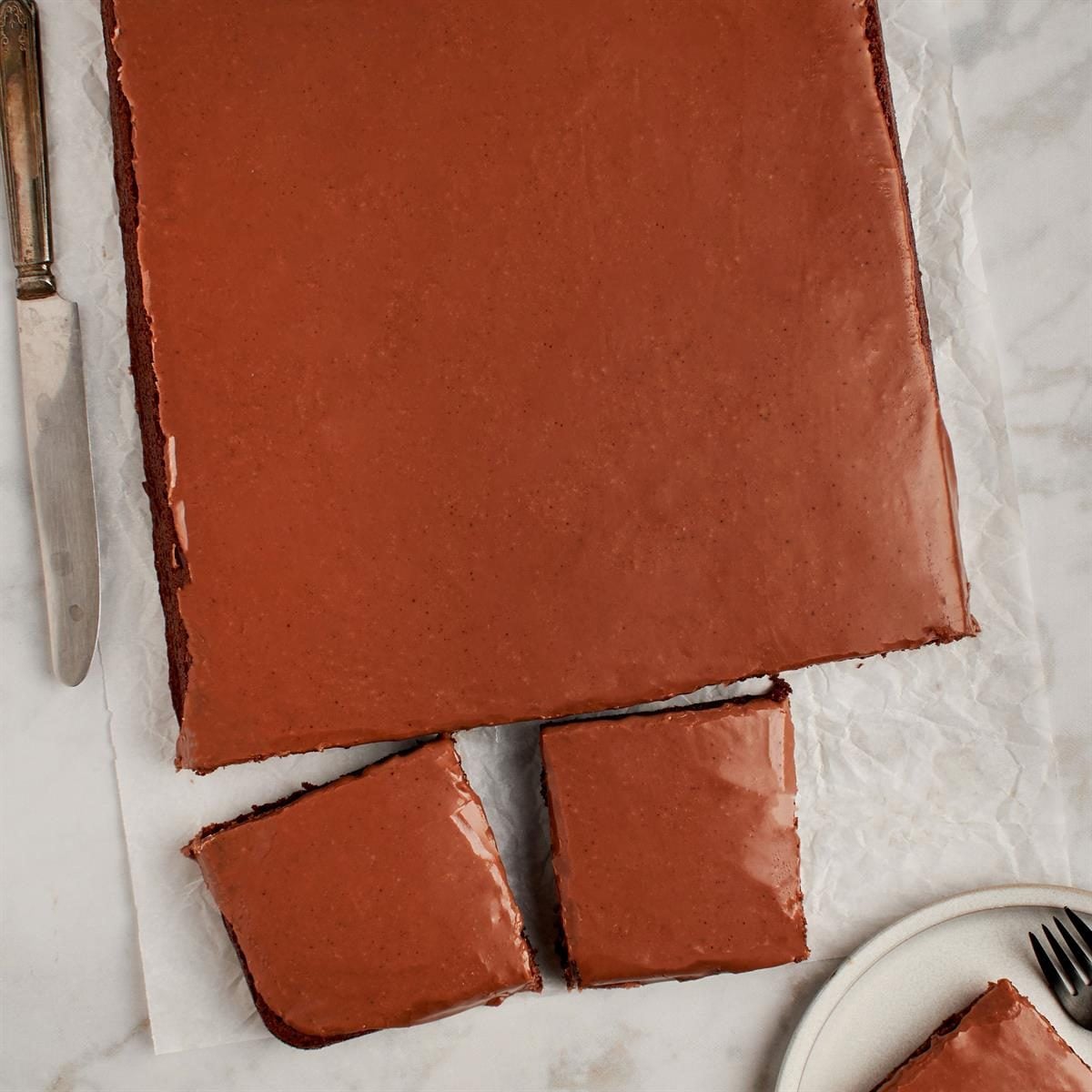
Texas sheet cake has a name more confident than its paper trail. Recipes for large chocolate sheet cakes circulated through newspapers, community cookbooks and home kitchens in the mid-20th century, but nobody seems able to prove exactly where the “Texas” part began.
Still, the name stuck for a reason. The cake is big, practical and built for feeding people by the panful, which makes it perfectly suited to potlucks, church suppers and family reunions. It may not have a tidy origin story, but it has something almost as useful: a personality so obvious that Texas feels like its inevitable home.
Mississippi Mud Pie
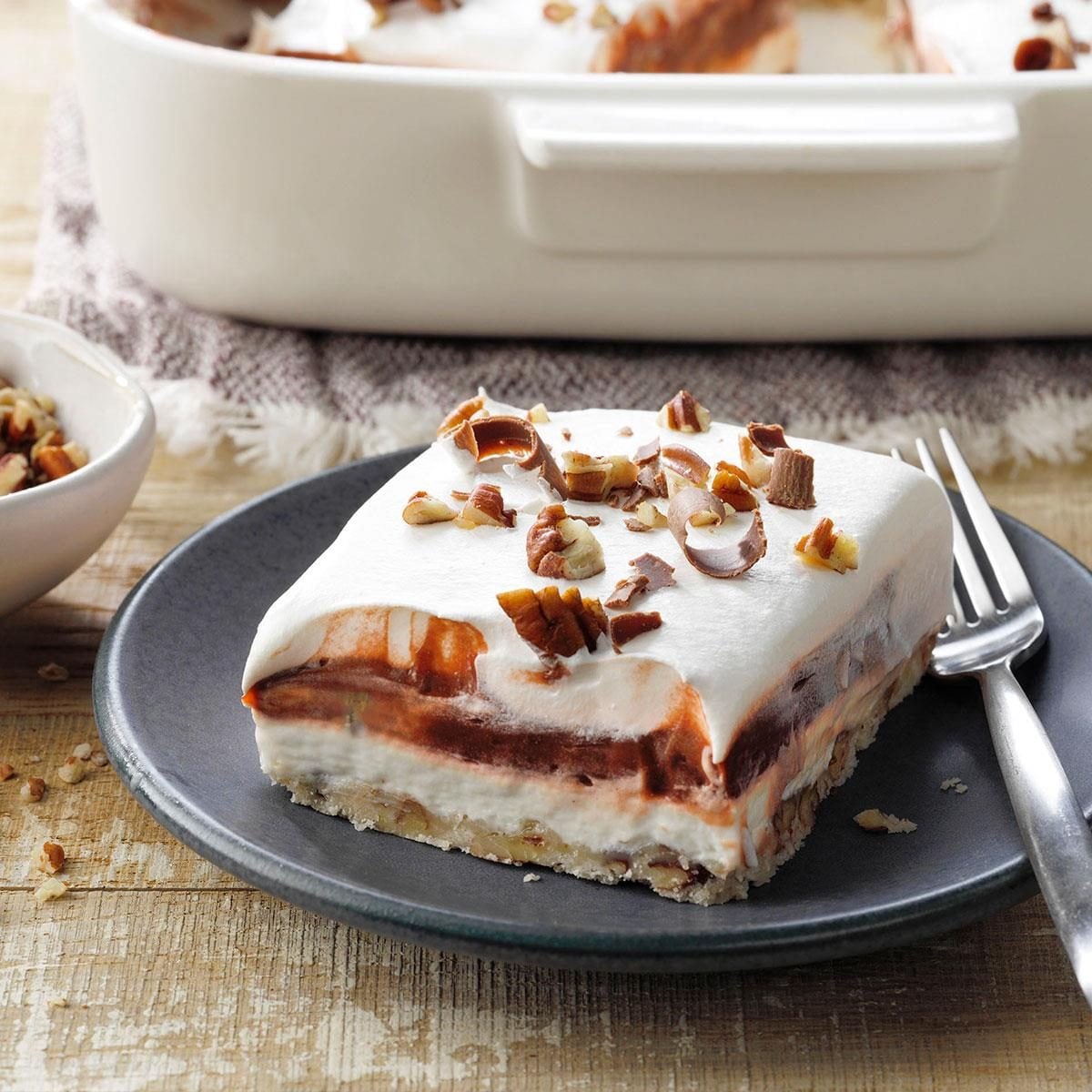
Mississippi mud pie has the wonderfully appropriate problem of a muddy origin story. Some versions trace it to Mississippi mud cake, a Southern chocolate dessert that may have become popular during or after World War II. Others place the pie’s rise closer to the 1970s. Either way, the name is usually linked to the dark, dense chocolate filling’s resemblance to the muddy banks of the Mississippi River.
That’s probably all the geography people need. Between the chocolate pudding, cream cheese filling and whipped topping, Mississippi mud pie is less interested in restraint than in full commitment. Its enduring popularity probably has less to do with the river and more to do with the fact that Americans rarely object to chocolate stacked on top of more chocolate.
Baked Alaska
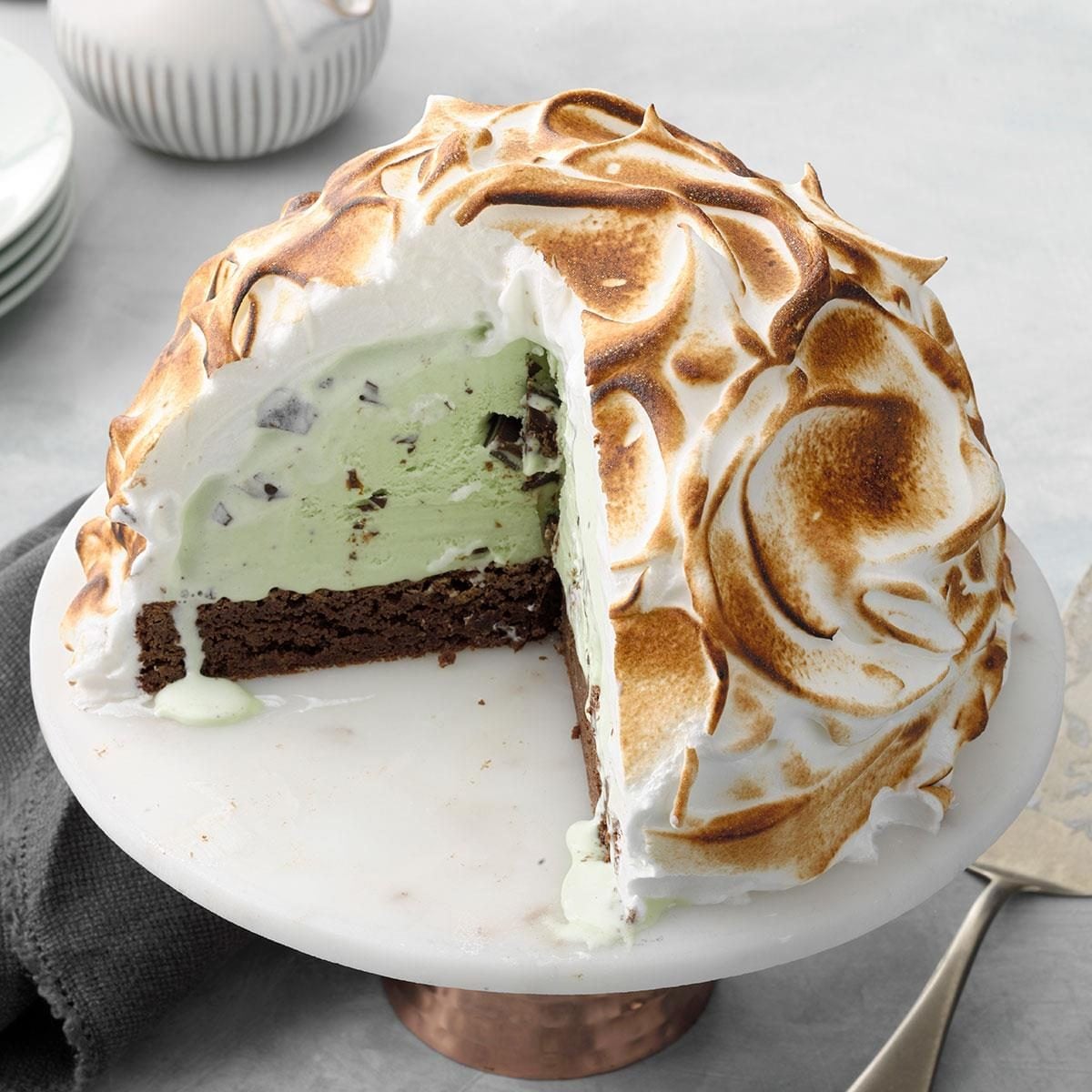
In 1867, the United States purchased Alaska from Russia for $7.2 million. Not long after, chef Charles Ranhofer of Delmonico’s in New York helped turn that political moment into a dessert.
Ranhofer’s version, originally called “Alaska, Florida,” played on contrast: frozen ice cream wrapped in toasted meringue. The name eventually became “baked Alaska,” which is cleaner, though slightly less delightfully strange. The dessert still feels like a delicious magic trick a century and a half later, which is probably why it has never fully disappeared.
Lane Cake
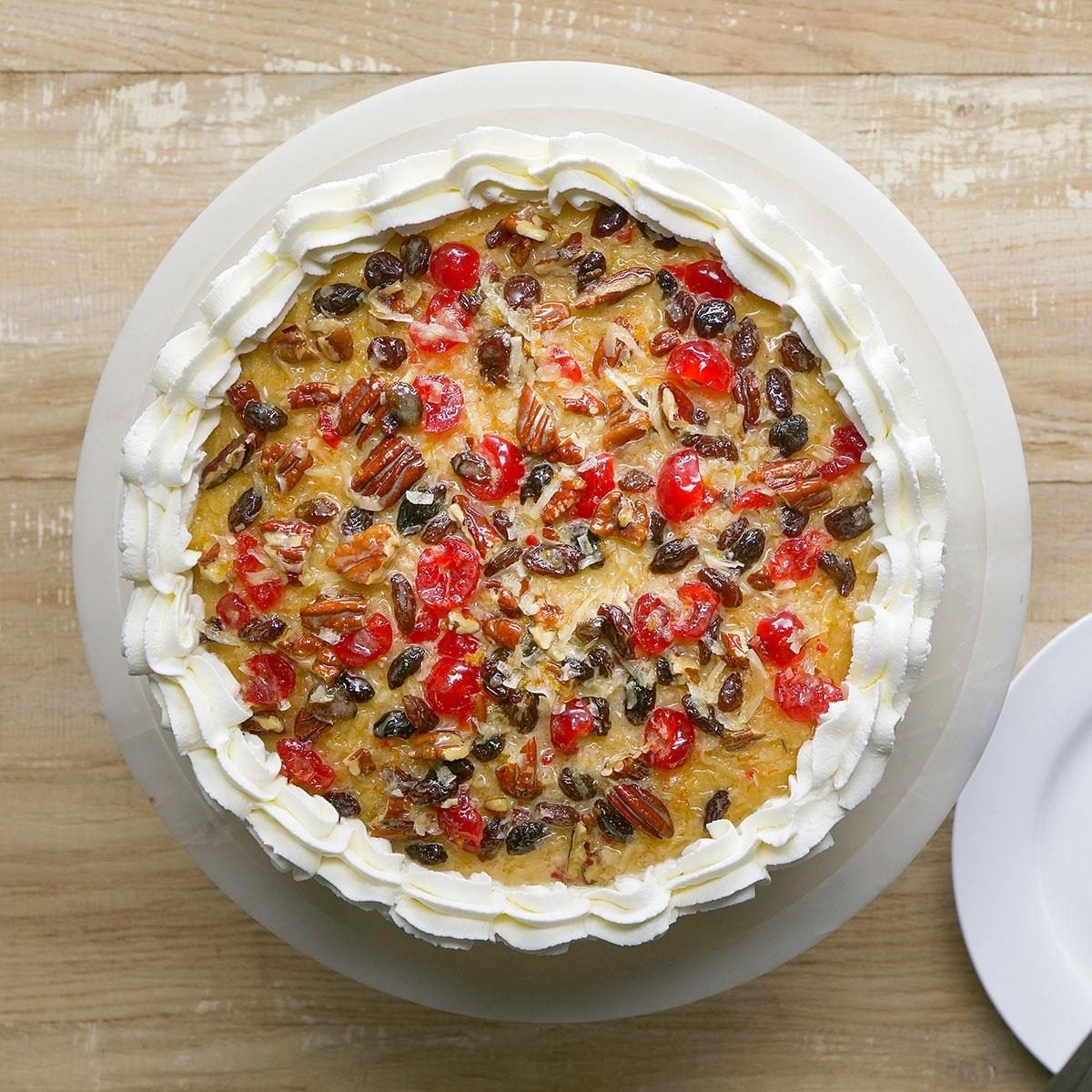
Emma Rylander Lane published the recipe for Lane Cake in her 1898 cookbook, Some Good Things to Eat, after the cake had earned attention as a prize-winning Southern dessert. The original was a white cake filled with a rich, boozy mixture of raisins and custard. Later versions expanded into pecans, coconut, candied fruit and bourbon.
But Lane Cake’s most enduring fame may have come from fiction. In To Kill a Mockingbird, Harper Lee uses Lane Cake as part of the texture of Southern life—generous, specific and just boozy enough to make Scout notice. It’s the rare dessert with both a county-fair origin and a literary afterlife, which is a very good résumé for a cake.
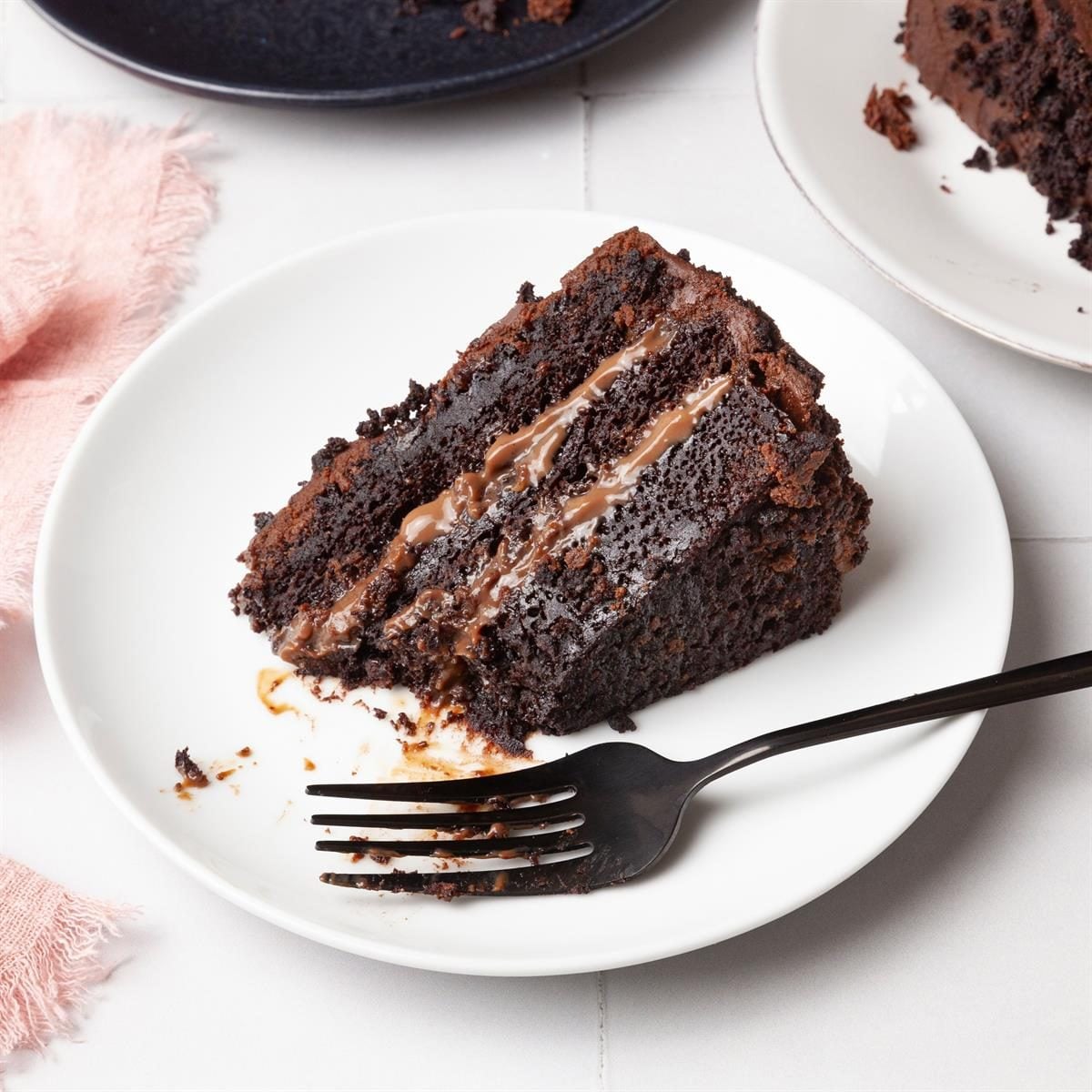
Brooklyn Blackout Cake
During World War II, the area around the Brooklyn Navy Yard was subject to mandatory blackout drills so ships could leave under cover of darkness and the city would be harder to spot from above. Around that same era, Brooklyn’s Ebinger’s Bakery became famous for a deeply chocolaty cake that took its name from those drills.
Brooklyn blackout cake was layered with chocolate pudding, frosted with chocolate and covered in cake crumbs. Ebinger’s eventually closed, but the cake outlived the bakery—as the best New York foods tend to do. It carries the memory of a very specific borough, a very specific bakery and a very specific wartime anxiety, all under a thick coat of chocolate.
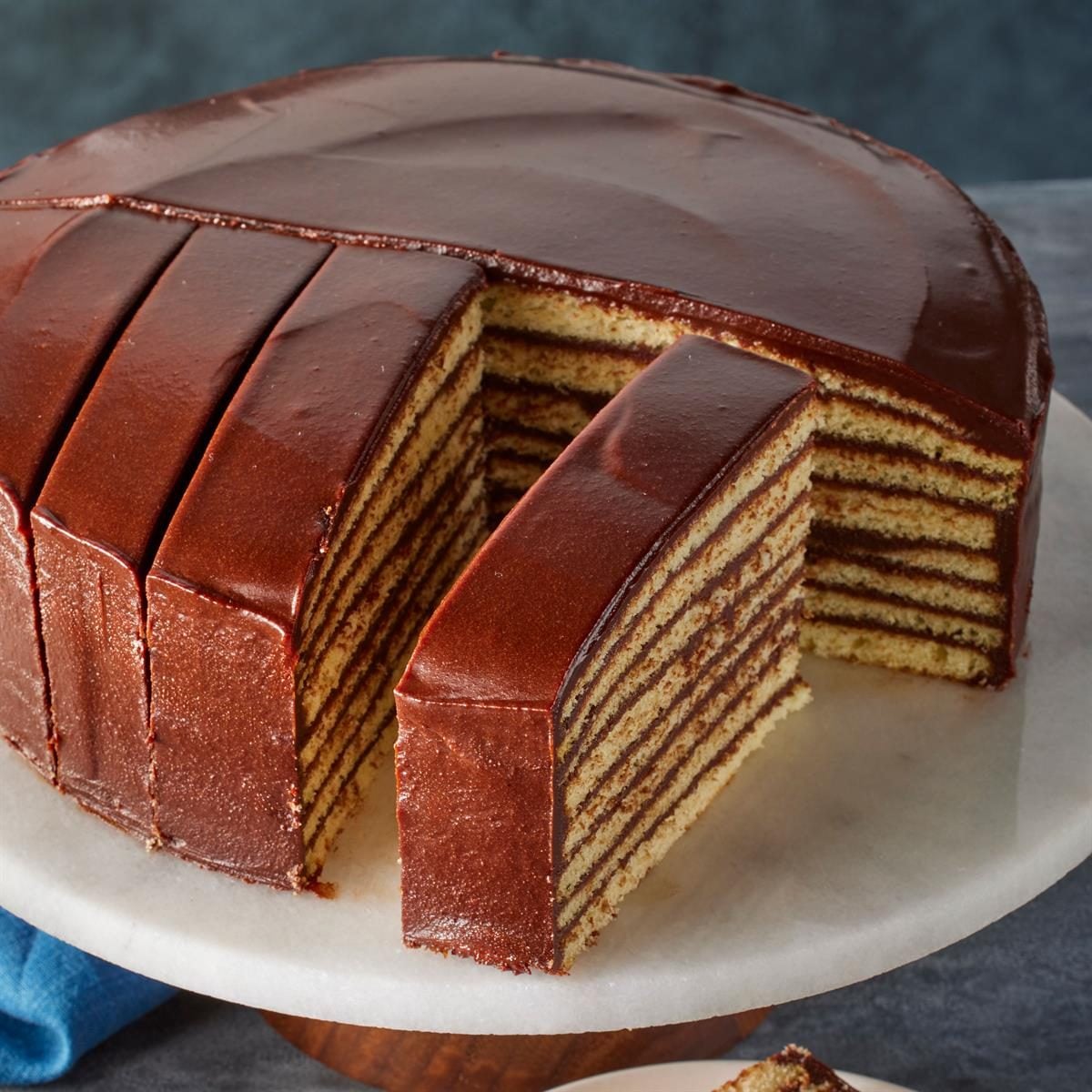
Smith Island Cake
Smith Island sits in the Chesapeake Bay, reachable only by boat. For generations, women on the island baked tall, many-layered cakes for husbands heading out during the autumn oyster harvest. The cakes traveled well, fed a crowd, and carried the sort of message that does not need to be written down: Come home safe.
Today, Smith Island cake is Maryland’s official state dessert. Its thin layers and chocolate frosting are impressive on their own, but the story is what makes the cake linger. It began as food for watermen, and became the symbol of one of Maryland’s smallest communities.
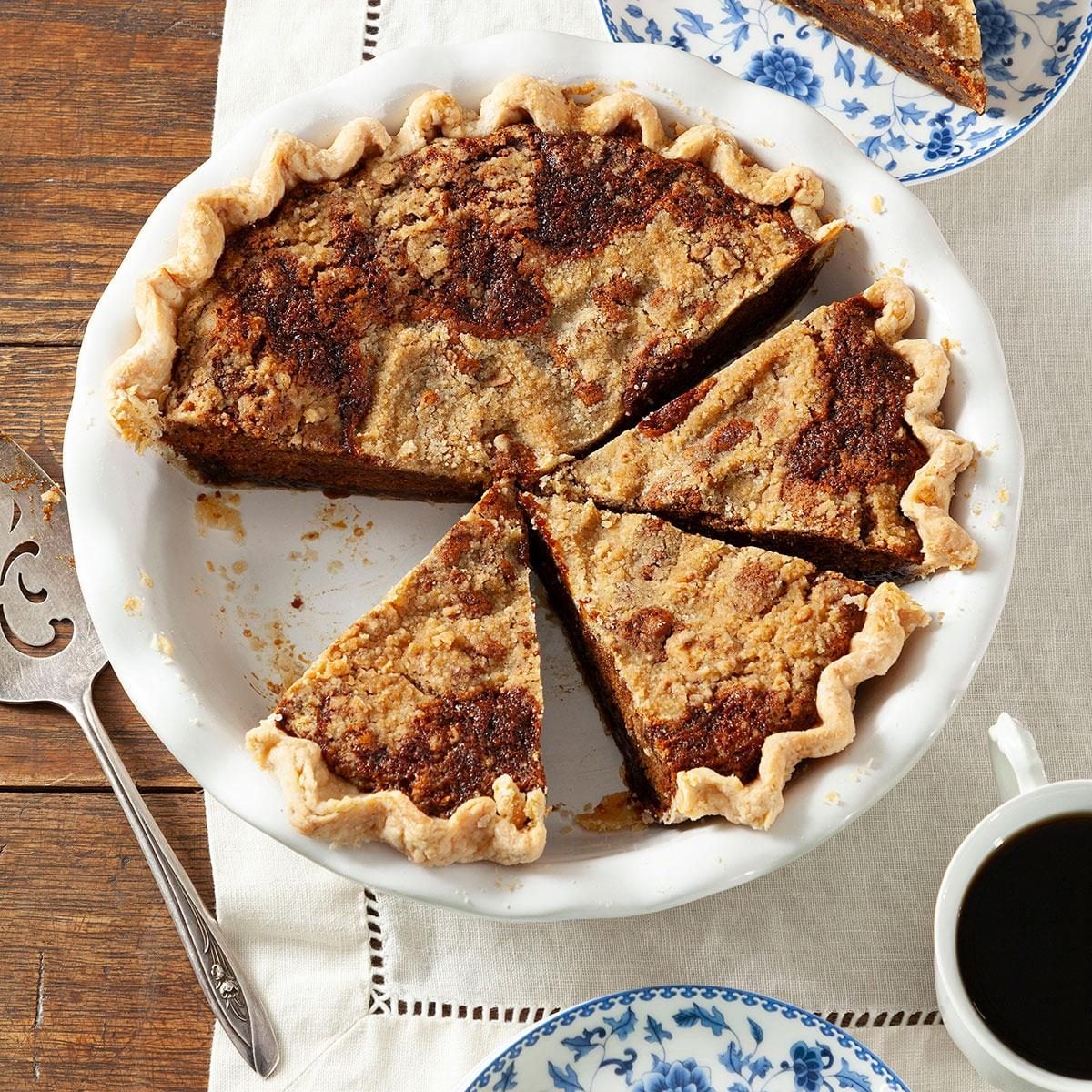
Shoofly Pie
Pennsylvania Dutch baking brought about shoofly pie, in which molasses, flour and brown sugar could become something far greater than the sum of their pantry-staple parts. The pie likely evolved from older molasses crumb cakes, with bakers eventually adding a crust to make it easier to serve and carry.
The name has inspired plenty of folklore, including the charming idea that bakers had to shoo flies away from the sticky filling. A more likely explanation points to Shoo-fly molasses, a product named for a popular 19th-century circus mule. That is, obviously, an even better story. Either way, the pie remains one of Pennsylvania Dutch country’s most recognizable desserts.
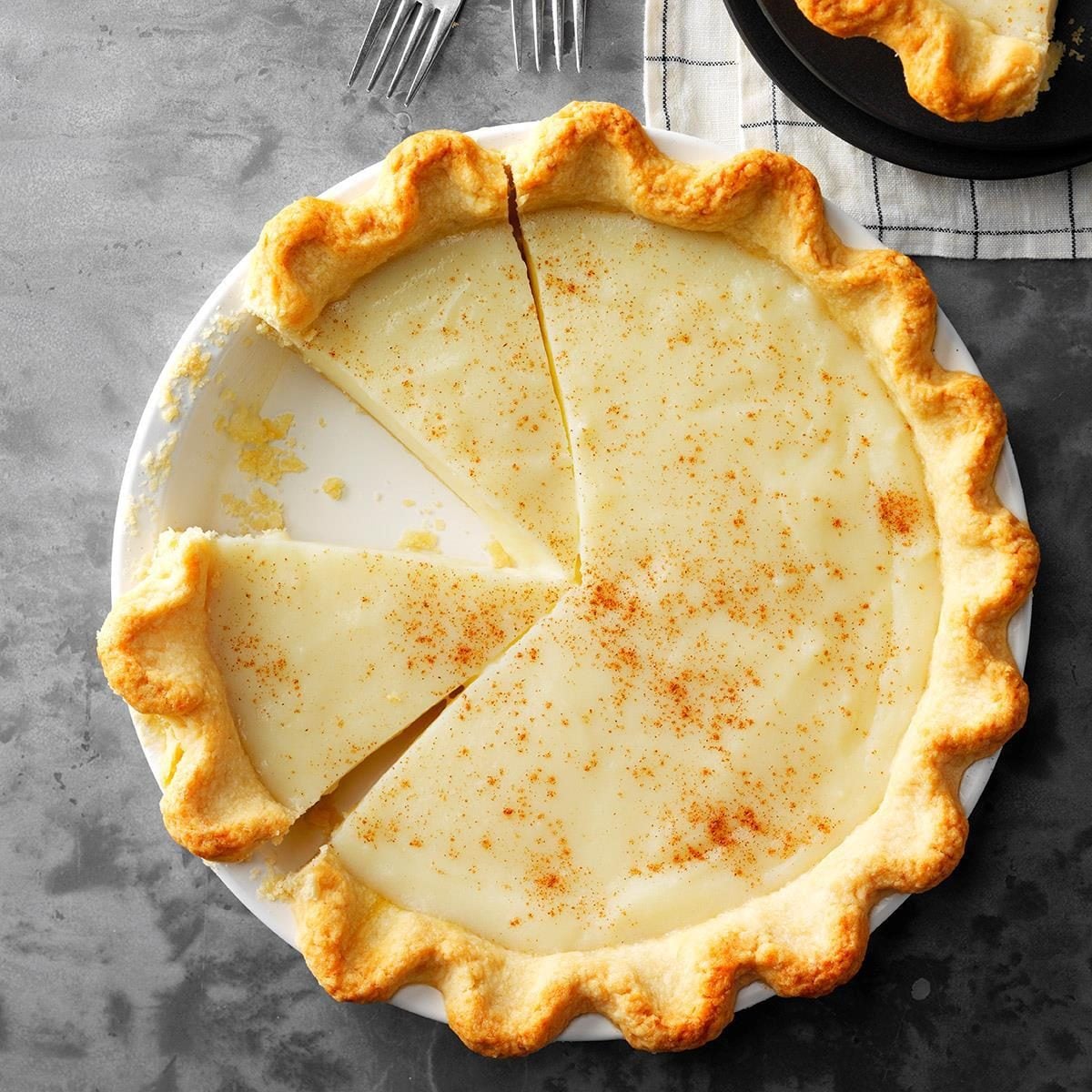
Sugar Cream Pie
Sugar cream pie began as a practical dessert, which is often how the best ones start. Indiana’s Amish and Shaker communities made versions of the pie with ingredients that were almost always close at hand: milk or cream, sugar, flour and a pie crust.
There’s no fruit to peel, no chocolate to melt, no towering assembly required. Just a creamy filling and a little farm-kitchen logic. The result became so tied to Indiana that it earned both a nickname—Hoosier pie—and a place in the state’s official history.
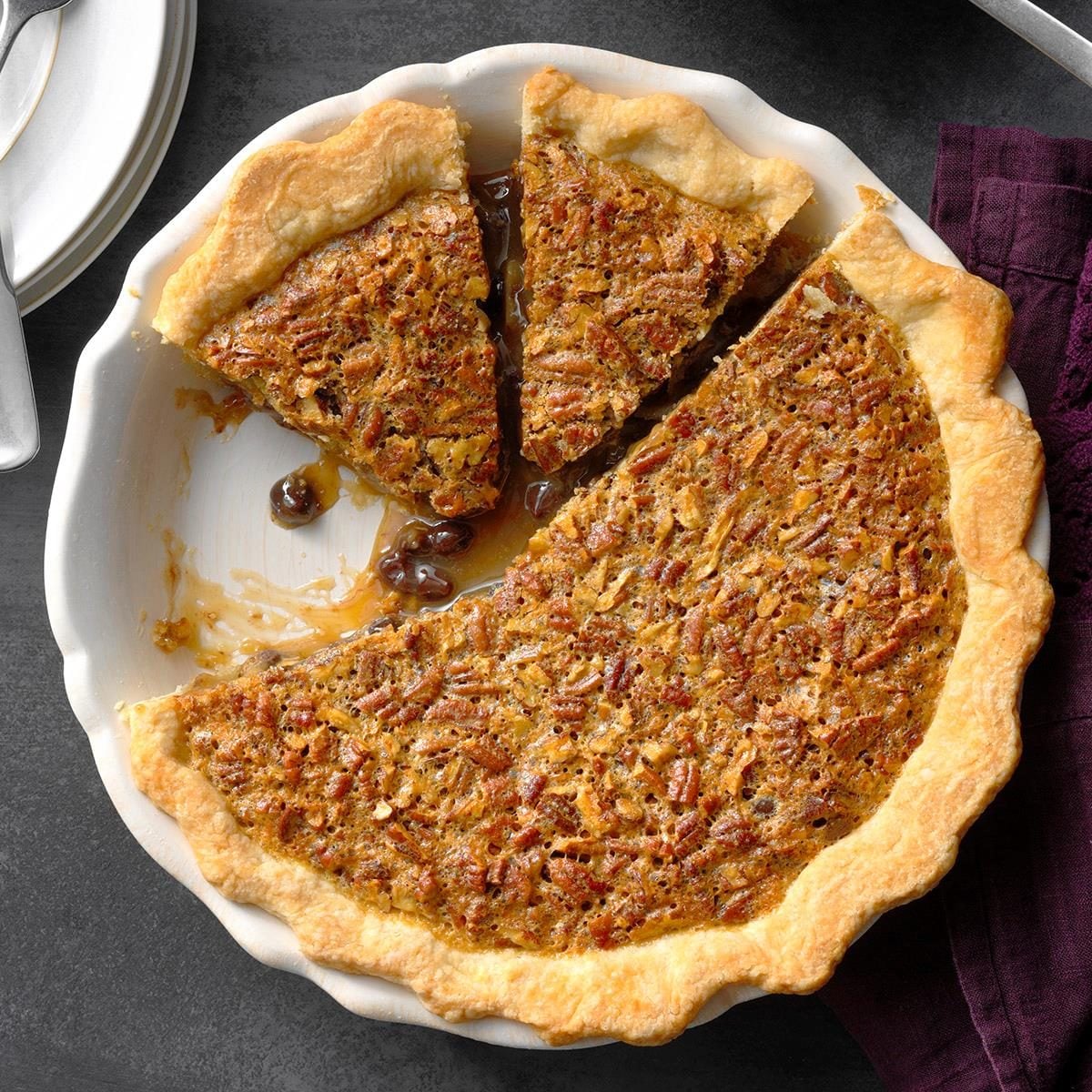
Kentucky Derby Pie
Every spring, millions of Americans turn their attention to Louisville for the Kentucky Derby. Alongside the horses, hats and mint juleps, another tradition has become synonymous with the race: Derby pie.
The chocolate-and-pecan dessert was created in the 1950s by the Kern family at Louisville’s Melrose Inn, and it quickly became a Kentucky classic. In fact, the name “Derby pie” became so closely associated with the recipe that the family trademarked it, leading many bakers to use names like “Kentucky pecan pie” when creating similar versions.
Whether served on Derby Day or any other day of the year, the combination of chocolate, pecans and buttery filling has become one of Kentucky’s most recognizable desserts. Not bad for a pie that started as a side character to a horse race.
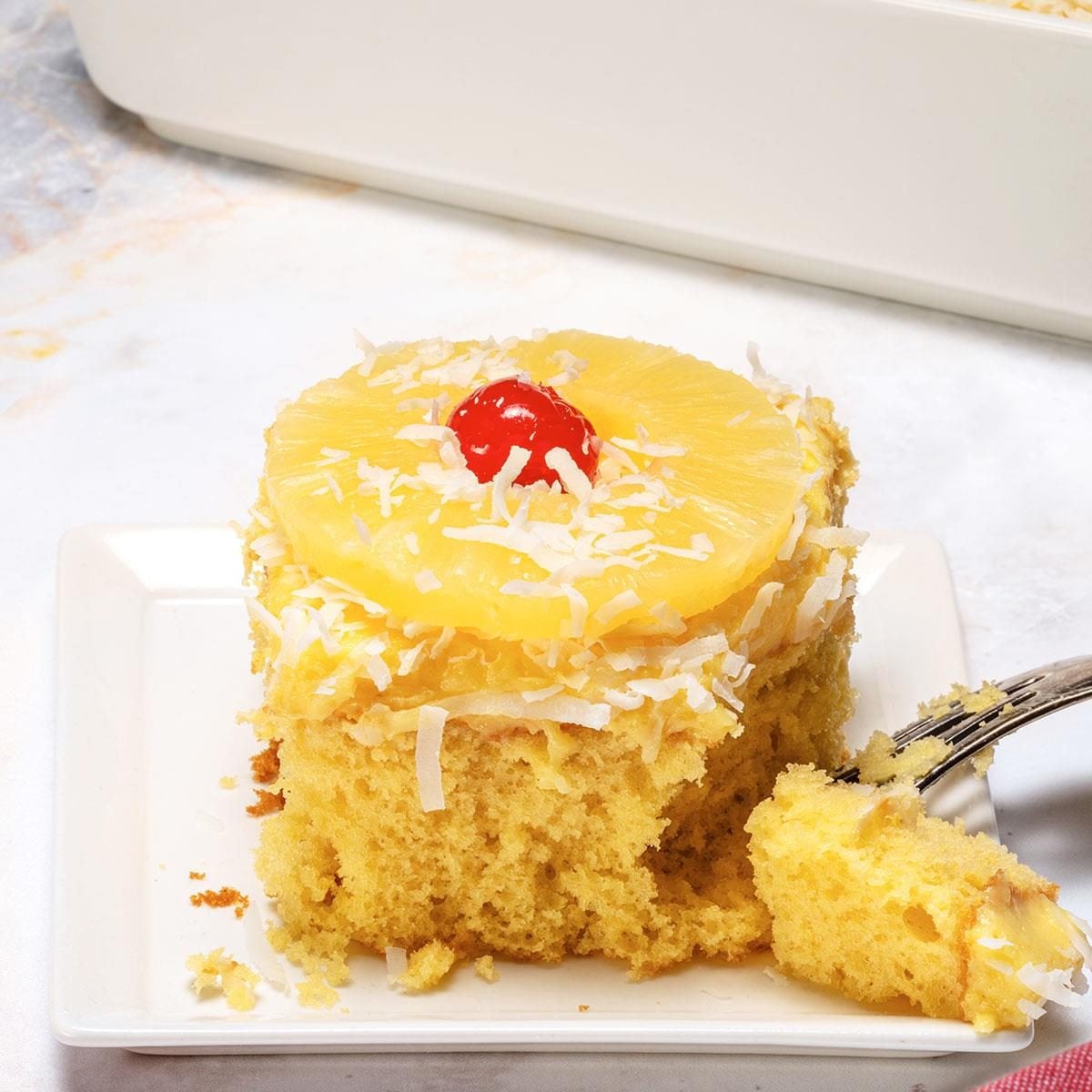
Hawaiian Cake
Long before Hawaii became the 50th state, pineapple had already become one of the islands’ most recognizable exports. By the mid-20th century, mainland Americans were putting a Hawaiian spin on everything from ham to gelatin salads, often with a can of pineapple leading the charge.
Hawaiian wedding cake emerged from that same era. Packed with pineapple, coconut and cherries, it reflects a period when home cooks were fascinated by tropical flavors and eager to bring a taste of paradise to church suppers and family gatherings. Many Hawaiian-themed recipes have come and gone. This one stuck around.
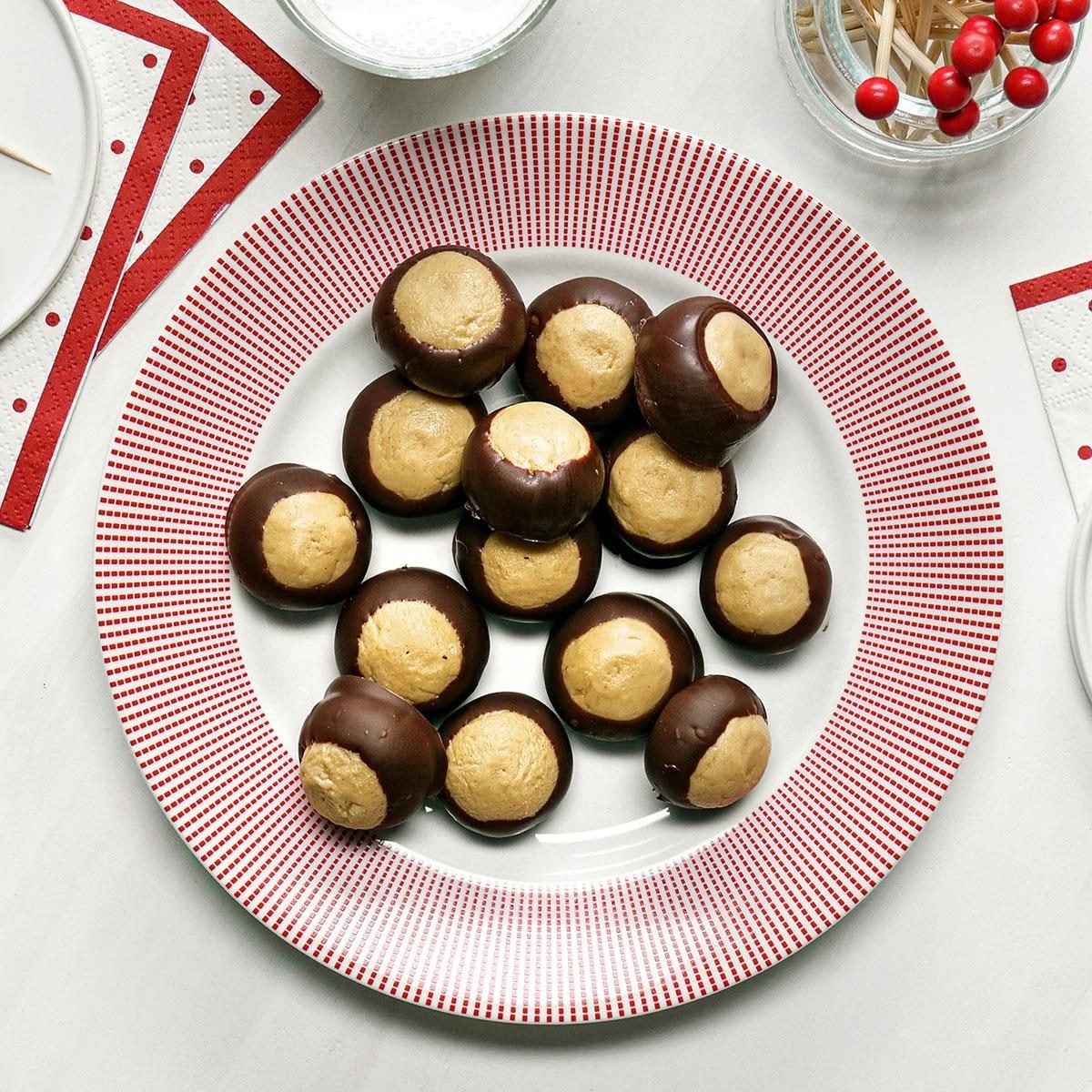
Buckeyes
If you’ve ever spent time in Ohio, you’ve probably heard the state’s residents referred to as Buckeyes. The nickname comes from the buckeye tree, whose dark brown nuts feature a lighter patch that resembles the eye of a deer. Eventually, home bakers borrowed the look for a treat made from peanut butter and chocolate, leaving a small circle of peanut butter exposed to mimic the nut.
The candy became so closely associated with Ohio that it’s now difficult to separate the two. Today, Buckeyes show up everywhere from holiday cookie trays to Ohio State football tailgates, proving that sometimes a state’s most recognizable symbol isn’t a flag or a flower—it’s dessert.