


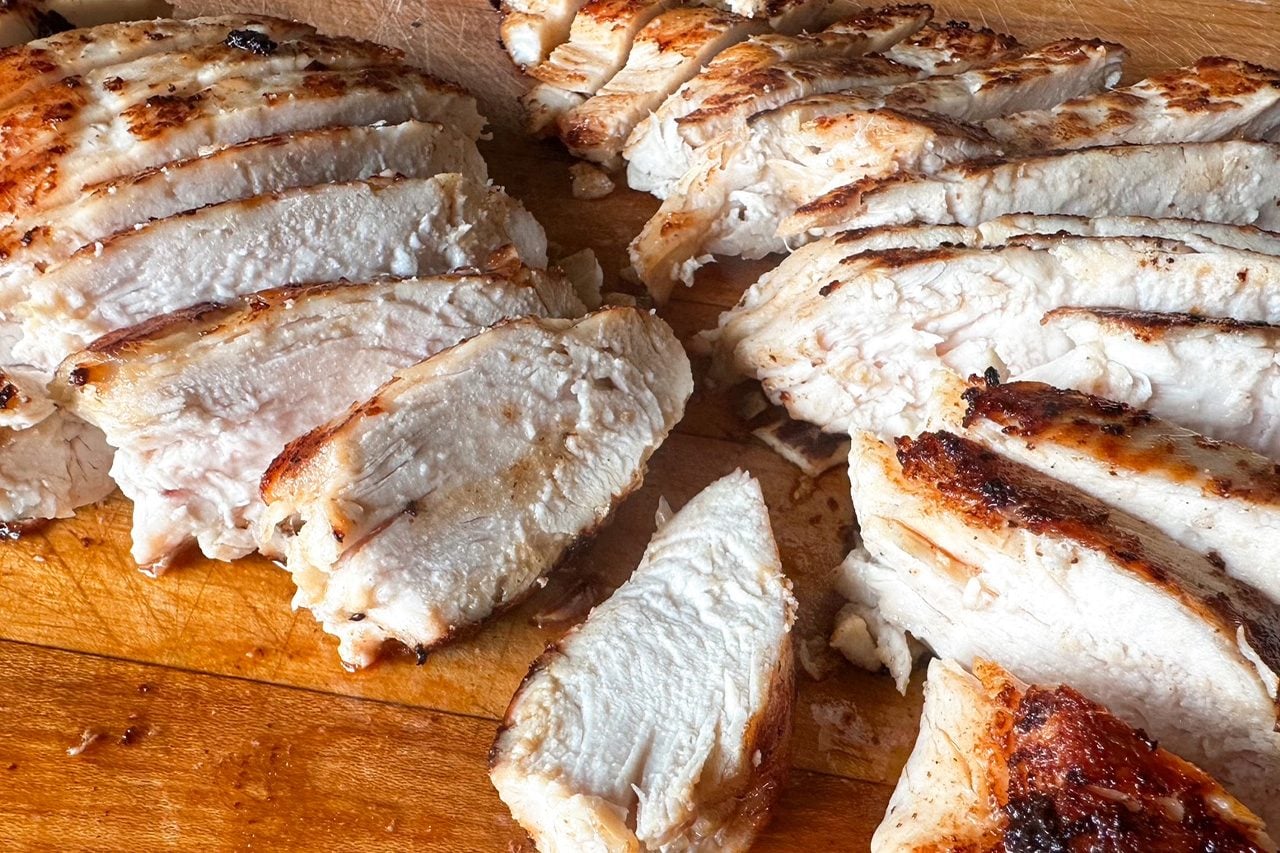

I thought I'd already learned every trick for keeping chicken breasts juicy. Then I tried marinating them in kiwi juice.
I’ve cooked enough chicken breasts over the years to become what some might call a little overconfident. I’ve brined them, pounded them, reverse-seared them, roasted them, and marinated them in buttermilk, yogurt and pickle juice. At this point, I know all the usual tricks. Even with all that experience, though, they’re still one of the easiest cuts of meat to get wrong.
Chicken breasts have a reputation for being easy to cook—but they’re also notoriously easy to overcook. Even when you know what you’re doing, they’re far less forgiving than other cuts. In fact, when I’m cooking chicken at home, I usually reach for thighs instead. They’re richer, harder to dry out, and much more forgiving if I get sidetracked with my kids’ homework or answering one last email before dinner.
Still, there’s a reason chicken breasts remain a weeknight staple in so many homes. They’re lean and versatile—perfect blank canvases for just about any seasoning or sauce. So when I came across Chef Fatty’s video recommending kiwi juice for keeping chicken breasts moist and tender, I was intrigued but skeptical. After cooking more chicken breasts than I could possibly count, I figured I already knew every secret to keeping them juicy.
Turns out, I still had one left to learn.
Why does kiwi juice make chicken more tender?
I’ve been following Chef Fatty’s videos for a while now because he has a knack for making food science feel approachable rather than intimidating. He’s the reason I started using the microwave to caramelize onions—a trick that, despite my enormous amount of initial skepticism, has permanently earned a place in my kitchen. So while I was skeptical of the kiwi, I also trusted that there was real science behind it.
Green kiwis contain a natural enzyme called antinidin, which breaks down proteins in meat. Give the enzyme enough time to work, and the meat becomes noticeably more tender. Leave it too long, though, and the same enzyme can turn the meat mushy.
If you’ve ever heard of using pineapple or papaya as meat tenderizers, it’s the same concept. They work for the exact reason kiwi does: both contain their own protein-breaking enzymes. But those enzymes are much more aggressive than antinidin, making it easier to accidentally over-tenderize the meat. Kiwi is gentler, giving you a little more room for error. Just be sure to use a green kiwi rather than a gold one, since green varieties contain more antinidin.
Even though the chicken is marinated in blended kiwi, don’t expect it to taste fruity (though I do love grilled chicken with a good mango salsa!). In this case, the fruit is there for its enzymes, not its flavor. And while the kiwi is the star of this technique, it’s not working alone. After the marinade, the chicken is soaked in a salt-and-baking-soda solution. The salt helps the meat retain moisture, while the baking soda raises its pH to encourage better browning and keep it juicy.
How to Marinate Chicken in Kiwi Juice
Step 1: Pierce the chicken
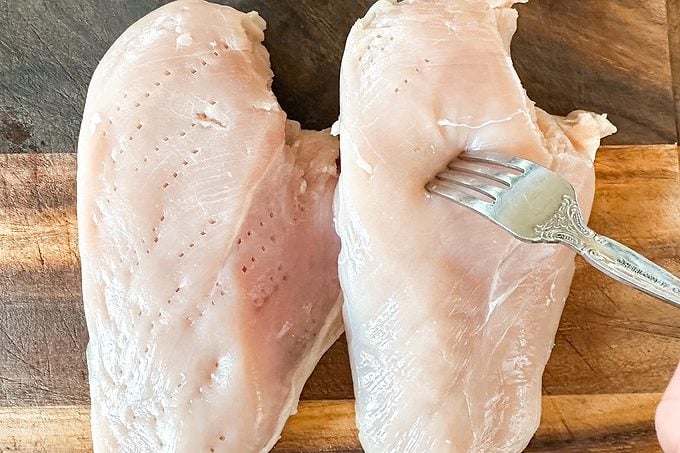
Start by piercing two boneless, skinless chicken breasts all over with a fork or meat tenderizer. This helps the kiwi marinade work its way into the meat.
Step 2: Blend the kiwi marinade
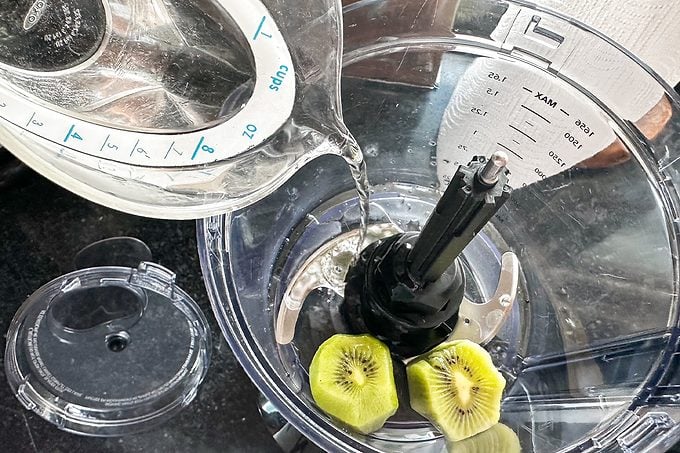
Peel two ripe green kiwis and blend them with a splash of water until they’re smooth.
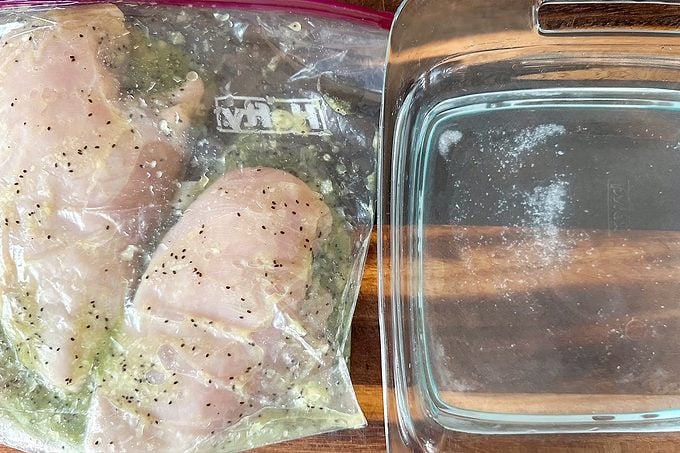
Pour the kiwi mixture into a large zip-top storage bag with the chicken breasts, making sure they’re evenly coated. Marinate the chicken for 15 minutes.
Step 3: Soak the chicken
Remove the chicken from the marinade, letting the excess kiwi juice drip off.
Transfer the breasts directly to a bowl containing 1 quart of water mixed with 3 tablespoons of salt and 2 teaspoons of baking soda. Let the chicken soak for 20 minutes, then remove it and pat it completely dry with paper towels.
Step 4: Cook the chicken
Heat a lightly oiled skillet over medium heat, and cook the chicken until it reaches an internal temperature of 160°F. Let the chicken rest for five minutes before slicing it.
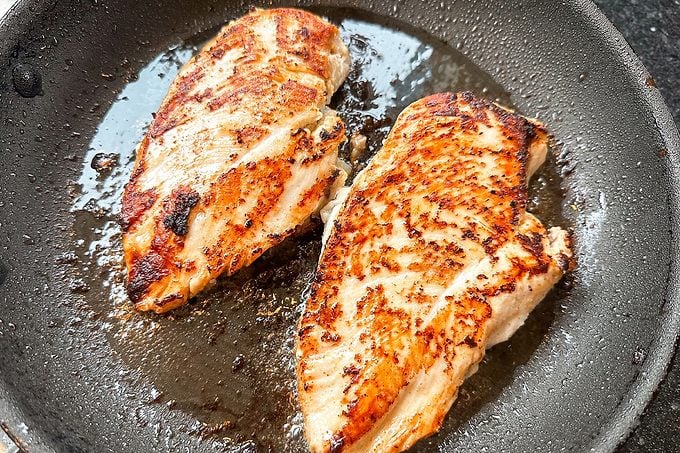
How does it taste?
I’ll admit, I was still a bit skeptical. The kiwi puree didn’t seem like it had done much beyond coating the chicken in what looked like a particularly strange smoothie. After years of cooking chicken every which way, I wasn’t expecting much.
The first surprise came before I even took a bite.
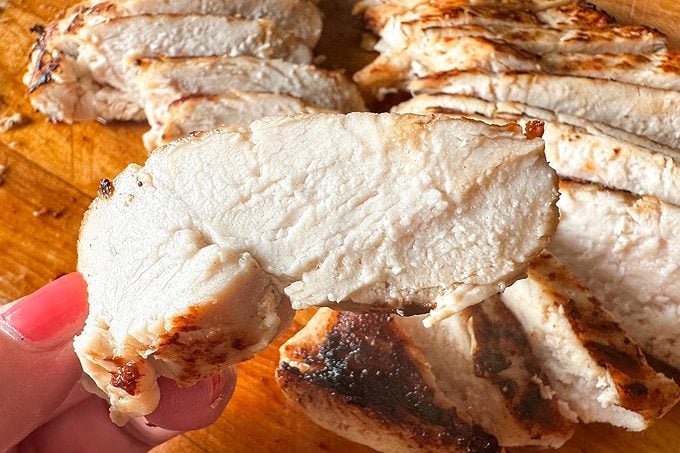
As soon as I sliced into the chicken, I could tell this wasn’t ordinary chicken breast. The knife glided through it, and the meat was incredibly juicy from edge to center. My biggest concern had been that the kiwi would make the texture oddly soft or mushy, but it didn’t. Instead, the kiwi marinade and the brine seemed to do exactly what they were supposed to: produce an incredibly tender, juicy chicken breast.
Then I tasted it.
Because I was testing Chef Fatty’s technique—not creating my own recipe—I followed his instructions exactly, right down to skipping any extra seasoning before cooking. As someone who’s constantly telling home cooks they aren’t using enough salt, I expected the chicken to taste flat. Instead, I found myself happily eating slice after slice.
I still added a small scattering of salt before serving it to my kids for lunch (mostly out of habit), but after tasting it plain, I realized I could have skipped that step entirely. Between the kiwi tenderizing the meat and the brine keeping it juicy and encouraging better browning, the chicken was delicious all on its own.
I started this experiment convinced I’d already learned everything there was to know about cooking juicy chicken breasts. It turns out, the one trick I was missing was sitting in the produce aisle.

