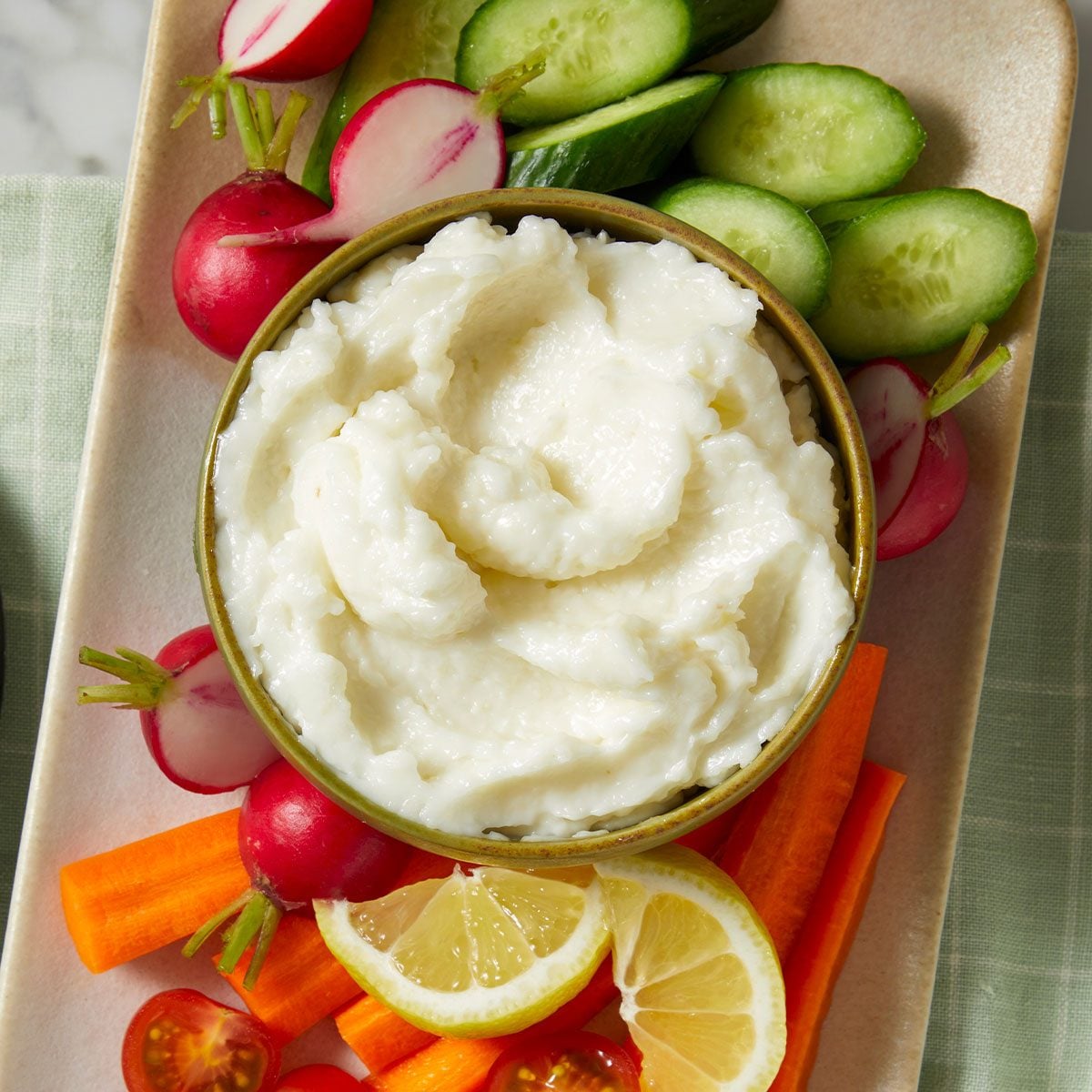
This four-ingredient toum recipe delivers a glossy, whipped garlic sauce so versatile that you'll want to put it on everything.
As someone who follows a mostly plant-based diet, I’ve become a little obsessed with toum sauce—the Lebanese garlic sauce that manages to be luxuriously creamy without a drop of dairy or a single egg. It’s thick and white and glossy, with a texture like homemade mayonnaise. But the flavor is something else entirely: bright with lemon, fiercely garlicky, and somehow light despite the generous amount of oil. I keep a jar in my fridge at all times, and reach for it the way others might reach for butter.
The magic is in the emulsification. You start with raw garlic and salt, then drizzle in oil so slowly and steadily that the whole thing transforms into a voluminous, cloud-like spread. I especially love it on vegan pizza, where this toum recipe brings the richness and depth that dairy usually provides. Once you make a batch, you’ll find yourself dreaming up reasons to use it.
What is toum?
Toum (rhymes with “room”) is a Lebanese garlic sauce with roots in the culinary tradition of the Levant, where it has been a staple condiment for centuries. Its name comes from the Arabic word for garlic. And with just four ingredients (garlic, oil, lemon juice and salt), garlic is its sole emulsifier—just like in traditional aioli (modern aioli is made with egg yolks). This sauce is a fixture of Lebanese tables, served with grilled meat, chicken shawarma, roasted vegetables and fresh bread.
Toum Ingredients
- Garlic cloves: Garlic is the star that provides the sauce’s signature pungent bite; it’s both sharp and creamy once fully emulsified. Look for firm, tight-skinned heads with no soft spots or sprouting, and peel each garlic clove just before processing them for the most potent flavor.
- Salt: Salt is more than a seasoning; it draws moisture from the garlic and helps the blades grip the cloves, resulting in a smoother, more uniform paste.
- Lemon juice: Lemon juice is added in two stages, brightening the sauce and helping the oil and garlic bind into a stable, cohesive spread. Fresh-squeezed juice is worth the extra effort; bottled juice tends to bring a flat, slightly bitter edge that’s hard to hide in a sauce this simple.
- Canola oil: Let garlic take center stage by mixing it with a neutral-flavored cooking oil like canola oil. The slow, steady pour transforms the mixture from a loose slurry into a thick, fluffy, mayonnaise-like emulsion.
- Ice water: A cold temperature is the secret to making a successful toum, keeping the emulsion stable and preventing it from breaking. Add it gradually alongside the oil to lighten the texture and give the sauce its characteristic airy, whipped quality.
How to Make Toum
Step 1: Process the garlic and lemon juice

In a blender or food processor, process the garlic and salt until the garlic is finely chopped. Add 1 tablespoon of lemon juice, and process the mixture until it’s smooth.
Step 2: Stream in the oil and water

While processing, gradually add 1/2 cup of oil, the ice water and 1 tablespoon of lemon juice in a steady stream. Scrape down the sides. Continue gradually adding the remaining 1 cup of oil. Refrigerate the toum for up to one week.
Editor’s Tip: “Gradually” is the keyword here. Pour the oil very slowly into the processor in a steady stream. One way to ensure it goes in gradually is by using the “dribbler,” the pinhole in the plunger, so the oil drizzles into the bowl while the motor runs. That functionality is perfect for emulsifying vinaigrettes and sauces.

How to Use Toum
- Slather it on a sandwich: Use toum in place of mayo on wraps, pitas or deli sandwiches for a garlicky punch. It makes everything from parchment-paper gyros to a simple turkey-and-avocado sandwich feel like something special.
- Use it as a marinade: Coat chicken thighs, lamb chops or shrimp in toum before grilling them; the garlic and lemon penetrate the meat, leaving it tender and fragrant.
- Use it as a salad dressing: Whisk a spoonful with a splash of red wine vinegar and a drizzle of olive oil to make a creamy, bold dressing that clings beautifully to romaine or shaved vegetables.
- Serve it alongside roasted vegetables: A dollop of toum with roasted cauliflower, roasted carrots or lemon-pepper broccoli turns a simple side dish into something worth going back to for seconds.
- Make bonus mashed potatoes: Instead of butter, stir toum into mashed potatoes for a lighter, silkier and more aggressively garlicky side dish.
- Amp up your pizza: Spread toum on pizza dough before adding toppings to make a Lebanese-inspired pizza that’s equal parts garlicky, creamy and deeply savory.
- Dip your fries in it: Skip the ketchup and serve toum with crispy french fries or roasted potato wedges. It’s the condiment upgrade you didn’t know your game-day spread was missing.
How to Store Toum
Transfer the toum to an airtight container and refrigerate it; the cool temperatures will keep the emulsion stable and fresh. Glass jars work especially well because they won’t absorb the garlic’s pungent aroma the way plastic containers can. Give it a quick stir before serving it if any separation occurs during storage.
How long does toum last?
Stored in an airtight container in the refrigerator, toum will keep for up to one week. Because it doesn’t contain dairy, it has a bit more staying power than cream-based sauces; just make sure your container is well-sealed to keep the garlic from perfuming everything else in your fridge.
Toum Tips

How do you fix toum if it breaks?
If your toum breaks and turns greasy or watery, don’t toss it; you can almost always rescue it. Start fresh with a small amount of garlic in a clean food processor, then slowly drizzle in the broken batch as if it were oil, allowing the new garlic to re-emulsify everything. Adding a splash of ice water while processing can also help bring the sauce back to its signature thick, fluffy consistency.
How else can you make toum?
You can also make toum the old-fashioned way with a mortar and pestle. Pound the garlic and salt into a smooth, fine paste, then transfer it to a bowl and whisk in the oil, lemon juice and ice water in a very slow, steady drizzle, just as you would when making mayonnaise by hand.
Ingredients
- 1/2 cup garlic cloves, peeled
- 1/2 teaspoon salt
- 2 tablespoons lemon juice, divided
- 1-1/2 cups canola oil
- 1-1/2 tablespoons ice water
Directions
-
1In a blender or food processor, process garlic and salt until finely chopped. Add 1 tablespoon lemon juice; process until smooth.
-
2While processing, gradually add 1/2 cup oil, ice water and 1 tablespoon lemon juice in a steady stream. Scrape sides down. Continue gradually adding remaining 1 cup oil. Refrigerate for up to one week.