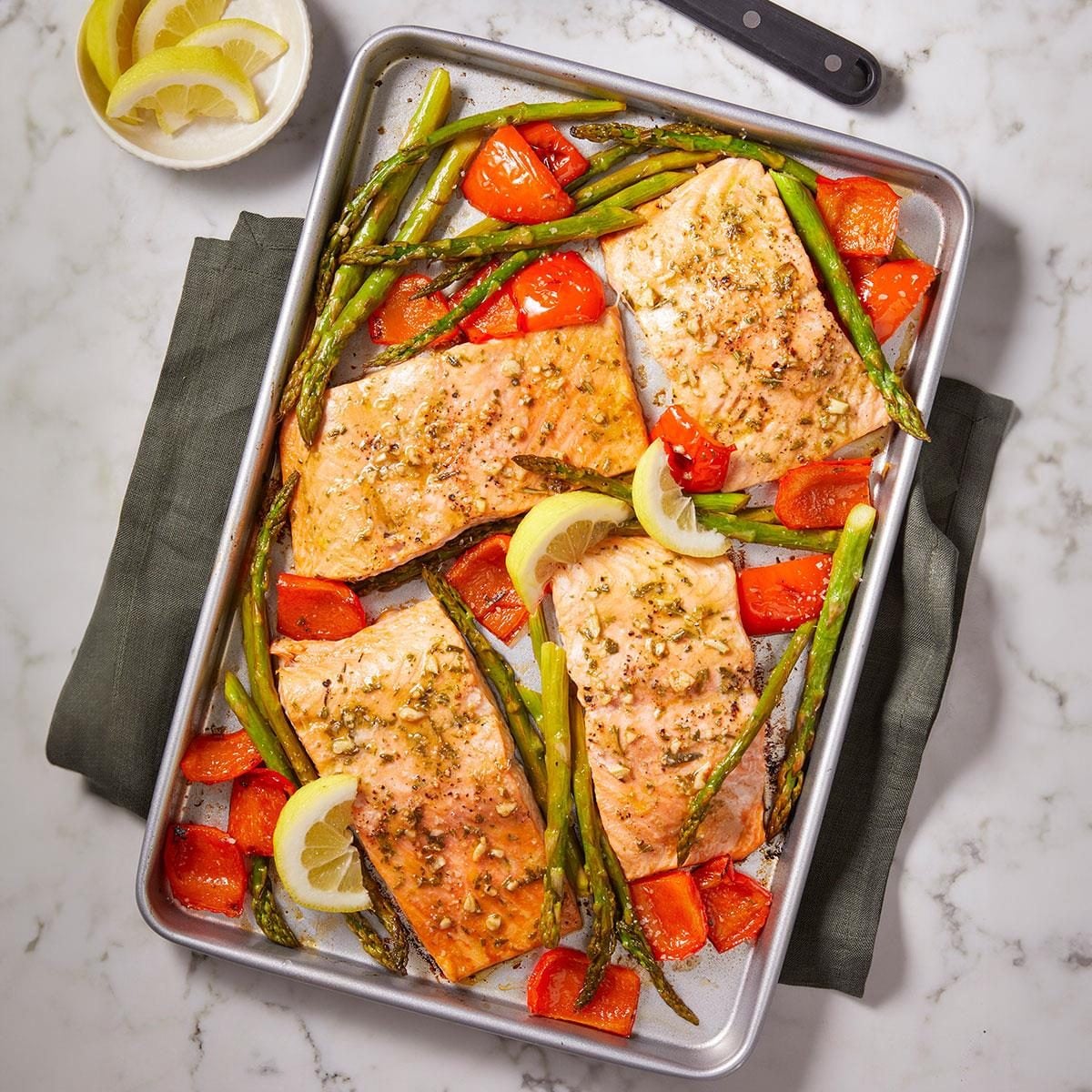

Rosemary salmon with asparagus and red peppers is a healthy and quick dinner with rave reviews.
The rich, savory flavors of rosemary salmon make for an unbelievably tasty meal. Seasoned with rosemary, garlic and a balsamic vinegar drizzle, this dish tastes more complicated and time-consuming than it really is. In fact, the total prep and cook time comes in under 30 minutes, and because you’ll be serving it alongside a hearty dose of veggies, it’s healthy, too. For a quick meal, that’s pretty hard to beat. So when you don’t have much time but still want something supremely tasty and good for you, keep this rosemary salmon recipe in your weeknight dinner rotation.
Ingredients for Rosemary Salmon
- Salmon fillets: Look for four salmon fillets that weigh about 1-1/2 pounds in total. The best types of salmon for this recipe are coho, sockeye and Atlantic. If you buy salmon that’s frozen, make sure to thaw it properly before cooking it.
- Coconut or olive oil: Use either coconut or olive oil here, but know that coconut oil does have a distinct taste. If you like that flavor, go for it! If you opt for coconut oil, melt it first.
- Balsamic vinegar: Slightly sweet and caramel-like, balsamic vinegar adds rich depth and flavor to the salmon. Don’t confuse it with balsamic glaze, which is cooked down and syrupy.
- Rosemary: Fresh rosemary has a cleaner, brighter flavor, so I recommend it. But dried rosemary is just fine, too. Make sure to crush it with a mortar and pestle before using it.
- Garlic: Peeling garlic is tedious, but I’ve found the quickest way to remove the skin is to carefully smash the bulb with the side of a knife blade. Once all the garlic is peeled, mince it for this recipe.
- Veggies: We recommend serving rosemary salmon with fresh asparagus and sweet red peppers, but cauliflower, zucchini or broccoli would complement the salmon well if you don’t have asparagus or red pepper on hand.
- Lemon wedges: Serve lemon wedges as a garnish for a light spritz of bright flavor.
Directions
Step 1: Make the sauce and season the salmon

Preheat the oven to 400°F. Place the salmon in a greased 15x10x1-inch baking pan. In a small bowl, combine the oil, vinegar, rosemary, garlic and salt, and mix well. Pour half of the sauce over the salmon.
Step 2: Prep the veggies

Place the asparagus and red pepper in a large bowl, then drizzle them with the remaining oil mixture and toss to coat them.

Arrange the veggies around the salmon in the pan, and sprinkle everything with freshly ground pepper.
Step 3: Bake the salmon
Bake until the salmon flakes easily with a fork and the vegetables are tender, 12 to 15 minutes. Serve the fish an veggies with lemon wedges on the side, spritzing lightly to add bright citrus flavor as needed.

Rosemary Salmon Variations
- Serve it with rice: This rosemary and salmon recipe is perfect just as it is, but you can serve it over a bed of perfectly fluffy rice or herbed rice pilaf.
- Add maple: Try mixing a tablespoon of pure maple syrup with the vinegar for an extra touch of sweetness. You won’t regret it!
- Bring some spice: A sprinkle of crushed red pepper would add just enough spice to the salmon without overpowering the other flavors.
How to Store Rosemary Salmon
We doubt you’ll have leftovers, but if you’re making this rosemary salmon recipe with the plan of saving some for later, you can keep rosemary salmon in the fridge for three to four days. To ensure they remain fresh, store leftovers in an airtight container in the coldest part of the fridge.
How do you reheat salmon and rosemary?
Warm a skillet with olive oil over medium heat, and add the fish and veggies once the oil is just beginning to sizzle. Saute the fish for three to five minutes per side, allowing both the fish and veggies to slightly brown and become heated through.
Rosemary Salmon Tips

How do I select a quality salmon fillet?
Fish shouldn’t smell, well, fishy. Salmon should be firm and shiny, and should have a nice, clean ocean smell—no ammonia-like smell, no overwhelming fish smell. Its flesh should be pink, and the skin should be shiny and silver, with a slightly blueish tint. You want the flesh to spring back when pressed, not crumble and flake to the touch; that’s how you know your salmon has gone bad.
Wild-caught or farmed salmon—which is better?
Wild-caught fish is the clear winner, since farmed salmon is often contaminated with persistent organic pollutants (POPs), sea lice, antibiotics and other toxins. It isn’t as healthy for the fish, and it’s not as healthy for you, either. It is, however, much milder in taste, and if you’re new to fish or not into a deeper fish flavor (or if it’s all you have access to), you may prefer farmed salmon.
How do I know if the salmon is finished cooking?
The easiest way to tell if salmon has finished baking is to check its internal temperature. It should be 145°, although you may prefer a medium doneness, which means the instant-read thermometer should read 125°. If you don’t have access to a meat thermometer, check for flakiness. If you gently press the top of the salmon with a fork, it should flake and separate easily. As it does so, you’ll also notice that the salmon is now just slightly pink and translucent, as opposed to a deeper coral-pink color. If it’s opaque, you know you’ve cooked it too long.
Ingredients
- 1-1/2 pounds salmon fillets, cut into 4 portions
- 2 tablespoons melted coconut oil or olive oil
- 2 tablespoons balsamic vinegar
- 2 teaspoons minced fresh rosemary or 3/4 teaspoon dried rosemary, crushed
- 1 garlic clove, minced
- 1/2 teaspoon salt
- 1 pound fresh asparagus, trimmed
- 1 medium sweet red pepper, cut into 1-inch pieces
- 1/4 teaspoon pepper
- Lemon wedges
Directions
-
1Preheat oven to 400°. Place salmon in a greased 15x10x1-in. baking pan. Combine oil, vinegar, rosemary, garlic and salt. Brush half over salmon. Place asparagus and red pepper in a large bowl; drizzle with remaining oil mixture and toss to coat. Arrange around salmon in pan; sprinkle with pepper.
-
2Bake until salmon flakes easily with a fork and vegetables are tender, 12-15 minutes. Serve with lemon wedges.