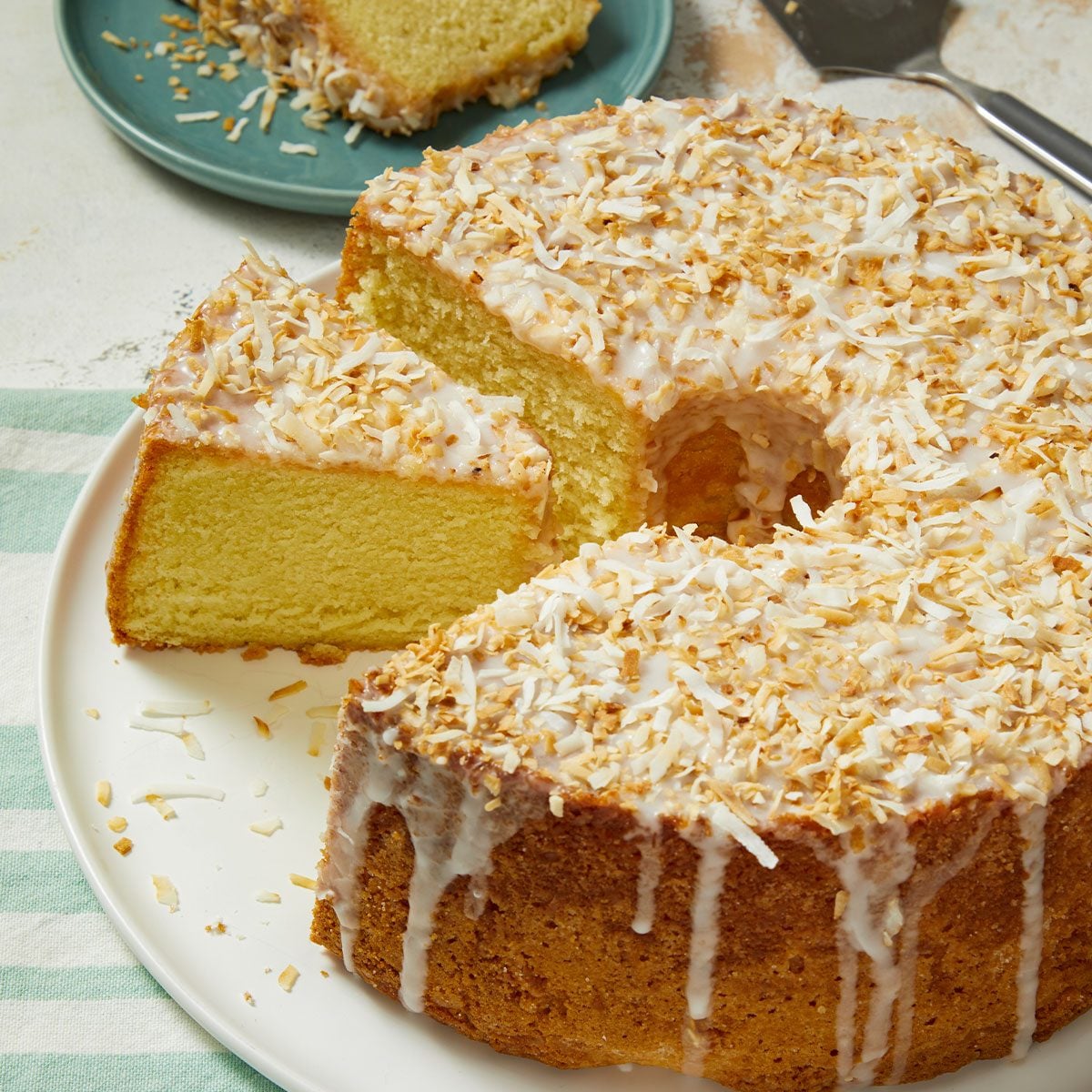
Louisiana crunch cake is every coconut lover's dream come true, with crispy coconut baked onto the exterior of the tender, coconut-flavored pound cake.
Everyone is always so surprised to learn that both of my kids adore coconut. To satisfy our insatiable love for this taste of the tropics, we’re always on the hunt for new coconut desserts, from homemade coconut ice cream to coconut meringue pie and everything in between. Our latest coconut obsession, however, is Louisiana crunch cake.
If you’re not familiar with this vintage Southern dessert, it’s composed of a tender, coconut-flavored pound cake with a distinctive, caramelized, crunchy exterior. It’s one of those treats you can enjoy for dessert or get away with eating in the morning alongside a cup of tea or coffee (my daughter says it’s like one giant glazed doughnut).
While this coconut wonder is most popular down south, it was actually created by Burny Brothers Bakery in Chicago. After the bakery was sold in the 1960s, Entenmann’s eventually ended up with the recipe, and has distributed its version at retailers nationwide ever since. Our Louisiana crunch cake recipe is an ode to Entenmann’s original recipe, with homestyle additions like tangy buttermilk and a sweet coconut glaze that elevate and enhance this old-fashioned dessert.
Louisiana Crunch Cake Ingredients
- Crunchy coating: To give the cake its signature crunchy exterior, a blend of granulated sugar and shredded coconut is generously dusted over the inside of a greased tube pan before the cake batter is added. The sugar caramelizes as the cake bakes, transforming into a sweet, crisp outer shell.
- Butter: Pound cake recipes are known for their richness, largely due to their high butter content. This recipe calls for 1 cup of butter.
- Sugar: Despite containing 2-1/2 cups of sugar, the cake itself isn’t overly sweet. Most of a Louisiana crunch cake’s sweetness comes from the crunchy exterior and sweet glaze.
- Eggs: As with most baking recipes, start with room-temperature eggs to ensure the batter combines properly.
- Vanilla extract: Vanilla complements the coconut extract, adding depth to this southern cake.
- Coconut extract: This key ingredient isn’t just for Louisiana crunch cake. There are so many tasty recipes with coconut extract, from cakes and cookies to bars and more.
- All-purpose flour: No need to buy a special cake flour for this recipe. Any good-quality all-purpose flour will do.
- Baking soda: Just the tiniest pinch of baking soda lightens the dense cake so that it doesn’t come across as dry or stodgy.
- Salt: A pinch of salt balances the sweetness and enhances the coconut flavor in the cake.
- Buttermilk: Using buttermilk instead of milk in this cake recipe adds extra moisture, tenderness, and a subtle tang.
- Coconut glaze: A simple glaze made from confectioners’ sugar, coconut extract and milk is drizzled or spread over the cake for an extra layer of coconut flavor.
- Toasted coconut: Coconut (especially sweetened coconut) browns super quickly. When toasting coconut, keep a close eye on it to prevent it from burning.
Directions
Step 1: Prep the pan

Preheat the oven to 325°F with the rack in the middle position. Grease a 10-inch tube pan.
Combine the shredded coconut and granulated sugar in a small bowl. Next, sprinkle the mixture over the bottom and sides of the prepared tube pan, rotating and shaking the pan until the interior is evenly coated with the coconut sugar topping. Set the pan aside.
Step 2: Prep the cake batter

In a large bowl, cream the butter and sugar until they’re light and fluffy, five to seven minutes. Add the eggs, one at a time, beating well after each addition. Beat in the vanilla extract. Combine the flour and baking soda, and add it to the creamed mixture, alternating with the buttermilk, beating until the batter well combined, about two to three minutes.
Step 3: Bake and cool the cake

Pour the thick batter into the prepared pan, spreading it into an even layer. Bake the cake for 55 to 65 minutes or until a toothpick inserted into the center comes out clean. Remove the cake from the oven and let it cool for 15 minutes in the pan before removing it to a wire rack to cool completely.
Step 4: Make the glaze

When the cake is nearly cool, combine the confectioners’ sugar, milk and coconut extract in a small bowl, stirring with a whisk until a smooth, lump-free glaze forms.
Step 5: Top the cake with glaze and toasted coconut
Position the wire rack over a sheet pan, then drizzle the glaze evenly over the cooled cake. Sprinkle it with toasted coconut, then let the glaze set for about 10 minutes. Slice the cake to serve it.
Editor’s Tip: A crunch cake is traditionally served as an upside-down dessert, so the crunchy bottom is front and center beneath the sweet glaze. You can either drizzle the cake with the glaze or spread it evenly over the flat “top” of the cake, allowing excess to drip over the sides.

Louisiana Crunch Cake Variations
- Use sweetened coconut: You are welcome to use sweetened shredded coconut in this recipe to make a slightly sweeter Louisiana crunch cake recipe. Do not use flaked coconut, however, as it doesn’t have the right texture for this recipe.
- Add more coconut extract: If you want extra coconut flavor in the cake, you can increase the amount of extract in the batter to 3 teaspoons.
- Add nuts: Some Louisiana crunch cake recipes will have chopped roasted pecans in the topping for even more texture. You could also experiment with baking chopped pecans into the cake.
How to Store Louisiana Crunch Cake
Store the Louisiana crunch cake in an airtight container or wrap it tightly in storage wrap. Store it at room temperature for five to seven days.
Can you freeze Louisiana crunch cake?
Yes, Louisiana crunch cake freezes like a dream. To freeze the cake, wrap it tightly in two layers of storage wrap, then wrap it in aluminum foil once the icing has completely set. Freeze it for up to three months. Defrost it completely at room temperature before serving it.
Louisiana Crunch Cake Tips

Can you make Louisiana crunch cake in another type of cake pan?
Yes! If you don’t have a tube pan with a flat top, you can turn this into a Bundt pan recipe instead. Make sure to grease the pan well, as the sweet coconut-sugar topping may cause the cake to stick in the crevices.
Why is my Louisiana crunch cake dry?
A dry or crumbly crunch Louisiana crunch cake was likely overbaked. For best results, bake the cake until its internal temperature registers between 200º and 210º in the center. Any longer, and the cake may become dry. Other common culprits for a dry pound cake include overmixing the batter or failing to measure flour the right way, which often results in too much flour being added.
Ingredients
- 1/2 cup sweetened shredded coconut
- 2 tablespoons sugar
- cake:
- 1 cup butter, softened
- 2-1/2 cups sugar
- 4 large eggs, room temperature
- 2 teaspoons coconut extract
- 1 teaspoon vanilla extract
- 3 cups all-purpose flour
- 1/2 teaspoon salt
- 1/4 teaspoon baking soda
- 1 cup buttermilk
- glaze:
- 1-1/2 cups confectioners' sugar
- 4 to 5 tablespoons whole milk
- 1 teaspoon coconut extract
- 1/4 cup unsweetened shredded coconut, toasted
Directions
-
1Preheat the oven to 325° with the rack in the middle position. Grease a 10-in. tube pan.
-
2Combine coconut and granulated sugar in a small bowl. Sprinkle the mixture over the bottom and sides of the prepared tube pan, rotating and shaking until the interior is evenly coated. Set aside.
-
3In a large bowl, cream butter and sugar until light and fluffy, 5-7 minutes. Add eggs, one at a time, beating well after each addition. Beat in extracts. In a separate small bowl, combine flour, salt and baking soda; add to the wet ingredients alternately with buttermilk, beating well until combined, 2-3 minutes.
-
4Pour the thick batter into the prepared pan, spreading into an even layer. Bake for 55-65 minutes or until a toothpick inserted into the center comes out clean. Let cool 15 minutes; remove to a wire rack to cool completely.
-
5When the cake is nearly cool, in a small bowl, stir together confectioners’ sugar, milk and coconut extract until smooth and lump-free. Position the cake on the wire rack over a sheet pan. Drizzle the glaze evenly on top. Sprinkle with toasted coconut; let the glaze set about 10 minutes. Slice to serve.