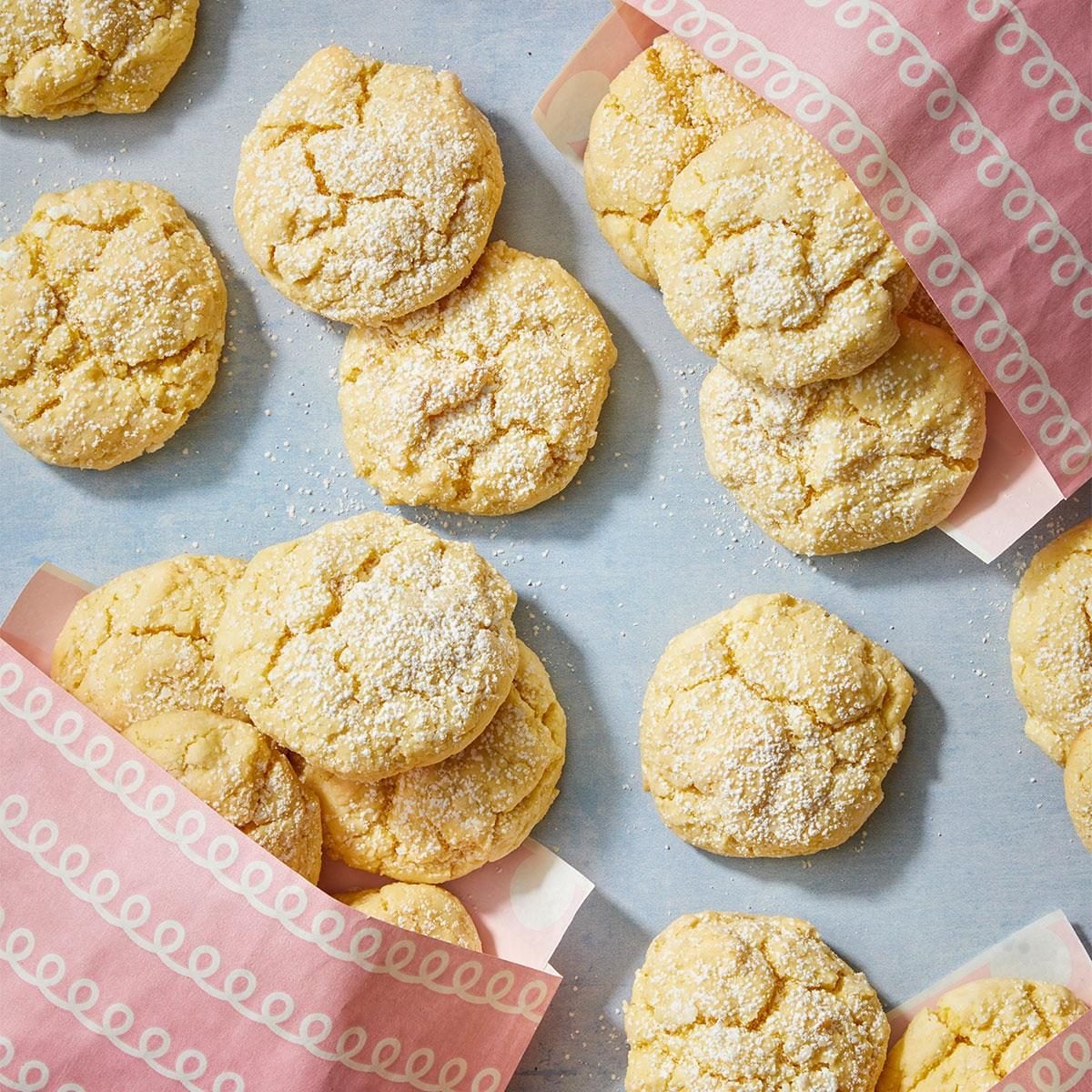
Death by butter cookies? What a way to go.
Moderation? Ha! Death by butter cookies don’t hold back. They’re a nod to St. Louis gooey butter cake, for which, as the name suggests, a love for butter is pretty much a requirement. Between the butter, cream cheese and confectioners’ sugar coating, these rich, buttery cookies are sink-your-teeth-in soft, and they instantly melt in your mouth. That’s probably why this recipe from Katie Cooper in Madison, Ohio, was one of the winners of our 2025 cookie exchange.
I love that these cookies are an easy pantry dessert, made from just a few simple kitchen staples, and yet they still taste good enough to win a competition. Play around with the cake mix flavors to make it your own. Just make sure that, whichever cake mix you choose, it weighs 15.25 ounces—no less, no more. Read those box labels!
Ingredients for Death by Butter Cookies
- Cream cheese: Soften the cream cheese to room temperature. Speed up the softening process by cutting the block into cubes.
- Butter: You’ll need one stick of butter for this recipe. Since the butter is so important to the cookie’s flavor, splurge on the best butter if you can.
- Egg: One egg is all you need to bind the ingredients. Bring the egg to room temperature so it emulsifies into the dough. A cold egg will cause softened butter and cream cheese to seize.
- Vanilla extract: While butter is the main flavor, vanilla extract adds a subtle, delicate floral note. I always notice when I’ve gotten lazy and skipped the vanilla, so take it from me: Don’t skip it!
- Yellow cake mix: We tested this recipe with a Duncan Hines 15.25-ounce yellow cake mix. While the cake mix doesn’t have to be Duncan Hines brand, the cake mix must be 15.25 ounces. Duncan Hines also sells a 13.25-ounce cake mix, so make sure you’re not grabbing that one.
- Confectioners’ sugar: You’ll roll the cookie dough balls in confectioners’ sugar before baking them to give them a crinkled cookie effect. You can add more after baking, too.
Directions
Step 1: Make the cookie dough

Preheat the oven to 375°F. In a large bowl, use a hand mixer or stand mixer to beat the softened cream cheese and butter until they’re smooth. Beat in the egg and vanilla extract.

Gradually add the yellow cake mix to the creamed mixture, and beat them just until no streaks remain.
Editor’s Tip: After mixing the egg and vanilla extract, stop the mixer and scrape down the sides and bottom of the bowl with a rubber spatula to ensure everything is incorporated.
Step 2: Roll the cookie dough in confectioners’ sugar

Scoop the cookie dough by the tablespoonful, then roll them in the confectioners’ sugar to coat them. Place the cookie dough balls 2 inches apart on baking sheets that are coated with cooking spray.
Step 3: Bake the cookies
Bake the cookies until they’re set, 12 to 15 minutes. Transfer the cookies to wire racks to cool at room temperature. If desired, dust them with additional confectioners’ sugar.
Editor’s Tip: Make sure not to overbake the cookies. They should appear just set and a little golden around the edges.

Recipe Variations
- Try another cake mix: Instead of yellow cake mix, feel free to try vanilla, white or butter cake mix. You could even use chocolate, lemon or strawberry cake mix.
- Include citrus: A little lemon, grapefruit or orange zest would be outstanding in these cookies, and would add a subtle, bright flavor without completely altering the recipe.
- Add mix-ins: Love cookie inclusions? Fold freeze-dried strawberries, chocolate chips, almonds, pistachios or dried fruits into the batter. I wouldn’t recommend using fresh fruit, as it will add too much water and throw off the cookie’s texture.
- Brown the butter: Browned butter has concentrated and caramelized milk solids, which have a deeper, nuttier, toastier flavor than fresh butter. Brown one stick plus 2 tablespoons of butter, let it cool to room temperature, then let it chill in the fridge. Take the butter out of the fridge and allow it to soften to room temperature so it’s the right consistency for these cookies.
How to Store Death by Butter Cookies
Allow the death by butter cookies to cool to room temperature, then transfer them to an airtight container. Since the cookies contain cream cheese, it’s best to stay on the safe side and store them in the fridge rather than on the countertop. Store the cookies in the fridge for up to four days, and warm them slightly in the microwave to take the chill off before enjoying them.
Can you freeze death by butter cookies?
Yes, you can freeze death by butter cookies, baked or unbaked. To freeze baked cookies, allow the death by butter cookies to cool to room temperature, then transfer them to an airtight container with pieces of parchment or waxed paper layered between the stacks. Freeze them for up to two months and thaw them overnight in the fridge.
To freeze cookie dough, place the cookie dough balls on a parchment-lined baking sheet, then pop them in the freezer, uncovered, for one hour. Transfer the cookie dough balls to a zip-top bag and freeze them for up to two months. Roll them in the confectioners’ sugar and bake them from frozen, adding a few minutes to the bake time as needed.
Death by Butter Cookies Tips

Why is my cookie dough so hard to handle?
If your cookie dough is hard to handle, it’s likely too warm. Pop the cookie dough in the fridge for 20 to 30 minutes, then try again. This probably happened if your butter and cream cheese were too warm, or if you’re baking this recipe on a hot, humid day. Kitchen temperatures and humidity levels can have a big effect on baking recipes, so be wary!
Which yellow cake mix should I use for death by butter cookies?
Any brand of yellow cake mix works for death by butter cookie as long as it’s 15.25 ounces. If you don’t have a go-to brand, we tested the most popular ones on the shelf and found the best yellow cake mix brands in a few categories, from best overall to the fluffiest and easiest to frost.
Can you make death by butter cookies gluten free?
We haven’t tried making death by butter cookies gluten free, but if you try, let us know how it went! Make sure to use a gluten-free cake mix, and ensure all other packaged goods are certified gluten free. Also, make sure the cooking spray you use to grease the cookie sheets doesn’t contain flour. Some baking sprays contain flour to help prevent sticking.
Ingredients
- 1 package (8 ounces) cream cheese, softened
- 1/2 cup butter, softened
- 1 large egg, room temperature
- 1/4 teaspoon vanilla extract
- 1 package yellow cake mix
- Confectioners' sugar, for rolling
Directions
-
1Preheat oven to 375°. In a large bowl, cream cream cheese and butter until very smooth. Beat in egg and vanilla. Gradually add cake mix into creamed mixture. Scoop by tablespoonfuls; roll in confectioners' sugar. Place 2 in. apart on baking sheets coated with cooking spray.
-
2Bake until set, 12-15 minutes. Remove to wire racks to cool; if desired, dust with additional confectioners' sugar.