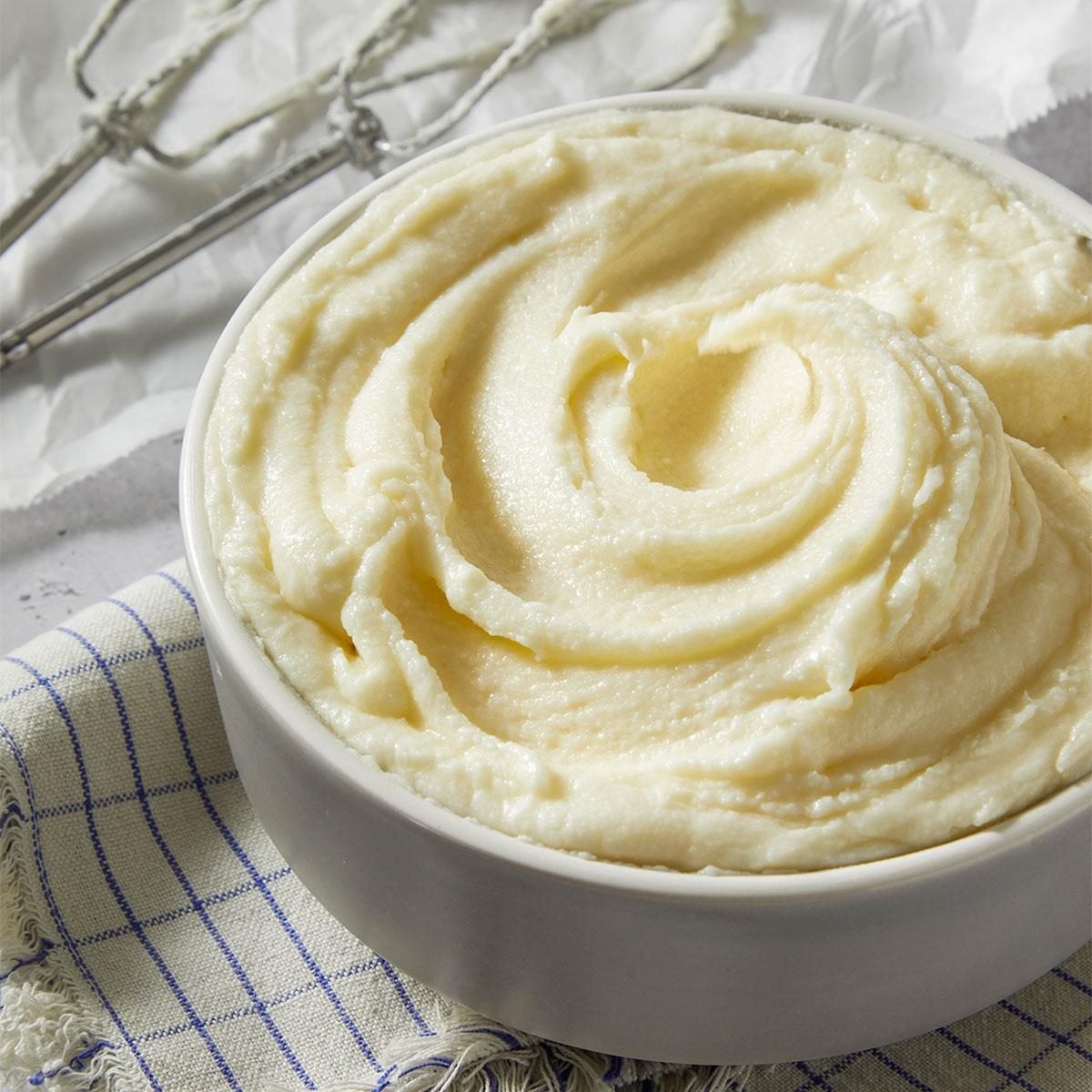
If Goldilocks were looking for just the right frosting, she would choose creme fraiche frosting. It’s not too sweet, not too tangy, and couldn’t be easier to make.
Creme fraiche frosting is made from only four ingredients, doesn’t take any special skills to make, is lighter than cream cheese frosting, and spreads on silky smooth. The mild tang from the creme fraiche keeps this frosting from being cloyingly sweet. So if simple American buttercream is too sweet for you, and you don’t have the time (or confidence) to make Swiss meringue buttercream, then creme fraiche frosting will be your new favorite adornment for cakes and cupcakes.
What is creme fraiche?
Creme fraiche is similar to sour cream, but it’s less tangy and higher in fat. In Europe, especially France, creme fraiche is often dolloped over fruit and pastries or stirred into sauces and soups to give them a rich, creamy texture. Most brands contain just two ingredients: cream and a bacterial culture. The bacteria sour the cream, giving it that characteristic tang. Since it’s high in fat, creme fraiche is unlikely to curdle when stirred into hot, savory dishes.
Creme fraiche isn’t as ubiquitous in the United States as sour cream, but most large supermarkets and specialty markets will carry it in their dairy case. If you can’t find creme fraiche in your local grocery store, sour cream can usually be used as a substitute, especially for cold recipes like frosting. Mascarpone cheese isn’t a good substitute for creme fraiche.
Creme Fraiche Frosting Recipe
- Butter: Take the butter out of the fridge 30 minutes before getting started so it can soften. Need it sooner than that? Quickly soften butter by grating it on a cheese grater. The small shreds come to room temperature much more easily than a stick of butter.
- Creme fraiche: Just like the butter, you’ll want to bring the creme fraiche to room temperature. Cold creme fraiche will cause the frosting to curdle.
- Vanilla extract: Vanilla extract cuts some of creme fraiche’s tang with its delicate, floral flavor. I always like to use vanilla bean paste in my frostings because I think the black flecks are so pretty, and they have a much stronger flavor.
- Confectioners’ sugar: Confectioners’ sugar (aka powdered sugar) is the best sweetener for no-cook frostings. Unlike coarse granulated sugar, the powdery consistency dissolves without heat. Give the confectioners’ sugar a quick sift to ensure it’s completely lump-free.
Directions
Step 1: Beat the butter
In a large bowl, beat the butter until it’s light and fluffy.
Editor’s Tip: Beating the butter first lightens its texture so the creme fraiche will blend in smoothly. It also ensures your butter is sufficiently softened. If it’s still stiff, continue beating or wait a few minutes for it to soften further before adding the creme fraiche.
Step 2: Add creme fraiche and vanilla
Beat in the creme fraiche and vanilla extract just until the mixture is smooth.
Editor’s Tip: Keep a careful eye on it and don’t overmix it, or the creme fraiche will separate and curdle.
Step 3: Beat in confectioners’ sugar
Gradually beat in enough confectioners’ sugar that the frosting becomes smooth. (It will be thinner than American buttercream, but thick enough to spread easily.)
Editor’s Tip: This frosting recipe yields about 3 cups, enough to frost a 9-inch two-layer cake, 24 cupcakes or a 13×9-inch cake.

How to Use Creme Fraiche Frosting
- Cakes and cupcakes: It may be the most traditional way use for frosting, but creme fraiche frosting on cakes and cupcakes is such a sophisticated upgrade. Try it on Guinness chocolate cake, mocha cake, easy apple snacking cake, carrot cake, hummingbird cupcakes and Black Forest cake. I don’t recommend red velvet cake, though—that’s too much tang!
- Cookies: I love using creme fraiche frosting as a filling for cookie sandwiches. Try it with chocolate cookie sandwiches, oatmeal cream pies or pumpkin whoopie pies. It’s a great topping for cookies, too, like our carrot cake cookies or frosted gingerbread cookies.
- Brownies and bars: A dollop or spread of creme fraiche frosting turns regular brownies and bars into much more luxe desserts. Try it on banana bars, carrot cake bars, pumpkin bars or cranberry bars.
How to Store Creme Fraiche Frosting
Store unused creme fraiche frosting in an airtight container in the fridge for up to four days. Make sure it’s covered tightly, or it’ll absorb lingering fridge smells. If you’ve used the frosting on a dessert, you’ll need to refrigerate the dessert. Store them in the refrigerator, but take them out 30 minutes before serving so they can soften a bit.
Can you make creme fraiche frosting ahead of time?
If you want to get a jump start, creme fraiche frosting can be made and stored in the refrigerator in an airtight container for up to four days. As with most homemade frosting recipes, let the frosting stand at room temperature for 15 minutes before frosting your cake. Beat the frosting until it’s smooth. You may need to adjust the consistency with a bit more confectioners’ sugar (if it’s too thin) or milk (if it’s too thick).
Creme Fraiche Frosting Tips

Why is my creme fraiche frosting curdled?
If your creme fraiche frosting is curdled, you may have used creme fraiche that was too cold, or you may have overmixed the frosting. Too-cold creme fraiche mixed with room-temperature or warm ingredients will break its emulsion. Overmixing the creme fraiche causes it to lose its emulsion because the fats have separated from the liquid.
How can I make my creme fraiche frosting firmer?
You can make creme fraiche frosting firmer by adding more confectioners’ sugar, but remember that this will make it sweeter, too! To thicken the frosting without making it sweeter, cover and refrigerate it for 15 to 30 minutes. If you’re using creme fraiche frosting as a cake filling, definitely thicken it with extra confectioners’ sugar if it feels too soft.
Can you add flavorings and extracts to creme fraiche frosting?
Yes, you can add flavorings and extracts to creme fraiche frsoting. Instead of vanilla, use almond, orange, lemon or lavender extract to switch up the flavor. You could also use orange blossom water or add fresh lemon or orange zest.
Ingredients
- 1/2 cup unsalted butter, softened
- 1 carton (8 ounces) creme fraiche
- 2 teaspoons vanilla extract
- 6 cups confectioners' sugar, sifted
Directions
-
1In a large bowl, beat butter until light and fluffy. Beat in crème fraiche and vanilla until smooth. Gradually beat in enough confectioners’ sugar until smooth.