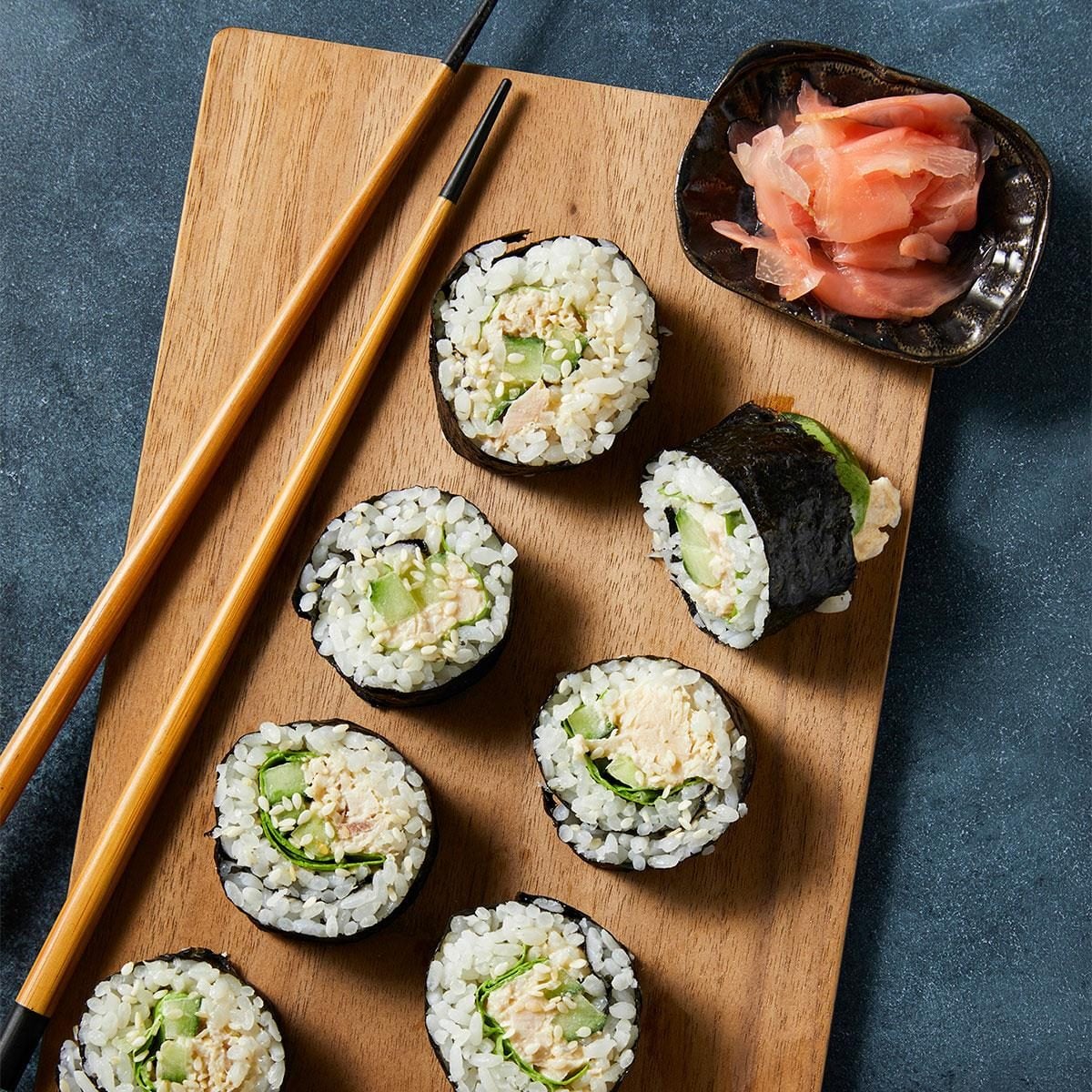
Our easy canned tuna sushi recipe instantly curbs a sushi craving—no raw fish required.
This canned tuna sushi recipe—often called tuna salad maki or lettuce maki in Japan—has an unusual history. In 1966, the Ippei Sushi restaurant in Miyazaki, Japan, wanted to develop a unique take on sushi. Up until this time, only fresh, raw fish with vinegared rice qualified as sushi. It was never made from cooked seafood.
But after many hit-or-miss combinations, the restaurant’s owner, Shoji Muraoka, and his friend Masaaki Hirao finally created a sushi roll consisting of lettuce, cooked prawn and good mayonnaise. It was Shoji’s effort to create “healthy sushi” for picky eaters who disliked vegetables—including his friend, Masaaki.
Today, Ippei Sushi still serves this lettuce maki to honor the friendship. You’ll find many affordable variations of salad maki across Japan, in grocery stores, sushi restaurants and even convenience stores. This sushi is often made with crab sticks (imitation crab), cooked shrimp, tamagoyaki and, of course, canned tuna.
Our canned tuna sushi recipe makes four maki rolls or 32 sliced pieces. Canned tuna sushi is a great choice for people who may not otherwise be able to enjoy sushi (like pregnant women, young children and those with a compromised immune system). Because the fish is not raw, it also makes a perfect packed lunch.
Ingredients for Canned Tuna Sushi
- Canned albacore white tuna: Drain the water from one 5-ounce can of albacore white tuna. You can even pat it dry to make sure there’s no excess moisture to prevent a watery tuna filling.
- Mayonnaise: Mayonnaise makes the tuna filling creamy and binds the flakes together so it’s easier to roll. Kewpie mayo is excellent for Japanese cooking, but any unflavored mayo (or homemade Japanese mayo) will work just fine.
- Sesame oil: Sesame oil adds a nutty, toasty flavor and a little fat to the sushi filling.
- Chili oil: Chili oil is completely optional. Only add this spicy ingredient if you prefer a kick of heat in your sushi.
- Nori: This traditional Japanese ingredient is made from seaweed that’s turned into paper-thin sheets. It’s a must in sushi rolls to create the tight spirals.
- Sushi rice: This type of rice is a short-grain variety that’s high in starch and tends to stick together once cooked—a good thing! Wash the rice thoroughly, then cook the sushi rice before starting the rolls.
- Sesame seeds: Without a few crunchy components, sushi leans very soft-textured. Sesame seeds provide a nice crunch without overpowering the other ingredients. I like to buy toasted sesame seeds. You can also use black sesame seeds or a mix of both if you prefer.
- Butter lettuce: Butter lettuce adds a refreshing, crunchy note and nice pop of green in the sushi. Wash the lettuce and dry it thoroughly so your sushi roll isn’t wet and watery.
- Cucumber: An English cucumber is one of the longer ones, which is perfect when you need strips to run the length of a sushi roll. Make sure to cut out the watery seeds. You can, however, use other types of cucumber and set them side by side.
- Soy sauce, prepared wasabai and pickled ginger: Serve your canned tuna sushi with good soy sauce, prepared wasabi and pickled ginger, as desired.
Directions
Step 1: Make the tuna salad

Stir together the drained canned tuna, mayonnaise, sesame oil, a pinch of salt and, if you’d like, the chili oil. You can adjust the spiciness to your taste.
Step 2: Prepare the nori

Place a bamboo mat on a cutting board, and put a full sheet of nori on the mat with the rough side facing up.
Using wet hands, spread 1/3 cup of the cooked sushi rice evenly across the nori sheet, leaving an inch empty at the top. Sprinkle half of the sesame seeds all over the sushi rice.
Step 3: Assemble the fillings

Arrange a small amount of lettuce, cucumber and tuna about 1-1/2 inches from the bottom edge of the nori sheet.
Step 4: Roll the sushi

Roll the nori over the filling, using the bamboo mat to lift and compress the mixture as you roll.
Step 5: Slice the sushi
Remove the bamboo mat and let your canned tuna sushi rest for five minutes before cutting it into eight pieces with a sharp, wet knife. (This will prevent the rice from sticking and give you clean, even cuts.) Repeat the process with the remaining ingredients.
Plate the sushi and serve with soy sauce, prepared wasabi and pickled ginger, as desired.

Recipe Variations
- Include other veggies: Roll more veggies, like asparagus or avocado (which, yes, is technically a fruit), into the sushi. Form a thinner layer of rice to accommodate the extra fillings.
- Try a different protein: Feel free to replace the canned tuna with canned salmon, or use sushi-grade raw tuna from the store. It’s important that you use sushi-grade tuna, which is safer to eat raw. You could also use finely-diced extra-firm tofu.
- Add a crunchy component: Crispy tempura bits would really elevate the crunch of this sushi. You can also make tempura veggies and roll those into the sushi roll.
- Turn it into a bowl: For a more substantial dinner, skip rolling and serve all the components in a bowl instead. Cut the nori into strips and serve it on top as a garnish.
- Make it gluten free: This canned tuna sushi roll is almost gluten free. Just make sure to serve the roll with tamari (a gluten-free soy sauce) or coconut aminos. Ensure that all other packaged foods are gluten free, too, and that they weren’t handled in a facility that processes wheat.
How to Store Canned Tuna Sushi
Store canned tuna sushi in an airtight container in the fridge for up to two days. Make sure it’s covered tightly so the smell of fish doesn’t linger around your fridge.
Can you make canned tuna sushi ahead of time?
Yes, you can make canned tuna sushi ahead of time. For the best quality, the earliest I would recommend make it is the morning of. Keep it stored in an airtight container in the fridge, then take it out 30 minutes before serving. Sushi is best at room temperature, not cold from the fridge.
Canned Tuna Sushi Tips

What should I serve with canned tuna sushi?
Serve canned tuna sushi with a bowl of miso soup, or put it on a platter with different types of sushi like Philly maki and California rolls. Or, let it be one component of a bento box. Steamed edamame, cucumber salad and tempura veggies are excellent with sushi, too.
Why is my sushi roll falling apart?
Your sushi roll may be falling apart if you overstuffed it with fillings. Take a few components out and try again. Rolling sushi for the first time is always challenging, so practice! Since tuna salad maki does not use raw fish and is easy to handle, you can practice rolling it with children. It’s a good way to start cooking with kids.
Do I have to use a bamboo mat to roll sushi?
You’ll need a bamboo mat for the best rolling results. However, you may use a clean kitchen towel in a pinch. Just make sure it’s completely clean to keep the food safe. The technique for rolling sushi is similar to making jelly rolls or strudel.
Ingredients
- 1 can (5 ounces) albacore white tuna in water, drained
- 2 to 3 tablespoons mayonnaise
- 1 teaspoon sesame oil
- 1 pinch salt
- 1 teaspoon chili oil, optional
- 4 nori sheets
- 1-1/3 cups cooked sushi rice
- 1 teaspoon sesame seeds
- 4 Butter lettuce leaves, washed and dried
- 1 small cucumber, seeded and julienned
- Bamboo sushi mat
- Optional: Reduced-sodium soy sauce, prepared wasabi and pickled ginger slices
Directions
-
1In a small bowl, combine canned tuna, mayonnaise, sesame oil, a pinch of salt and, if desired, chili oil.
-
2Place bamboo mat on a cutting board. Place one sheet of nori on the mat; rough side facing up. Using wet hands, spread 1/3 cup sushi rice evenly across the nori, leaving 1 in. at the top. Sprinkle 1/2 the sesame seeds over rice.
-
3Arrange a small amount of lettuce, cucumber, and tuna about 1-1/2 in. from bottom edge of nori sheet. Roll up nori over filling, using the bamboo mat to lift and compress the mixture while rolling.
-
4Remove mat; let stand 5 minutes. Cut into 8 pieces with a wet, sharp knife. Repeat with remaining ingredients. Serve with soy sauce, wasabi and ginger slices if desired.