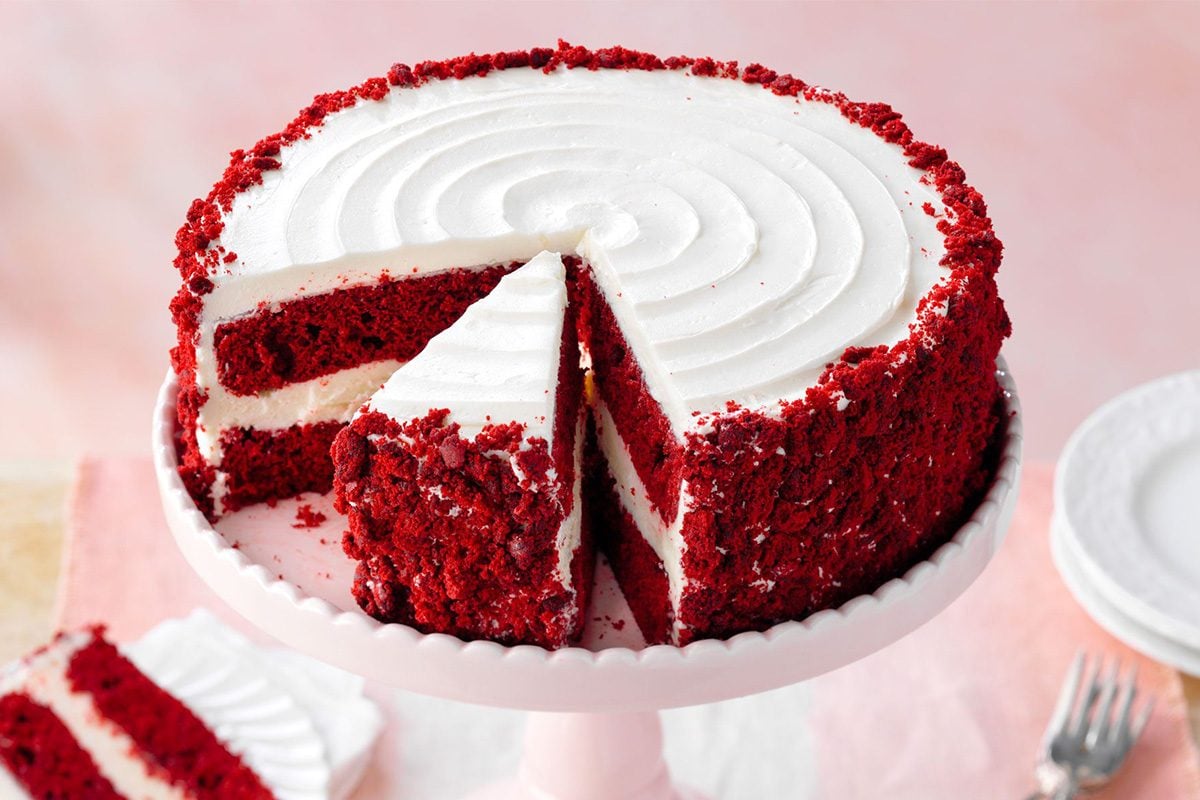
So, what is red velvet cake? And what makes it so vibrantly red? We share all that and more, including where red velvet cake comes from and what flavor it is exactly.
Our editors and experts handpick every product we feature. We may earn a commission from your purchases.
Learn more.
This vibrantly red-hued cake with stark white cream cheese frosting is so beloved that “red velvet” has become its own flavor, inspiring red velvet recipes like brownies, cookies and even ice cream. But even though most of us have had red velvet cake, there are still a lot of questions about it. We have a hard time pinpointing its exact taste, what “velvet” even means here, and why we’re dumping two bottles of food coloring in it to make it that red.
We’ve demystified this popular southern dessert so there’s no more confusion about it. Whether you’re enjoying red velvet cake from scratch or one of the best red velvet box mixes from the store, get familiar with what makes red velvet cake the icon it is today.
What is red velvet cake?

Red velvet cake is a popular layered cake known for its soft tender crumb, subtle chocolate notes and tangy buttermilk-vanilla flavor. It has a deep red color and is finished with a rich cream cheese frosting. Today, this dessert gets its vibrant color from red food coloring, but before commercial food dye, red velvet cake became red (OK, more like a dark maroon) from the reaction between buttermilk, acid and non-Dutch-processed cocoa powder.
As time went on, bakers began to see this slightly red color as an asset and sought to augment it with a drop or two of food coloring. That minuscule amount has turned into two bottles’ worth of red food coloring, creating the bold red hue we recognize today.
What makes a cake “velvet”?
What makes a cake “velvet” is the chemical reaction between the buttermilk, acid and baking soda in the batter during baking. Baking soda needs an acidic ingredient to create carbon dioxide. This reaction yields a tender, soft, velvety texture.
You actually don’t even need the cocoa powder or red food coloring to make the cake velvet, which opens the doors for other velvet cakes like blue velvet cake, green velvet cupcakes and even white velvet cake.
The Origins of Red Velvet Cake

As with many origin stories, it’s hard to pinpoint this famous cake’s exact origins. We know that it gained popularity in the Waldorf Astoria’s kitchen in New York City in the 1920s, but the cake was likely created long before that.
In her award-winning cookbook BraveTart: Iconic American Desserts, Stella Parks traces red velvet’s origins back to a Velvet Cocoa Cake that was published in 1911 in an Ohio newspaper. Over the years, variations of this dessert spread across the United States. In the South, bakers added buttermilk to the cocoa-infused batter, which gave the cake a reddish cast. This earned the cake the nickname Red Devil (a name that combined the devil’s food flavor and red color). The phrase “red velvet” wasn’t coined until later.
While red velvet cake wasn’t part of the American food landscape when Juneteenth was first celebrated, it has become a part of the celebration. Juneteenth menus prominently feature red foods, so it’s no surprise this cake’s blood red crumb fits in alongside red staples like barbecue, red soda and watermelon.
Velvet Cake FAQs

What is the difference between chocolate vs. red velvet cake?
The difference between chocolate and red velvet cake is the amount of cocoa powder. Recipes for red velvet cake use around 2 tablespoons cocoa powder. However, a chocolate cake recipe typically calls for 3/4 cup cocoa powder, and that’s not even including the frosting. Because of the different amounts, chocolate cake tastes much more chocolaty than red velvet cake.
What does red velvet cake taste like?
Red velvet cake tastes tangy and rich, with buttermilk and vanilla being the main flavors and subtle notes of cocoa lingering throughout. The cake is made with typical cake ingredients like butter, sugar, flour, vanilla and leavening agents, but buttermilk, white vinegar, a tiny bit of cocoa powder and lots of red food coloring set red velvet cake apart, creating its red hue and velvety texture.
Should I use food coloring to make red velvet cake?
Yes, you should use food coloring to make red velvet cake if you want a vibrant red hue, but you don’t have to. When this cake first came onto the food scene in the early 20th century, red velvet cake wasn’t truly red. Rather, this cocoa-infused cake had a slightly brick-colored tone. This was thanks to the particular cocoa powder available in the early and mid-20th century reacting with the buttermilk or vinegar in the cake batter. As time went on, cocoa powder was processed in a slightly different way (meaning it was no longer quite as acidic) and red velvet recipes required red dye to achieve the desired hue.
You can try a few other methods to create a vibrant dessert. First, you can try naturally derived food colorings. Watkins makes a natural red food dye that’s completely interchangeable in recipes. You can also use beet powder to add color. This veggie-based powder is mellow-flavored, so it shouldn’t affect the cake’s taste much. Know that beet powder tends to give red velvet cakes more of a magenta tone rather than a warm red.
What are the best ways to enjoy red velvet cake?
The best ways to enjoy red velvet cake (besides in its typical cake form) are through other red velvet desserts. Recipes like red velvet cheesecake, brownies, crinkle cookies, red velvet cinnamon rolls, thumbprint cookies, whoopie pies, cupcakes and red velvet cake balls are all infused with red velvet’s tangy cocoa flavor and cream cheese topping. We’ve even evolved to drinks, like red velvet espresso martinis!