


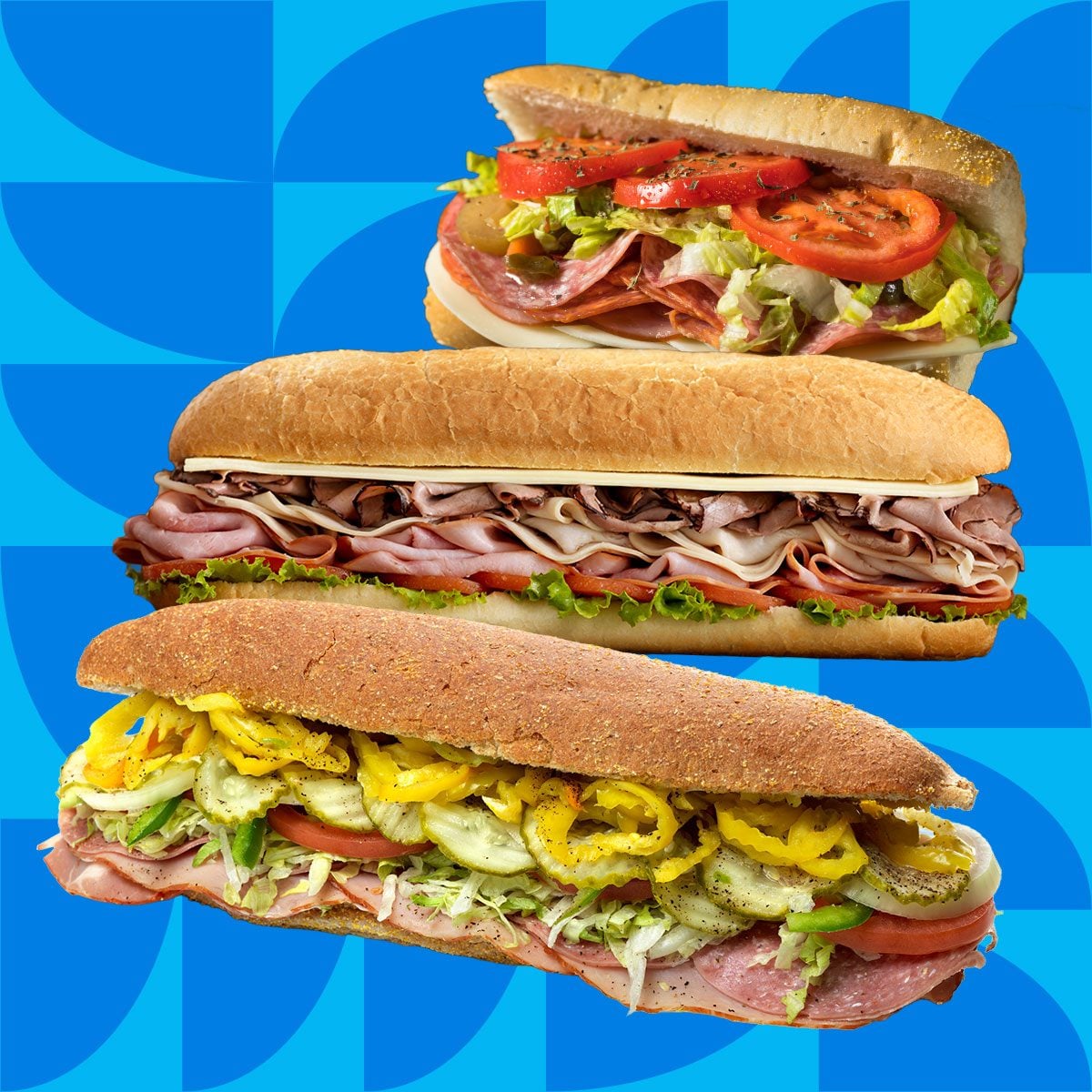

It's hard to resist a mile-high sandwich. But whether you call it a hoagie, a grinder, a sub or something else depends mostly on what part of the U.S. you're from!
What do you call a long sandwich that contains meat, cheese, condiments, lettuce and other toppings? I mean, besides “totally delicious,” of course.
The short answer is that it really depends on where you grew up. In the Chicago suburbs, I’ve always called them “subs.” It wasn’t until high school when I encountered the term “hoagie” for the first time, when the band and orchestra held a big hoagie fundraiser. We set up shop in the cafeteria at 7:00 a.m. to make hundreds of those sandwiches—I swear I can still smell that delicious hoagie air.
I have some friends who use the term “hoagies” or “grinders.” And it was actually an episode of 30 Rock that introduced me to “hero” as a word for a sandwich. With all of these different names, you might find yourself wondering whether or not there’s actually a difference between all these sandwiches.
Hoagies vs. Grinders vs. Subs vs. Heroes
Though their names are often used interchangeably, there are slight differences between these sandwiches. By and large, sub is the most general and most widely used term to describe this kind of sandwich across the country. In fact, the very first reference to a “submarine sandwich” comes from a 1931 mention in a New Jersey news program. A sub sandwich can contain any ingredients you want and can be served warm or cold.
A hoagie is usually served cold and is piled high with Italian meats, cheeses and spices. This is a Philadelphia-specific term with many myths about its origin, but most of them trace back to Al DePalma, a musician-turned-sandwich shop owner. He sold sandwiches so big you’d have to be a “hog” to finish them. Thus, “hoggies” became “hoagies” and 70 years later, I was making them in my high school cafeteria.
A grinder can use any variety of fillings and is usually toasted before serving—so technically, meatball subs and chicken Parms could be classified as grinders. Again, this term has many apocryphal origin stories that insinuate that the bread got hard once toasted, so you had to “grind” it with your teeth to eat it. It could also be slang used to refer to dockworkers in New England who had an affinity for this sandwich.
And it’s no wonder that the New York-based show 30 Rock was my entry point to a sandwich being referred to as a hero. New York is probably where you’re most likely to hear that term. In fact, my friend who lives in New York said hero is much more widely used than sub.
More often than not, regional differences are responsible for all these sandwich names!
Other Names for Sub Sandwiches
Before chain restaurants, each region named its sandwich however it pleased. Over time, the sub (short for “submarine sandwich”) became the most commonly used.
It’s really as simple as that. In some places, subs have kept a regional moniker, so don’t be surprised if you hear one of these names:
- Grinder: New England
- Torpedo: Northeast U.S.
- Italian sandwich: Maine
- Spuckie: Boston, MA
- Hoagie: Philadelphia, PA
- Zeppelin: Pennsylvania
- Hero: New York
- Wedge: Yonkers, NY
- Bomber: Buffalo, NY
- Blimpie: New Jersey
- Po’ Boy: New Orleans, LA
It’s all the same sandwich, so long as it’s served up on a split roll. You’ll even find some regional best sandwiches served on split rolls, like a Philly cheesesteak in Philadelphia, oyster po’ boys in New Orleans, lobster rolls in Maine and Italian beefs in Chicago.
In the end, it doesn’t really matter what you call ’em. Just grab a long, split roll and pile it high with meat, condiments and vegetables—and you can call it whatever you like!
What do you call these sandwiches? Let us know in the comments below!

