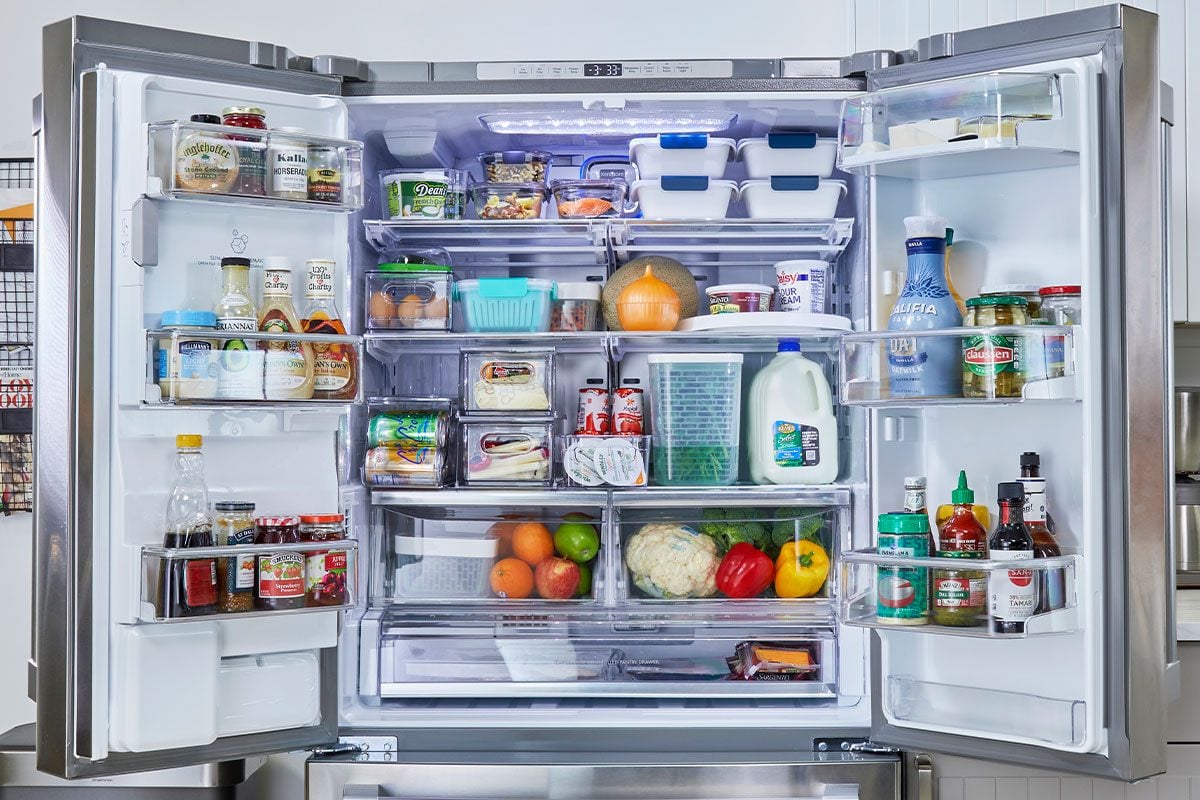
That built-in egg tray may be sending the wrong message.
When I was growing up, my parents always kept the milk in the refrigerator door. They still do, actually. Every time I visit, I quietly move it onto a shelf, and every time I return, it has somehow found its way home again. Old habits die hard.
Not that my own refrigerator is exactly winning any organization awards. I have two kids who treat the fridge like a convenience store, opening it dozens of times a day in search of snacks, drinks and ingredients for whatever they’ve suddenly convinced themselves that they need to make. Keeping everything in its designated spot is more aspiration than reality in this stage of my life.
Still, my husband and I both went through food safety training in culinary school, and many of those lessons followed us home. We still think about FIFO (first in, first out) when unpacking groceries, and we always keep raw meat on the bottom shelf. We don’t let food sit out on the counter too long, and we always label things to make sure perishables are eaten by their expiration dates. Keeping highly perishable foods out of the refrigerator door is another big one on that list.
Why Some Foods Don’t Belong in the Refrigerator Door
The refrigerator door may seem like the most convenient storage spot in the kitchen, but it’s also the part of the fridge with the most inconsistent temperature. Every time the door opens, those shelves are exposed to warmer kitchen air before they get cooled down again once the door closes.
The issue isn’t that foods stored there will instantly spoil. But those repeated temperature swings can shorten freshness and affect quality over time, particularly for highly perishable foods.
As a general rule, the more perishable a food is, the more it benefits from a colder, more stable spot deeper inside the refrigerator. Foods preserved with vinegar, salt or sugar tend to be much more forgiving—which is why they’re often the best candidates for door storage.
Foods to Avoid Storing in the Refrigerator Door
Milk

If you’re currently storing milk in the refrigerator door, don’t worry; my parents have been doing it for decades.
The problem is that milk likes consistency. While the door may seem convenient, it’s also the part of the refrigerator door most exposed to temperature changes. To keep your milk the freshest, store it on an interior shelf toward the back of the fridge instead.
Eggs

Many refrigerators come with a built-in egg tray in the door, which certainly makes it look like that’s where eggs belong.
In reality, eggs stay freshest when they’re kept in their original carton on an interior shelf. The carton protects them from odors, and the shelf keeps them at a more consistent temperature than the door.
Soft cheeses

Cream cheese, goat cheese, ricotta and other soft cheeses are also better off elsewhere.
These cheeses don’t love being repeatedly warmed and cooled throughout the day. Keeping them on an interior shelf can help preserve both their texture and flavor.
Yogurt

Like milk and soft cheese, yogurt does best when it’s kept at a consistently cold temperature. The refrigerator door may be convenient, but the repeated warming and cooling will definitely affect yogurt’s freshness over time.
Deli meat

Deli meat should stay as cold as possible. Since it’s often eaten straight from the package without additional cooking, it’s one of those foods that benefits from the most stable refrigeration you can give it.
Instead of tucking it into the door, store it deeper inside the refrigerator where temperatures are less likely to fluctuate.
Leftovers

Last night’s lasagna, takeout and meal-prep lunches all belong in the main body of the fridge.
If you’ve gone through the effort of saving leftovers for later, it makes sense to keep them in the coldest, most stable environment possible.
Butter

This one surprises people because many refrigerators include a dedicated butter compartment right in the door.
Butter is certainly more forgiving than milk, but if you don’t go through it quickly, it will stay fresher longer on an interior shelf. That said, this isn’t quite the refrigerator crime that storing a raw chicken in the door would be.
Fresh berries

Berries operate on their own timeline. One day they’re perfectly plump and beautiful, and the next you’re staring at a suspicious patch of fuzz and wondering what happened.
While no storage method can work miracles, keeping berries upside down in their container in the main compartment of the refrigerator rather than the door can help them last a little longer.
Raw meat and fish

You probably aren’t storing raw meat or fish in the refrigerator door, but it’s worth mentioning.
Raw proteins need the coldest, most stable temperatures. They’re best stored on the bottom shelf inside the refrigerator, where any accidental drips are less likely to contaminate other foods.
What should go in the refrigerator door?
The refrigerator door isn’t refrigerator jail. It just has a very specific purpose. Think of it as prime real estate for condiments and other foods that won’t panic if the temperature fluctuates a few degrees throughout the day.
Jams and jellies

The high sugar content in jams and jellies helps preserve them, making the refrigerator door a perfectly reasonable place to store them. They’re also exactly the sort of thing people reach for frequently, so it makes a lot of sense to keep them there.
Pickles

With their vinegar, salt and brine, pickles are built to handle life in the refrigerator door. The same goes for pickled onions, pickled peppers and most other jarred vegetables living in a salty, acidic environment.
Mustard

Mustard is one of the easiest condiments to store. Its acidity helps keep it stable, even when temperatures fluctuate slightly throughout the day. If you’re looking to free up space, mustard can happily live in the door.
Ketchup and other condiments

Ketchup, barbecue sauce, steak sauce and many other bottled condiments can comfortably handle the conditions in a refrigerator door.
If your refrigerator door is anything like mine and currently contains six kinds of mustard, three hot sauces and a bottle of barbecue sauce you’ve been meaning to use for months, congratulations—you’re doing it correctly.
Salad dressing

Most bottled salad dressings contain enough acid and preservatives to tolerate minor temperature changes without issue. The refrigerator door keeps them easy to grab when you need to top off your meal-prepped salads.
Hot sauce

If your refrigerator door is overflowing with hot sauce bottles, you’re probably using the space exactly as intended. Most hot sauces contain plenty of vinegar, which stabilizes them even when the door is being opened dozens of times a day.
Olives

All types of olives and other foods stored in brine are generally well-suited to door storage. Their salty environment helps preserve both flavor and quality, making them a much better fit than highly perishable foods.
Soda and sparkling water

Cans of soda, sparkling water and sports drinks don’t require the same temperature consistency as dairy-based drinks. That makes them ideal candidates for refrigerator-door storage—and leaves more room on the interior shelves for the foods that actually need it.
Related: