


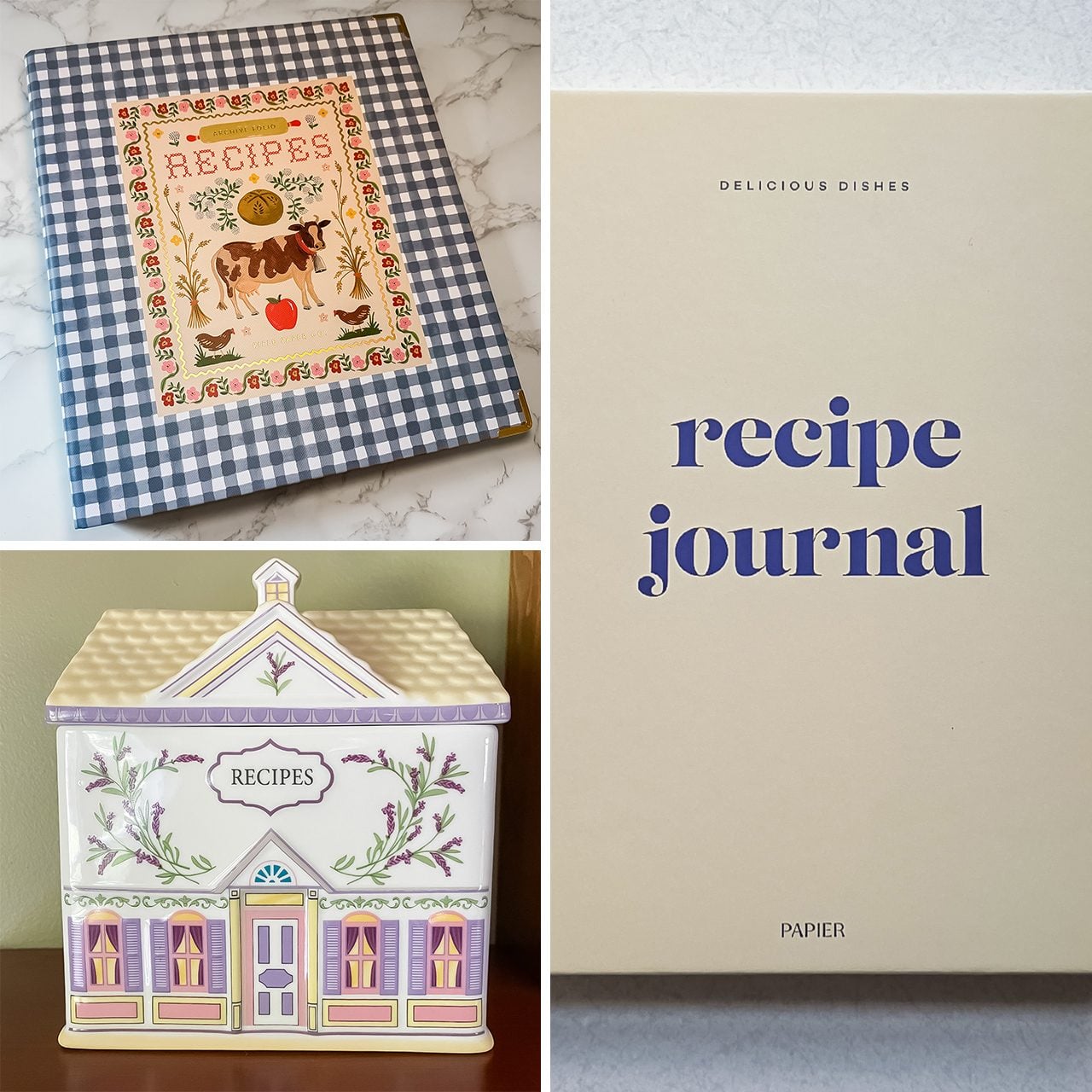

The best recipe storage solutions aren't just beautiful culinary keepsakes. They're a way to preserve family history.
Our editors and experts handpick every product we feature. We may earn a commission from your purchases.
Learn more.
For many, the desire to recreate bespoke family recipes is what ultimately sparks a love of cooking. Meals like Auntie’s icebox cookies or Mom’s chicken enchilada bake are more than just a collection of ingredients and instructions. They’re part of the lore that gives families their identity. Unfortunately, unlike most things in the kitchen, family recipes are also often irreplaceable.
“Without a deliberate way to hold onto them, recipes disappear the way so much of family history does: quietly in someone’s head or on a stray card, until the person is gone and the recipe goes with them,” says Rachel Ingber, owner of custom family cookbook service Heirloom Collaborative. “Preserving them is really an act of love. It’s a way of saying, ‘this mattered, and I didn’t want to lose it.'”
That’s why using the right methods to keep these pieces of history safe is so essential. But with so many different options, deciding on the right way to store family recipes can feel like casting a wide net into an ocean. To find the best recipe storage for every home cook, I spoke with two recipe preservation experts and several of our very own editors to gather their insights.
Why Preserving Family Recipes Matters
“A recipe is never really just a recipe,” says Rachel. “It’s a little time capsule: the handwriting, the smudge of flour in the corner, the note in the margin that says ‘add more butter than this calls for.’ That’s a piece of someone, not just a set of instructions.”
Preserving family recipes is the best way to record and pass down family traditions, cultural customs and unforgettable flavors. But it also serves as something much more personal—a beautiful way to honor loved ones. Creating a curated place for these recipes to live isn’t just honoring the person behind them, though. The right storage also makes a beautiful gift for family birthdays, bridal showers and holidays.
Keeps Memories Alive
Rachel explains that without a deliberate way to hold onto them, recipes disappear the way so much of family history does. Because of this, she sees preserving recipes as an act of love.
“Recipes are one of the rare traditions we don’t just remember,” explains Rachel. “We get to live inside them again and again, every time we cook. That’s what makes them so powerful. They keep someone present in your everyday life, not tucked away in a memory box.”
Establishes Family Traditions
Valerie Frey, family recipe archivist and author of Preserving Family Recipes: How to Save and Celebrate Your Food Traditions, notes that preserving family recipes is oftentimes more than just cataloging good food. She began actively collecting family recipes as a teenager after her father was diagnosed with cancer. Keeping recipes began as a way to comfort him with the dishes he would enjoy most when he wasn’t feeling well, often the foods of his childhood.
“Recipes give our family common ground despite being scattered across the country and living very different lives,” says Valerie. “And those recipes are the basis of new traditions. My husband and son never got to meet my parents or grandparents, but I love it that they associate favorite treats from my childhood with the holidays.”
Strengthens Family Bonds
While cataloging her late father’s childhood recipes, Valerie also discovered an unexpected benefit of keeping family recipes: reestablishing lost family connections.
“I learned very quickly that it was great fun trying my hand at the recipes and gleaning information from my brother, aunts, and grandparents,” she says. “Reaching out to far-flung cousins that I didn’t know well for help with recipes sometimes turned out wonderfully, helping strengthen family ties.”
Expert-Recommended Recipe Storage Ideas
Some folks like to use recipe apps to keep their favorites close at hand. While apps have their advantages, Valerie cautions against relying solely on them for archival purposes, since she’s seen many come and go throughout the years. Instead, she recommends saving original copies of favorite recipes in a low-tech way in case that system unexpectedly goes away.
Another consideration? Accessibility.
“The most beautiful system in the world means nothing if it lives in a drawer,” says Rachel. “Choose the method that fits how your family actually cooks and shares, because a recipe that’s just preserved isn’t the same as a recipe that’s still being lived in.”
Below are a few reliable recipe storage tips to help preserve family recipes while honoring the years of love and tradition that go into making them.
Recipe Binder
Recipe binders are best for collections that have grown organically over the years. They can hold clippings, printouts and cards copied from Mom’s handwriting, making them flexible enough to grow with your family as traditions are born. This is the preferred method for folks seeking an orderly home for both existing and new recipes. According to Rachel, it also offers added protection.
“Page protectors mean the recipe can be splattered on, floured on, and loved on, and still survive, which feels right, since the best family recipes are the ones actually made again and again,” says Rachel.
This is also one of Valerie’s favorite methods, as it gives her the freedom to easily update recipes and shuffle their order. She notes that scanning old family recipes and typing up new ones she wants to add to her repertoire also lets her back up to the cloud for added security. For a meaningful touch, Valerie suggests adding a picture of the person to the recipe page, and perhaps a small scan of the original recipe in their handwriting.
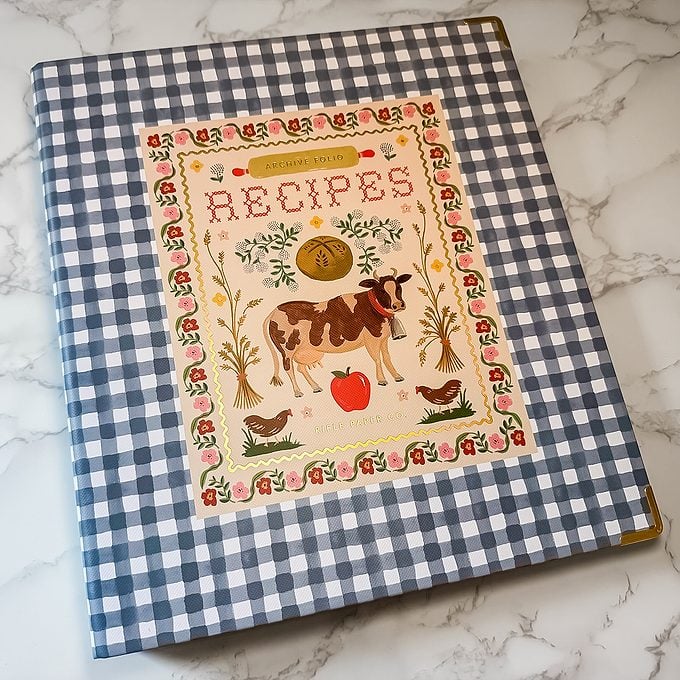
Rifle Paper Co. Recipe Binder
Editor Mary Henn swears by Rifle Paper Co. recipe binders, particularly the Home Sweet Home binder. The binder features rich hues, gold detailing and a rustic farmhouse and cottage-inspired aesthetic with chicken, cow and grain motifs throughout. Despite its somewhat rustic vibe, it’s still really artful and timeless, making it perfect for heirloom recipes.
“This recipe book is large and includes dedicated sections for favorite meals, recipes to try and a guest log,” says Mary. “It also comes with dividers, folders and plastic sleeves for recipe cards, all of which can be arranged in the binder in a way that makes the most sense for your kitchen. There are even helpful measurement conversions, ingredient substitutions, abbreviations, knife-cut guides and table-setting charts in the front and back of the binder.”
Mary does note that it doesn’t come with recipe cards, though they are available separately on the Rifle Paper Co. website, along with additional sleeves. That said, it’s beautiful, thoughtfully designed and would make a great gift for anyone who wants to organize and preserve their favorite recipes in a physical format.
Recipe Card Box
Rachel explains that recipe card boxes are best for safeguarding recipes. Think the original card in Grandma’s handwriting, exactly as she left it. That’s why these are typically decorative—they’re meant to evoke nostalgia and hold particular memories.
“This one is less about function and more about feeling,” says Rachel. “The box itself often becomes part of the heirloom, something that sits on a counter and quietly says this family has history. They’re best for preserving and honoring rather than everyday kitchen use. Delicate originals deserve gentle hands.”
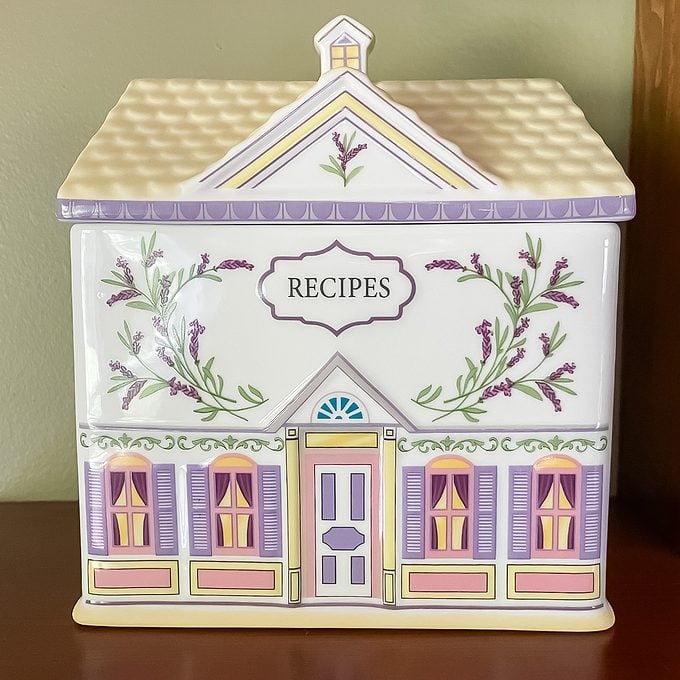
Lenox Spice Village Recipe Box
As a huge fan of the Lenox Spice Village, this sweet, themed recipe box is an heirloom-worthy addition to Deputy Editor Katie Bandurski’s kitchen. It has the same sweet pastels and country-chic vibe of the original villages, while housing cute recipe cards inside. It’s large and comes with 25 recipe cards, each printed with Lenox Spice Village icons. There’s also plenty of space for magazine clippings, printed off recipe pages and tabbed organizers.
“Honestly, I’m not a huge recipe person. I like to make things up as I go,” says Katie. “But there are still a few dear-to-me recipes I keep written down, like my mom’s blueberry bread or special sugar cookies. This recipe box fits my needs perfectly. It’s cute, matches my kitchen aesthetic and complements my spice village. It would also make a great gift!”
Recipe Journal
Journals are a lovely and interactive way to save a few favorite recipes. Valerie notes that if you have fairly simple recipes that don’t change much, or if you’re creating a small collection of recipes for a gift, such as for a new bride, this is a good format.
However, she also warns that if a recipe journal is in the wrong spot at the wrong time, it can lead to a loss. Recipe journals work well for testing and refining recipes as you go along in the kitchen. Once finalized, it’s always best to back up the recipe somewhere reliable.
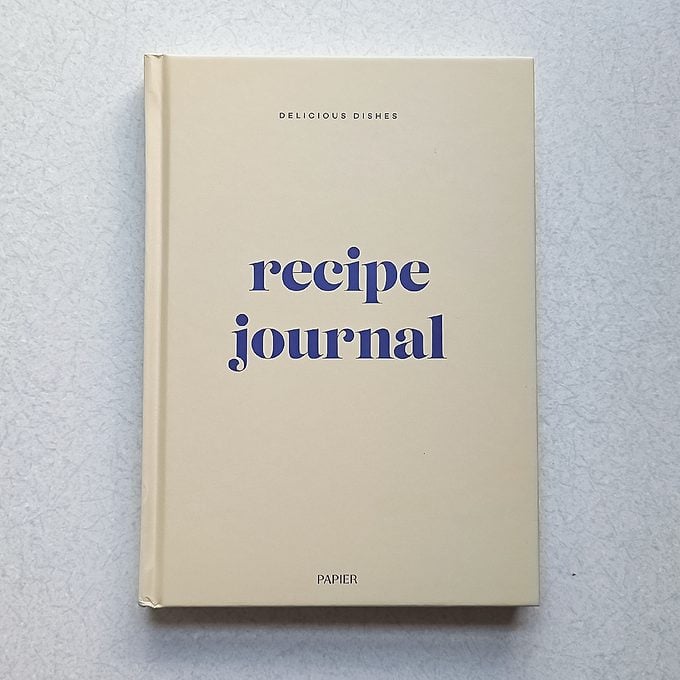
Papier Joy Recipe Journal
I own the Papier Joy recipe journal, which has quickly become my most-used kitchen tool. My grandma, bless her, was an excellent baker, but awfully disorganized and messy. Very few of her recipes survived the spills and wear-and-tear of the kitchen, so many of her most special dishes have been passed down by word of mouth. This recipe journal is my favorite way to catalogue my mom’s recollection of these family favorites.
From the minimalistic look to the silky finish of the cover, the journal feels special and sacred, much like my grandma’s recipes. The paper comes ethically sourced from forests and each page is perfectly printed on thick paper to prevent tears. There’s space for 85 recipes, with specialty markers on each page to indicate whether it’s a breakfast, lunch, dinner or treat. Each listing also offers a dedicated space for star ratings, dietary requirements, ingredients, instructions, hints and tips. There are even pages in the back with simple conversions and blank boxes for cataloging favorite stores, restaurants and places to try.
While many of my grandma’s recipes are gone, I cherish having this space to recall, tweak and refine my memories of her cooking. It gives me a place to explore the culinary traditions of my childhood, which makes me feel closer to my Gran.
Family Recipe Book
For folks who want to preserve recipes in an organized way, creating a family recipe book is the most luxe option. It’s a nice place to memorialize clippings with Grandma’s writing in the margins, cursive notes scribbled on loose paper and other essential family memories. Family recipe books also make great gifts. Rachel started Heirloom Collaborative, a custom family cookbook service, for this exact reason.
“Don’t just save the recipe. Save the person behind it. A single line, whose it was, when it’s made, what it means, turns a set of instructions into a story worth passing down,” says Rachel. “That’s the heart of what a keepsake cookbook does. It holds both the dish, the handwriting, and the story behind it, so future generations don’t just inherit the food. They inherit the feeling of home that came with it.”
Tips for Success
Valerie explains that she’s often seen some common roadblocks folks run into when preserving family recipes. Here are a few tips that help push past those barriers:
- Don’t worry about being a good cook. “One of our family’s beloved recipes is for the teacakes of my great-great-grandmother. An elderly cousin shared the recipe with my grandfather, confessing that she’d never made them herself. He never made them either. But nine decades after my great-great-grandmother died, the recipe finally reached someone who wanted to work with it and fell in love with it.”
- Dishes and treats don’t need to be special or fancy to have a true place in family tradition. “So often, it is the simple dishes and treats that trigger our nostalgia, reminding us of dear people and beloved places. One of the recipes I use most from my mother is simply doctoring up a cake mix, but the grandson she never got to meet loves it and her notorious love of cherries has been passed down through the recipe.”
- Try not to start too big. “I hear people say they made an announcement at the family reunion that they’d be creating a cookbook for everyone, and now the task seems overwhelming. I recommend working on one recipe at a time. Which family food would you miss the most if you never tasted it again? Start there. When you feel it is written down in a way that most cooks could reproduce the dish and you’ve recorded its history or a few memories about it, then move on to a second recipe. I created recipe binders for many people in our family, and periodically I send out additions.”
Whether you’re trying to create cooking traditions from scratch for future generations or want to preserve the recipes that shaped your love of food, investing in the right recipe storage is the perfect starting point. No matter which option you choose, you’re taking a step into a world of nostalgia, love and remembrance—and that’s what recreating beloved recipes should feel like.
Why You Should Trust Us
We are a team of editors and writers who are passionate about protecting family traditions. For this piece, we consulted with several experts on the importance of preserving family recipes. Contributing to the piece is Rachel Ingber, creator of the custom family cookbook service Heirloom Collaborative. We also spoke to Valerie Frey, family recipe archivist and author of Preserving Family Recipes: How to Save and Celebrate Your Food Traditions.
FAQ
What’s the best way to store recipes?
The best way to store family recipes depends on their existing format. For original clippings and handwritten recipes, a recipe box works well for protective storage. Recipe journals make a nice keepsake or gift and can be a good place to copy fragile or difficult-to-read recipes. Recipe binders often feature plastic sleeves paired with note pages, making them a good hybrid choice for folks who wish to preserve heirloom recipes and record their own recipes.
How to preserve family recipes?
Valerie Frey, family recipe archivist and author of Preserving Family Recipes: How to Save and Celebrate Your Food Traditions, likes using recipe card boxes as heirloom recipe storage.
“My mother’s recipe box is one of my life treasures,” she says. “Quite a few of her recipes are a part of my cooking repertoire as well, and these I’ve scanned so the box with its handwritten recipes stays safe in my home office.”

