The answer is surprisingly nuanced.
Pasta’s versatility knows almost no bounds. It can get all dressed up with fancy homemade sauces and toppings, or it can keep things casual with a knob of butter and a few cracks of pepper. Plus, there are so many shapes that everyone has a favorite they gravitate toward. (I reach for penne almost every time.)
And while cooking pasta is pretty straightforward, there is technique that goes into it. Of course, everyone has strong preferences on how long to cook pasta. While I like my pasta cooked 30 seconds past al dente, others love a softer noodle. There’s also the question of just how much salt to add to the water—one that has even professional chefs divided.
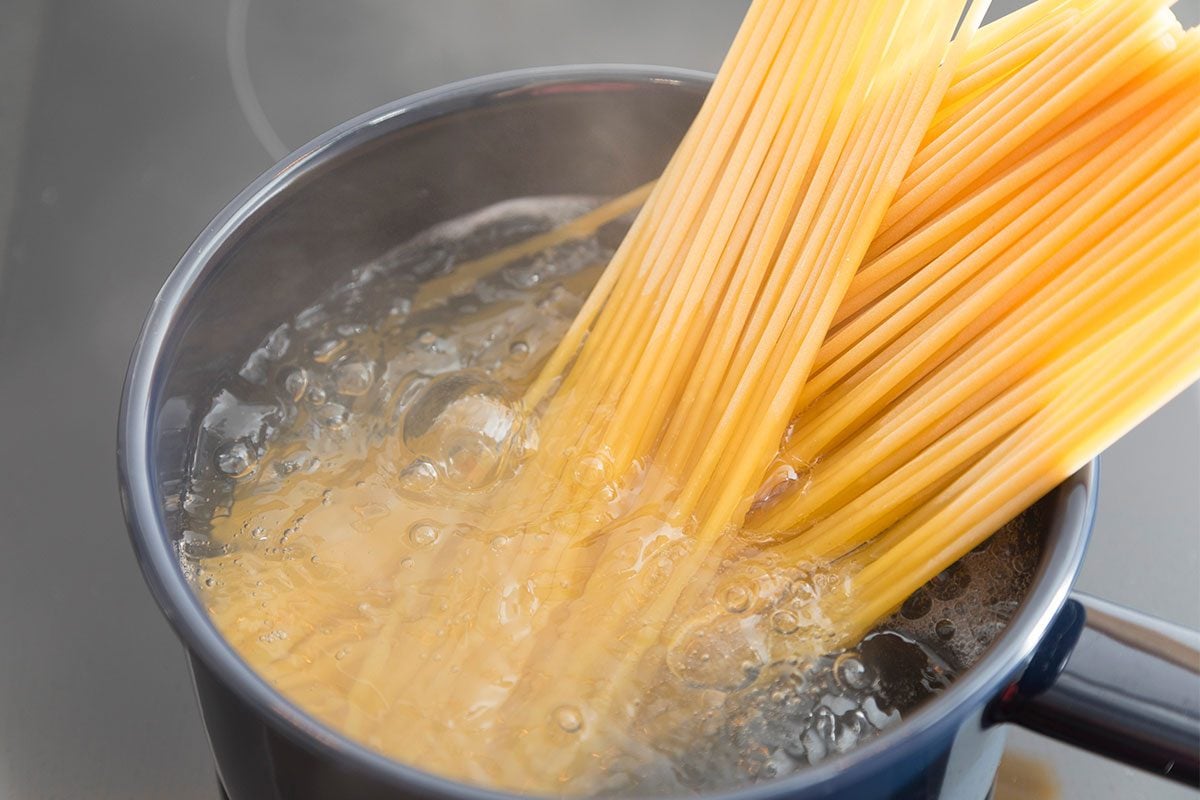
But what about that third pasta-cooking metric: the amount of water? It always seems like I’m using a lot of water for a relatively small amount of pasta. So I dug a little deeper to see if there is a method to this madness. And it turns out the amount of water you boil pasta does matter!
Why does the box say to use so much water for pasta?
The most common instruction that I see on the back of pasta boxes is to use 4 to 6 quarts of water per pound of pasta. Filling up an empty pot with 6 quarts of water always seems a bit wasteful, not to mention that it takes a really long time to bring it to a rolling boil.
But using a lot of water has its benefits. It helps to keep the noodles from sticking to each other while they cook, which can result in unevenly cooked pasta. When the noodles have enough room to move around, they can cook more evenly and quickly.
However, I learned that using less water has some sneaky benefits—and, according to kitchen king Alton Brown, it can actually help every step of the way.
Why Using Less Pasta Water Can Be Beneficial

There are three reasons why less water can help your overall pasta dish: it saves energy; it saves time; and it improves the texture of your sauce. I mean, that’s a pretty big win across the board. Alton recommends using just 8 cups of cold water per pound of pasta, and not waiting for it to boil before adding the pasta. Since the pasta and the water heat up together, it saves energy and time. The cold water method also means the water gets more concentrated with starch, which means it can be used to add a nice silky finish to any sauce. They don’t call it “liquid gold” for nothing!
How much water should you use to boil pasta?
In the end, it depends on the recipe and your cooking style. If you need starchy pasta water for your sauce or if you want to save energy, use less water. If you want your pasta to be evenly cooked without babysitting the pot, follow the instructions on the box.
But personally, I’d say that the next time you boil up some pasta for dinner, you should try using just enough water to cover the noodles. It might just become your new favorite kitchen hack.
Related: