


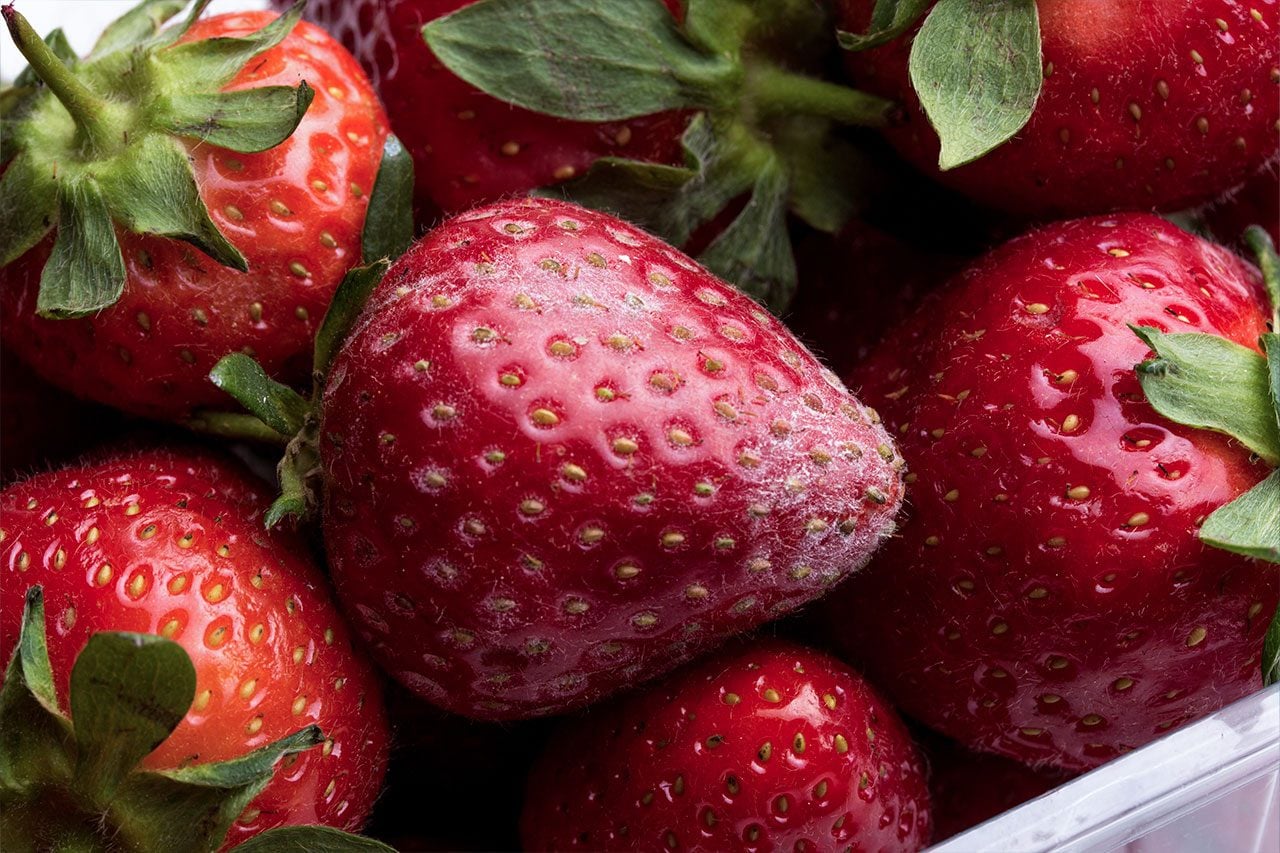

Before you throw away the whole container because of one fuzzy berry, here's what food-safety guidance says about the rest of the fresh ones.
Fresh berries have a frustratingly narrow window between perfect and past their prime. Even when I’ve chosen a beautiful container, stored berries properly and resisted washing the fruit until I’m ready to eat it, I occasionally open the refrigerator to find a single berry sprouting an unmistakable patch of fuzz.
The moldy berry, of course, belongs in the trash. But finding one raises a more interesting food-safety question: What happens to the rest of the container? Mold isn’t necessarily limited to the bits we can see, so the real question is where to draw the line between one spoiled berry and a pint that’s no longer safe to eat. And with food-safety oversight having a rather eventful year, it seems like a particularly good time to know the difference.
Do I have to throw away all the berries if one is moldy?
Thankfully, no. One fuzzy berry does not mean you have to dump the entire container. That one berry itself, though, is beyond saving.
The USDA recommends throwing away moldy soft fruits and vegetables. This includes berries. Because berries contain so much moisture, mold can penetrate beneath the surface, meaning there may be more going on than the little patch of fuzz you can see. This is different from, say, a hard cheese or firm bell pepper, where you can safely cut well around the mold and use what’s left. A moldy strawberry doesn’t get the same reprieve.
With berries, the moldy fruit itself needs to go, but that doesn’t necessarily mean taking its neighbors with it. The USDA advises checking foods that were touching a moldy item, but it doesn’t say that every neighboring berry automatically belongs in the trash. Anything soft, leaking, damaged or showing the faintest signs of mold should be tossed.
Berries that are still firm, intact and mold-free are fine to keep. Give them a thorough rinse under running water before eating, and enjoy the fact that you didn’t just throw several dollars into the garbage over one blueberry.
There is, of course, a point at which berry detective work should end. If you find several moldy berries, fuzz cropping up in different areas of the container or fruit that’s generally becoming wet and mushy, the whole thing should go. Mold spreads quickly among fruits and vegetables, so at a certain point, it’s more like trying to rescue a science experiment than saving perfectly good berries.
How to Keep Berries from Molding
As tempting as it is to wash a pint of berries as soon as you get home and have them ready to eat from the refrigerator, don’t. Whether you’re wondering how to clean strawberries or what to do with that dusty pint of blueberries, timing matters. Berries and lingering moisture do not get along, and washing them before storing them in the fridge can speed up deterioration.
Instead, I like to give the container a quick inspection when I get home. This is the best time to evict anything already crushed, leaking, soft or suspicious rather than letting it spend the next few days pressed up against the others. When you’re ready to eat them, rinse the berries under cool running water and dry them gently. You can skip the produce wash and elaborate berry-bath concoctions: the FDA recommends plain running water and specifically advises against using popular produce washes.
Will this guarantee you’ll never encounter another rogue fuzzy raspberry? Sadly, no. But when one inevitably appears, at least you can pluck it out without wondering whether the other berries need to follow it into the trash can.
What’s your trick for keeping berries fresh? Let us know in the comments below!

