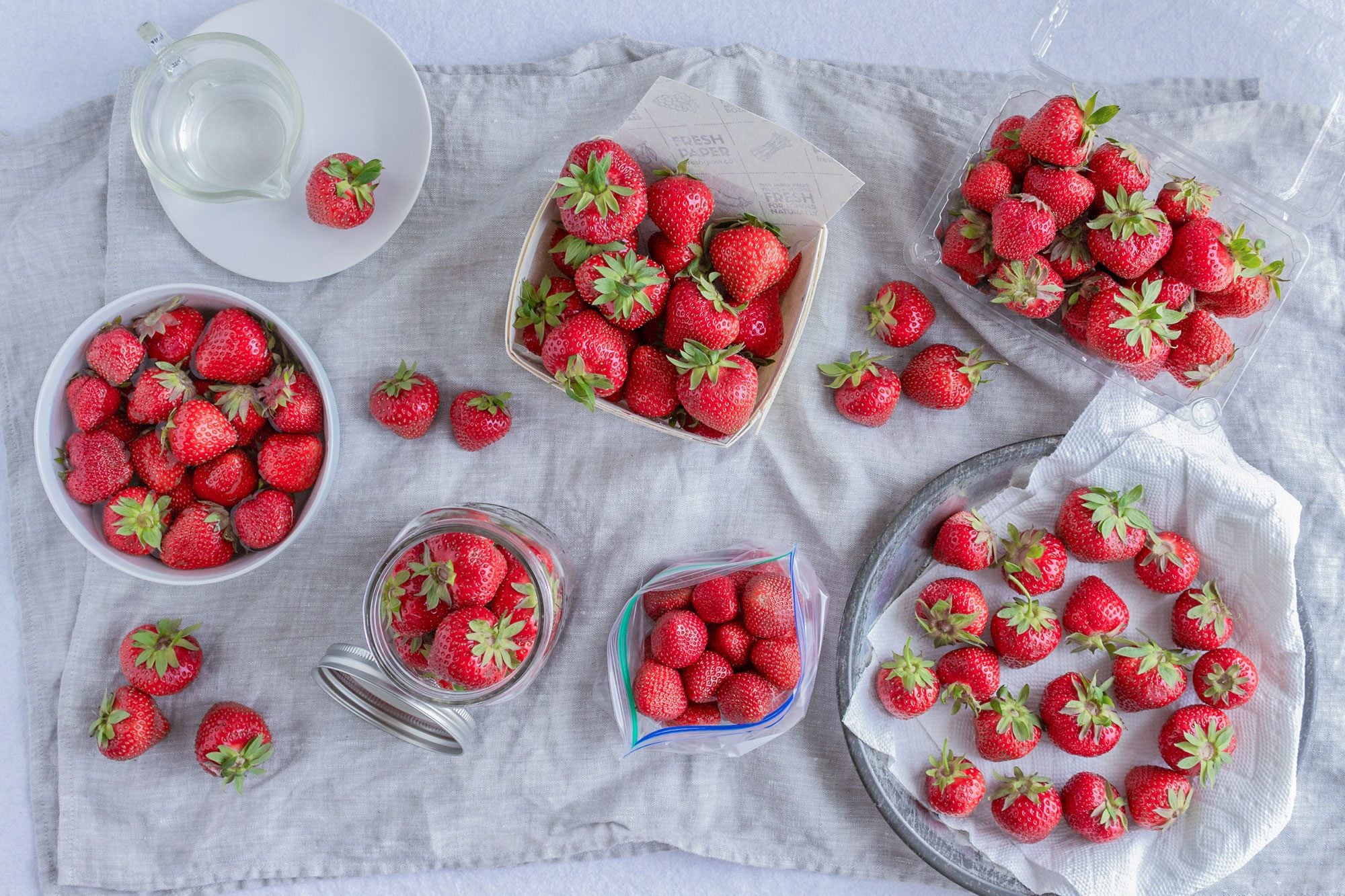
Moldy berries begone! I tested five methods to find the best way to store strawberries so they stay fresh for as long as possible. Now I'll use only the best method.
Our editors and experts handpick every product we feature. We may earn a commission from your purchases.
Learn more.
Strawberries are luscious and flavorful, especially when you pick your own or buy them from a local fruit stand at the height of strawberry season. Each berry has the taste of summer! They’re too delicious to lose to mushiness or mold, but keeping strawberries fresh once you get them home can be a challenge. The delicate berries can spoil within days if they’re not stored properly.
Many opinions are out there on how to store strawberries, so I put five popular methods to the test. I wanted to know which way keeps them firm, flavorful and ready for my favorite fresh strawberry recipes. Here’s what I learned about storing strawberries, including the method I liked best.
How I Tested Strawberry Storage Methods
I focused on four refrigerator methods and one freezer storage option. A cold environment inhibits the growth of bacteria and mold spores and prevents the berries from spoiling, so don’t keep them on the counter unless you plan to eat them all in one day. For each method, I checked on the strawberries every day for seven days, looking for signs of spoilage, like mushy texture or mold spots. The best storage solution kept the strawberries as fresh and plump as the day they came home and maintained bright green leaves.
The Best Ways to Store Strawberries
Best overall: Store strawberries in a Mason jar
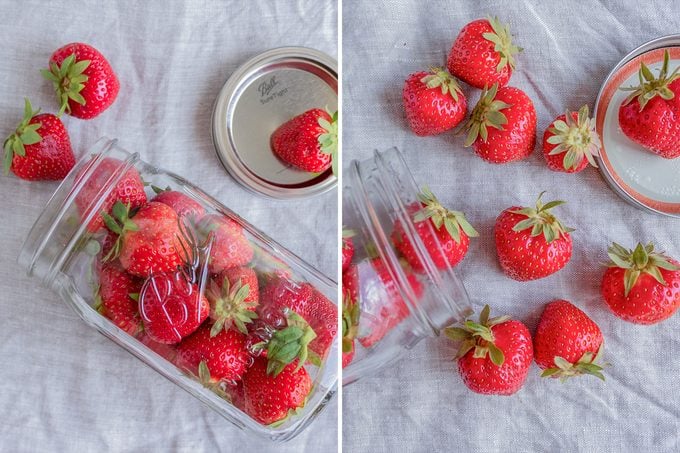
For this method, I sorted my strawberries to remove any with mushy or moldy spots. I placed the remaining whole, unwashed strawberries in a glass Mason jar, stacking the berries loosely so they wouldn’t squish each other. Then, I added the lid, tightly fastened it and put it the jar the fridge.
If you don’t see a difference in the before and after photos, it’s not a trick! After seven days, the strawberries looked as fresh as they did on day one: plump and bright with perky green leaves. There’s enough natural moisture in the jar to maintain the berries’ firm texture, and the lid’s seal prevents additional air from getting in and spoiling the fruit.
This was my favorite of all the methods, and it was so satisfying to find my strawberries looking and tasting this perfect after a week in the fridge. I do need to give you a small warning: When you open the jar, don’t be surprised if you hear the same pssshh sound as when opening a soda. That’s the escaping ethylene gas produced by the strawberries.
Runner up: Store strawberries on a lined tray in the crisper drawer
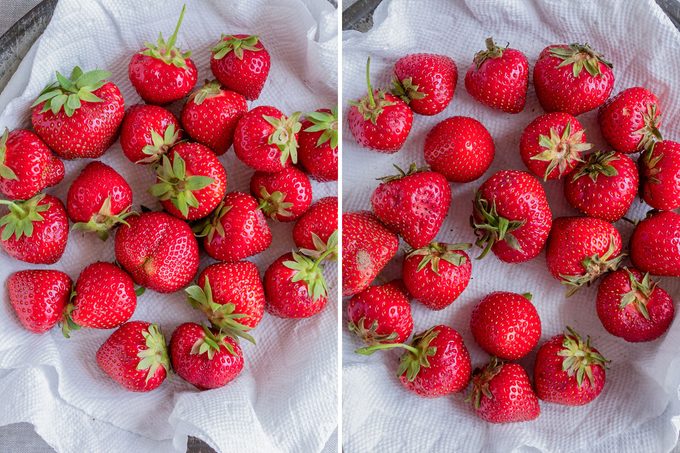
For this method, I transferred the whole strawberries to a tray lined with clean paper towels to help absorb moisture. I placed the tray in the refrigerator’s crisper drawer and adjusted the vents for low humidity. I knew these drawers could be a game-changer for extending the life of fruits and vegetables, as the vents can be adjusted to create high or low humidity to help produce last as long as possible.
Although the strawberries held up pretty well after seven days, I did find one berry beginning to grow mold. All the leaves had become limp too. Still, the crisper did its job in preventing moisture from building up, so the majority of the strawberries remained firm. Leaving some space between the berries and arranging them in a single layer was also key, as it kept the berries dry.
If you’re cutting down on your paper towel use, you could use reusable refrigerator liners or a sheet or two of FreshPaper, a compostable sheet infused with organic botanicals to naturally inhibit the bacteria that cause fruits and veggies to spoil.
Best for long-term storage: Store strawberries in the freezer

For this method, I rinsed and dried whole strawberries, then removed the stems and leaves (I’ve found hulled strawberries are much easier to use once thawed). I placed the strawberries inside thick freezer-safe bags and pressed out all the air to prevent freezer burn or unwanted odors from getting into the fruit. Once packaged, I froze them flat in a single layer until solid.
If you have a lot of berries, freezing strawberries is the way to go. Berries freeze beautifully, and this method allowed me to enjoy my favorite summer flavor for months. Well-sealed strawberries can last up to a year, but using them within six months ensures the best flavor. The downside to freezing berries is that they’ll be soft and juicy when you thaw them—not the best for snacking. But there are many great frozen strawberry recipes to use them up. They’ll still taste great in smoothies, milkshakes, muffins and strawberry syrup.
Less successful storage methods
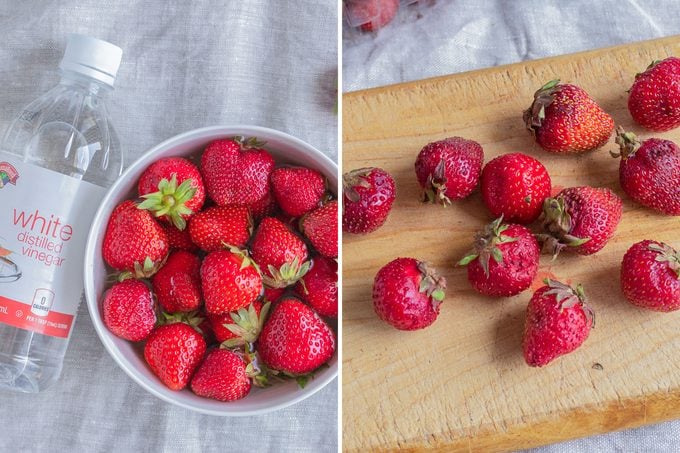
I tested two additional methods that didn’t work as well: Storing strawberries in the original container and washing them in a vinegar bath. It’s easy enough to just slide a package of berries from the store into the fridge and go about your day, but they stayed firm for only three to four days. After seven days, they had some mushy spots, a few specks of mold growing and withered leaves. It’s an OK solution if you don’t have time for anything else, as long as you can use the berries in three to four days.
The least successful method (which I tested twice to be sure) was washing whole strawberries in a mixture of 2 cups water and 1 cup white vinegar. Rinsing strawberries in a vinegar bath supposedly kills any naturally occurring mold spores, allowing the berries to stay fresh. After a week, there were no signs of mold, but the berries didn’t look appealing at all. The vinegar-rinsed strawberries looked bedraggled and dark, with shriveled leaves and soft spots.
Instead of washing all the strawberries immediately when you get home, you can clean strawberries right before eating them with a vinegar bath. Vinegar can be especially helpful for freshly picked berries with a lot of embedded dirt, but I found that the moisture they absorbed from the bath accelerated the decay, ultimately affecting the freshness over time. It’s always best to wait to wash berries until right before you eat them.
Tips for Storing Strawberries
No matter which storage method you use, there are a few general, helpful rules. Avoiding common berry mistakes will help your fruit stay fresher and look better for longer.
- Sort the berries: Just as one bad apple can spoil the bunch, one moldy or deteriorating strawberry will cause the rest of the berries to spoil faster. When you get your strawberries home, sort through them and remove any that have mold or look mushy.
- Leave the stem and leaves intact: It’s best to leave strawberries whole with leaves and stems intact until you’re ready to use them. Hulling strawberries, or even just pulling off the leaves and stems, exposes the flesh of the fruit to air and bacteria, which will cause it to decay more quickly.
- Wait to wash them: This may be the reason the vinegar bath method was unsuccessful! Strawberries absorb water quickly, which can cause them to become mushy or grow moldy. Wait to clean strawberries until just before you’re ready to use them. Rinse them quickly in cold water, and handle them very gently. Then, spread them out on a tray lined with a clean dish towel to air-dry. Turn them occasionally so that they can dry on all sides and around the leaves, then use them right away.
- Store them in the refrigerator: Unless you’re planning to eat or use your fresh strawberries within a day of bringing them home, the refrigerator is the best place to store them. The cold temperature will slow down the spoiling process, so your berries will last longer.