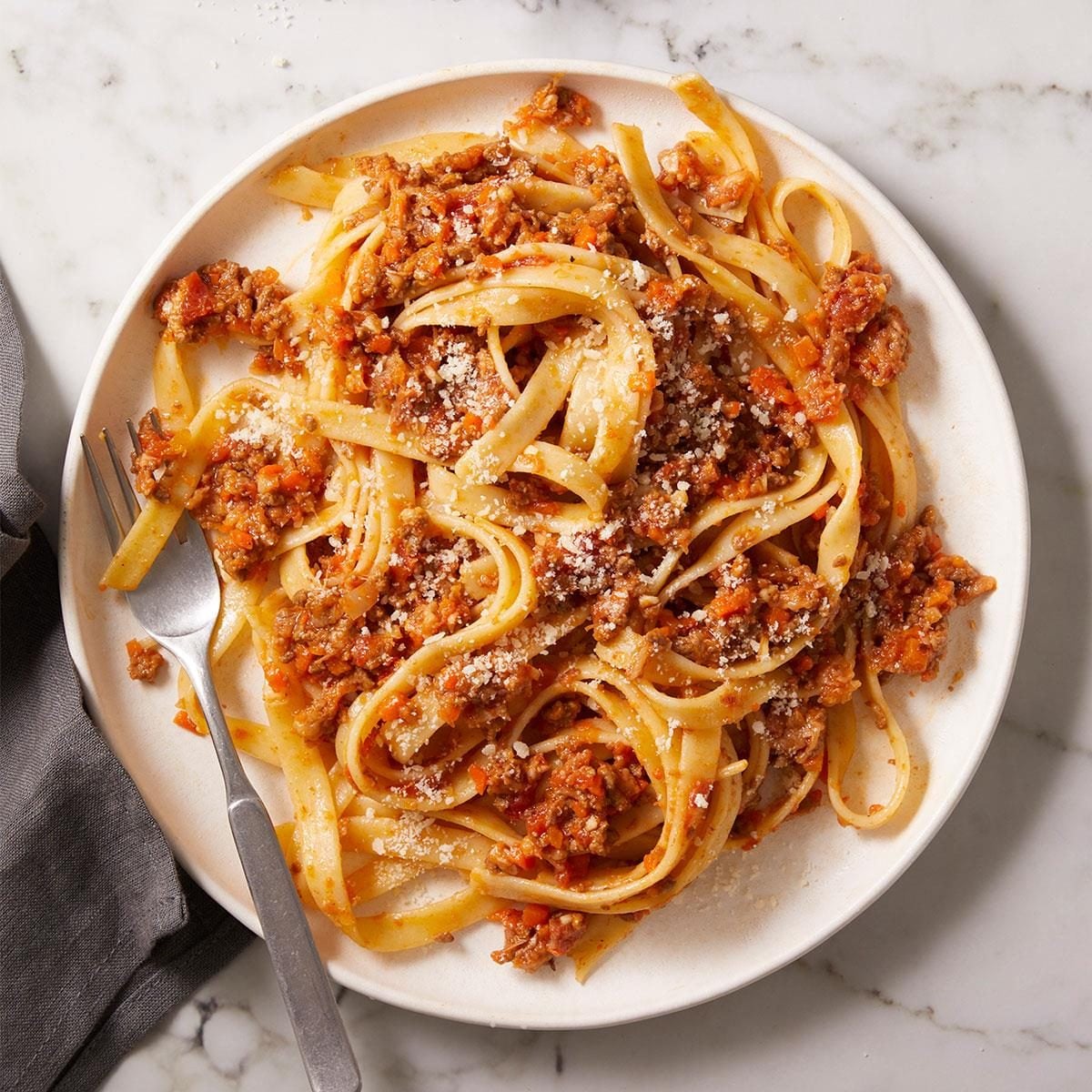
With tender beef, pancetta and a long gentle simmer, this tagliatelle Bolognese delivers classic Italian comfort in every bite.
To be a great Italian cook, you need to have a tagliatelle Bolognese recipe in your back pocket. It’s the ultimate example of what simple ingredients can create with a little bit of patience. The classic meat sauce originates from Bologna, where it’s revered with almost ceremonial seriousness. In fact, there is an official version of ragu alla Bolognese registered with the Bologna Chamber of Commerce.
This version of tagliatelle Bolognese is a little more weeknight-friendly than that ultra-traditional sauce Italians make, but it captures the same spirit: slow-simmered meat, aromatic vegetables and a rich tomato base that gets better the longer it cooks. It’s not a fast recipe, but it offers big rewards, as do any of Nonna’s best recipes.
If you can, use freshly made tagliatelle, which has a softer, silkier texture that feels especially luxurious, but dried tagliatelle works perfectly well and is way easier to find. Really want to show off? Make a batch of homemade pasta dough and cut your own long, flat noodles. No matter what type of tagliatelle you use, you can expect a comforting pasta recipe that feels rustic, satisfying and just a little bit fancy.
Ingredients for Tagliatelle Bolognese
- Ground beef: Many Bolognese recipes call for a mix of ground beef and ground pork, but our meat sauce is made only with browned ground beef. Use a good 80/20 blend; if the meat is too lean, it won’t add as much flavor.
- Salt and pepper: Salt and pepper balance the richness of the sauce.
- Aromatics: Finely chopped carrots, onion and garlic add flavor and body to the sauce. Carrot and onion are part of the traditional soffritto (like an Italian mirepoix), which is an important foundation for many Italian sauces.
- Pancetta: Pancetta brings salty, porky richness to the sauce. Its fat melts into the vegetables, helping create the signature savory depth of Bolognese. If you can’t find it, pancetta and bacon are very similar; use diced thick-cut bacon instead.
- White wine: White wine deglazes the pan, adding brightness to balance the meat’s richness. Avoid sweet wines and stick to the drier, crisper varieties. As it cooks down, it leaves behind a complex flavor that doesn’t taste boozy. That said, if you don’t want to cook with wine, use extra beef stock.
- Diced tomatoes: Tomatoes provide acidity and body for the sauce. Using canned diced tomatoes keeps things simple while still delivering a rich tomato backbone.
- Beef stock: Beef stock deepens the meaty flavor and helps create the slow-simmered texture Bolognese is known for. Pick it up at the store or make beef stock from scratch for more flavor.
- Tagliatelle: The pasta matters just as much as the sauce here. Tagliatelle—long flat ribbons slightly wider than fettuccine—are considered the proper pasta shape for Bolognese because their broad surface grabs on to the thick, hearty sauce, unlike round noodles like spaghetti.
- Butter: A small amount of butter, stirred in at the end, rounds out the sauce and adds a velvety finish. It’s a classic Italian trick that gives the dish a richer mouthfeel.
- Parmesan cheese: Freshly grated Parmesan adds salty, nutty flavor and ties everything together. Always grate it fresh if possible for the best texture and flavor.
Directions
Step 1: Brown the beef

In a 6-quart stockpot, cook the beef over medium heat for five to seven minutes until no longer pink, breaking into crumbles. Stir in the salt and pepper. Remove from the pot with a slotted spoon and pour off any drippings.
Editor’s Tip: Let the beef develop a little color before stirring too much. Those browned bits equal flavor.
Step 2: Cook the vegetables and pancetta

Add the carrots, onion and pancetta to the same pot, and cook and stir over medium heat for six to eight minutes or until vegetables soften. Add garlic and cook one minute longer.
Editor’s Tip: Finely chopping the vegetables helps them melt into the sauce rather than stand out as chunky pieces.
Step 3: Deglaze with wine
Return the meat to the pot, then add wine. Bring to a boil, stirring to loosen the browned bits from the pan, and cook until the liquid is almost evaporated.
Step 4: Simmer the sauce

Add the tomatoes and stock, and return to a boil. Reduce the heat, then simmer, covered, three to four hours to allow the flavors to blend, stirring occasionally.
Editor’s Tip: Low and slow is the secret to great Bolognese. Resist the urge to rush the simmer.
Step 5: Cook the pasta and finish the dish

To serve, cook the tagliatelle according to package directions for al dente, then drain. Stir the butter into the meat sauce. Finally, add the tagliatelle and Parmesan cheese and toss to combine.

Tagliatelle Bolognese Variations
- Replace some of the meat: For a more traditional flavor, substitute half the beef with ground pork or ground veal. The blend creates a richer and more complex sauce.
- Add milk or cream: Some classic Bolognese recipes include milk to soften the acidity of the tomatoes. Stir in a splash during the simmer for a slightly creamier sauce.
- Use fresh pasta: If you can find fresh tagliatelle at an Italian market, it makes the dish feel restaurant-worthy. Fresh pasta cooks faster and has a wonderfully delicate texture.
- Add herbs: While traditional Bolognese often skips herbs, a little fresh basil or parsley sprinkled on top can brighten the finished dish.
How to Store Tagliatelle Bolognese
Tagliatelle alla Bolognese stores well, which is one reason it’s such a beloved make-ahead meal. Let the sauced pasta cool slightly, then transfer leftovers to an airtight container and refrigerate. If you know you’ll have leftovers, don’t mix all the pasta into the sauce, and store the cooked pasta and sauce separately.
How long does tagliatelle Bolognese last?
Tagliatelle Bolognese will keep in the refrigerator for up to four days. The sauce often tastes even better the next day as the flavors continue to meld.
Can you freeze Bolognese?
Yes, Bolognese sauce freezes beautifully. Store the sauce separately from the pasta in airtight containers or freezer bags for up to three months.
How should you reheat tagliatelle Bolognese?
Reheat tagliatelle alla Bolognese gently on the stovetop or in the microwave. Add a splash of water or stock to loosen the sauce as it warms.
Tagliatelle Bolognese Tips

Can you use another pasta shape with Bolognese sauce?
Yes, other wide pasta shapes like pappardelle or fettuccine work well with Bolognese sauce. The key is choosing a noodle with enough surface area to hold on to the thick meat sauce.
What else can you serve with tagliatelle Bolognese?
Tagliatelle alla Bolognese is ideal as the centerpiece of an Italian feast! Serve it with garlic bread or a crisp green salad, and end the meal with a massive piece of tiramisu. Pair it with a deep red Italian wine by looking for grapes like nebbiolo or words like “super Tuscan.”
Ingredients
- 1 pound ground beef
- 1/2 teaspoon salt
- 1/4 teaspoon pepper
- 2 medium carrots, finely chopped
- 1 medium onion, chopped
- 4 ounces chopped pancetta
- 8 garlic cloves, minced
- 1 cup dry white wine
- 1 can (28 ounces) diced tomatoes, undrained
- 1 cup beef stock
- 1 pound uncooked tagliatelle
- 3 tablespoons butter, cubed
- 1 cup grated Parmesan cheese
Directions
-
1In a 6-qt. stockpot, cook beef over medium heat, 5-7 minutes, until no longer pink, breaking into crumbles. Stir in salt and pepper. Remove from pot with a slotted spoon; pour off drippings.
-
2Add carrots, onion and pancetta to same pot; cook and stir over medium heat 6-8 minutes or until vegetables are softened. Add garlic; cook 1 minute longer. Return meat to pot; add wine. Bring to a boil, stirring to loosen browned bits from pan; cook until liquid is almost evaporated.
-
3Add tomatoes and stock; return to a boil. Reduce heat; simmer, covered, 3-4 hours to allow flavors to blend, stirring occasionally.
-
4To serve, cook tagliatelle according to package directions for al dente; drain. Stir butter into meat sauce; add tagliatelle and and Parmesan cheese; toss to combine. If desired, top with additional Parmesan cheese when serving.