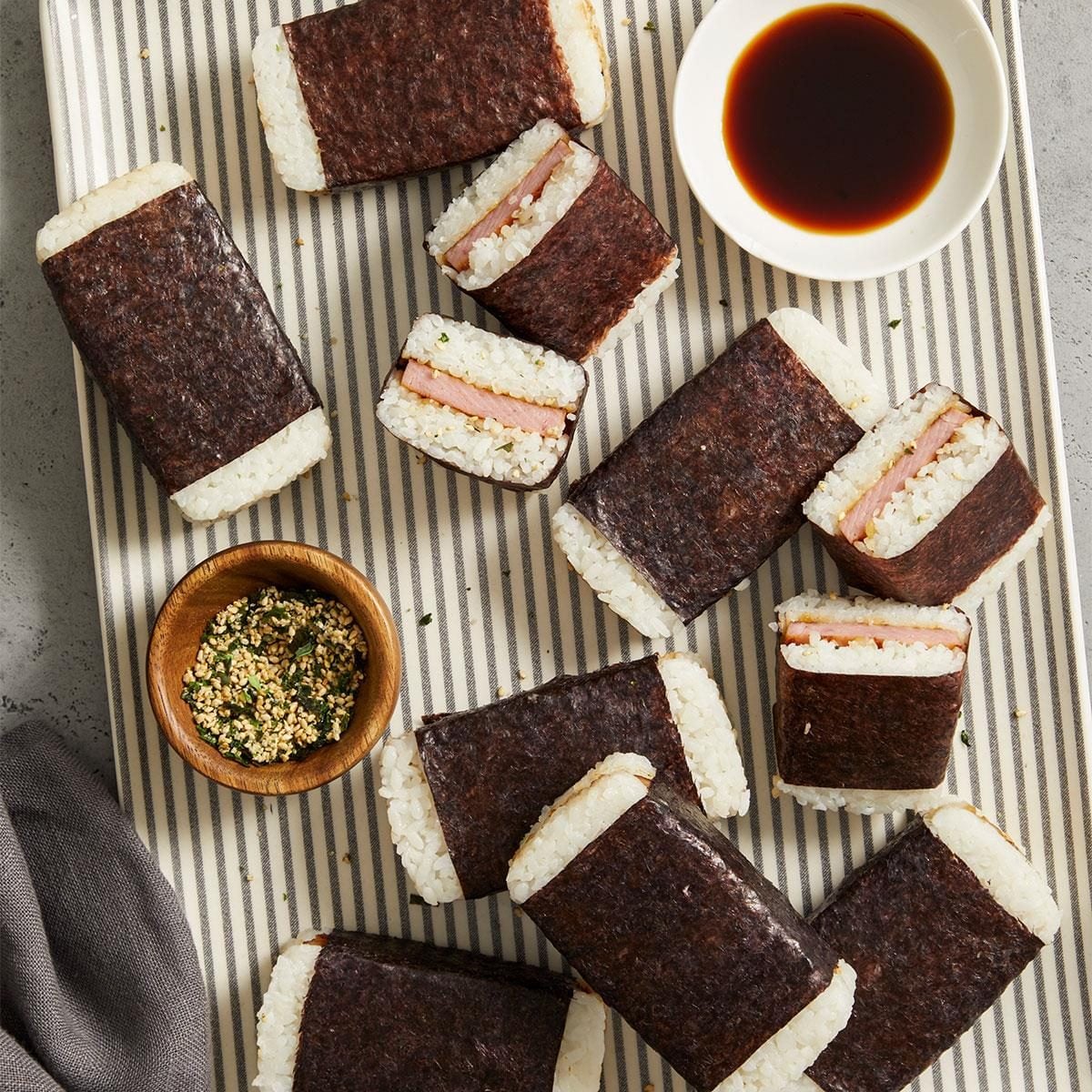
The secret to really good Spam musubi? Letting the Spam get deeply caramelized before tucking it between warm rice and crisp nori.
Every Tuesday at 6 p.m., I meet up with a group of women to play ukulele. The evenings are filled with music, laughter and often food. I always look forward to the days when Teri Tsutsui walks through the door with a loaded platter of Spam musubi. This handheld snack is remarkably simple—it’s just fried Spam with rice and seaweed—but something about it feels incredibly comforting.
When I asked Teri if she would be willing to share her recipe with me, she said, “Oh, sure! I probably need to measure things?” She’s made this recipe so many times for family gatherings, on-the-go breakfasts and travel snacks that she could practically make it with her eyes closed. But she humored me and pulled out the measuring cups when we made it together.
What is Spam musubi?
Spam musubi is a popular Hawaiian grab-and-go snack that combines a fried slice of Spam with a pressed block of rice and a piece of nori. “Growing up in Waipahu, every parent brought musubi when they were on snack duty,” Teri says. “There was a musubi and a juice box for every kid, whether it was for sports or field trips or days spent swimming at the beach.” The snack is so popular that piles of them can be found on tables at almost every grocery store in Hawaii.
Musubi is often compared to Japanese onigiri, a rice ball or triangle formed around fillings like salted salmon or pickled vegetables, but it adds a decidedly American meat to the equation: Spam. The canned meat was invented in the 1930s and became a Hawaiian staple during World War II.
The classic Spam version remains a favorite thanks to the sweet-and-salty flavor of the glazed meat, but musubi can be made with other proteins. I’ve seen versions on restaurant menus with fried chicken or crispy pork tonkatsu, or bacon and egg for breakfast.
Spam Musubi Ingredients
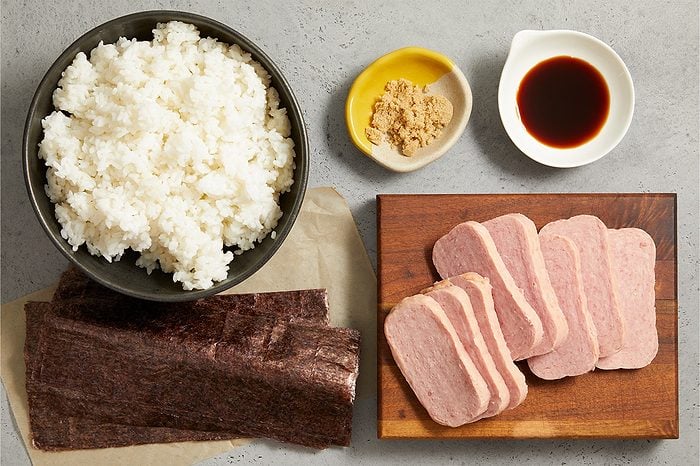
- Spam: Teri slices the canned meat into 8 pieces, but you can slice it thinner or thicker if you prefer. A regular kitchen knife works just fine for this task, but you can also use the slicer that comes with some musubi mold kits.
- Spam musubi sauce: Many musubi recipes call for teriyaki sauce, but Teri makes her glaze with brown sugar and soy sauce.
- Nori sheets: You can find these seaweed sheets at most grocery stores in the international aisle. Cut them in half to cover the whole rice ball, or cut them into four pieces to create a small strip for wrapping the musubi.
- Short-grain rice: Cook the rice according to the package directions. Some musubi recipes call for prepared sushi rice—which has added vinegar and salt—but Teri always keeps hers plain and simple.
Directions
Step 1: Pan-fry the Spam

Preheat a large skillet over medium heat. Add the Spam slices, sprinkle them with half the brown sugar and brush them with soy sauce. Cook until the bottoms are browned, one to two minutes. Flip the slices and sprinkle them with the remaining brown sugar, and brush them with soy sauce. Cook the Spam until both sides are caramelized and browned, two to three minutes.
Editor’s Tip: You shouldn’t need to add any oil to the pan because the Spam is plenty fatty on its own. If your Spam does stick, turn down the heat, add a small splash of water and cover the pan to create steam and loosen the slice.
Step 2: Press the rice and Spam
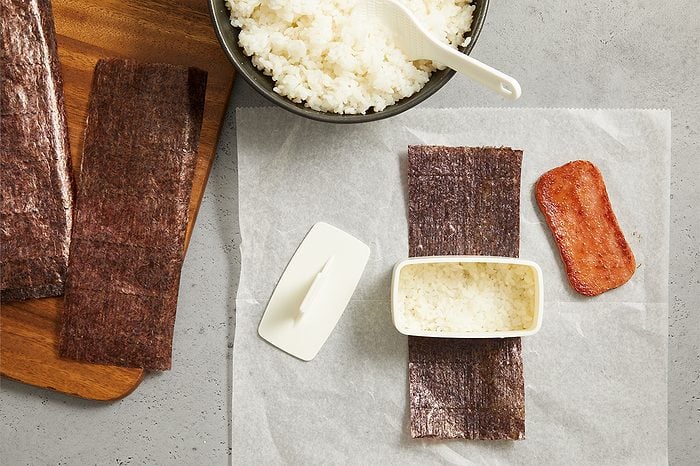
To assemble the musubi, place one piece of nori, rough side up, on a cutting board. Dip the musubi mold into water, and place it perpendicular in the middle of the nori sheet. Add 1/4 cup of hot cooked rice, and press down firmly with the top of the mold. Top the rice with one slice of cooked Spam. Fill the press with another 1/4 cup of rice. Press down firmly. Remove the press.
Editor’s Tip: Make sure to put the nori rough side up. It looks better with the shiny surface on the outside, and the rough side grips the rice to hold the musubi together better.
Step 3: Add the nori
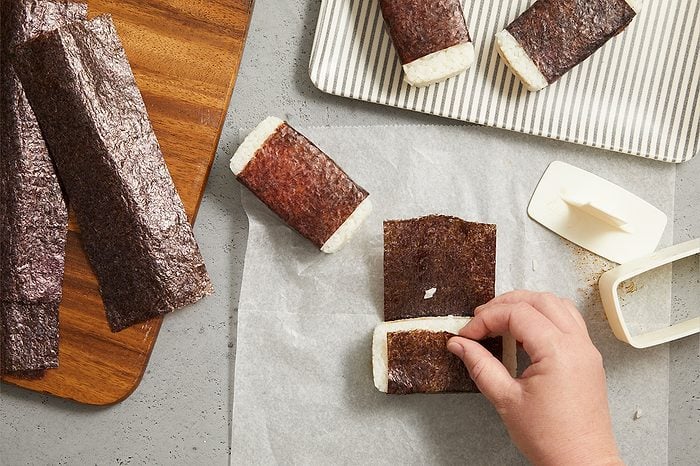
Fold the edges of the nori sheet around the rice.
Repeat the process with the remaining ingredients. Serve Spam musubi immediately with additional soy sauce and furikake, if desired, or wrap them tightly in storage wrap and refrigerate them for up to four days.
Editor’s Tip: If you prefer the partially-wrapped look, cut the halved nori in half again.
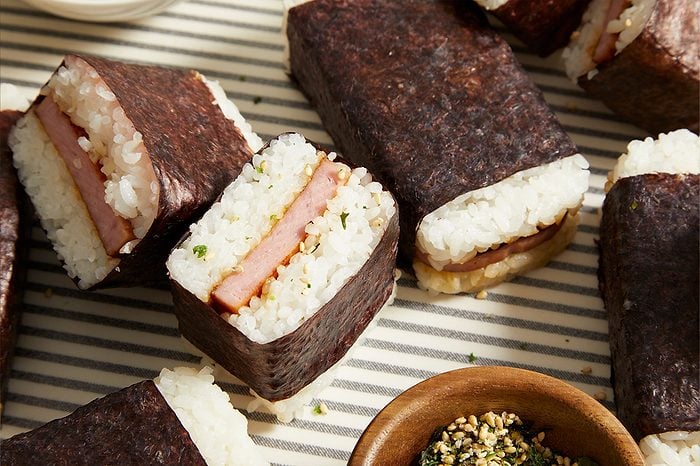
Recipe Variations
- Add furikake: Mix this Japanese seasoned seaweed blend into the rice, or sprinkle it on top of the Spam before wrapping your musubi.
- Include an egg: Make a thin egg omelet and layer it onto the rice before adding the sliced Spam. For the perfect shape, make a baked omelet on a sheet pan and use the Spam can to cut the egg.
- Make it fancy: Replace the Spam with chicken katsu or a piece of crispy pork tenderloin.
How to Store Spam Musubi
Wrap the Spam musubi individually in a layer of storage wrap. Store them in the fridge for up to four days.
Spam Musubi Tips
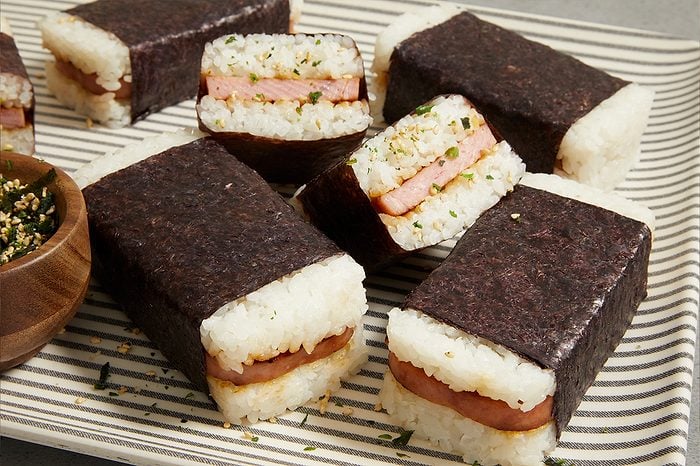
Do you need a musubi mold to make Spam musubi?
You don’t need a musubi mold to make Spam musubi, but it certainly helps. The mold tightly compacts the rice to form clean, uniform blocks that won’t fall apart when eaten. If you don’t have one, you can line your Spam can with storage wrap and use it as a makeshift mold. Or form the musubi by hand—they won’t be perfect, but they’ll still be delicious!
Should you sandwich the Spam between rice when making musubi?
Teri makes her musubi sandwich-style, layering the sliced spam between rice instead of placing it on top of a large block of rice. But if you prefer the instant gratification of a salty slice of Spam, add 1/2 cup of cooked rice to the musubi mold and press down firmly. Add the sliced Spam and wrap with nori as directed.
What do you eat with Spam musubi?
Spam musubi can be enjoyed as a snack or paired with other Hawaiian foods to make a meal. It tastes great with Hawaiian macaroni salad and pickled vegetables or kimchi to cut through the Spam’s richness.
Ingredients
- 1 can (12 ounces) reduced-sodium SPAM, cut into 8 slices
- 2 teaspoons packed brown sugar, divided
- 4 teaspoons soy sauce
- 4 nori sheets, cut in half lengthwise
- 4 cups cooked short-grain rice, hot
- Furikake, optional
Directions
-
1Preheat a large skillet over medium heat. Add spam slices. Sprinkle with half the brown sugar; brush with soy sauce. Cook until bottom is browned, 1-2 minutes. Flip; sprinkle with remaining brown sugar and brush with soy sauce. Cook until both sides are caramelized and browned, 2-3 minutes.
-
2To assemble, place one piece of nori rough side up on a cutting board. Dip the musubi mold into water, and place it perpendicular in the middle of the nori sheet. Add 1/4 cup of hot cooked rice; press down firmly with the top of the mold. Top with one slice of cooked spam. Fill with another 1/4 cup of rice. Press down firmly. Remove the press.
-
3Fold the edges of the nori sheet around the rice. Repeat with the remaining ingredients. Serve immediately with additional soy sauce and furikake, if desired, or wrap tightly in plastic wrap and refrigerate for up to three days.