Shrimp Linguine with Saffron Sauce

Saffron is the star of this silky shrimp linguine with saffron sauce, bringing brilliant color and its subtly luxurious aroma.
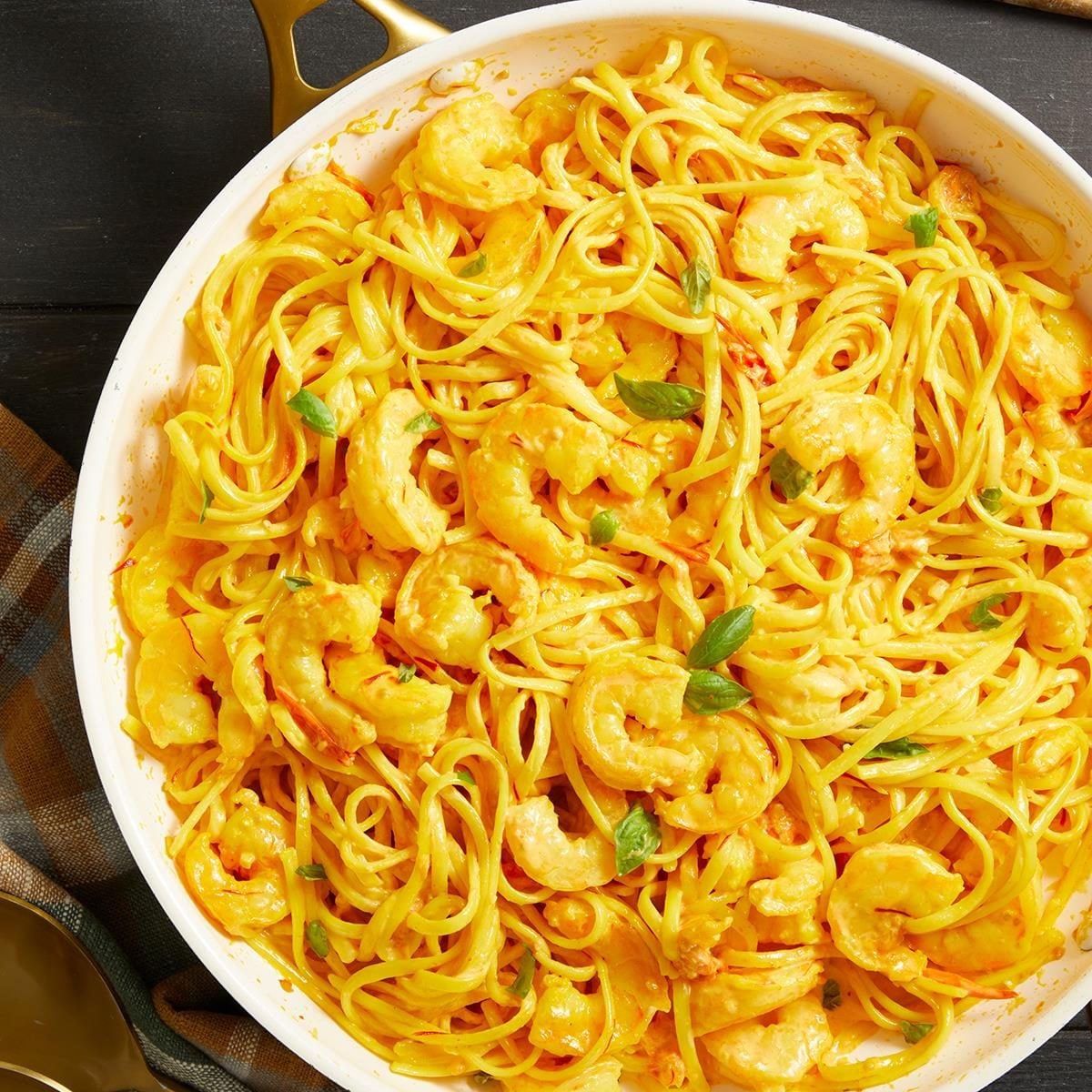
In my kitchen, shrimp is the unofficial “other white meat,” It’s a mild-tasting, quick-cooking and versatile protein, but this gorgeous, golden-hued shrimp linguine with saffron sauce shows off just how special a simple shrimp recipe can taste. The secret is in the sauce, which features floral saffron bathed in thick, sweet cream. The sauce is the perfect match for the sweet shrimp, and once al dente linguine is added, it becomes a satisfying pasta recipe for dinner parties or a quick weeknight meal.
Ingredients for Shrimp Linguine with Saffron Sauce
- Linguine: Thicker than spaghetti, good linguine pasta is silky and sinuous, especially after it absorbs creamy pasta sauce.
- Crushed saffron threads: Saffron is a rare, expensive spice that’s harvested from crocus flowers (each flour produces just three threads). Look for saffron in the spice section of most grocery stores. It may come in a small container and not look like much, but you only need a pinch to impart its flavor and aroma.
- Hot water: Steeping the saffron in hot water imbues the water with all that deep, floral, aromatic taste, kind of like making tea. This technique extracts the maximum flavor with the smallest quantity of spice.
- Butter: Sweet shrimp pairs well with the rich, high-quality butter. Because butter is so rich in fat, it’s also an excellent carrier of flavor—again, important when cooking with saffron.
- Uncooked shrimp: You can buy shrimp that’s already cleaned, or you can peel and devein whole shrimp yourself—it’s not difficult to do. You just need a sharp knife and a bit of patience. As in most shrimp recipes, you may use frozen or fresh shrimp. Pass on precooked shrimp, however; it will become chewy and rubbery after being cooked a second time.
- Cherry tomatoes: It’s easy to find tasty cherry tomatoes all year round. In this recipe, you’ll cook them until the skins burst, making them tender and sweet. Orange and yellow cherry tomatoes are often the sweetest varieties; red, green and purple have a more savory slant.
- Minced garlic: Mincing garlic allows it to permeate every bite of this shrimp and pasta dish.
- Seasonings: Salt and an optional pinch of Aleppo pepper won’t overpower the saffron flavor.
- Heavy whipping cream: Heavy cream makes for an indulgent pasta sauce that coats every bit of pasta.
- Fresh basil: Cut the herb into ribbons and scatter it over the finished dish just before serving.
Directions
Step 1: Cook the pasta
Cook the pasta according to the package directions for al dente. Drain the water.
Editor’s Tip: Al dente is Italian for “to the tooth,” meaning the noodles should have some bite. They shouldn’t be completely soft. They will continue to soften as they cool, and after the sauce is added.
Step 2: Steep the saffron

Meanwhile, add the saffron threads to hot water. Steep them for 15 to 20 minutes.
Step 3: Cook the shrimp
In a large skillet, melt 2 tablespoons of butter over medium heat. Add the shrimp and cook them until they turn pink, two to three minutes. Remove them from the pan.
Step 4: Make the sauce base

Reduce the heat to medium-low. Add the remaining tablespoon of butter, the cherry tomatoes, the salt, the Aleppo pepper (if using) and 1 tablespoon of water. Cover the pan and cook, stirring occasionally, until the tomatoes burst and release their juices, about 10 minutes. Add the garlic and cook for another minute.
Editor’s Tip: Why wait to add the garlic? Garlic cooks quickly, and once browned (or, worse, burnt!), it can take on a very bitter flavor that can spread to the whole dish.
Step 5: Add the cream
Slowly stir in the cream. Bring it to a gentle boil. Immediately reduce the heat and simmer the sauce, uncovered, for three minutes, stirring frequently. Break up tomatoes with the back of a spoon.
Step 6: Assemble the elements

Add the cooked shrimp and the steeped saffron water and threads to the sauce. Cook, stirring, until the shrimp are heated through. Add the linguine and toss to coat it in the sauce. Garnish the dish with basil before serving it.

Shrimp Linguine with Saffron Sauce Variations
- Replace the shrimp: You could use cut-up chicken breasts, pieces of white fish or even scallops in place of the shrimp.
- Add greens: While some of the beauty of the recipe is in its simplicity, you could add steamed and well-drained spinach or chard to the pan in Step 6 for a burst of vibrant color and an extra helping of veggies.
- Trade noodles: Can’t find linguine? Angel hair pasta, fettuccine and tagliatelle are fine substitutes. You can even swap in gluten-free noodles for an easy gluten-free dinner recipe.
How to Store Shrimp Linguine with Saffron Sauce
If you expect leftovers, consider tossing only the noodles and sauce you intend to eat immediately. The sauce and noodles will keep better if stored separately. (But if you’ve already tossed everything together, that’s OK; the noodles will just soften a bit more.) Either way, keep leftovers in airtight containers in the refrigerator. The pasta and shrimp sauce will keep for up to four days.
What’s the best way to reheat shrimp linguine with saffron sauce?
Reheat the linguine with shrimp in the microwave or on the stovetop. If the sauce has gotten a bit dry in the fridge, stir in a spoonful of water, milk or heavy cream. To heat the pasta in the microwave, first transfer it to a bowl. Cover it with a damp paper towel and heat it in 30-second blasts until it’s warmed through. To heat the pasta on the stovetop, transfer it to a saucepan, cover it, then heat it over medium-low until it’s hot. Be mindful when reheating shrimp; it can get rubbery if you cook it too long.
If the pasta isn’t tasting as flavorful as when it was fresh, add a pinch of salt, a squeeze of lemon and/or extra fresh basil to the bowl.
Shrimp Linguine with Saffron Sauce Tips

What’s the best way to clean and devein shrimp?
To clean shrimp, first gently tug off the legs and shell. If you’d like, you can cut a shallow slit in the back to remove the dark line, or vein, from the shrimp. This is the intestinal tract, and most people prefer to remove it, though technically it’s safe to eat as long as you cook the shrimp. Rinse the prepared shrimp well and cook it as directed.
What else can you serve with shrimp linguine?
Our best advice for sides is to keep it simple. This dish is the showstopper, and heavily seasoned or spiced side dishes may overpower the aromatic saffron flavor. Consider classics like crusty bread with butter, a great green salad with a quick homemade vinaigrette, or a pan of roasted seasonal vegetables like springtime asparagus, summer broccoli or fall squash.
Ingredients
- 8 ounces linguine
- 1/2 teaspoon crushed saffron threads
- 1/4 cup hot water
- 3 tablespoons butter, divided
- 1 pound uncooked shrimp (26-30 per pound), peeled and deveined
- 2 cups cherry tomatoes (about 10 ounces)
- 1/2 teaspoon salt
- 1/4 teaspoon Aleppo pepper, optional
- 3 garlic cloves, minced
- 1-1/2 cups heavy whipping cream
- Fresh basil leaves, for garnish
Directions
-
1Cook pasta according to package directions for al dente; drain.
-
2Meanwhile, add saffron threads to hot water. Steep 15-20 minutes.
-
3In a large skillet, melt 2 tablespoons butter over medium heat. Add shrimp, cook until shrimp turn pink, 2-3 minutes. Remove from pan.
-
4Reduce heat to medium-low. Add remaining tablespoon of butter, cherry tomatoes, salt, Aleppo pepper (if using) and 1 tablespoon water. Cover and cook until the tomatoes burst and release their juices, about 10 minutes, stirring occasionally. Add garlic, cook 1 minute longer. Stir in cream. Bring to a gentle boil. Reduce heat; simmer, uncovered, for 3 minutes, stirring frequently. Break up tomatoes with back of spoon.
-
5Add shrimp and steeped saffron water and threads. Cook and stir until heated through. Add linguine; toss to coat. Garnish with basil before serving.