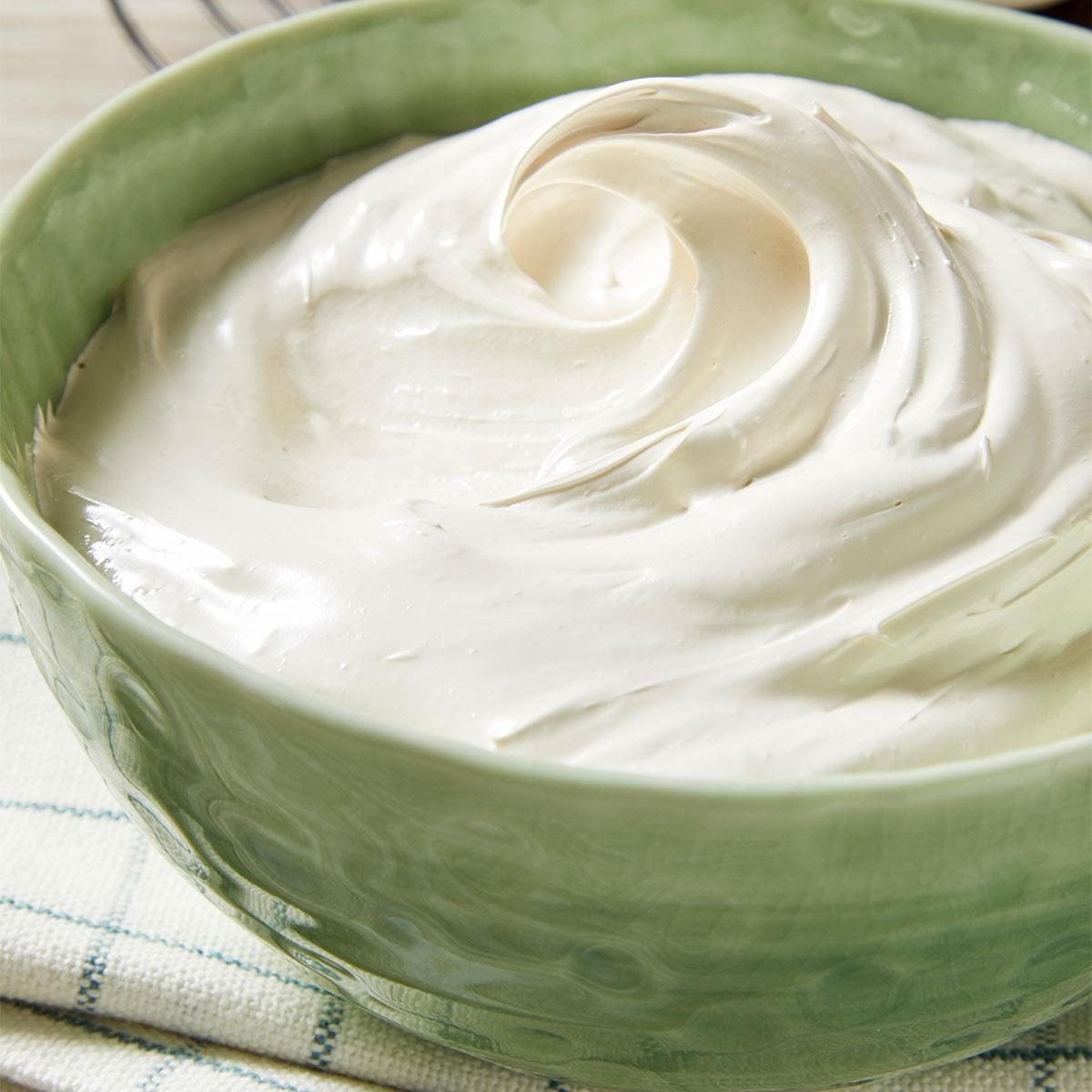
With caramel notes from brown sugar, seafoam frosting is a dreamy, cloudlike meringue frosting for all your cake and cupcake needs.
My mom loved a great cake. She baked many throughout her lifetime and even had a side hustle making and decorating cakes for friends and colleagues. One of her favorite cake recipes was devil’s food cake with seafoam frosting, which is what her mom made for her and her siblings when they were kids. Even as an adult, her eyes would light up when my grandma made it for her birthday (she got it almost every year). After making my own cakes with seafoam frosting, I now know why my mom loved it so much.
One of my favorite mementos from my grandma’s kitchen is a small sepia-toned cardboard cutout recipe for seafoam frosting. It came from a Swan’s Down cake flour box, and I imagine it’s the recipe she used when she made birthday cakes for her four children. It has a few sticky splatters, so she definitely loved it.
This recipe for seafoam frosting is almost identical to that one from the box, except for the addition of cream of tartar as a stabilizer. The meringue is super glossy and so cloudlike that you almost think it can’t possibly hold its shape when you frost your cake or cupcakes with it, yet it settles quickly and keeps its form for at least a couple of days. But it is so delicious, it won’t last that long, trust me.
What is seafoam frosting?
Seafoam frosting is an old-fashioned meringue made with brown sugar and egg whites cooked over a double boiler on the stovetop. You whisk it over the heat for a few minutes, then remove it, add vanilla extract and whisk until soft peaks form. It’s also known as a seven-minute frosting because of how long you whisk it, similar to this fluffy white frosting or the beginning of a Swiss meringue buttercream. But because of the brown sugar, it has a slightly caramelized flavor with maybe a hint of maple or spice (that’s the molasses talking). The frosting is sweet, smooth and marshmallowy, not weighed down by butter (not that there’s anything wrong with butter!).
I used to think the name came from the light tan color and frothy nature, like the foam you see on the ocean’s waves when they hit the shore. But it’s probably a reference to divinity candy, also sometimes called seafoam candy, made with sugar, egg whites and corn syrup. Wherever the name came from, seafoam frosting is excellent on chocolate cakes, spice cake, banana cake, vanilla or, really, any cake you love.
Seafoam Frosting Ingredients
- Egg whites: It’s easiest to separate egg whites and yolks while cold. Save the yolks for a custard or other recipes.
- Brown sugar: Light brown sugar is best for seafoam frosting. Dark brown has more molasses and more moisture, which could change the texture.
- Cold water: Water is essential for achieving the syrup you’ll whip into the meringue.
- Cream of tartar: Cream of tartar is a stabilizer for meringue and helps keep it from turning grainy or weepy. It helps create a more voluminous, glossy meringue.
- Pinch of salt: Salt is essential in every sweet dessert, in my opinion.
- Vanilla extract: Use the best vanilla extract you can for this (and any) recipe. The taste really makes a difference.
Directions
Step 1: Whisk the eggs and sugar over heat
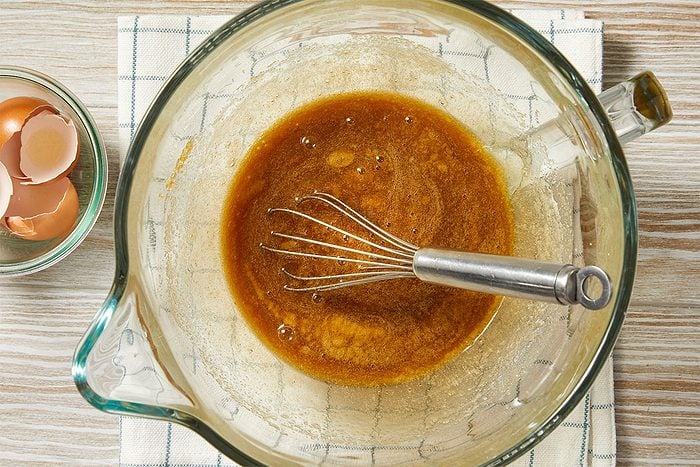
In a heatproof bowl of a stand mixer, whisk the egg whites, sugar, water, cream of tartar and salt until blended.

Place over simmering water in a large saucepan over medium heat. Whisking constantly, heat the mixture until a thermometer reads 160°F, three to five minutes.
Editor’s Tip: You can also use a hand-held mixer or a whisk attachment on a hand-held blender for this frosting. Just remember to turn it off before taking it out of the meringue or you’ll end up with little droplets of meringue all over the kitchen (I speak from experience).
Step 2: Move the mixture off the heat

Remove the bowl from the heat and add the vanilla. With the whisk attachment of a stand mixer, beat on high speed until stiff glossy peaks form, about seven minutes. Use the frosting immediately.
Editor’s Tip: It might seem as if the meringue isn’t stiff enough to spread on a cake, but it will be ready after at least seven minutes of whisking, although I’ve gone closer to 10 minutes. You should get a good soft curl at the tip when you take the whisk out of the frosting.

Seafoam Frosting Variations
- Add an extract: Play up the molasses and spice flavor by replacing 1/2 teaspoon of the vanilla with 1/2 teaspoon of maple extract.
- Make it nutty: Fold 1/2 cup toasted chopped pecans or walnuts into the frosting just before spreading.
- Make coffee seafoam: Add 1 to 2 teaspoons of instant coffee powder to the egg white mixture before beating it on the stovetop.
How to Store Seafoam Frosting
Use seafoam frosting immediately; it won’t hold up well for too long before frosting your cake. The frosted cake should be stored, uncovered, in the refrigerator. It will last up to two days. The frosting’s exterior might crystallize a bit after a day; by the second day, the meringue may begin to deflate and weep.
Seafoam Frosting Tips

How do you keep seafoam frosting from getting grainy?
To keep seafoam frosting from getting grainy, make sure the brown sugar dissolves completely in the egg whites over a double boiler. One way to tell is by rubbing the mixture between your fingers to see if any grit remains; if it does, let it melt longer. Make sure to heat it to at least 160°. Whisk it until those lovely glossy peaks form to ensure it’s stable.
How do you know if you overwhisked seafoam frosting?
You’ll know that you’ve overwhisked seafoam frosting when the texture turns from smooth, glossy and marshmallow-like to clumpy, dry and grainy. Overwhipped seafoam frosting will be hard to spread or may feel dense. Stop whisking just when it looks and feels as if you can spread it.
Why isn’t my seafoam frosting holding its shape?
Seafoam frosting won’t hold its shape if you didn’t heat the sugar and egg whites to the right temperature or if you didn’t whisk it long enough. Whisk it a bit longer until those smooth, glossy peaks form and it’s spreadable. Humidity could also be a factor when making any type of meringue. If you live in a really humid environment or it’s a particularly rainy day, the frosting will stay a little droopy and soft (but still taste great).
Ingredients
- 2 large egg whites, room temperature
- 1-1/2 cups packed brown sugar
- 1/3 cup cold water
- 1/4 teaspoon cream of tartar
- 1 pinch salt
- 1 teaspoon vanilla extract
Directions
-
1In a heatproof bowl of a stand mixer, whisk egg whites, sugar, water, cream of tartar and salt until blended. Place over simmering water in a large saucepan over medium heat. Whisking constantly, heat mixture until a thermometer reads 160°, 3-5 minutes.
-
2Remove from heat; add vanilla. With the whisk attachment of a stand mixer, beat on high speed until stiff glossy peaks form, about 7 minutes. Use immediately. Store frosted cake, uncovered, in refrigerator.