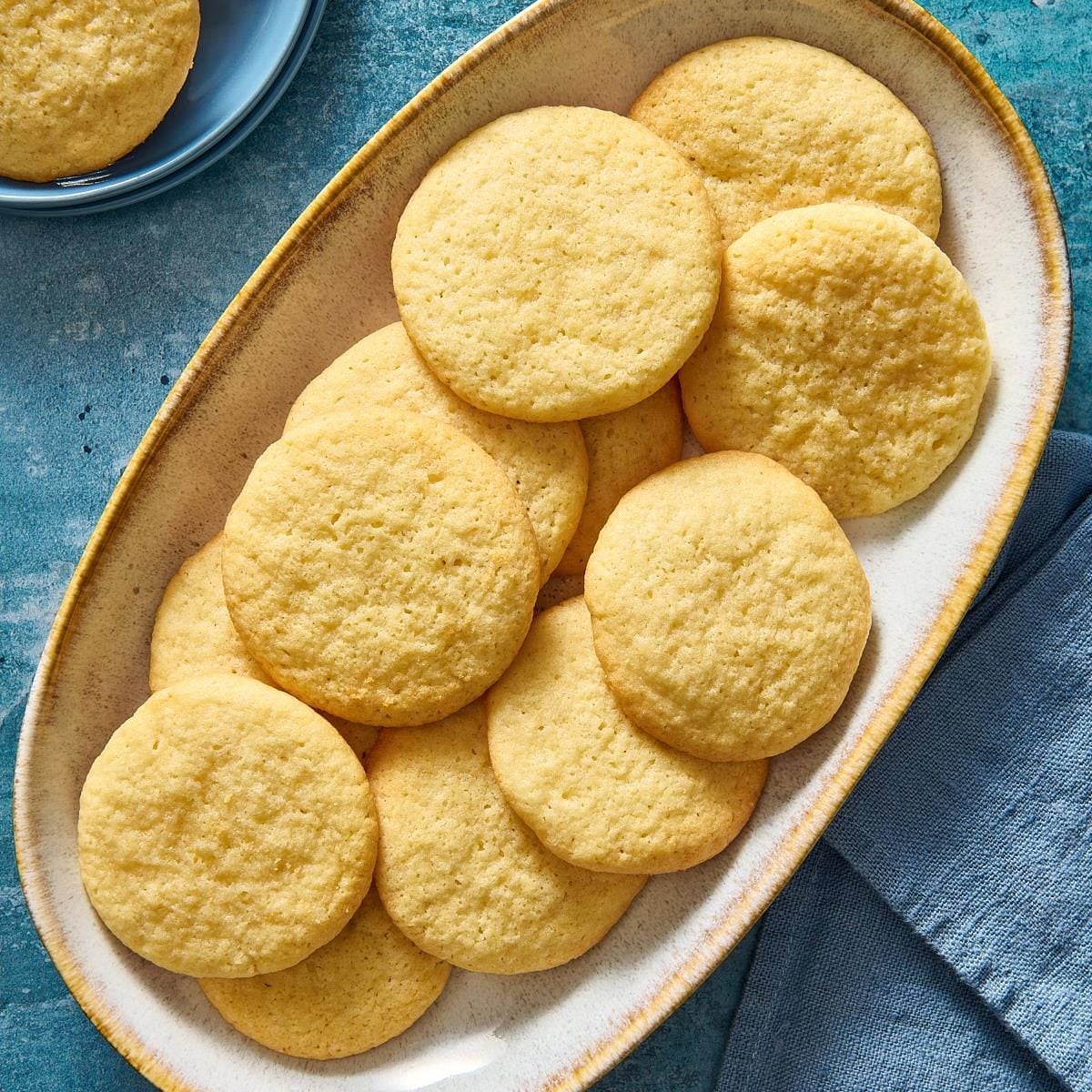
Tea Cakes
The soft centers and buttery vanilla flavor of these tea cakes are a key part of an unforgettable tea or coffee break.
Tea cakes are a classic Southern teatime treat, with cakey centers and crunchy edges. They don’t require any fancy ingredients, so they’re simplicity on a plate. They look like cookies but are called cakes; no matter what you call them, they’re delicious. Plus, they store well for a relatively long time; bake a double batch, freeze some for later, and you’ll have them ready for guests on short notice.
If the term “tea cakes” made you think of small, layered cakes covered in glaze, you’re thinking of petit fours—another awesome tea party dessert.
Ingredients for Tea Cakes
- Butter: Creaming butter and sugar incorporates air and produces lighter cakes. Take the butter out of the fridge about an hour before you start making these cookies so it’s fully softened. If you forgot, don’t worry! Grate the butter with a cheese grater, then wait about 10 or 15 minutes for it to soften.
- Sugar: Use white sugar here, not brown sugar. The latter will tinge the tea cakes’ color, and the molasses will add heaviness—not what you want when making light, soft tea cakes!
- Large eggs: The eggs bind the other ingredients in this tea cake recipe. It’s best to use room-temperature eggs when baking so they emulsify better. Cold eggs will seize the butter, making your softened butter moot.
- Vanilla extract: I always like to splurge on the best vanilla extract when I can. The quality of flavor makes a significant difference in desserts!
- Flour: These tea cakes will spread somewhat, but you still want them to have enough structure that they can be picked up without bending. All-purpose flour has enough protein and gluten-forming potential to give the cookies some strength.
- Baking powder: Baking powder helps the cakes rise. Do not use plain baking soda as a substitute; it won’t work. If your baking powder has been in the cabinet for over six months, test it to check its potency.
Directions
Step 1: Make the creamed mixture

Preheat the oven to 375°F. In a large bowl, cream the softened butter and sugar until they’re light and fluffy, five to seven minutes. Add the eggs and beating well until they’re fully incorporated. Beat in the vanilla extract.
Step 2: Combine the dry ingredients

In another bowl, combine the flour, baking powder and salt, then gradually add this dry mixture to the wet mixture. You’ll end up with a very soft dough.
Step 3: Bake the tea cakes

Drop the dough by the tablespoonful 2 inches apart onto the greased baking sheets. Bake them until the edges turn golden brown, seven to eight minutes. Move the cakes from the baking sheets to a wire rack to cool.

Tea Cake Variations
- Top them with nuts or cinnamon: Add chopped nuts or a sprinkling of cinnamon to the tops of the cakes before baking them. These additions aren’t traditional, but they sure are tasty.
- Finish with frosting: Use the meringue frosting from these pastel tea cookies to add a splash of color each cake. You can stick with pastels or use whatever color you want to whip up.
- Add a little more flavor: Replace the vanilla with almond extract or lemon extract to give the tea cakes a flavor boost.
How to Store Tea Cakes
After you whip up this tea cakes recipe, store the tea cakes in an airtight container at room temperature. They will last for up to one week.
Can you freeze tea cakes?
Like other cookies and cakes, tea cakes freeze well. Wrap each in freezer-safe storage wrap and then seal the packets in a freezer bag or freezer-safe container. A container is preferable if you’re worried about the cakes being bent or crushed. Eat them within three months. They may still be good after that, but keep an eye out for signs of freezer burn.
Tea Cake Tips

What’s the difference between these tea cakes and tea cookies?
These tea cakes look like cookies, right? They’re more of a combination. In the South, the “tea cake” looks like a cookie with a crispy edge, a soft center and a cakey texture. Outside of the South, the term takes on many more meanings. Someone who makes tea cakes could be making Southern-style tea cakes, flat-topped tea cakes that look like mini muffins, or even an actual cake that they plan to slice and serve with tea.
There are English tea cakes, Russian tea cakes covered in confectioners’ sugar, and even tea biscuits—like these lemon tea biscuits, which look like Southern biscuits and are meant to be served with tea. Tea cakes might be referred to as “tea cookies” in other parts of the U.S.
Do you need to use soft red winter wheat flour?
No, you don’t need to hunt down any specialty flours for this recipe. If you’ve done any Southern-style baking before, you may have heard that Southern soft red winter wheat flour is better for baked goods (especially biscuits) compared to the conventional all-purpose flour that’s available across the country.
Supposedly, the lower protein content in the flour makes baked goods lighter and fluffier. That may not actually be the case, but whatever your preference, you can use the plain AP flours that are available all over the country if you don’t have access to soft red winter wheat flour.
How do you make uniform cakes?
Grab a tablespoon-sized cookie scoop to produce evenly sized balls of dough and uniformly sized tea cakes. After scooping up the dough, press the dough down in the scoop to ensure the cavity is filled and to smooth out what will be the base of the cake. Remove excess dough and position the dough on the baking sheet.
How do you serve tea cakes?
Serve tea cakes slightly warm or at room temperature, with a quality tea or cup of coffee. As you might expect, they’re perfect as the second course at a tea party. (The second course at a tea party is traditionally scones, which are paired with other carb-rich tea party recipes like tea cakes, shortbread and mini muffins.) However, they are sweet enough to qualify for the third course: tea party desserts.
But don’t feel like you have to host high tea just to make tea cakes. They’re perfect as an afternoon dessert with a little jam on top, but they don’t really need anything at all.
Ingredients
- 1 cup butter, softened
- 1-1/2 cups sugar
- 3 large eggs, room temperature
- 1 tablespoon vanilla extract
- 3 cups all-purpose flour
- 2 teaspoons baking powder
- 1/4 teaspoon salt
Directions
-
1Preheat oven to 375°. In a large bowl, cream butter and sugar until light and fluffy, 5-7 minutes. Add eggs, 1 at a time, beating well after each addition. Beat in vanilla. Combine the flour, baking powder and salt; gradually add to the creamed mixture (the dough will be soft).
-
2Drop by tablespoonfuls 2 in. apart onto greased baking sheets. Bake until the edges are golden brown, 7-8 minutes. Remove to wire racks to cool.