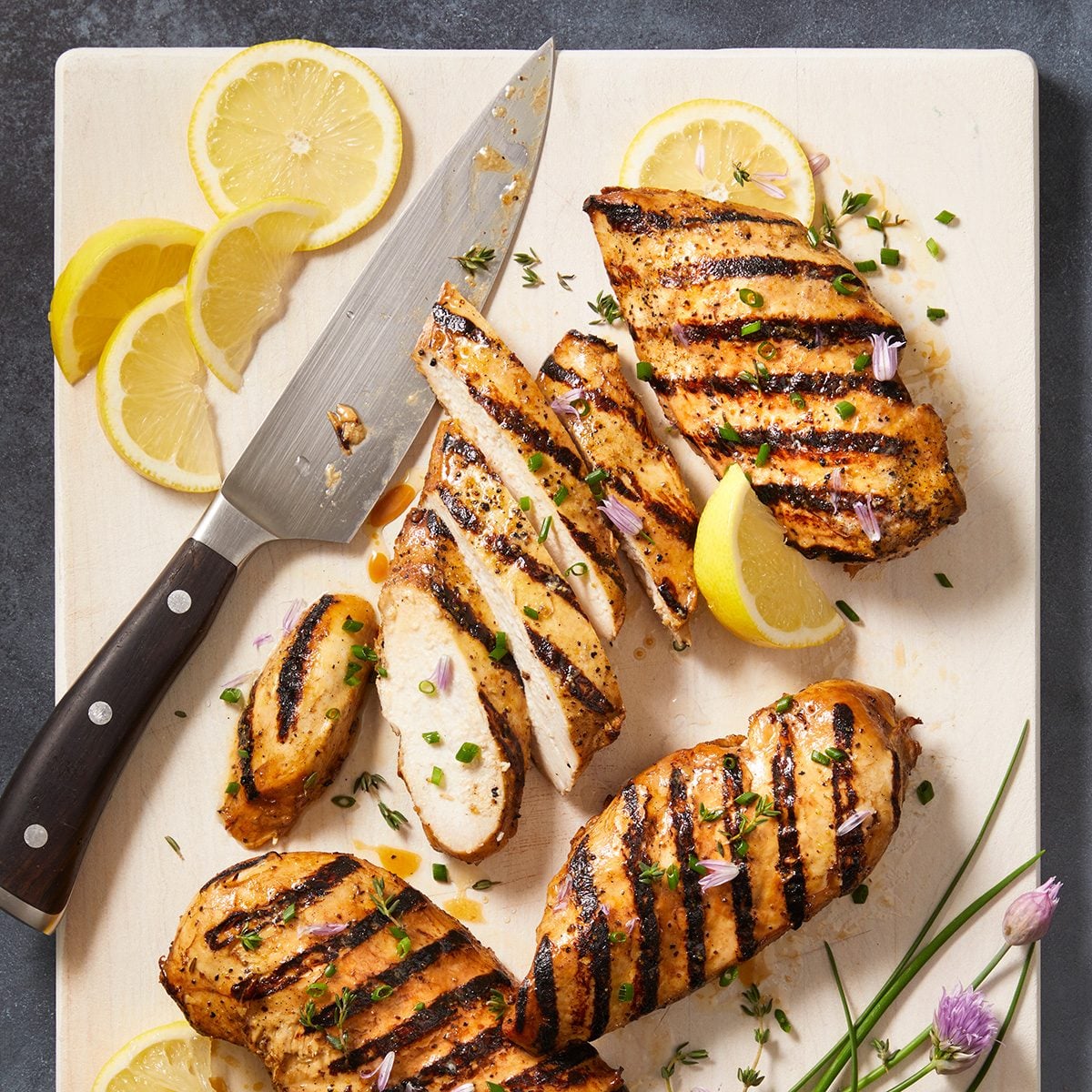
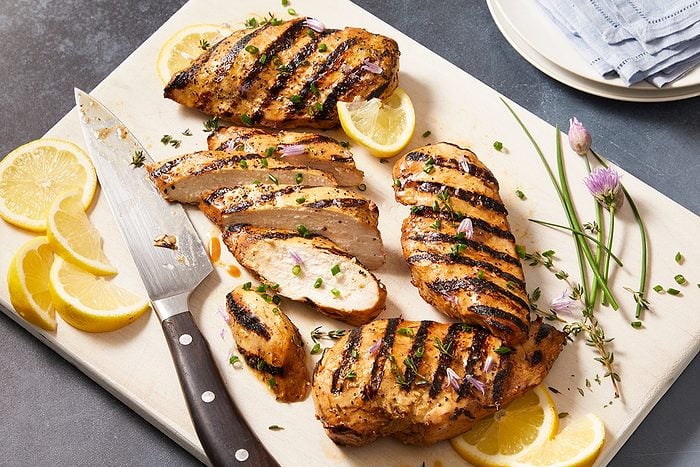
These juicy grilled chicken breasts are marinated in a simple balsamic-lemon mixture that delivers big flavor with minimal effort.
Chicken is one of those proteins that can go from juicy and flavorful to dry and disappointing in a flash. The good news? Perfectly grilled chicken breasts are actually one of the easiest chicken recipes to master once you know the basics.
This recipe starts with a simple balsamic-lemon marinade that adds bright, savory flavor and helps keep the chicken tender and juicy on the grill. From there, it’s all about cooking the chicken just until it reaches the right temperature. Do yourself a favor and invest in a good meat thermometer; it’s the easiest way to know exactly when to pull chicken off the heat before it dries out.
Once you know how to grill chicken breasts, you have access to an incredibly versatile and nutritious protein that can be enjoyed for lunch, dinner or make-ahead meals. Serve marinated chicken breasts with your favorite cookout sides, or slice them and add to to salads, sandwiches, pasta salads, soups or grain bowls throughout the week.
Ingredients for Marinated Grilled Chicken Breasts

- Balsamic vinegar: Balsamic vinegar gives the marinade a sweet, tangy depth that keeps grilled chicken from tasting flat. It also tenderizes the meat while the chicken marinates.
- Olive oil: Olive oil helps the marinade coat the chicken evenly and prevents the meat from drying out on the grill.
- Lemon juice: Fresh lemon juice gives the chicken a bright, zesty summery flavor. Like the balsamic, its acidity also tenderizes the chicken for juicier results.
- Seasoning: Salt enhances all the other flavors, while lemon-pepper seasoning is an easy shortcut to bold, citrusy flavor. It makes basic chicken breasts taste a lot more exciting.
Directions
Step 1: Marinate the chicken
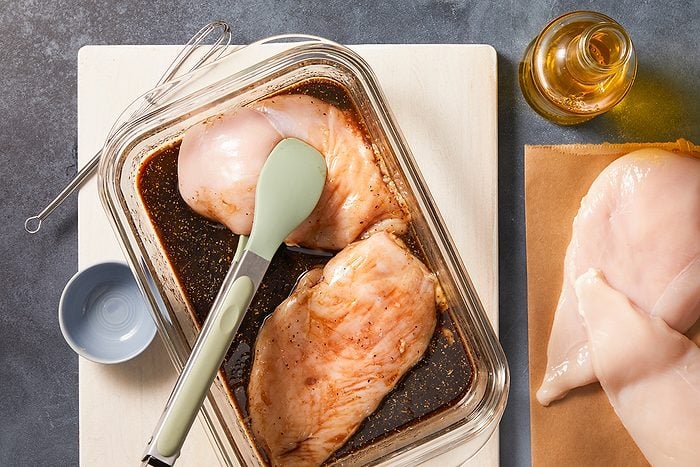
In a large bowl or resealable bag, combine the balsamic vinegar, olive oil, lemon juice and lemon-pepper seasoning. Add the chicken and turn it to coat each piece well. Cover the bowl (or seal the bag) and refrigerate the marinating chicken for at least 30 minutes. Just before grilling, drain and discard the marinade.
Editor’s Tip: You can marinate the chicken for up to four hours if you want to prep it ahead. Any longer than that, and the acidic ingredients can start to make the chicken mushy.
Step 2: Prepare the grill
Before grilling, clean the grill grates thoroughly and preheat the grill to medium. Then, use long-handled tongs and a paper towel moistened with cooking oil to lightly coat the grill rack.
Editor’s Tip: Starting with clean grill grates helps prevent sticking and creates prettier grill marks on the chicken. Here’s how to get your grates squeaky clean.
Step 3: Grill the chicken
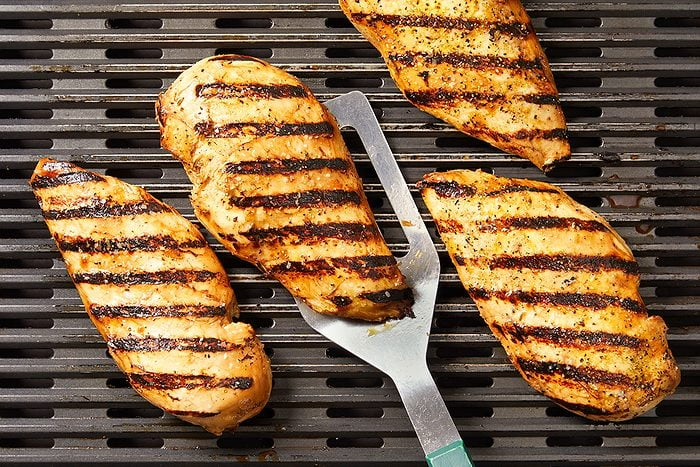
Place the chicken breasts on the grill and cook them, covered, for five to seven minutes. Use tongs to flip the breasts and grill for five to seven minutes longer or until a meat thermometer inserted into the thickest part reads 170°F. If desired, serve grilled chicken with lemon wedges and sprinkle it with chopped fresh herbs.
Editor’s Tip: Cutting into the chicken right away lets juices escape, which can leave the meat dry. Let the chicken rest for five minutes before slicing or serving it to give the juices time to redistribute.
Grilled Chicken Breast Marinade Variations
- Make it herby: Add chopped fresh herbs like rosemary, thyme, oregano or basil to the marinade for a summery, garden-fresh flavor.
- Add a hint of sweetness: Whisk in a little honey, maple syrup or brown sugar to balance the tangy ingredients and help the chicken caramelize on the grill.
- Turn up the heat: Add crushed red pepper flakes, cayenne or a spoonful of hot sauce or Sriracha to the marinade for spicy grilled chicken breasts.
- Swap citruses: Try lime juice or orange juice instead of lemon juice for a different twist.
- Use a different seasoning blend: Instead of lemon-pepper seasoning, try Italian seasoning, Cajun seasoning or a simple garlic-herb blend to create a whole new flavor profile.
What to Serve with Grilled Chicken Breasts
Grilled chicken is one of those easy, reliable mains that work with just about anything. You can keep it simple and serve it straight off the grill or use it in any recipe that calls for cooked chicken.
Slice the chicken to serve over a fresh green salad or use it to make chicken Caesar wraps or chicken pasta salad. You can also shred or dice it to make an easy chicken soup or chicken tacos. And of course, you can never go wrong with a classic plate of grilled chicken alongside corn on the cob, baked beans, potato salad and other classic cookout sides.
How to Store Grilled Chicken Breasts
Store leftover grilled chicken breasts in an airtight container in the refrigerator for up to four days. Sliced chicken tends to dry out faster, so store the chicken whole if possible, and slice or dice it just before adding it to salads, soups, sandwiches, pasta or grain bowls.
Can you freeze grilled chicken breasts?
Grilled chicken breasts freeze surprisingly well. Marinate and grill the chicken, then let it cool completely. Wrap individual chicken breasts tightly in storage wrap, then transfer them to a freezer-safe container or resealable bag and freeze them for up to three months. Thaw them overnight in the refrigerator before reheating them.
How do you reheat grilled chicken breasts?
To reheat grilled chicken breasts without drying them out, warm them in a covered skillet over low heat with a splash of water or broth to keep them moist. You can also microwave the chicken in short intervals, but you should cover it with a damp paper towel first to help trap moisture.
Grilled Chicken Breast Tips

Is grilled chicken breast healthy?
Yes, grilled chicken breast is generally considered a healthy choice because it’s a lean, high-protein food. It’s naturally lower in saturated fat than many other cuts of meat. And since the grill adds flavor, grilled chicken tends to be lighter since you don’t need heavy sauces, breading or a lot of added oil.
Is organic chicken better for grilling?
When it comes to grilling, there’s no real difference between organic and conventional chicken. The organic label on chicken refers to how the birds are raised, including the type of feed they eat and their access to the outdoors, but it doesn’t necessarily change how the chicken performs once it hits the heat. That said, some people find organic chicken tastes better.
The biggest factor for juicy grilled chicken is how you cook it. Starting with a good marinade, not overcooking the chicken and using a meat thermometer will make far more of a difference than an organic label. If organic chicken fits your budget or preferences, go for it, but it’s not a requirement for delicious grilled chicken breasts.
How do you tell when grilled chicken is done without a thermometer?
An instant-read meat thermometer is the most reliable way to check grilled chicken for doneness, but if you don’t have one, you can cut into the thickest part of the chicken. If the juices run clear and the meat is no longer pink, it’s likely done.
This method can cause your chicken to dry out, since you’re letting all those juices escape. It also won’t help you prevent overcooking. Using a thermometer to check the safe internal temperature is the easiest way to eliminate guesswork and consistently get juicy grilled chicken.
Grilling up a different cut? Here’s a quick guide to chicken cooking temperatures:
| Type of Chicken Breast | Temperature |
| Boneless chicken breast | 165° |
| Bone-in chicken breast halves | 170° |
| Boneless thighs | 170° |
| Bone-in thighs or leg quarters | 170-175° |
Ingredients
- 1/4 cup balsamic vinegar
- 2 tablespoons olive oil
- 1-1/2 teaspoons lemon juice
- 1/2 teaspoon lemon-pepper seasoning
- 4 boneless skinless chicken breast halves (6 ounces each)
Directions
-
1In a large resealable plastic bag, combine the vinegar, oil, lemon juice and lemon-pepper; add chicken. Seal bag and turn to coat; refrigerate for 30 minutes.
-
2Drain and discard marinade. Moisten a paper towel with cooking oil; using long-handled tongs, lightly coat the grill rack. Grill, covered, over medium heat or broil 4 in. from the heat for 5-7 minutes on each side or until a thermometer reads 170°.