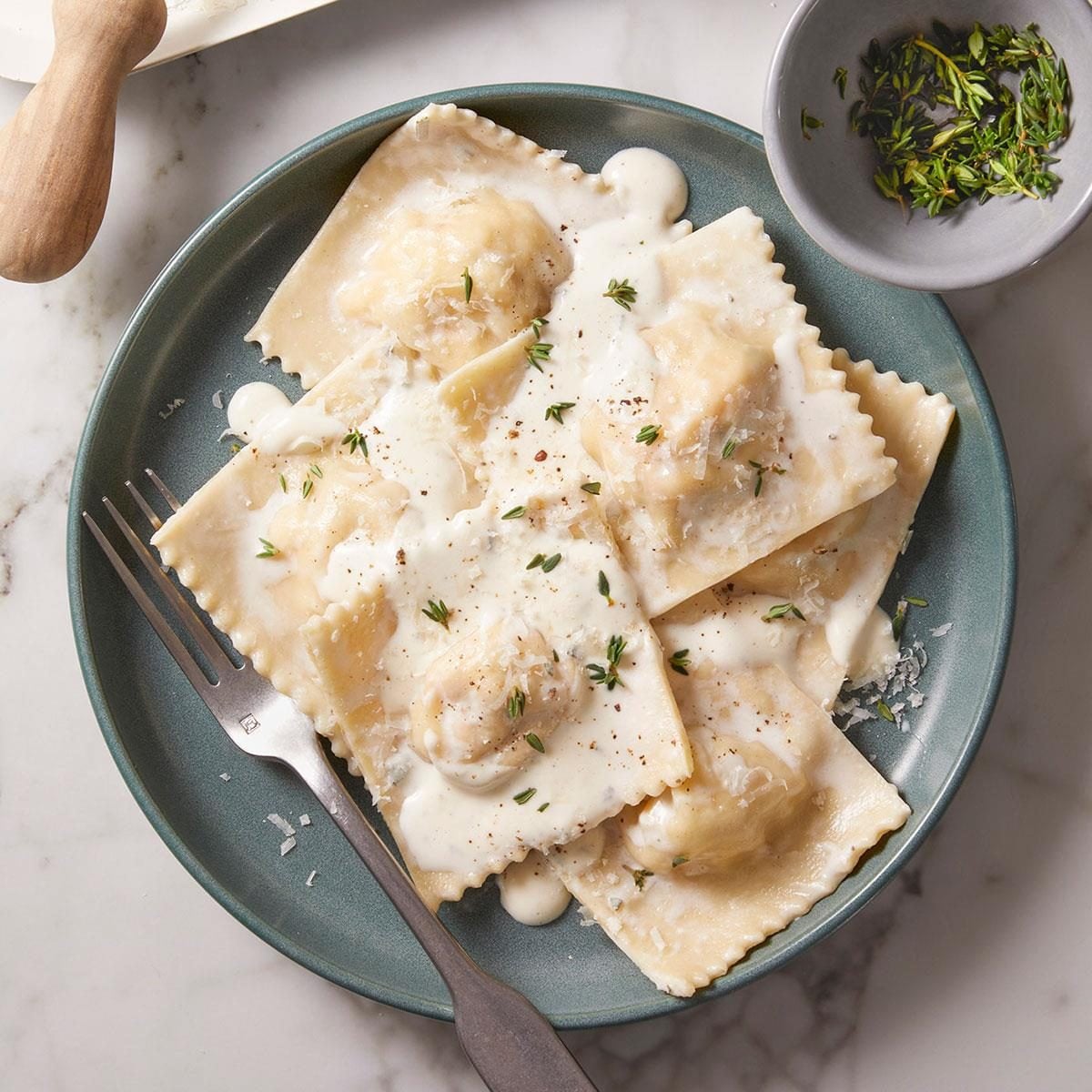
This lobster ravioli recipe makes a luxurious, restaurant-quality meal that won't break the bank.
If you’re going big on a decadent dish like lobster ravioli, putting in the extra effort to make it from scratch will really impress everyone at the table. This recipe combines the luxury of top-tier shellfish with the rustic simplicity of homemade pasta dough and a rich, buttery cream sauce, making it super indulgent. Trust me when I say that you and your guests will be talking about this dish for a long time.
I genuinely love making pasta from scratch. There’s something incredibly satisfying about turning a few simple ingredients into silky sheets of dough. If you’re new to it, this recipe for homemade ravioli is a great place to start. The trick to making ravioli with homemade pasta is rolling the dough nice and thin. Once you stuff the ravioli and drop them in boiling water, those little stuffed pastas really expand. And when the filling is made with lobster meat, ricotta, Parmesan and fresh herbs, you want to taste it. It’s really the star here.
These lobster ravioli are an impressive recipe for your cooking bucket list, perfect for special occasions or date night at home.
Ingredients for Lobster Ravioli
Pasta dough: You only need all-purpose flour, eggs, water and olive oil to make homemade ravioli dough. All-purpose flour provides the structure, while eggs add richness and help bind the ingredients into a smooth, workable dough. Water loosens the dough slight, and a drizzle of olive oil adds elasticity, making it easier to roll into thin, silky sheets without tearing.
Lobster meat: Finely chopped cooked lobster is the star of the show, bringing a sweet, delicate flavor that instantly elevates this dish. Most lobster meat sold at grocery stores and local fish markets is flash-frozen, but it still tastes fresh.
Ricotta cheese: Whole-milk ricotta gives the filling a creamy, luxurious texture while its neutral flavor lets the lobster shine. If you have milk and some lemon juice, you have everything you need to make homemade ricotta.
Parmesan cheese: Grated Parmesan adds a salty, nutty backbone that balances the sweetness of the lobster. Freshly grated cheese melts better and tastes sharper.
Lemon zest: Just a teaspoon of zest brightens everything up and cuts through the richness. A tiny bit of acid is the secret weapon in this filling.
Fresh sage and thyme: These classic garden herbs make the filling sing. Sage adds an earthy, aromatic note that pairs beautifully with both lobster and the buttery sauce. Thyme adds subtle herbal depth that rounds out the filling without overpowering it.
Salt and pepper: This dynamic duo ties everything together and enhances the natural flavors of the lobster and cheese.
Cream sauce: The velvety cream sauce is made with butter, minced garlic, white wine, heavy cream, minced fresh sage, grated Parmesan, salt and pepper.
Directions
Step 1: Make the pasta dough
Josh Rink for Taste of Home
Place 2-1/2 cups of flour in a large bowl. Make a well in the center. In a separate bowl, beat the eggs, water and oil, and pour the mixture into the flour well. Stir them together to form a ball.
Josh Rink for Taste of Home
Turn the dough onto a floured surface and knead it until it’s smooth and elastic, about four to six minutes, adding the remaining flour if necessary to prevent the dough from sticking. Cover the dough and let it rest for 30 minutes.
Editor’s Tip: If the dough keeps snapping back when you roll it, it needs a few more minutes of rest. Letting it rest relaxes the gluten, which makes rolling it out later much easier.
Step 2: Prepare the filling
Josh Rink for Taste of Home
Meanwhile, in a large bowl, mix the lobster, ricotta, Parmesan, lemon zest, sage, salt, thyme and pepper until they’re well combined. Set it aside.
Editor’s Tip: If you’re using frozen lobster meat, thaw and drain it before adding it to the mixture. You don’t want a watery ravioli filling.
Step 3: Roll out the pasta dough
Josh Rink for Taste of Home
Divide the pasta dough in half. Use a pasta roller or a rolling pin on a lightly floured surface to roll one portion of dough to 1/16-inch thickness. Repeat the process with the second portion of dough. Keep the pasta covered until you’re ready to use it.
Step 4: Fill the ravioli
Josh Rink for Taste of Home
Pipe the filling by the tablespoonful, spacing them 1 inch apart over half of the pasta sheet.
Josh Rink for Taste of Home
Fold the sheet over and press down to seal the filling in between layers of pasta. Cut the pasta into squares with a pastry wheel. Repeat the process with the remaining dough and filling.
Editor’s Tip: A little dab of water around the edges helps seal the ravioli like glue, especially if your dough has dried slightly. If you have trouble making perfect squares, use a ravioli stamp or a ravioli mold for perfectly consistent puffs.
Step 5: Cook the ravioli
In a Dutch oven, bring salted water to a boil. Add the ravioli. Reduce the heat to a gentle simmer and cook the ravioli until they float to the surface and are tender, one to two minutes.
Editor’s Tip: Keep a close watch on the pot. The ravioli are ready once they float to the surface.
Step 5: Make the sauce
Josh Rink for Taste of Home
Meanwhile, in a small saucepan, melt the butter over medium heat. Add the garlic, and cook and stir for one minute. Stir in the wine. Cook and stir until the wine is reduced by half. Gradually stir in the cream and sage. Bring the mixture to a gentle boil. Reduce the heat and simmer it, uncovered, until it has slightly thickened, three to five minutes, stirring constantly. Reduce the heat to low. Gradually whisk in the grated Parmesan, and return the sauce to a simmer. Cook and stir the sauce until it’s just thick enough to coat the back of a metal spoon. Stir in the salt and pepper.
Step 6: Combine the ravioli and sauce
Drain the ravioli and add them to the sauce. Toss to coat them.
Josh Rink for Taste of Home
Lobster Ravioli Variations
Use shrimp or crab: If lobster is hard to track down, use shrimp or crab for a slightly more budget-friendly version that still feels fancy.
Add spinach to the filling: Finely chopped spinach adds color and a subtle earthy flavor while stretching the filling further.
Serve it in brown butter sauce: Skip the cream and coat the lobster ravioli in a sage brown butter sauce for something lighter and deeply nutty.
Give it a tomato cream twist: Stir in a spoonful of tomato paste for a blush sauce that leans slightly tangy.
How to Store Lobster Ravioli
Store leftover cooked ravioli in an airtight container in the refrigerator, preferably with little to no sauce so they don’t get soggy. If you’re planning ahead, it’s better to store ravioli, uncooked, in the refrigerator or freezer.
How long will lobster ravioli last?
Store leftover cooked ravioli in the sauce in the refrigerator for up to four days. You can cook the ravioli and store them without the sauce for the same amount of time. Uncooked ravioli will last for one day in the fridge or up to three months in the freezer.
How do you freeze lobster ravioli?
Lobster ravioli freeze beautifully, especially before they’re cooked. Arrange them in a single layer on a baking sheet and freeze them, then transfer them to a freezer bag and store them. Cook them straight from frozen as needed. You can also freeze cooked, unsauced ravioli, though the texture is best with the uncooked method.
What’s the best way to reheat lobster ravioli?
The best way to reheat lobster ravioli is to gently simmer it in a saucepan over low heat, adding a splash of cream or water to loosen the sauce. Avoid the microwave if possible, since it can make the pasta tough and can heat the ravioli unevenly.
Lobster Ravioli Tips
Josh Rink for Taste of Home
How do you make sure homemade ravioli don’t fall apart as they cook?
To make sure homemade ravioli stay together when they cook, press out any air pockets and seal the edges firmly, using a bit of water if needed. If you’re using a mold, brush water along the edges of the pockets before adding the top layer of pasta. Proper sealing is the difference between beautiful pasta and accidental lobster soup.
What other sauces work well with lobster ravioli?
Try pairing lobster ravioli with a light lemon butter sauce or a delicate tomato cream sauce. The key is to keep the sauce light enough that the lobster shines through.
What can you serve with lobster ravioli?
Lobster ravioli pairs well with simple sides like crisp green salad, roasted asparagus and pull-apart garlic bread to soak up the sauce. A chilled white wine on the side doesn’t hurt.
We are no longer supporting IE (Internet Explorer) as we strive to provide site experiences for browsers that support new web standards and security practices.