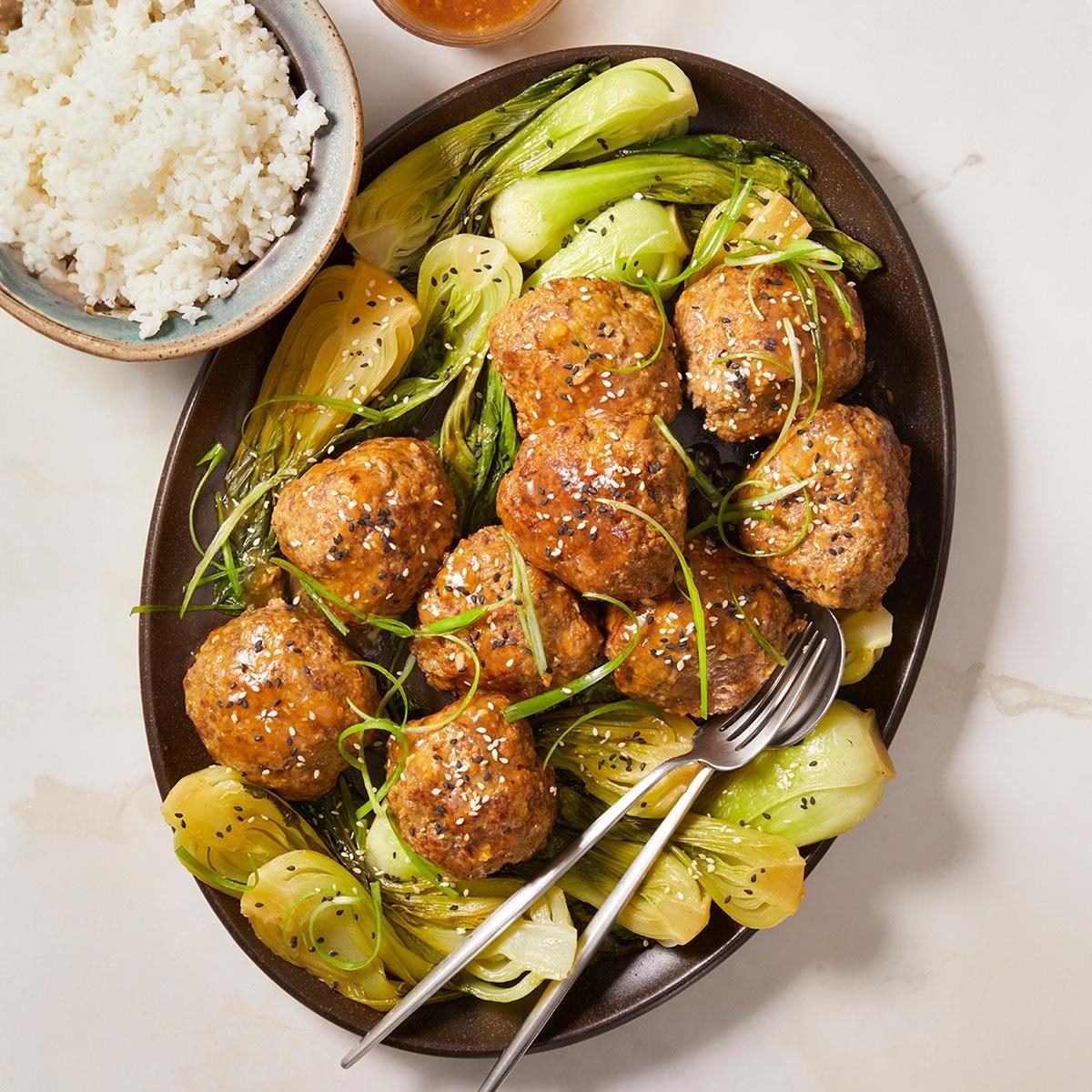
Tender lion's head meatballs—much larger and fluffier than typical meatballs—are a Chinese delicacy with a fun appearance and a balanced sweet and savory flavor.
Nearly every culinary tradition has a version of meatballs, and they come in all sizes and flavors. There are small creamy Swedish meatballs, Mexican albondigas simmered in broth, and American party meatballs slicked with grape jelly. Lion’s head meatballs are another variation made with pork and water chestnuts, gently braised with cabbage leaves, and then served in a rich sauce flavored with garlic, ginger and soy.
Lion’s head meatballs are associated with celebrations. Fittingly, the first time I tried them was at my sister-in-law’s Chinese wedding banquet. Seated at large round tables, guests were treated to course after course of special dishes served on lazy Susans so we all could reach them. The delicate, cloudlike texture of these meatballs made them stand out.
What are lion’s head meatballs?
Lion’s head meatballs are common in Huaiyang cuisine, which favors light flavors, fresh ingredients and mildly sweet dishes. Food from the region is often steamed or cooked in liquid rather than fried, and it’s rarely spicy.
Served with a garnish of leafy greens (the manes), these oversized pork meatballs are said to resemble the heads of Chinese guardian lions. Considered a celebratory dish, they’re particularly associated with Lunar New Year. The meatballs are likely to have been on menus since the Tang Dynasty, which ended more than 1,100 years ago.
Ingredients for Lion’s Head Meatballs
Ground pork: Use a higher-fat pork to make these meatballs; it’s key to the soft texture (skip ground meat labeled “lean”). Make sure you’re getting plain ground pork, not flavored pork sausage—they look similar in the package.
Panko bread crumbs:What is panko? Very light Japanese bread crumbs that are excellent for fluffing up meatballs and keeping them tender. Plain bread crumbs will work, but your lion’s head meatballs will have a slightly different texture.
Water chestnuts: The secret ingredient in these meatballs, crunchy water chestnuts bring a nice crunch to the mix without contributing much flavor. You can find canned water chestnuts in the global aisle of most grocery stores and at Asian markets.
Eggs: Eggs hold the meatballs together as they cook. The yolks are a bonus because they contribute flavor and richness.
Green onions:Green onions, aka scallions, are an important flavor component of the meatballs. Use the whole onion, including the white parts. If you can’t get scallions, yellow or white onions are the next best thing.
Chinese cooking wine (Shaoxing wine): This rice wine, traditionally aged in clay urns, is sweet with a slightly nutty flavor. If you can’t find it, don’t use cooking wine, as it usually includes added salt. Surprisingly enough, dry sherry is actually the best substitute.
Soy sauce: The recipe calls for reduced-sodium soy sauce, which helps you control the final amount of seasoning. However, to some, reduced-sodium soy sauce has a noticeably harsh flavor. If you don’t like it, use regular soy sauce and consider trimming the amount a little to keep the salt in check. Tamari would be great too.
Garlic: You’ll get better flavor with freshly minced garlic vs. store-bought “jarlic.”
Canola oil: Canola oil is flavorless, so it’s a piece of cake to swap in any other neutral-tasting healthy oil that’s safe to use over high heat, such as grapeseed or avocado.
Bok choy: Bok choy is a variety of cabbage with oblong heads and deep green leaves with white ribs. It’s a nice accompaniment to Chinese dishes.
Sesame oil: Dark, toasted sesame oil is more for flavor than for cooking. This oil is also lovely in salad dressings, drizzled over plain rice or added to stir-fries once they come off the heat.
Ginger: Look for plump, unblemished pieces of ginger. Although it’s common (and easy) to peel ginger, the outer layer is perfectly safe to eat and contains many nutrients. Grating the ginger on a Microplane is quicker than mincing, so do whichever you prefer.
Chicken broth: If you’re using store-bought chicken broth, look for a low-sodium variety. If you’re using homemade unseasoned broth, you’re golden.
Cornstarch: When using cornstarch as a thickener, it’s always wise to whisk it with a cool or cold liquid first, then slowly pour it into the mixture you’re thickening, whisking as you do. Otherwise, it can form clumps.
Oyster sauce: Originally, oyster sauce was made from nothing but oysters, cooked until the liquid browned. Nowadays, most commercial oyster sauces include sugar, salt, cornstarch, MSG and oyster flavor. There are vegan versions for those who don’t eat seafood.
Sugar: Just a hint of granulated sugar helps balance the salinity of the other sauce ingredients.
Sesame seeds: These are an optional garnish for this dish and are worth adding if you have them. Some stores have both toasted and raw seeds, and either one will work here. The toasted version tastes nuttier.
Directions
Step 1: Make the meatballs
JOSH RINK FOR TASTE OF HOME
In a large bowl, combine the pork, panko crumbs, water chestnuts, eggs, green onions, Shaoxing wine, soy sauce and garlic, mixing until well blended. Divide into nine meatballs (about 1/2 cup each).
JOSH RINK FOR TASTE OF HOME
In a large Dutch oven skillet over medium heat, heat canola oil. In batches, brown meatballs on each side. Remove meatballs to paper towels to drain.
Editor’s Tip: Since meatballs are round, they don’t have sides, but the goal is to roll them around a few times so that there are plenty of browned surfaces. I usually roll them over onto new surfaces three times during cooking.
Step 2: Steam the meatballs and bok choy
JOSH RINK FOR TASTE OF HOME
Remove any remaining oil from the skillet and wipe it clean. Place the bok choy leaves around the skillet and top with the meatballs. Cover and steam until a thermometer inserted into the meatballs reads 160°F, 15 to 20 minutes.
Editor’s Tip: As the bok choy wilts, it will release enough liquid to steam the meatballs. If the pan runs a little dry, add a bit of water or some chicken stock.
Step 3: Make the sauce
JOSH RINK FOR TASTE OF HOME
Meanwhile, heat the sesame oil in a large skillet over medium-low heat. Add the ginger and garlic, and cook until fragrant, 30 to 60 seconds. In a small bowl, whisk together the cornstarch and chicken broth until smooth. Add to the pan along with the cooking wine, soy sauce, oyster sauce and sugar. Bring to a simmer. Cook two to three minutes or until thickened, stirring frequently.
Step 4: Serve the meatballs
Plate meatballs over bok choy and garnish with sesame seeds and additional sliced green onion. Serve with prepared sauce and hot cooked rice.
JOSH RINK FOR TASTE OF HOME
Lion’s Head Meatball Variations
Swap for the bok choy: The most traditional version of this recipe uses Napa cabbage as the green, and it would make a great substitute.
Add crab or shrimp to the meat mixture: Another traditional version of lion’s head meatballs adds sweetness and complexity by mixing in crabmeat or finely chopped shrimp. A few ounces of either one will do.
Make it with mushrooms: For less crunch but more flavor, try using minced shiitake mushrooms instead of the water chestnuts.
Serve the meatballs in clear broth: Serve the meatballs in a meat broth flavored with garlic and ginger for a lighter version.
How to Store Lion’s Head Meatballs
Scoop cooled leftover meatballs, bok choy and sauce into a glass snap-top container and store in the fridge for three to four days.
Can you freeze the meatballs?
Yes, the meatballs and sauce freeze well. The bok choy, however, doesn’t, so don’t include it. Use a freezer-safe bag, and squeeze as much air out as you can. The meatballs will last in the freezer for around three months. Thaw them overnight in the fridge before using.
How should you reheat lion’s head meatballs?
Pour a splash of broth into a saucepan or skillet over low heat, add the meatballs and cover. Heat until warmed through, turning once or twice.
Lion’s Head Meatball Tips
JOSH RINK FOR TASTE OF HOME
How do you make sure lion’s head meatballs don’t fall apart?
The eggs, panko crumbs and water chestnuts all help bind the mixture, ensuring the meatballs won’t fall apart. One trick for extra assurance is not to overwork the meat; mix it just until it’s combined and the ingredients are evenly distributed. The other trick is making sure the meatballs brown on the first side and release easily before turning them, as moving them around in the pan too early can cause them to break apart.
What else can you serve with lion’s head meatballs?
Plain white rice or glass noodles are traditional accompaniments to lion’s head meatballs. Yangzhou fried rice comes from the same region, so that would be another great dish to have on the table. Since these are considered a lucky food for a Lunar New Year feast, you could also offer them along with steamed fish and longevity noodles, and then have Chinese almond cookies for dessert.
We are no longer supporting IE (Internet Explorer) as we strive to provide site experiences for browsers that support new web standards and security practices.