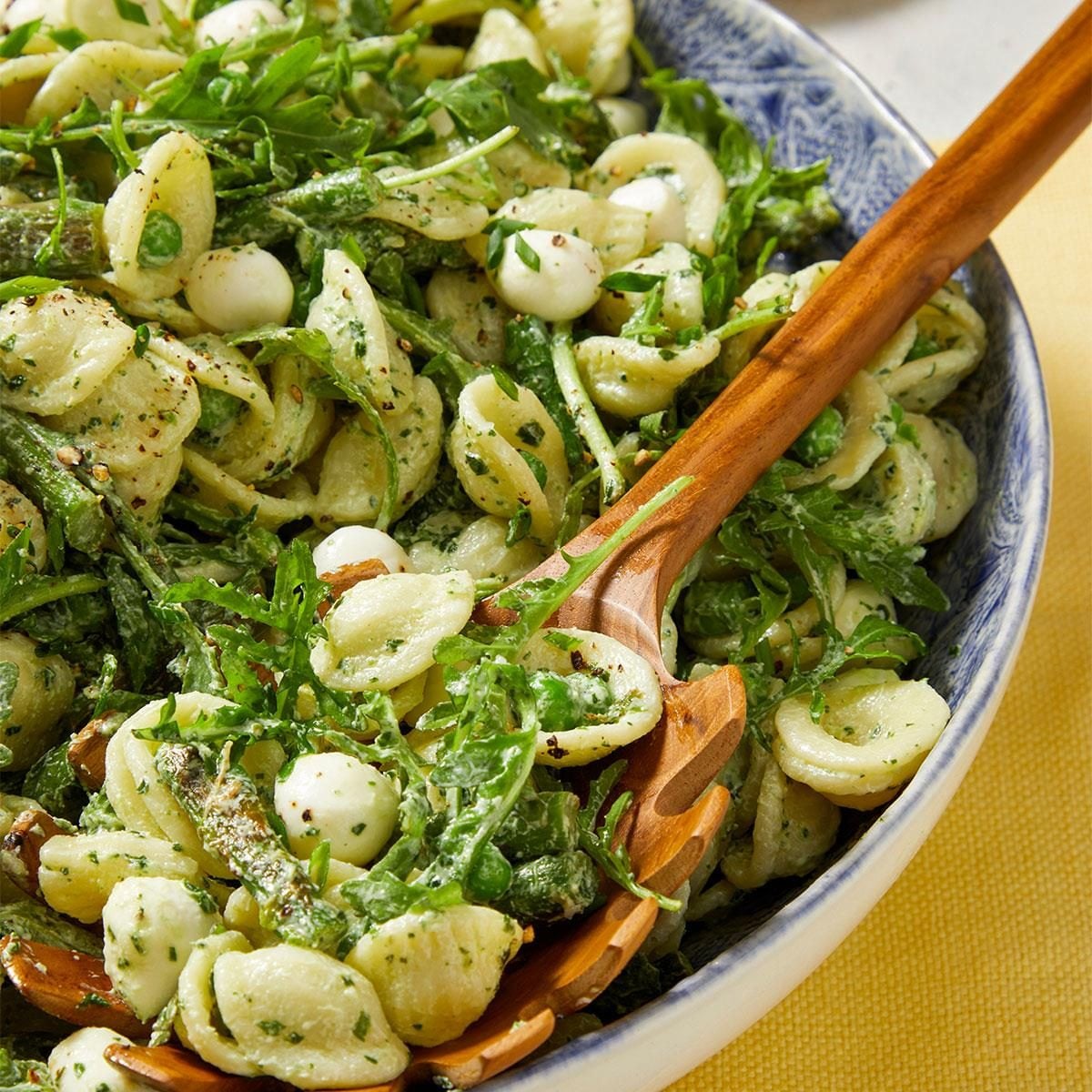
Green Goddess Pasta Salad

This fresh and herb-flavored green goddess pasta salad is a tasty way to celebrate the arrival of warmer weather.
This green goddess pasta salad recipe is a delicious dish to make to welcome spring. Not only does the dressing give the salad a vibrant green color, but it’s also bursting with fresh herb flavor. The addition of sweet peas and lightly roasted asparagus takes the spring flavors over the top. While this pasta salad would be a tasty contribution to any spring or summer potluck, it’s also a great side dish to pair with grilled salmon or lemon chicken.
What is green goddess dressing?
Green goddess dressing is, at its heart, a riff on classic Caesar dressing. It was invented by a chef at San Francisco’s Palace Hotel in the 1920s. Although there are a variety of origin stories, according to one version, the dressing was created at the request of an actor staying at the hotel who didn’t care for any of the hotel’s available salad dressings. The chef created this herb-forward dressing and named it after the play that the actor was starring in at the time: The Green Goddess.
Traditionally, this dressing is made with a combination of mayonnaise, sour cream and a variety of herbs, including parsley, tarragon, and chives or green onions. The addition of a generous amount of parsley gives the dressing its signature green color. Anchovies and Worcestershire sauce are also commonly added for a savory note. For the green goddess dressing in our pasta salad recipe, Greek yogurt is used as the base of the dressing for a lighter and creamier take. We also sprinkle the salad with chives as a garnish instead of blending them into the dressing.
Green Goddess Pasta Salad Ingredients
- Green goddess dressing: Our green goddess dressing recipe contains Greek yogurt, basil, parsley, tarragon, cilantro, garlic, olive oil, fresh lemon juice and zest, salt and pepper.
- Orecchiette pasta: You can use the short pasta shape of your choice, whether you want to use up what’s in the pantry or use this recipe as an excuse to try a new shape.
- Peas: You can use frozen or fresh peas for this recipe.
- Asparagus: When choosing fresh asparagus in the produce section, look for stalks that are still stiff and not easily bendable. The best way to trim the woody ends of the stalks is to line up the ends of the bunch of asparagus and use a sharp knife to trim where the color begins to fade from green to white.
- Arugula: This fresh green herb adds its peppery and herbaceous flavor to the pasta salad. Use leftover greens to make a tasty arugula salad.
- Pearl mozzarella: This type of fresh mozzarella gets its name from its small spherical shape. You could also use quartered bocconcini or tear sliced fresh mozzarella into small, bite-sized pieces.
- Chives: Finely chopped fresh chives are used to garnish the pasta salad.
Directions
Step 1: Make the green goddess dressing

Add the Greek yogurt, basil, parsley, tarragon, cilantro, garlic, olive oil, lemon juice, lemon zest, salt and pepper to a food processor and process until smooth. Set aside.
Step 2: Cook the pasta

Bring a large pot of water to a boil. Cook the pasta to al dente according to the package instructions. In the last two minutes of cooking, add the frozen peas to the boiling water. Drain the pasta and peas. Allow to cool slightly.
Step 3: Cook the asparagus

While the pasta cooks, pan-roast the asparagus pieces. Add 1 tablespoon of olive oil to a large skillet over medium-high heat. Roast the asparagus for eight minutes, flipping the asparagus after about four minutes to evenly brown both sides. Transfer the cooked asparagus to a large shallow bowl. Let cool slightly.
Step 4: Combine the salad ingredients
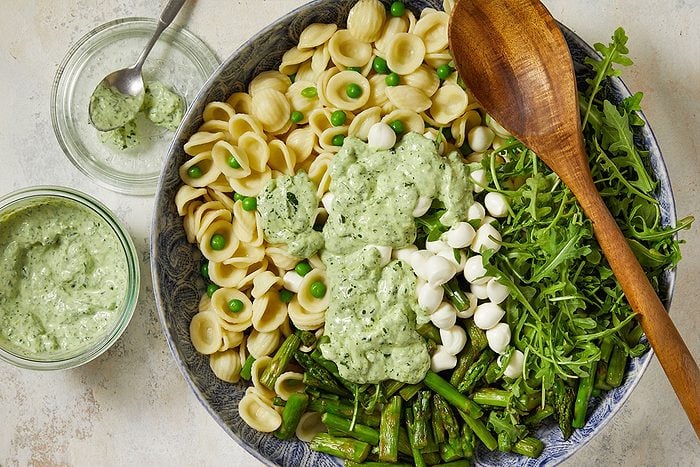
Add the cooked pasta, peas, arugula and mozzarella to the bowl with the asparagus. Add the dressing, starting with 1/2 cup, and toss until the salad ingredients are well-coated in the dressing, adding more dressing as desired. Top with the chopped fresh chives and serve.

Green Goddess Pasta Salad Variations
- Mix up the herbs: You have tons of options when it comes to what herbs to use in the green goddess dressing. Mix up the ratio as you see fit, depending on what fresh herbs you have on hand in your fridge! Store any leftover herbs properly to help them last longer.
- Include protein: Make this green goddess salad into a meal by topping each serving with shredded chicken or flaked salmon. For a vegetarian protein boost, add beans such as chickpeas to the salad.
- Add more veggies: To stick with the green theme, add sliced green peppers, sliced cucumbers or lightly steamed broccoli to the salad. Or, opt for a rainbow salad instead by adding sliced orange or red peppers, grape or cherry tomatoes, black or green olives, or chopped artichoke hearts to the salad.
- Use a different pasta: The best type of pasta for this green goddess pasta salad recipe is a short-cut shape with plenty of nooks and crannies to catch the dressing. Fusilli, farfalle, radiatore and rotelle would work well.
How to Store Green Goddess Pasta Salad
Store leftover pasta salad in an airtight container in the fridge. Store any leftover green goddess dressing in a separate airtight container in the fridge.
How long does green goddess pasta salad last?
Pasta salad with green goddess dressing lasts up to four days when stored properly in the fridge. Because the pasta will soak up some of the dressing as it sits, stir in any leftover dressing before serving leftovers.
Can you make green goddess pasta salad ahead of time?
You can make the green goddess dressing a few days in advance. Store it in an airtight container in the fridge. Making the dressing in advance is actually ideal, as this gives the dressing more time for all the flavors to meld together. You could also pan-roast the asparagus a day in advance. Just store the roasted asparagus in an airtight container in the fridge as well.
Green Goddess Pasta Salad Tips

What can you serve with green goddess pasta salad?
This pasta salad with green goddess dressing is a great shareable dish to take to your next spring or summer potluck. Its herb-forward flavor pairs well with roast chicken, grilled burgers, baked pork chops or cedar plank salmon.
Ingredients
- 1 cup plain Greek yogurt
- 1 cup fresh basil leaves
- 1/4 cup packed fresh parsley sprigs
- 1/4 cup fresh tarragon sprigs
- 1/4 cup fresh cilantro leaves
- 2 garlic cloves
- 2 tablespoons olive oil
- 2 tablespoons lemon juice
- 1 teaspoon grated lemon zest
- 1/2 teaspoon salt
- 1/4 teaspoon pepper
- pasta salad:
- 16 ounces uncooked orecchiette pasta
- 1 cup frozen peas
- 1 tablespoon olive oil
- 1 pound cut fresh asparagus (1-inch pieces)
- 2 cups fresh arugula
- 1 cup fresh mozzarella pearls
- 1 tablespoon minced chives
Directions
-
1Place the yogurt, herbs, garlic, olive oil, lemon juice and zest, salt and pepper in a food processor; puree until smooth. Set aside.
-
2Bring a large pot of water to a boil. Cook the pasta according to package instructions. During the last 2 minutes of cooking, add the frozen peas. Drain the pasta and peas; allow to cool slightly.
-
3Meanwhile, heat olive oil in a large skillet over medium-high heat. Add asparagus; cook until tender and lightly browned on the edges, 7-8 minutes, flipping the asparagus halfway. Transfer to a large shallow bowl; let slightly cool.
-
4Add the pasta, peas, arugula and mozzarella pearls to the bowl. Add half of the dressing; toss to coat. Add additional dressing, as desired. Top with chopped chives to serve.