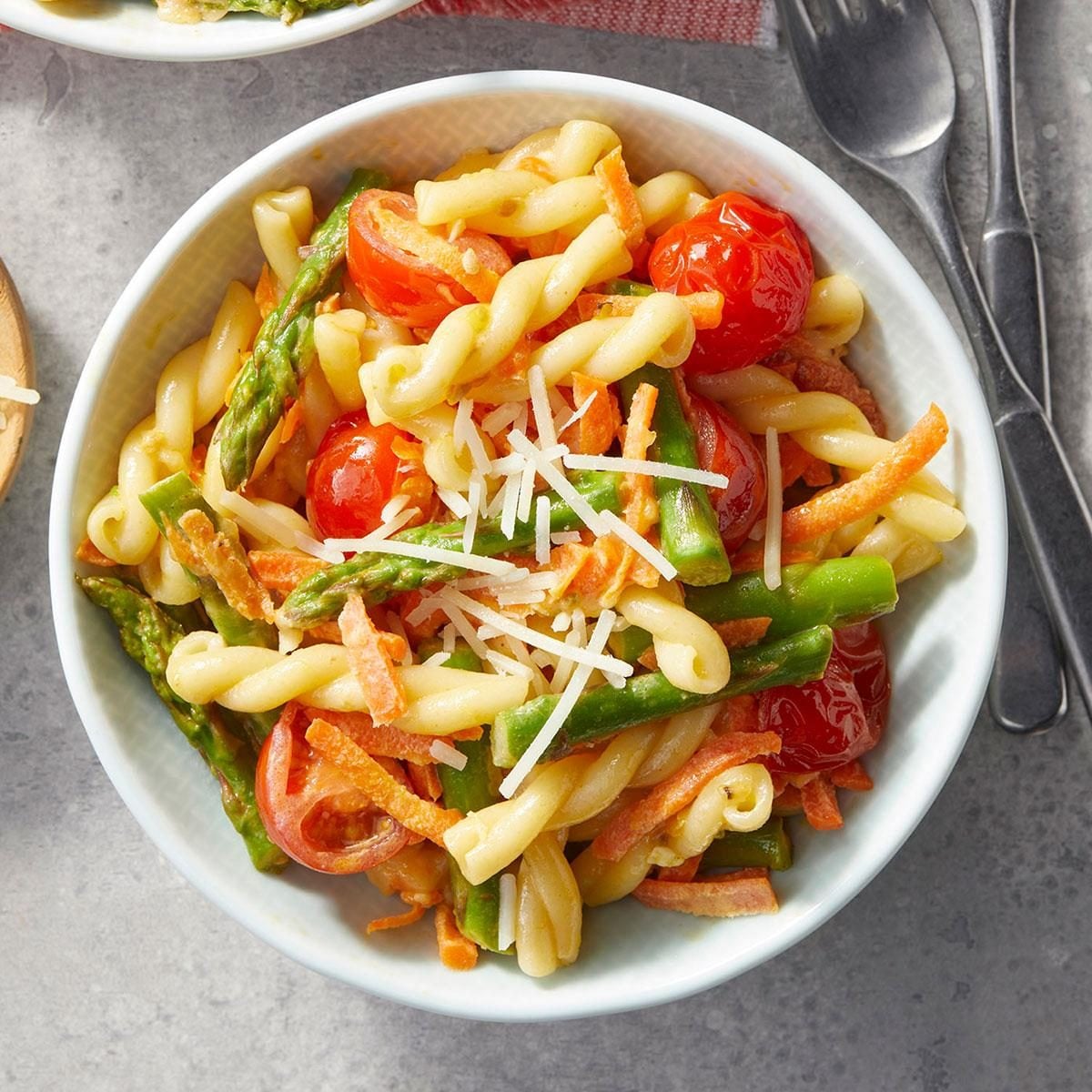

This simple, satisfying pasta primavera combines fresh colorful vegetables with a creamy Parmesan cheese sauce and hearty spiral pasta.
One of the best things about pasta is that it can be the vehicle for celebrating the seasons or hunkering down when you need comfort food. As much as a massive dish of baked pasta or decadent penne alla vodka hits the spot, when the weather warms and your local farmers market is bursting with abundance, it’s time to make pasta primavera.
Primavera means “spring” in Italian (although pasta primavera was created in America), so it makes sense that this pasta recipe trades all-day simmered canned tomatoes for a light Parmesan, cream and garlic sauce with bright, gently sauteed vegetables. Some versions of pasta primavera use olive oil instead of cream, but the essence of the dish—oodles of colorful vegetables cooked with care—is the same.
This foolproof pasta primavera recipe works for al fresco dinner parties, quick weeknight meals, and those 80-plus-degree nights when you need something simple and satisfying but not heavy. The fact that it goes from prep to plate in 30 minutes is a bonus reason to make it on repeat throughout the spring and summer.
Ingredients for Pasta Primavera

- Gemelli or spiral pasta: We love the way the vegetables tangle with twisty gemelli, but other pasta shapes, from longer noodles, like fettuccine, to shorter tubes of penne, are fine to use instead.
- Vegetables: This is where you can get creative with whatever veggies you have on hand. We use fresh asparagus, carrots, cherry tomatoes and garlic in this recipe, but other versions include bell peppers, snap peas, broccoli and zucchini.
- Canola oil: You need only a small amount of oil to saute the vegetables, so you could use any neutral-tasting cooking oil, including one of our new, favorite options: algae oil.
- Parmesan cheese: Parmesan brings a nutty flavor to the simple cream sauce and a good amount of salt, which seasons the pasta and vegetables. I prefer buying a block of cheese and grating it myself so it melts easily and tastes super fresh.
- Heavy whipping cream: Heavy whipping cream is the base of the silky, creamy sauce. It thickens quickly when simmered, so if you accidentally cook it too long or your pasta seems dry, add some of the starchy pasta cooking water (always save your pasta water!), a few tablespoons at a time, to loosen everything up.
- Pepper: This recipe skips herbs and spices—except for a bit of tingly black pepper—so the vegetables are the star of the dish. A small amount of pepper perks up the vegetables and cuts through the richness of the cream and cheese. It always tastes better freshly ground, and using a good pepper grinder makes it a cinch.
Directions
Step 1: Cook the pasta
Cook the pasta according to the package directions.
Step 2: Saute the vegetables

In a large skillet over medium-high heat, saute the asparagus and carrots in oil until they’re crisp-tender. Add the halved cherry tomatoes and garlic, then cook one minute longer.
Step 3: Add the sauce ingredients

Stir in the Parmesan cheese, cream and pepper.
Step 4: Toss in the pasta

Drain the pasta, then toss it with the asparagus and sauce mixture.

Pasta Primavera Variations
- Add meat or seafood: This is a vegetarian-friendly dish, but you could stir in cooked cubed chicken, ham or flaked salmon when you add the pasta. You can also serve grilled shrimp on the side, so those who enjoy seafood can add a few to their bowl.
- Top it with nuts: A sprinkle of a buttery nut, such as pine nuts, would add a bit of crunch and earthy taste against the fresh vegetables. Don’t forget to toast the nuts to enhance the taste and texture.
- Add more cheese: Baby mozzarella balls or torn burrata would take this light dish to a more decadent level for cheese lovers.
- Bulk up the spices: Besides a bit of pepper, all the flavors in this pasta dish come from fresh veggies, cream and cheese. If you want a bolder dish, saute the vegetables with crushed red pepper flakes, dried or fresh herbs, or double the amount of minced garlic.
How to Store Pasta Primavera
Store any leftover pasta primavera in a sealed, airtight container in the fridge for three to four days. Enjoy it cold right out of the fridge, like a pasta salad, or let it stand at room temperature for about 30 minutes to take the chill off.
Can you make pasta primavera ahead of time?
You can make pasta primavera three to four days ahead and enjoy it cold, or gently reheat it with a splash of cream or water. The vegetables and pasta will become softer over time, so they won’t have the same vibrant look or taste as a fresh skillet of pasta. Since it’s a quick meal to make, try prepping your veggies the night before to save time, then it’s just a matter of quickly cooking them and tossing them with hot pasta, cream and cheese.
Can you freeze pasta primavera?
We don’t recommend freezing pasta primavera. The fresh vegetables will become mushy, and the cheese may separate from the sauce as it thaws. These make-ahead freezer meals are better options for filling your freezer. Save pasta primavera for when you have time to make it fresh.
Pasta Primavera Tips

What kind of sauce is in pasta primavera?
Primavera features a very simple cream or olive oil-based sauce that is thickened with cheese instead of a flour roux. Unlike a tomato-heavy marinara, which can simmer for hours, primavera sauce cooks very briefly so it retains its light, creamy taste and silky texture. It is similar to Alfredo sauce, which you could use in a pinch, but primavera sauce isn’t as thick.
Are there any vegetables you shouldn’t add to pasta primavera?
While I wouldn’t personally add diced potatoes to this light dish, you can really add any vegetable you want, as long as you ensure it’s cooked through properly. In this recipe, we shred the carrots so they cook more quickly than if they were diced, matching the asparagus cooking time. For sturdy vegetables, like beets or eggplant, cut them into small pieces and cook them first, before adding other vegetables.
Choosing a medley of different colored vegetables is true to classic pasta primavera, but you could put your own spin on it and make a completely green, yellow or red version, choosing your favorite veggies in that particular color scheme.
How can I make pasta primavera healthier?
Healthy means different things to different people, and between all the fresh vegetables and the light coating of sauce, this isn’t an intensely decadent recipe to begin with. For more fiber or protein, try a whole-grain or bean-based pasta, or add some chickpeas to the recipe. To lighten the dairy richness, use half-and-half instead of cream.
Ingredients
- 2 cups uncooked gemelli or spiral pasta
- 1 pound fresh asparagus, trimmed and cut into 2-inch pieces
- 3 medium carrots, shredded
- 2 teaspoons canola oil
- 2 cups cherry tomatoes, halved
- 1 garlic clove, minced
- 1/2 cup grated Parmesan cheese
- 1/2 cup heavy whipping cream
- 1/4 teaspoon pepper
Directions
-
1Cook pasta according to package directions. In a large skillet over medium-high heat, saute asparagus and carrots in oil until crisp-tender. Add tomatoes and garlic; cook 1 minute longer.
-
2Stir in Parmesan cheese, cream and pepper. Drain pasta; toss with asparagus mixture.