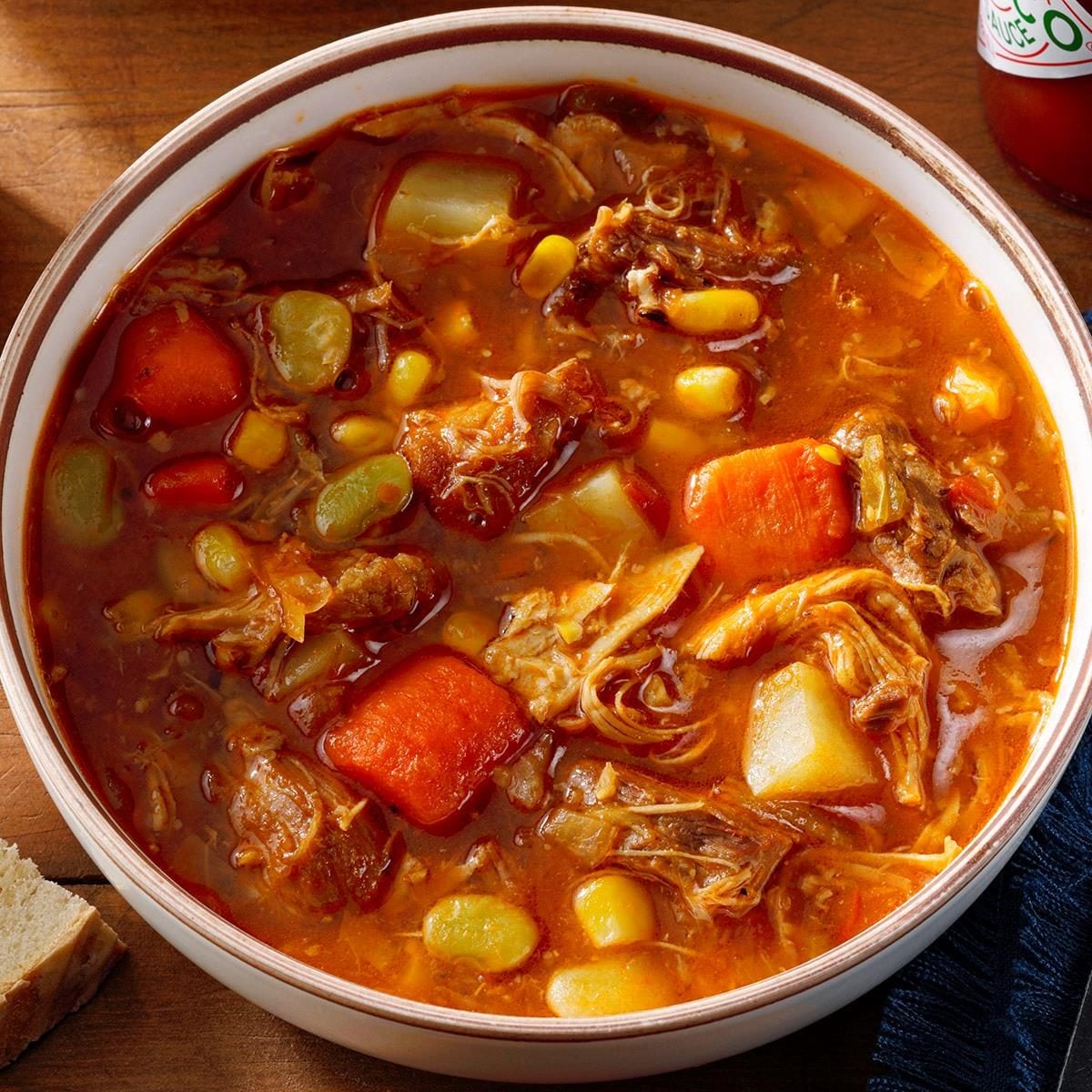
Burgoo is a hearty regional stew that's chock-full of meats and vegetables. Invite your friends; it’s meant to feed a crowd!
If you’ve ever spent time in Kentucky—especially around Derby Day—there’s a chance you’ve tasted burgoo. The rich, hearty, soul-fulfilling stew is one of the best Kentucky recipes, and is a regional specialty in parts of Illinois and the Ohio River Valley, too. It takes time to cook, but after one bite, you’ll see that making burgoo at home is worth every minute.
What is burgoo?
Around the running of the Kentucky Derby, you’ll see (and smell!) burgoo cooking in big kettles over open flames for community events, Kentucky Derby parties, and fundraisers, with every cook touting their recipe as the best. There are more versions than anyone can count, with families and home cooks handing burgoo recipes down through the generations. Chock-full of meats, vegetables and spices, burgoo is a good-luck requirement—along with a glass of Kentucky bourbon—for some race-goers before the big event. But it’s also served year-round at barbecue joints and diners throughout the state.
Burgoo can be made with almost any combination of ingredients, but it usually has at least three meats and plenty of vegetables like corn, potatoes, lima beans and sometimes cabbage. At one time, huge vats were made with ingredients brought by the community, which could contain anything raised on the farm or killed in the wild—from chicken and mutton to rabbit, pheasant, squirrel and possum. These days you’re more likely to see Kentucky burgoo made with pork, beef and chicken. But it’s generally a good fridge-clearing stew that you can eat for days.
Where did burgoo come from?
Like other regional stews across America, including Brunswick stew in the South, booyah in the upper Midwest and gumbo in New Orleans, burgoo’s origin story is rife with lore. Some say it was an import from England in the 1800s; others say it originated with a French chef named Gustave Jaubert sometime before the Civil War. The word “burgoo” has been documented as far back as the 18th century, and is possibly of Welsh origin. But it could also have come from the simple mispronunciation of “bird stew” or “barbecue.”
Burgoo Ingredients

- Olive oil: Olive oil is used to render fat and brown the meat. In this recipe, olive oil, not extra virgin olive oil, is the better choice of cooking oil.
- Meats: Burgoo usually contains at least three different meats. In this recipe, you’ll use boneless pork shoulder butt roast, boneless beef chuck roast, and bone-in chicken thighs. The pork and beef are cubed, and the chicken thighs are left whole. Each meat is browned to add deep flavor, and becomes meltingly tender after a long simmer.
- Carrot: Carrot adds an earthy sweetness to the stew. They should be cut into large chunks so they won’t fall apart during the extended cooking time.
- Celery, onion and green pepper: The combination of these three vegetables is referred to as the Cajun holy trinity. They work together to form an aromatic base for the stew.
- Garlic: The minced garlic is added after the other vegetables to prevent it from burning.
- Reduced-sodium beef broth: Starting with lower-sodium beef broth means that the stew won’t become too salty after being reduced for a few hours. If you have a freezer supply of homemade beef stock, this is a great time to use it.
- Canned crushed tomatoes: Crushed tomatoes have more texture than tomato sauce or puree, but they’re not nearly as chunky as diced tomatoes. In a pinch, you can pulse a can of whole, peeled tomatoes until they’re coarsely ground.
- Bay leaves: Bay leaves are used to gently perfume soups and stews. Fresh bay leaves are great when available; they have a stronger flavor than dried ones. Be sure to fish them out before serving, since you shouldn’t eat bay leaves.
- Seasonings: Salt, dried thyme and pepper flavor the broth. In long-cooking stews, I sometimes add an extra pinch in the last 20 to 30 minutes of cooking to freshen their taste.
- Potatoes: An all-purpose, moderately starchy type of potato, such as a Yukon Gold or white potato, will hold its shape without making the broth cloudy or gluey.
- Frozen lima beans: You can drop frozen lima beans right into the stew without defrosting them. Lima beans and butter beans are actually the same, but lima beans are picked when they are younger, so they’re still green and a little sweeter tasting.
- Frozen corn: There’s no need to defrost the corn, either. Corn adds crunch and sweetness to the dish as well as a bright color. Frozen fire-roasted corn would taste wonderful in this recipe, too.
- Cabbage: Finely chopped cabbage is added to the stew in the last 30 minutes so it becomes soft and tender quickly.
- Worcestershire sauce: Worcestershire sauce is a tangy, salty fermented condiment. When stirred into the stew at the end of cooking, it retains its flavor and seasons the broth.
- Apple cider vinegar: Cider vinegar is stirred in with the Worcestershire sauce shortly before serving, so its bright acidity doesn’t get cooked off. You can use another mild, light type of vinegar like rice or white wine vinegar, but avoid intense vinegars like white distilled vinegar, which could impart a sour flavor.
- Hot pepper sauce (optional): If you like spicy recipes, season the stew with a few shakes of your favorite hot sauce. Or serve it on the side so people can spice up their own bowls.
Directions
Step 1: Brown the meats and soften the vegetables

In a large stockpot, heat 2 tablespoons of oil over medium heat. Brown the pork in batches, then remove it and set it aside. Repeat this process with the beef and chicken. In the same pan, heat the remaining oil over medium heat. Add the carrots, celery, onion and green pepper. Cook and stir them until they’re tender, five to seven minutes. Add the garlic and cook the vegetables for one minute longer.
Step 2: Add broth and seasonings and simmer

Add the beef broth, stirring to loosen all the browned bits from the pan. Then, add the tomatoes, bay leaves, salt, thyme and pepper. Return the pork, beef and chicken to the pan and bring the broth to a boil. Reduce the heat, cover the pot, and simmer the stew until the meat is very tender, about two hours.
Step 3: Shred the chicken

Remove the chicken and transfer it to a plate. Once it’s cool enough to handle, remove the meat from the bones, and discard the skin and bones. Using two forks, shred the meat into bite-size pieces and return it to the stockpot.
Editor’s Tip: We recommend using two forks, but you can also try one of our other ways to shred chicken quickly.
Step 4: Add the remaining vegetables

Add the potatoes, lima beans, corn and cabbage. Cover the pot and cook the stew for 30 minutes.
Step 5: Finish the stew and serve
Discard the bay leaves and stir in the Worcestershire sauce and cider vinegar. If desired, serve the burgoo with hot sauce.

Burgoo Variations
- Change up the root vegetables: To give the stew a subtle yet noticeable flavor tweak, try parsnips instead of carrots, and turnips or rutabaga in place of potatoes.
- Make it vegetarian: While meat is a key part of classic burgoo, you can turn it into a satisfying vegetarian dinner if you don’t eat meat. Use vegetable broth instead of beef broth, replace the meat with a combination of beans or lentils, and double the hearty vegetables. I like to add a spoonful of miso paste to my vegetable-forward stews to give them an umami boost.
- Cook it in an Instant Pot: Long-simmering stews are perfect for the Instant Pot, which can shorten their cook time. To make this recipe in an Instant Pot, reduce the amount of broth (since there is much less evaporation), and be sure to scrape all the browned bits off the bottom of the pot so it can build pressure properly.
How to Store Burgoo
Transfer burgoo to airtight food storage containers and refrigerate for three to four days. If the burgoo is still slightly warm, leave the lid off the container until it cools before sealing it tightly.
Can you freeze burgoo?
You can freeze burgoo for two to three months. Freeze it as you would freeze soup, by using freezer-proof bags or containers and leaving some space at the top for expansion. Thaw it overnight in the refrigerator before reheating it thoroughly.
Burgoo Tips
Does burgoo make good leftovers?
Burgoo makes great leftovers, and it even tastes better the next day as the flavors deepen and come together. Since just about every burgoo recipe makes enough for a crowd (our recipe serves 24!), there’s a good chance you’ll have leftovers. Always double-check the seasoning when reheating it, since some flavors will mellow over time while others will sharpen. You may want to add a pinch of salt and pepper or a small splash of vinegar to make it taste just right again.
How can you make burgoo thicker if the broth is too thin?
If the broth is too thin by the time the meat and vegetables are tender, you can thicken it with a cornstarch slurry or a paste of flour and butter (called beurre manié), or by mashing some of the potato chunks into the broth. If using cornstarch or flour, make sure the broth returns to a simmer in order to cook out the dry starch taste and fully activate their thickening powers.
What do you serve with burgoo?
This is a stick-to-your-ribs stew that doesn’t need much on the side, but a wedge of cornbread or some crusty homemade bread would be perfect for sopping up the broth. If you’re serving this on race day, pick a few Kentucky Derby appetizers and bourbon cocktails to make it a festive feast.
Ingredients
- 3 tablespoons olive oil, divided
- 2 pounds boneless pork shoulder butt roast, cut into 1-1/2-inch cubes
- 2 pounds boneless beef chuck roast, cut into 1-1/2-inch cubes
- 2 pounds bone-in chicken thighs
- 3 medium carrots, cut into 1-inch pieces
- 2 celery ribs, cut into 1-inch pieces
- 1 large onion, chopped
- 1 large green pepper, chopped
- 3 garlic cloves, minced
- 2 cartons (32 ounces each) reduced-sodium beef broth
- 1 can (28 ounces) crushed tomatoes
- 3 bay leaves
- 2 teaspoons salt
- 2 teaspoons dried thyme
- 1 teaspoon pepper
- 2 medium potatoes, peeled and cubed
- 2-1/2 cups frozen lima beans (about 12 ounces)
- 2-1/2 cups frozen corn (about 12 ounces)
- 2 cups finely chopped cabbage
- 1/4 cup Worcestershire sauce
- 3 tablespoons cider vinegar
- Hot pepper sauce, optional
Directions
-
1In a large stockpot, heat 2 tablespoons oil over medium heat. Brown pork in batches; remove and set aside. Repeat with beef and chicken. In same pan, heat remaining 1 tablespoon oil over medium heat. Add carrots, celery, onion and green pepper; cook and stir until tender, 5-7 minutes. Add garlic; cook 1 minute longer.
-
2Add broth, stirring to loosen browned bits from pan. Add tomatoes, bay leaves, salt, thyme and pepper. Return pork, beef and chicken to pan. Bring to a boil. Reduce heat; cover and simmer until meat is very tender, about 2 hours.
-
3Remove chicken to a plate. When cool enough to handle, remove meat from bones; discard skin and bones. Using 2 forks, shred meat into bite-sized pieces. Return meat to stockpot.
-
4Add potatoes, lima beans, corn and cabbage; cover and cook for 30 minutes. Discard bay leaves. Stir in Worcestershire sauce and vinegar. If desired, serve with hot sauce.