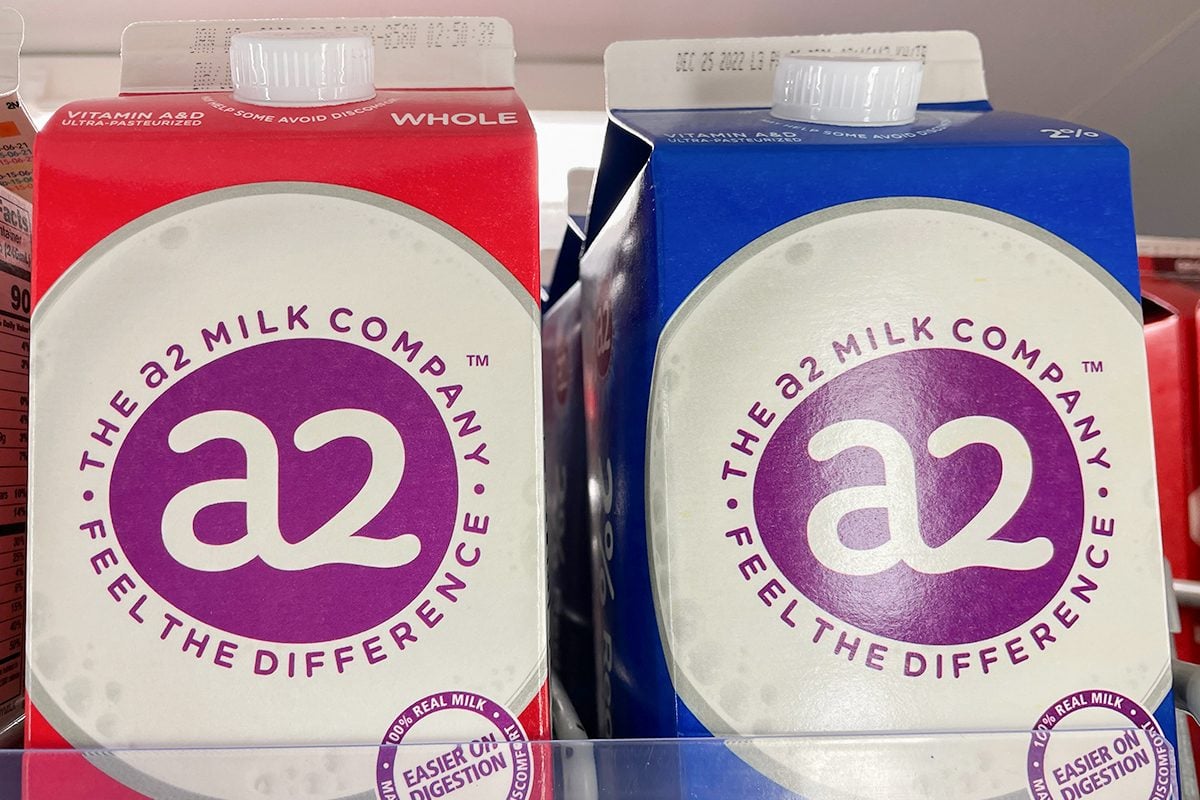
A2 milk is popping up everywhere. Consider this before you buy it.
If you’ve found yourself doing a double-take in the dairy aisle lately, you’re not alone. With organic, grass-fed, ultra-filtered and A2 milk—not to mention nondairy milk alternatives—lining the shelves, it’s hard to know which one to grab.
My family goes through a lot of the stuff, between my kindergartener who requests chocolate milk on repeat and my husband who likes to cap off dessert with a tall glass of ice-cold milk. So when I spotted a bright sale tag on A2 milk, it went straight into my cart—even though it was my first time noticing the label.
It wasn’t until I got home that I learned A2 milk is marketed as being “easier” on digestion. But unlike lactose-free milk, nothing has been added or taken away. Since no one in my house has trouble with dairy, I couldn’t exactly test that theory, but it definitely piqued my curiosity. What exactly is A2 milk, how does it differ from regular milk, and can it really make a difference with digestion? I started digging for answers.
What is A2 milk?

A2 milk is cow’s milk that contains only A2 beta-casein protein and no A1 beta-casein protein. If that sounds a little science-y, I’ve got you. Milk contains two main proteins: casein and whey protein. Most of the protein in milk comes from casein, while the rest is whey protein. There are a few naturally occurring versions of casein found in milk—and that’s where A1 and A2 come in.
Most regular cow’s milk contains a mix of casein types, including both A1 and A2 beta-casein. They’re tiny variations of the same protein, and the difference between them is a single amino acid. You can think of amino acids like letters that are put together to form long words. A1 and A2 beta-casein are essentially the same word, just spelled differently.
So why does A2 milk only contain one type of beta-casein? Some cows naturally produce only the A2 version of beta-casein, while other cows produce a mix of A1 and A2. A2 milk is still regular cow’s milk, but it comes from cows that only produce A2. Who knew?!
Is A2 milk better for you?
The short answer is … not really. A2 milk isn’t healthier or unhealthier than regular milk; nutritionally, they are the same. But digestion is where things get interesting. Some people find that A2 milk feels a little easier to digest, especially if regular milk tends to leave them with tummy troubles. Not everyone who struggles with dairy has lactose intolerance, and some think the type of casein in milk may be to blame.
One theory about milk intolerance proposes that A1 beta-casein may be harder for those people to break down, which could lead to symptoms like bloating or cramping. Since A2 milk doesn’t contain A1 beta-casein, it may be better tolerated by those individuals. That said, the science here is still evolving. A2 milk might offer an advantage for some people, but we need more high-quality research on A1 and A2 in the body to know for sure.
A2 Milk vs. Regular Milk

Curious how A2 milk compares to regular milk in terms of nutrition and everyday use? Spoiler alert: They’re pretty similar. The only real difference between A2 milk and regular milk is the type of casein protein they contain. A2 milk contains only A2 beta-casein, while regular milk has a mix of A1 and A2 beta-casein. That one small protein difference is what all the buzz is about.
What’s the nutritional difference between A2 and regular milk?
There really isn’t much of a nutritional difference between A2 and regular milk. If you flip a gallon of milk over and compare labels, you’ll notice they’re nearly identical in calories, protein, carbohydrates, and nutrients like calcium and vitamin D. Like regular milk, A2 milk also comes in whole and reduced-fat options, so the fat content is comparable, too.
Is A2 milk lactose-free?
A2 milk is not lactose-free, and this is one of the biggest mix-ups people run into when they first see it in the dairy aisle, or when they hear it may be easier to digest. It still contains lactose, so it’s not a safe lactose-free swap if you have lactose intolerance or a milk allergy.
Who should try A2 milk?
If drinking or cooking with regular milk leaves your stomach feeling a bit off—and if your doctor has confirmed you don’t have a lactose intolerance or allergy—A2 milk may be worth a try. Some people find that it goes down easier, even though it’s still dairy and contains lactose. Everyone responds differently, so it might be helpful to experiment and note how you feel.
If you’re curious to try it, just know that A2 milk usually costs more than standard milk. If you drink regular milk without any issues, or if you try A2 and don’t notice a difference, it’s totally fine to stick with the classic carton in your fridge for dunking cookies, baking cakes and making buttermilk.
The bottom line? A2 milk isn’t healthier or more nutritious than regular milk, but you may feel better drinking it.