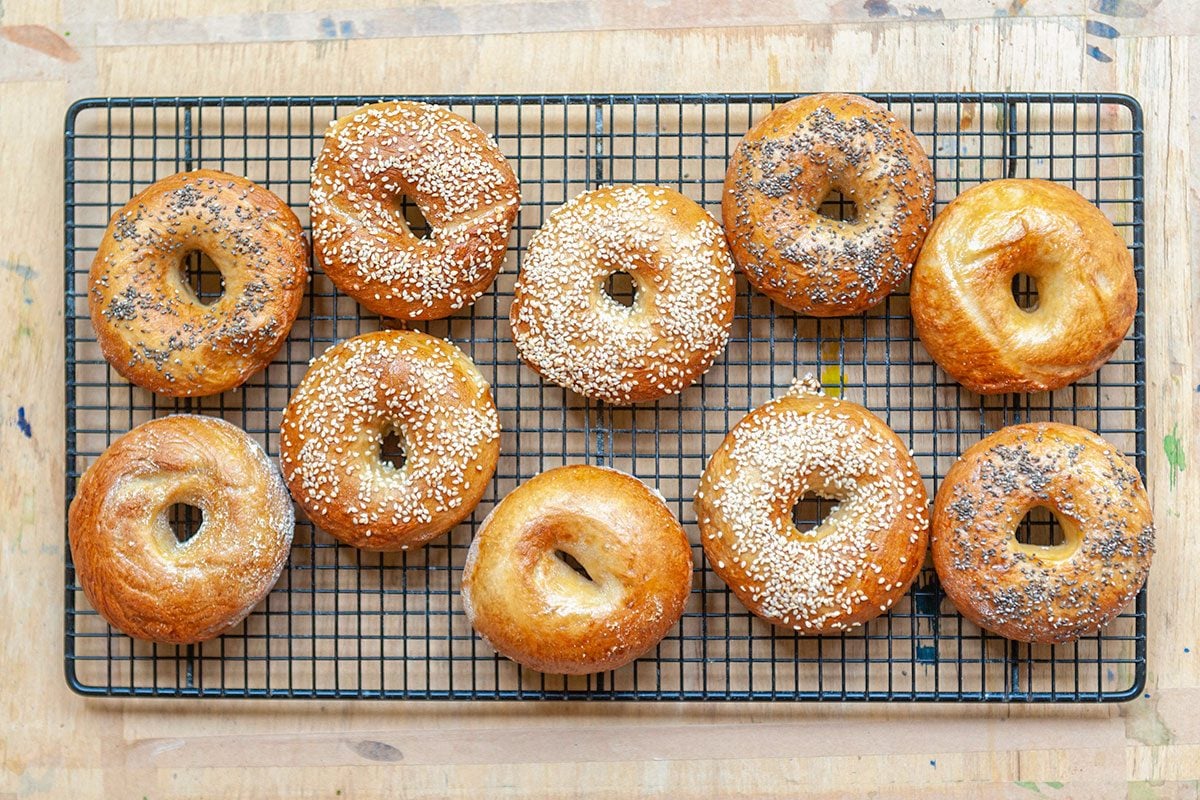
It feels wrong, but your bagels will thank you.
Some food tricks sound so deeply incorrect that your brain rejects them on instinct. Running a bagel under the faucet definitely falls into that category, right along with cooking bacon in water. But sometimes, the science behind these tricks actually makes sense.
Lately, the “wet bagel” method has been all over social media, with people rinsing store-bought or day-old homemade bagels before reheating them in the oven or air fryer. The trick has actually been used for ages to revive all kinds of bread, from crusty bakery loaves to sad dinner rolls, but bagels are having a particularly big moment right now.
I’ve always loved bagels, but I don’t think I fully understood them until I went to New York for the first time as a senior in high school. The trip was a graduation gift from my parents for me and my best friend, and we spent the entire week seeing as many Broadway musicals as possible and absolutely stuffing ourselves with pizza and bagels. New York bagels ruin you a little. Suddenly, every grocery store bagel is disappointing—like it’s trying its best under difficult circumstances.
That’s part of why this trick is getting so much attention. It doesn’t magically transform a supermarket bagel into something hand-rolled in Brooklyn at 4 a.m., but it does make stale or store-bought bagels taste dramatically better: softer inside, crisper outside and far less dry.
What is the wet bagel method?
View this post on Instagram
The wet bagel method involves running a whole bagel under water before reheating it in the oven, air fryer or toaster oven. Instead of slicing it first and exposing the interior directly to dry heat, you warm the bagel whole so the inside stays chewy while the outside crisps back up.
Most people just give the bagel a quick rinse under the faucet, though some dunk it very briefly in water. From there, you place it in a 350°F oven, air fryer or toaster oven for about 5 to 10 minutes, depending on the size and freshness of the bagel. Once it’s warmed through, you can slice it and toast it further if you want extra crunch on the cut sides.
This technique works especially well on day-old bagels or grocery store bagels that have gotten a little tough. It’s basically the bread equivalent of giving a wilted houseplant a glass of water and hoping for emotional redemption.
Why does water make bagels taste better?
Bagels go stale because they lose moisture over time, but it’s not just about dryness. As bread sits, the starches inside firm up, which changes the texture from chewy and tender to dense and stiff.
Adding a little water before reheating the bagel helps reverse some of that process. But you don’t want to rinse it so much that you end up with a soggy bagel. Too much water can turn the exterior gummy before the heat has time to evaporate it.
In the oven, the water turns to steam, which rehydrates the interior while crisping the crust instead of drying it out further. That’s why the method works better than tossing an old bagel straight into the toaster, which can leave the outside aggressively crunchy while the middle stays tough.
Related: