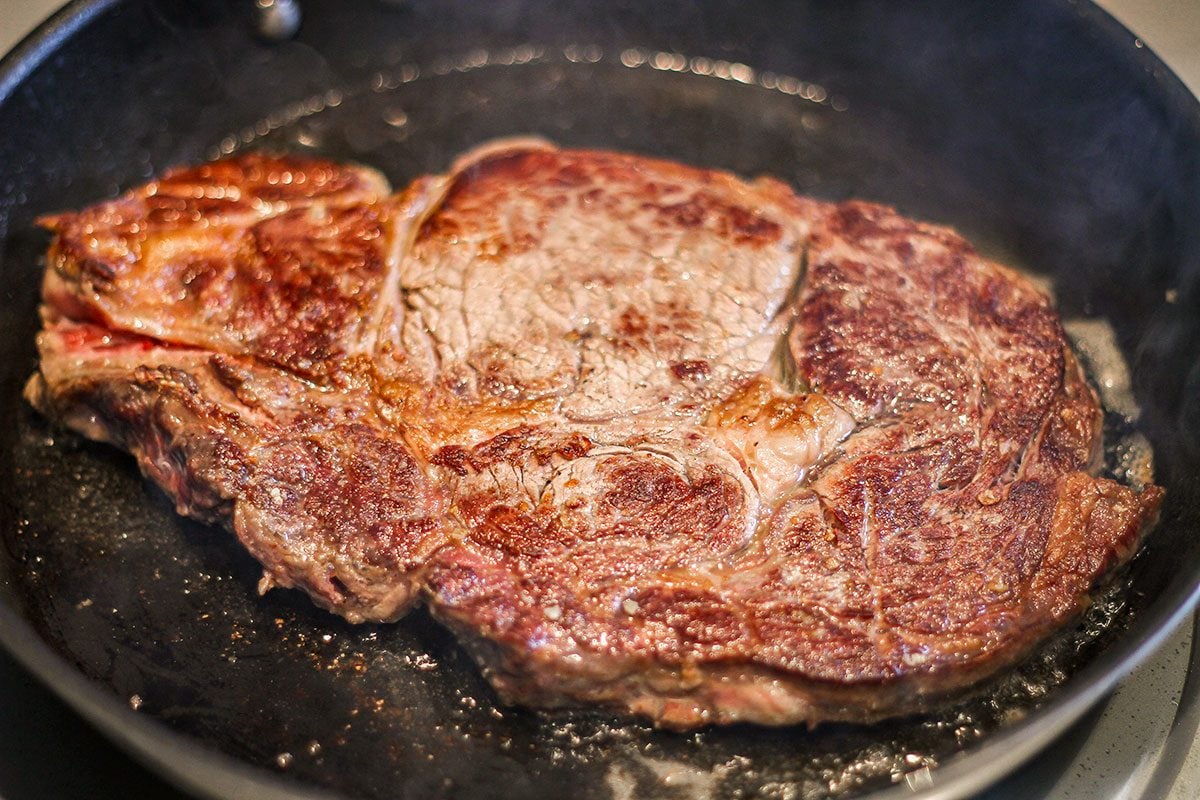
I wasn't looking for a new steak technique, but here we are.
Steak is one of the foods I spend an unreasonable amount of time thinking about. My husband is a chef at a steakhouse, and somewhere in our wedding photos there’s probably a cow or two wandering through the background. We were married on his grandparents’ cattle ranch, which, in hindsight, should have been a clue about how much steak would feature in our lives.
Over the years, I’ve developed some fairly strong opinions about how a steak should be cooked. Start with a good cut. Keep the surface dry. Season generously. Give it enough heat to develop a proper crust. Let it rest before slicing. The fundamentals are fairly straightforward. Which is why a recent Instagram video from America’s Test Kitchen stopped me in my tracks.
The sugar steak technique calls for seasoning a steak with a mixture that’s more sugar than salt. I was skeptical, since steak is one of the last foods that needs more sweetness. The best steaks are savory, beefy and rich—adding sugar just sounds like a distraction. Then there was a practical concern: sugar burns. Anyone who’s taken caramel a shade too far knows how quickly it can go from golden and delicious to acrid and bitter. A screaming-hot cast-iron skillet seemed like the last place I’d want it.
But the more I looked into it, the more interesting the technique became. So I picked up two steaks to test it. One got the sugar-and-salt treatment, while the other just got salt. Then I cooked them in my cast-iron and compared the results.
Why add sugar to steak?
The idea sounds strange until you stop thinking about sugar as a sweetener. In this case, it’s there because it’s exceptionally good at browning.
One of the first things I learned in culinary school was that color and flavor are closely connected. A pale steak can be perfectly cooked, but it rarely tastes as complex as one with a deeply developed crust. That’s because many of the flavors we associate with great steak are created during the Maillard reaction, the series of chemical reactions that occur when heat transforms proteins and sugars on the surface of food. It’s the reason toasted bread tastes different from plain bread, and why roasted vegetables are more flavorful than boiled ones.
Beef naturally contains sugars, which is one reason steak browns so beautifully on its own. Adding a little more sugar to the surface essentially gives those browning reactions extra fuel. As the steak cooks, the sugar caramelizes, adding color and building the kind of crust that makes people pause to admire before cutting into it.
That’s the theory behind sugaring a steak. Rather than replacing salt, this method combines the two. The sugar stays mostly on the surface, contributing to a darker, more dramatic crust with additional roasted flavor. The salt, on the other hand, works its way into the meat, seasoning it from within and making it taste more like itself.
How to Make Sugar Steak

To test the technique, I started with two New York strip steaks that were as close in size and thickness as possible. One was seasoned with salt only. The other was seasoned with a mixture of four parts granulated sugar and three parts kosher salt.
For the sugar steak, I combined the sugar and salt in a small dish, then sprinkled about 1-1/2 teaspoons of the mixture over each side of the steak. After letting it rest for about an hour, I applied an additional teaspoon per side along with a few grinds of black pepper.
The salt-only steak received the same treatment. I seasoned it before resting it, then added a second light sprinkle of salt and pepper just before cooking.

Both steaks were cooked side by side in a hot cast-iron skillet for about 3 minutes and 30 seconds per side before I rested and sliced them.
Is sugar steak worth trying?
After reading about the technique, I had expected one of two outcomes. Either the sugar would burn and leave the steak tasting bitter, or the difference would be so subtle that I’d spend dinner wondering whether I was imagining it. Neither happened.

The first thing I noticed was the color. Even though the steaks were cooked together in the same skillet for the same amount of time, the sugar-seasoned steak developed a noticeably darker crust. I was surprised that the sugar-coated steak didn’t cook faster, burn more easily or require any special handling. Both steaks reached the same level of doneness, but the sugar steak had much better browning.
Then I took a bite.
The sugar steak didn’t taste sweet in the way I feared it would. There was no candy-like flavor and nothing that distracted from the beef itself. Instead there was a subtle, steak sauce–adjacent sweetness that appeared briefly before giving way to the rich, savory flavors you’d expect from a good steak. It wasn’t enough sugar that you could identify it immediately, and it certainly wasn’t enough to cheapen the flavor. If anything, it made the steak taste even richer and more complex.
My Verdict

I had assumed that I would spend the meal thinking about the sugar. Instead, I spent it thinking about the steak. The sugar-seasoned version looked better, developed a darker crust and tasted slightly richer than the salt-only steak sitting beside it. The difference wasn’t dramatic enough to make me question everything I thought I knew about cooking steak, but it was noticeable enough that I kept reaching for the sugar-seasoned bites.
I’ve tried plenty of steak techniques over the years, with most falling somewhere between “perfectly fine” and “probably not worth the effort.” This one took only a few seconds of extra effort and produced a result I could actually see and taste.
So the next time I make a steak, I’ll season it the same way I always do.
I’ll just add a little sugar, too.
Related: