Smithey cookware is undeniably gorgeous, but does it perform as well as it looks? Our testers cooked with three of the brand's cast iron and carbon steel skillets to find out.
Our editors and experts handpick every product we feature. We may earn a commission from your purchases.
Learn more.
Few pieces of cookware make as strong a first impression as a Smithey skillet. The Charleston-based brand is known for smooth cooking surfaces, vintage-inspired silhouettes and a warm, copper-colored finish that stands apart from traditional black cast iron.
Smithey cookware is also a significant investment, but chef and Cast-Iron Cooking author Rachael Narins says quality cast iron can be worth the upfront cost. “Cast iron is beautiful and lasts a lifetime,” she says. “It’s incredibly durable and made from sustainable materials, making it an eco-friendly choice for any kitchen. It also works in the oven, on the stove, with induction burners and even directly over the flames at your next campout.”
To see whether Smithey’s pans perform as well as they look, our editors tested three pieces of cookware: the No. 12 Cast-Iron Skillet, a Dual Handle Skillet and the carbon-steel Deep Farmhouse Skillet.
The pans impressed us with their smooth surfaces, even heating and striking craftsmanship. However, testing also revealed a few drawbacks, including considerable weight and seasoning that can be more temperamental than the finish on rougher cast-iron cookware.
Smithey Ironware
What is Smithey Ironware?
Smithey Ironware was founded in Charleston, South Carolina, by Isaac Morton, who began by restoring vintage cast-iron cookware and giving the finished pieces to friends and family. The brand now produces carbon-steel and cast-iron cookware designed to combine the character of vintage ironware with modern manufacturing.
Smithey’s cast-iron cookware is produced in the United States and finished by hand in Charleston. Its signature feature is a polished interior that feels noticeably smoother than the pebbled surface you get on many inexpensive cast-iron pans.
The cookware arrives pre-seasoned and ready to use. Its initial layers of seasoning give the surface a warm copper or bronze appearance, although that color naturally changes as the pan is used. With continued cooking and seasoning, the surface gradually develops a darker patina.
Smithey also backs its cookware with a lifetime warranty covering defects and damage from normal use. Depending on the issue, the company may repair or replace the cookware.
Features
- Cast-iron and carbon-steel cookware
- Made in the U.S. and hand-finished in Charleston
- Smooth, polished cooking surfaces
- Pre-seasoned and ready to use
- Distinctive copper-toned finish that darkens over time
- Available in multiple sizes and handle styles
- Suitable for stovetop and oven cooking
- Compatible with induction and open-flame cooking
- Backed by a lifetime warranty
Smithey Cookware We Tested
Smithey No. 12 Cast-Iron Skillet
Pros:
- Smooth, polished cooking surface
- Excellent heat retention
- Heats evenly
- Arrives pre-seasoned
- Naturally nonstick with proper use
- Display-worthy design
- Backed by a lifetime warranty
Cons:
- Heavy (like all cast-iron)
- Expensive
- Smooth surface can shed seasoning
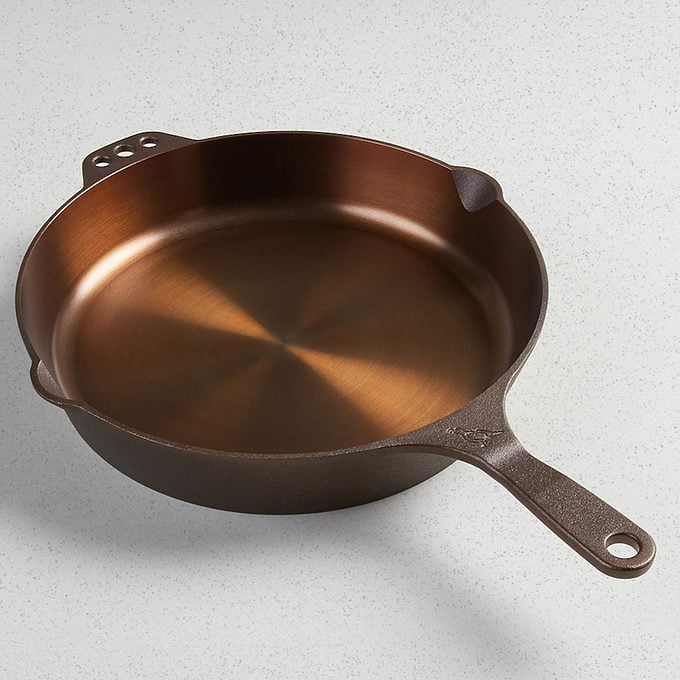
The No. 12 Cast-Iron Skillet received the longest testing period of the three pans. Former shopping editor Daria Smith used it regularly for four years, cooking everything from steak, salmon and bacon to pancakes, cornbread, vegetables and shrimp and grits. Her father also used his own Smithey skillet for approximately nine years.
Throughout that long-term testing, the skillet proved to be an exceptionally versatile piece of cookware. The 12-inch cooking surface offered enough room for family meals and batch cooking, while the approximately 2-inch depth accommodated frying, sautéing, roasting and baking. It worked on the stovetop, in the oven, on an induction burner and over an open flame.
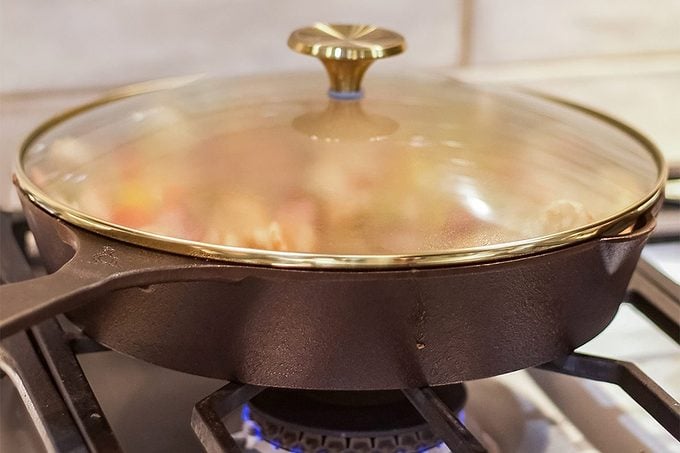
The polished interior also made the skillet easier to clean than many rough-surfaced cast-iron pans. Once properly heated and seasoned, foods released cleanly from the cooking surface. However, the smooth finish did not always hold seasoning as reliably as more textured cast iron. During testing, sections of the seasoning occasionally wore away and required rebuilding.
At approximately 8.7 pounds, the No. 12 is also undeniably heavy. Its helper handle makes lifting safer, but moving a full skillet from the stovetop to the oven can still require two hands.
Overall, the No. 12 is the most versatile choice of the three pans we tested. It’s big enough for substantial meals, attractive enough to leave on the stove and durable enough for long-term use.
Smithey No. 14 Dual Handle Skillet
Pros:
- Beautiful copper-colored finish
- Smooth, naturally nonstick surface
- Two secure lifting handles
- Even cooking performance
- Easier to store than a long-handled skillet
- Straightforward to clean
Cons:
- Seasoning can be damaged by excessive heat
- Requires gradual preheating
- Premium price
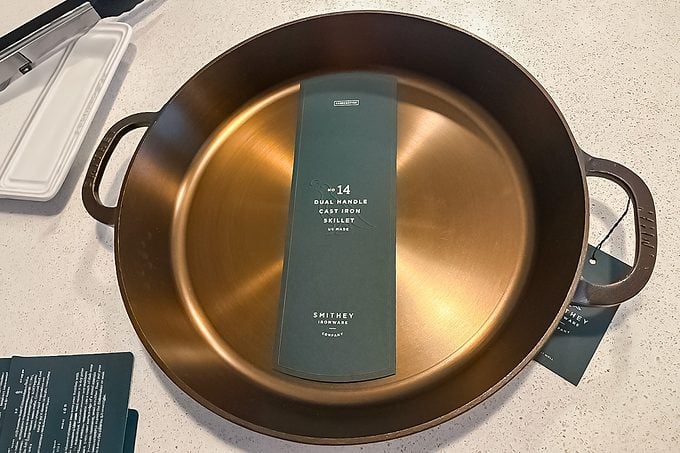
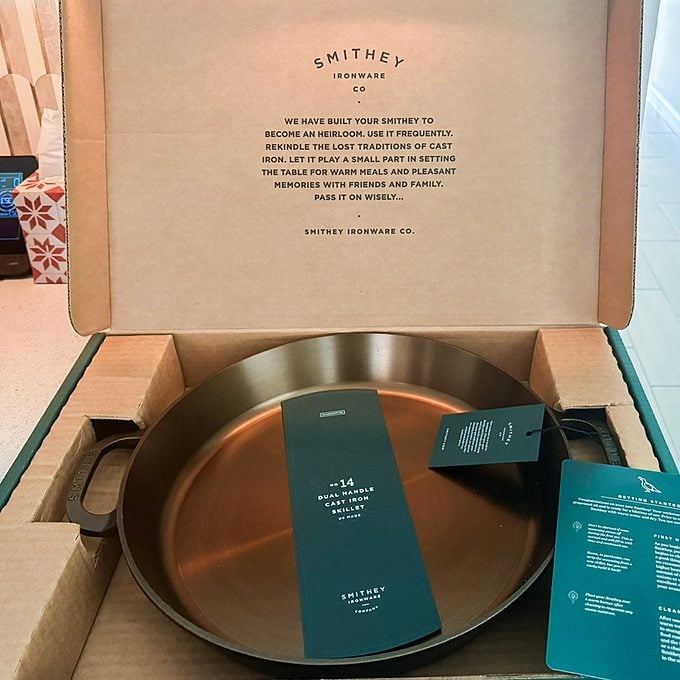
The Dual Handle Skillet may be the most visually striking piece of cookware in Smithey’s lineup. Its smooth surface and warm, almost copper-like finish look more like decorative cookware than a traditional cast-iron pan. It is the kind of skillet that deserves a place on an open shelf rather than inside a cabinet.
Fortunately, the performance lived up to the appearance. Product tester Paul Rankin cooked with the skillet straight out of the box without adding another layer of seasoning. Food released easily during the first cook, and there were no immediate sticking problems.
There was a learning curve during testing, though. During a later steak test, the skillet was preheated too aggressively and cooking the steaks at such a high temperature appeared to strip away part of the upper seasoning layer, leaving the surface temporarily patchy. The seasoning gradually rebuilt through regular cooking, and the skillet’s copper-colored finish began to return as new layers developed.
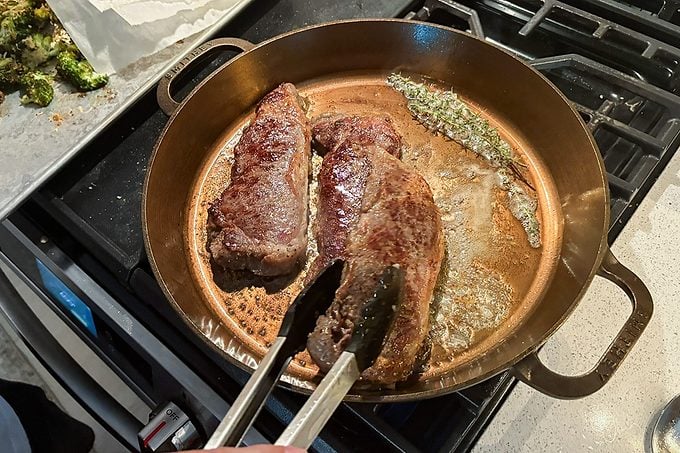
This experience showed that Smithey’s polished cast iron benefits from patient preheating. Starting over low or medium heat and gradually increasing the temperature is preferable to placing the pan over an immediately high flame.
The skillet is still heavy, as expected from cast iron, but the dual handles make it feel secure when lifting it from the stove or removing it from the oven. It also eliminates the long protruding handle that can make conventional skillets awkward to fit inside smaller ovens or crowded cabinets.
For cooks who value appearance almost as much as performance, the Dual Handle Skillet offers the best balance of the two. It is practical enough for regular use but beautiful enough to double as kitchen decor.
Smithey Deep Farmhouse Skillet
Pros:
- Excellent food release
- No noticeable hot or cold spots
- Deep sides accommodate larger dishes
- Distinctive hand-forged design
- Easy to clean
Cons:
- Extremely heavy
- Difficult to reposition while cooking
- Impractical for tossing or shaking food
- May be too cumbersome for everyday use
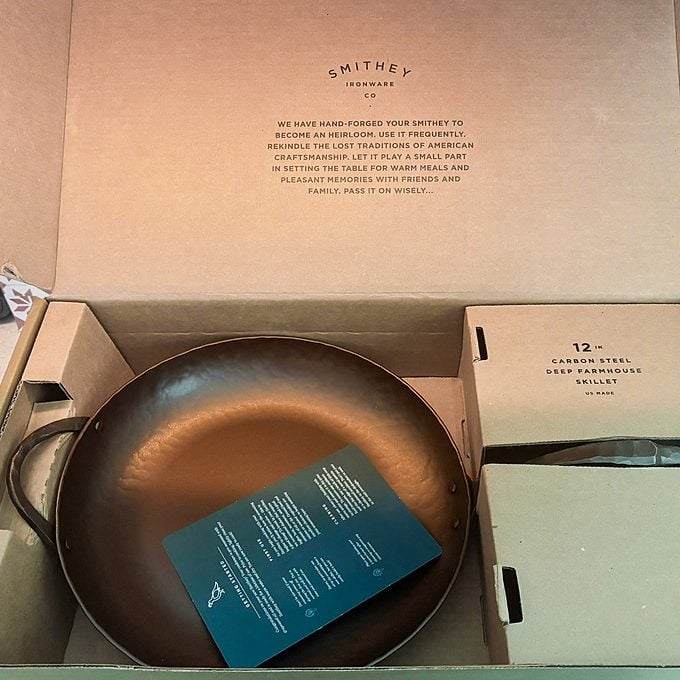
The Deep Farmhouse Skillet has a dramatically different appearance from Smithey’s cast-iron cookware (it’s made from carbon steel, but works similarly to cast-iron). Its deep bowl and sculptural handle look almost like an ancient cooking tool from a fantasy film. The hand-forged handle, in particular, gives the skillet a distinctive appearance that gives serious Elder Wand vibes.
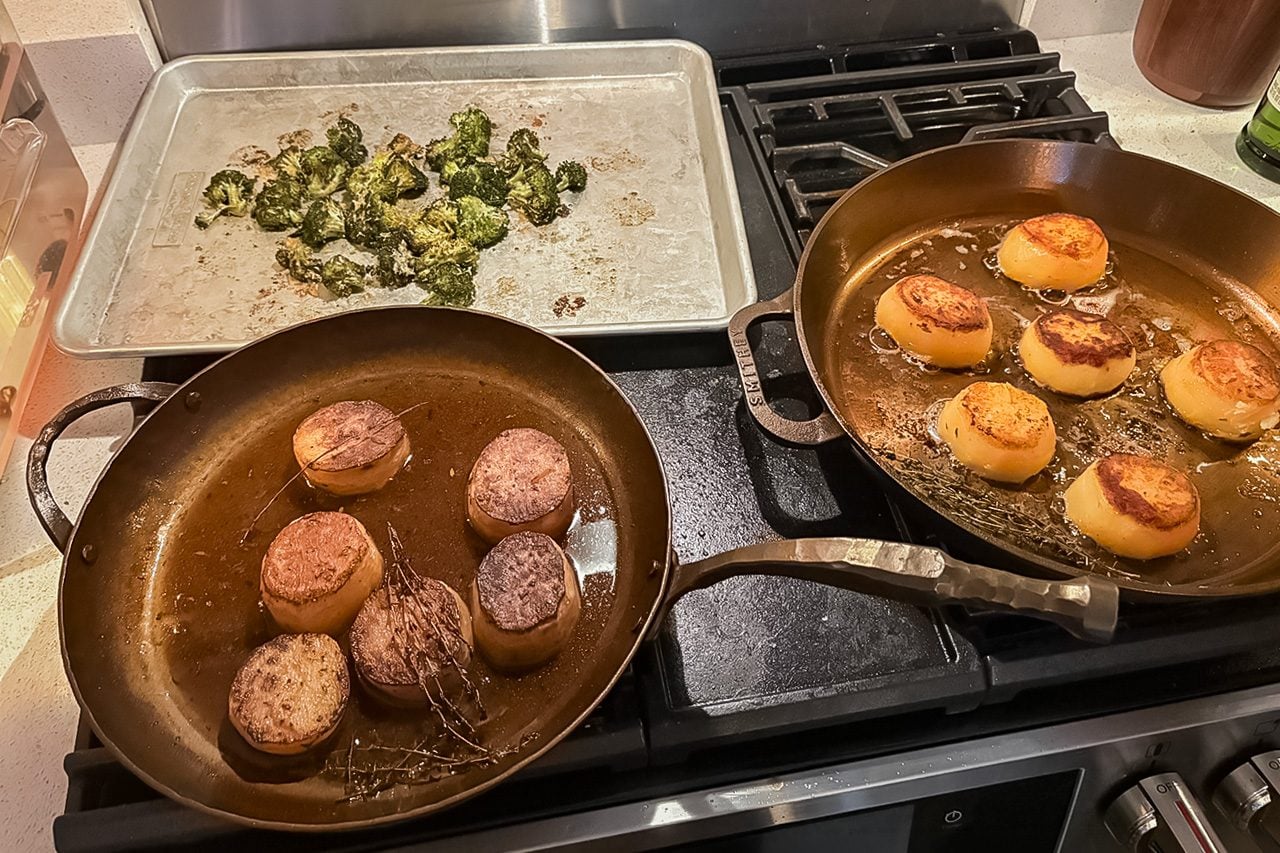
Cooking performance was excellent. Paul Rankin also tested this skillet, experienced no sticking and found that the skillet heated evenly across the cooking surface without noticeable hot or cold spots. During one test, it produced evenly golden-brown fondant potatoes before transferring directly from the stovetop to the oven to finish cooking.
The deep sides make the skillet suitable for recipes involving larger portions, sauces or oven finishing. Its substantial construction also holds heat exceptionally well, which can help maintain a steady cooking temperature when searing or roasting.
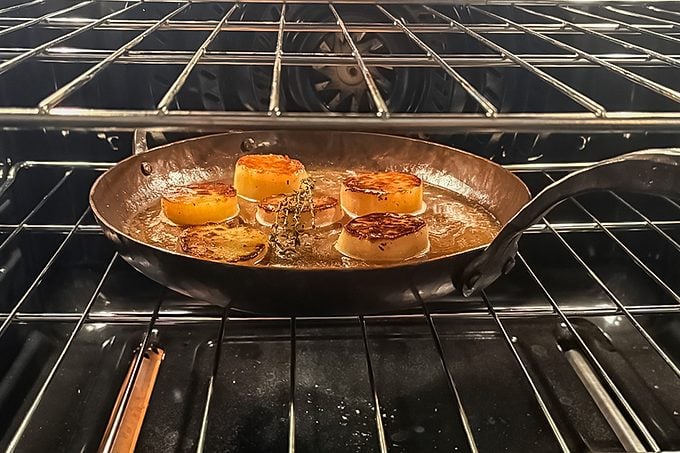
Unfortunately, that substantial construction comes with a major drawback. The Deep Farmhouse Skillet is extremely heavy. As testing continued, lifting and repositioning it became increasingly tiring. Cooks accustomed to shaking a pan, tossing ingredients or frequently moving cookware between burners may find it frustrating to use.
The skillet is best reserved for foods that can remain relatively stationary while cooking. Steaks, chops, braises, roasted vegetables and oven-finished potatoes are better suited to it than stir-fries or recipes requiring constant pan movement.
Although its performance was nearly flawless, its weight prevented it from becoming an everyday favorite. It is a beautiful specialty pan, but some cooks may use it more often as a display piece than as a daily kitchen workhorse.
How We Tested Smithey Cookware

Our editors tested three pieces of Smithey cookware: the No. 12 Cast-Iron Skillet, No. 14 Dual Handle Skillet and carbon-steel Deep Farmhouse Skillet. Testing combined four years of long-term use with more recent hands-on evaluations across a variety of stovetop and oven-cooked meals.
Cooking Performance
The pans were used to prepare steaks, salmon, bacon, pancakes, cornbread, sautéed vegetables, shrimp and grits, shakshuka and fondant potatoes. We evaluated how evenly each pan heated, how well it retained heat and whether food browned consistently across the cooking surface.
We also assessed food release on each pan’s smooth, pre-seasoned surface. All three performed well without additional seasoning before their first use, although high heat caused part of the Dual Handle Skillet’s seasoning to wear away during a steak test. Continued cooking gradually rebuilt the finish.
Design and Usability
Throughout testing, we considered how easy each pan was to lift, maneuver and transfer between the stovetop and oven. The No. 12’s helper handle and the Dual Handle Skillet’s two-sided design provided secure gripping points, although both are still fairly heavy.
Weight was the biggest concern with the Deep Farmhouse Skillet. Its substantial construction gives you excellent heat retention, but it was difficult to lift, shake or reposition while cooking. As a result, it worked best for recipes that could remain stationary on the stovetop or finish in the oven.
Cleaning and Long-Term Care
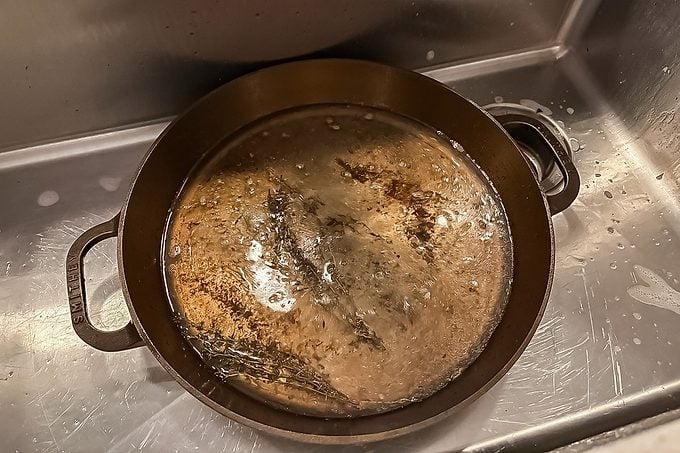
After cooking, we evaluated how easily food residue released from the polished surfaces and how much effort was required to clean and maintain each pan. The skillets were washed by hand, dried immediately and treated with a thin layer of oil as needed.
The four-year test of the No. 12 also allowed us to monitor how its seasoning and appearance changed over time. Its copper-toned finish gradually developed a darker patina, while occasional worn or patchy areas could be restored through regular cooking and re-seasoning.
Smithey Customer Service and Warranty
Smithey backs its cookware with a lifetime warranty. The company states that eligible cookware may be repaired or replaced if it becomes defective or wears down through normal use.
During long-term testing, customer service helped our tester, Daria Smith, troubleshoot a section of seasoning that had worn away. The company provided instructions for rebuilding the finish, and the affected section eventually returned to normal with continued seasoning and use.
The lifetime warranty adds value to cookware that is considerably more expensive than entry-level alternatives.
What Other Reviewers Had to Say
There’s no shortage of cast iron cookware reviews. Reviewers are blown away by Smithey’s heirloom quality and aesthetic appeal. It cooks like a dream and cleanup is a breeze.
Five-star reviewer Robert B. calls his Smithey cast-iron skillet a gem. “There is no comparison between this one and a run-of-the-mill cast-iron skillet. It gets better with use. This is an investment in quality and a very well-American-made product that will stand the test of time.”
Verified buyer Sean A. loves this skillet. “I’m a collector of fine iron cookware. Most of which are from the past. This skillet is by far the most well-made and efficient of any in my multiple-skillet collection. Excellent product. Thank you, Smithey.”
The main complaint—other than price—that users shared in the r/castiron subreddit is that Smithey’s smooth surface doesn’t hold seasoning well. User firecaptaion104 says, “I love the looks of mine and all. But I cannot for the freaking LIFE of me get it to hold seasoning.”
Product Comparison
Lodge remains one of the most recognizable cast-iron brands and offers similarly sized skillets at a fraction of Smithey’s price.
Both brands produce durable cookware capable of searing, frying, baking and roasting. The primary difference is refinement. Smithey skillets have a smoother interior, more elaborate finishing and a distinctive copper-colored appearance. Lodge cookware generally has a rougher cooking surface and more basic design.
Smithey cookware may retain heat slightly better because of its substantial construction, but that added material also contributes to its weight. The polished surface can simplify food release and cleanup once properly seasoned, although some users may find that it requires more attention during the early stages of ownership.
For shoppers primarily concerned with performance and value, Lodge is difficult to beat. Smithey is better suited to cooks who are willing to pay more for craftsmanship, appearance and heirloom appeal.
Final Verdict
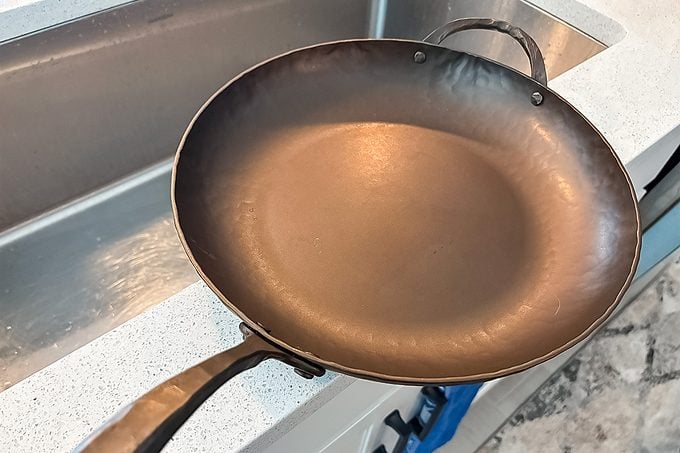
Smithey cookware performed well in every major cooking category we evaluated. The pans heated evenly, retained heat effectively and released food without major sticking problems. They were also among the most visually impressive pieces of cookware our testers had used.
The No. 12 Cast-Iron Skillet is the most versatile option. It gives you enough cooking space for family meals without the extreme weight of the Deep Farmhouse Skillet.
The Dual Handle Skillet is the best choice for cooks who want Smithey’s signature appearance in a compact, oven-friendly form. Its two handles make it easier to lift securely, although it still requires careful temperature control to protect the seasoning.
The Deep Farmhouse Skillet produced excellent results but was difficult to maneuver. It’s best treated as a specialty pan for stationary stovetop cooking, searing and oven finishing rather than a skillet that will be tossed and moved constantly.
Ultimately, Smithey is worth considering if you value American manufacturing, distinctive design and cookware that can last for decades. If you’re mainly looking for an affordable cast-iron cooking workhorse, you can achieve similar cooking results with a less expensive brand.
On a side note, Smithey offers custom engraving for those looking to take their cast iron to heirloom status. It’s a thoughtful way to personalize your skillet, though remember that personalized cookware is final sale.
Where to Buy
Smithey Ironware
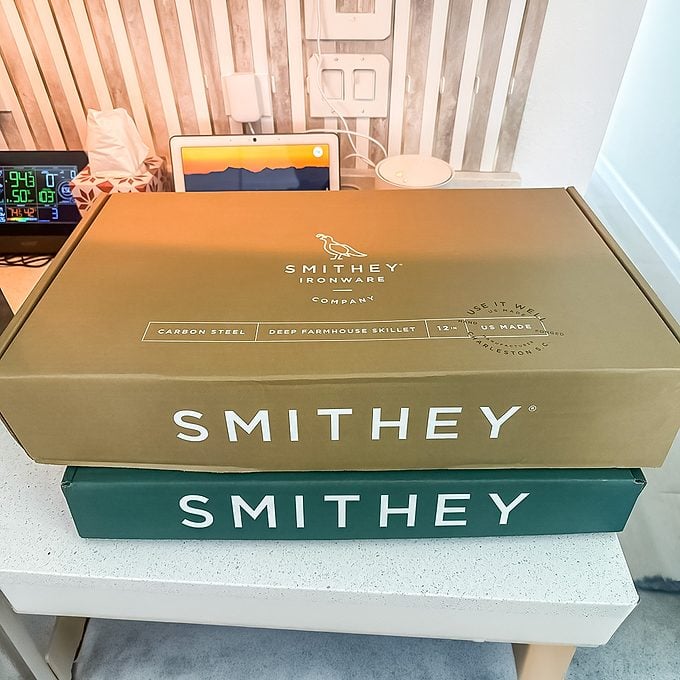
Smithey cast iron can be purchased on Smithey’s website, as well as on Williams Sonoma, Sur La Table, and Crate & Barrel. The No. 12 Smithey cast-iron skillet is $220, and other skillet sizes range from $85-$375. Smithey cast-iron skillets come in five sizes: No. 6, No. 8, No. 10, No. 12 and No. 14. While Smithey may be pricier than budget-friendly brands like Lodge, its unmatched quality makes it worth the investment. Ultimately, purchasing a Smithey means investing in a kitchen staple that can be passed down for generations.
FAQ
How do you clean a Smithey cast-iron skillet?
To clean my Smithey cast iron, I gently wash it under warm water, occasionally adding a bit of baking soda to neutralize odors—especially after cooking something like fish. While the skillet is still warm, I apply a thin layer of vegetable oil or seasoning oil to maintain the seasoning. For stubborn, stuck-on food, I use a metal spatula (which is also great for flipping fish and eggs) or a chainmail scrubber with a dab of dish soap to loosen it up. Keep in mind, cast iron is not dishwasher-safe, and soaking it in water will cause rust. After cleaning, I make sure to dry the skillet thoroughly. Regular use keeps your Smithey healthy because the oils from cooking help enhance the seasoning.
How do you season Smithey Ironware?
Seasoning is essential for any cast iron. I prefer using the stovetop method: after cleaning, I apply a thin coat of oil with a paper towel and heat the skillet until it reaches a searing temperature, just when the oil starts to smoke. I recommend turning on a fan during this process. Afterward, I wipe another light coat of oil onto the hot skillet, letting it cool down. This process darkens the pan and improves its nonstick surface.
Alternatively, you can season using the oven method. Simply apply a thin layer of grapeseed oil (or vegetable oil) to the entire skillet and place it upside down in a 450 degrees oven for an hour. Then, turn off the oven and allow the skillet to cool inside.
For the best performance, season your cast iron regularly. Each use erodes the seasoning, so routine re-seasoning helps maintain a nonstick surface and protects the skillet from moisture and air. Our seasoning guide provides step-by-step instructions, emphasizing that light, even coats of oil create the best seasoning, and the full layer develops with frequent use.
Are Smithey cast iron skillets pre-seasoned or nonstick?
Smithey cast iron comes pre-seasoned with multiple layers of oil, so it’s ready to use right out of the box. Some users, however, report needing to re-season their skillets more often than rougher-surfaced brands like Lodge. While this hasn’t been my experience, it’s worth noting for those seeking a deeper, darker layer of seasoning.
Although Smithey cast iron isn’t coated with a nonstick surface, it becomes naturally nonstick with regular use. To maximize this, I recommend preseasoning with grapeseed oil and adding layers of seasoning over time. Frequent use enhances the pan’s nonstick qualities, making it a reliable kitchen tool for years to come.
What to look for when shopping for a cast iron skillet?
A few considerations to make when deciding on the right cast iron skillet are the size, shape and weight. According to Rachael Narins, the most common size for a cast iron pan is 10-inch. “This works for most people cooking for 2-4 people,” she says. “If you’re enticed by a smaller pan, especially those cute four inch-ers, just make sure it’ll rest evenly on your burner.”
Then you have to decide between traditional round or square pans, which each have their own purpose in the kitchen. “If you go for a traditional round skillet, a small helper handle (the tab opposite the handle) and side pour spouts are really helpful,” Rachael says.
Finally, don’t forget to consider weight. “There is no denying cast iron can be quite heavy, especially once you’re done cooking and need to move it off the stove. Keep that in mind when picking one out,” Rachael says. “There are light-weight cast iron pans on the market which may be a nice option if lifting is a concern.”
Why You Should Trust Us
Our testing combined several years of long-term ownership with additional hands-on cooking evaluations.
Former shopping editor Daria Smith used the Smithey No. 12 Cast-Iron Skillet regularly for four years, preparing a wide range of stovetop and oven recipes. Her testing provided insight into durability, seasoning development and performance over time.
Product tester and editor Paul Rankin evaluated the Dual Handle Skillet and Deep Farmhouse Skillet through repeated home cooking. His tests included high-heat searing, browning, oven finishing and routine cleanup, with particular attention paid to food release, heat consistency, seasoning durability, weight and maneuverability.
Together, these testing periods allowed the team to evaluate both the immediate cooking experience and how Smithey cookware performs as its seasoning and finish evolve.